Category: State Current Affairs

  • Sharp increase in child kidnappings across Karnataka; 1094 children still missing | Sanchara Yukta project

    Sharp increase in child kidnappings across Karnataka; 1094 children still missing

    Why in news :

    • In three years, 9,639 cases of missing children reported in Karnataka; 1,094 remain untraced

    Key Highlights

    • Regional Distribution: Bengaluru city accounts for nearly one-third of the total cases, followed by Bengaluru Rural and Tumakuru districts.
    • Gender Statistics: A significant number of missing cases involved girls (6,894 cases), with 825 of these cases still pending.
    • Yearly Trends:
    • 2023: 3,039 cases reported; 77 unresolved.
    • 2024: 3,411 cases reported; 145 untraced.
    • 2025 (till Nov 15): 3,189 cases reported; 872 unresolved.
    • District-wise Breakdown:
    • Bengaluru: 3,268 cases reported; 426 pending.
    • Bengaluru Rural: 694 cases reported; 55 untraced.
    • Tumakuru: 450 cases reported in the last three years; 33 unresolved.

    Sanchara Yukta project
    Why in news :

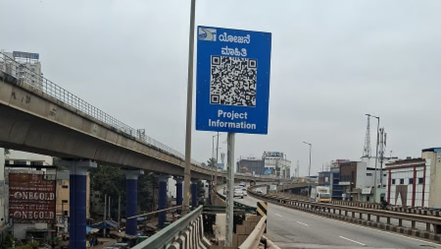
    • Sanchara Yukta project may add 90 km of roads beyond GBA limits

    The Sanchara Yukta project

    • It is a major infrastructure initiative by the Greater Bengaluru Authority (GBA) and the Bruhat Bengaluru Mahanagara Palike (BBMP) designed to decongest Bengaluru’s traffic by constructing nearly 300 km of new roads along the buffer zones of stormwater drains (rajakaluves).

    Key Objectives and Features

    • Buffer Zone Roads: The project focuses on utilizing the buffer zones of stormwater drains to create additional road capacity, strengthen neighbourhood streets, and prevent illegal encroachments.
    • Vehicle Restrictions: To ensure stability on these buffer zones, heavy vehicles are generally prohibited; most of these routes will be reserved for cars and two-wheelers.
    • Funding & Land: The project is part of the ₹3,000 crore (₹30 billion) “Brand Bengaluru” concept.

    Additional Information – BRAND BENGALURU 

    • Brand Bengaluru concept has been classified into eight categories

    SUGAMA SANCHARA (FREE MOVEMENT) 

    • Focus – Bengaluru City Comprehensive Mobility Plan (BCCMP) + construction of a tunnel road.

    CLEAN BENGALURU

    • Land parcels of 50 to 100 acres each will be identified in different directions for treating waste for the next 25 to 30 years(Rs 100 crore)

    SHE TOILETS 

    • Make public infrastructure woman-friendly – By Bengaluru Solid Waste Management Limited (BSWML)
    • Sharane Satyakka award with an amount of Rs 50,000 will be paid to eight pourakarmikas (workers who carry out cleaning of public places) in eight zones in recognition of their honest and dedicated work.

    HASIRU BENGALURU (GREEN BENGALURU) 

    • Bengaluru’s first ever Climate Action and Resilience Plan (BCAP Climate Action and Resilience Plan) was launched on 27 November 2023  
    • ‘Hasiru Rakshak’, – a mobile application has been developed to sensitize school/college students on the importance of plants and trees in the environment and 2 lakhs saplings will be planted in the current year 

    HEALTHY BENGALURU 

    • Twenty-seven e-vehicles (1 per constituency) under ‘Mane Bagilige Chuchhu Maddu’ shall be made functional to improve immunization and cover last mile coverage

    EDUCATION BENGALURU 

    • To enhance the quality of education, the BBMP will set up a well-equipped computer lab, digital lab, Information technology lab and e-libraries (Rs 10 crore)

    TECH BENGALURU  

    • Strengthening IT staff (Rs 50 crore)

    VIBRANT BENGALURU 

    • To provide a grant of Rs100 crore to illuminate with attractive electric lights in flyovers, underbridges, road junctions and parks
    • The BBMP will set up ‘Pink Rooms’ that will have sanitary napkins at malls, bus stations and toilets and they would act as rest rooms for women during menstruation

    WELFARE PROGRAMMES

    E-Sarathi scheme for the welfare of women,

    • Targeted beneficiary – Scheduled Castes, Scheduled Tribes, backward minorities, and the transgender community
    • Objective – to providing financial assistance for the purchase of approximately 250 electric autos or goods e-autos (Rs 5 crore)
    • ‘Savitri Vasathi’ hostels for working women.
  • Insurance coverage in Karnataka for forest officials | State Education Policy (SEP)

    Insurance coverage in Karnataka for forest officials

    Why in news :

    • Forest Department, outsourced personnel get insurance coverage in Karnataka

    Key Highlights

    • Agreement: A Memorandum of Understanding (MoU) was signed between the Karnataka Forest, Ecology and Environment Department and Bank of Baroda.
    • Coverage: Provides ₹1 crore accidental death insurance to all permanent officers and staff, regardless of their cadre or salary.
    • Additional Duty Benefit: In case of accidental death while on duty, the bank will provide an additional ₹25 lakh.
    • Life Insurance: Permanent employees are also eligible for ₹10 lakh in life insurance coverage.
    • Outsourced Personnel Cover: Outsourced staff are provided with insurance coverage of ₹20 lakh.
    • Pensioner Extension: Personal accident insurance coverage remains valid up to the age of 70 for retired employees who continue their pension accounts with Bank of Baroda.

    State Education Policy (SEP)

    Why in news :

    • The State Education Policy (SEP)-2025 has made several recommendations like discarding the three-language formula and adopting a two-language formula instead

    Recommendations

    • Language Formula: Recommends discarding the three-language formula in favor of adopting a two-language formula.
    • Medium of Instruction: Proposes Kannada or the mother tongue as the medium of instruction for the primary education sector.
    • RTE Extension: Suggests extending the Right to Education (RTE) eligibility up to 18 years of age.
    • Reservation Policy: Recommends implementing a reservation matrix even within private educational institutes.

    Current status

    • Implementation Status: The policy has not yet been implemented, with hopes for rollout in the 2026-27 academic year. While an expert committee exists for higher education implementation, no such exercise has begun for school education.
    • KPS Magnet Schools: The government plans to develop 900 Karnataka Public Schools (KPS) as “magnet schools” (Pre-primary to II PUC) using an Asian Development Bank loan. 509 of these are set to be developed between 2025 and 2027.

    Additional Information –   KPS Magnet Schools in Karnataka

    • It is an an initiative to upgrade selected government schools into resource centers, merging smaller nearby schools (within 5-6 km)
    • Objective – to provide better infrastructure, digital learning, and comprehensive education (Pre-primary to Class 12) under one roof,
    • Significance – It aims to improve government education quality,
    • Concerns – The plan faces significant opposition due to fears of rural school closures, student displacement, and negative impacts on poor communities.
  • State seeks allocation of 40 to 45 tmcft of water in river linking projects | Karnataka’s second monkey fever lab

    State seeks allocation of 40 to 45 tmcft of water in river linking projects

    Why in news:

    • Deputy Chief Minister D.K. Shivakumar, representing the Karnataka State Government at the 24th meeting of the National Water Development Authority (NWDA) in New Delhi.

    Key Highlights

    • Purpose: To secure an increased total water allocation of 40 to 45 tmcft for Karnataka within the national river-linking frameworks, specifically to address drinking water and irrigation needs.
    • Key Demands: The State specifically urged the Centre to provide an additional 5 tmcft of water to the Kalyana Karnataka (KK) region via the Godavari-Cauvery link primarily for drinking water purposes.
    • Current Allocation Status: Karnataka has currently been allocated a total of 40 tmcft under two major projects:
      • 90 tmcft from the Godavari-Cauvery link.
      • 50 tmcft from the Varada-Bedti link.
    • Godavari-Cauvery Project Data: In the first phase, a total of 148 tmcft of water is set to be diverted; Karnataka has requested clarification on the usage and distribution of its 15.90 tmcft share.
    • Varada-Bedti Project Details: A Detailed Project Report (DPR) is being prepared for this intra-state link. The estimated cost is ₹10,000 crore, with 90% of the expenditure to be borne by the Centre.
    • Note : The NWDA has been formed under the leadership of the Union Minister of Jal Shakti for river linking, and all States are its members.

    Additional information – Godavari-Cauvery River Linking Project.

    • Route Alignment (3-Stage Link): The project proposes a massive transfer of water through the following path:
      • Godavari (Inchampalli Barrage) –Krishna (Nagarjunasagar Dam)
      • Krishna (Nagarjunasagar) – Pennar (Somasila Dam)
      • Pennar (Somasila) – Cauvery (Grand Anicut)
    • Key Statistics:
      • Total Diversion: Approximately 148 TMC (4,189 MCM) of unutilized water from the Godavari basin.
      • Tamil Nadu Share: 41 TMC earmarked for irrigation and drinking water supply to Chennai.
      • Karnataka’s Stance: The State claims rights to 45 TMC of water before giving approval for the project.
    • Infrastructure & Technology:
      • Starting Point: The Inchampalli Barrage on the Godavari river serves as the primary source.
      • Transport Mechanism: The project incorporates the use of Steel Pipes instead of traditional open canals in specific sections to significantly reduce evaporation losses.
    • Beneficiary Hierarchy:
      • Major Beneficiaries: Telangana, Andhra Pradesh, and Tamil Nadu.
      • Minor Beneficiaries:

    Bedti – varada liking project

    • Proposed by: The Karnataka State Government (Water Resources Department).
    • Core Purpose: To divert approximately 22 TMC of “surplus” water from the west-flowing Bedti river to the east-flowing Varada river (a tributary of the Tungabhadra) to mitigate water scarcity in North Karnataka.
    • Route & Mechanism:
      • Source: Bedti River (Western Ghats, flowing to the Arabian Sea).
      • Destination: Varada River (Flows East).
      • Engineering: The project involves two mix-links utilizing 8 km tunnels and lifting (pumping) stations at Pattanahalla and Suremane.
    • Target Objectives:
      • Irrigation: Designed to irrigate approximately 1 Lakh Hectares in the Tungabhadra Left Bank region.
      • Usage: Providing drinking water for arid towns and sustaining rain-fed crops such as Cotton and Jowar.
    • Beneficiaries: The project targets the drought-prone districts of Raichur, Gadag, Haveri, and Koppal.
    • Infrastructure:
      • Dam 1: At Menasagoda (Pattanahalla stream).
      • Dam 2: At Hirevadatti (Gadag district).
    • Financials: The estimated cost ranges between ₹2,000 crore to ₹10,000 crore, subject to final plan modifications.
    • Conflict & Status:
      • Proponents: Farmers in North Karnataka seeking drought relief.
      • Opponents: Environmentalists and locals in Uttara Kannada (Sirsi), citing the potential loss of 2,100+ acres of forest and damage to the ecologically sensitive Myristica Swamps.
      • Status: Highly controversial; while the government has approved the preparation of a Detailed Project Report (DPR), widespread implementation is stalled due to protests.

    Karnataka’s second monkey fever lab

    Why in news :

    • Second KFD testing lab will come up in Sirsi soon

    Key Highlights

    • Launched by : The Health Department is set to establish another Kyasanur Forest Disease (KFD) testing laboratory at Sirsi of Uttara Kannada district
    • Aim: to strengthen early detection and control of the disease.
    • The first laboratory is currently functioning in Shivamogga.
    • Benefits: new laboratory would benefit residents of Sirsi, Siddapur and surrounding areas by enabling quicker diagnosis, which, in turn, would help reduce mortality to zero

    Additional information  – About Kyasanur Forest Disease

    • Origin : First identified in 1957 in Karnataka’s Kyasanur Forest, it is commonly known as Monkey Fever.
    • Type: It is a tick-borne viral hemorrhagic fever caused by the Kyasanur Forest Disease Virus (family Flaviviridae).
    • Transmission: Spread to humans via tick bites (mainly Haemaphysalis spinigera) or contact with infected animals, particularly sick or dead monkeys.
    • No person-to-person transmission exists.
    • Seasonality: Epidemics usually last from October to June, with a peak period between January and April.
    • Symptoms: Sudden high fever, headache, and vomiting; severe cases may involve bleeding (hemorrhagic) and neurological issues.
    • Mortality: The disease has a fatality rate of approximately 5% to 10%.
    • Treatment: There is no cure; management relies on supportive care (hydration, oxygen, and maintaining blood pressure).
    • Prevention: A vaccine is available and widely recommended in affected regions of India.
  • Bengaluru International Film Festival | KPME (Amendment) Bill, 2025

    Bengaluru International Film Festival

    Why in news

    • The Bengaluru International Film Festival is scheduled to begin on January 29.

    Key Highlights

    • Brand Ambassador: Actor Prakash Raj has been named the brand ambassador for the 17th Bengaluru International Film Festival (BIFFes).
    • Dates: The festival will be held from January 29 to February 6.
    • Venue Shift: Cinepolis, Lulu Mall in Rajajinagar (Bengaluru).
    • Oscar Showcase: The 17th edition is set to showcase movies shortlisted for the 98th Oscars.
    • International Acclaim: Films that gained appreciation at reputed global festivals such as Cannes, Rotterdam, Berlin, Busan, and Locarno will be screened at the event.
    • Theme: The central theme for this edition is “Women Empowerment” (‘Woman: As She Is’).

    KPME (Amendment) Bill, 2025

    News

    • Private hospitals flag concerns over KPME (Amendment) Bill, 2025

    Key objections

    • the removal of representation from private medical establishments in the Registration and Grievance Redressal Authority.
    • excluding hospital administrators from the decision-making process
    • replacement of the earlier provision for “deemed approval” with a six-month provisional registration system. Under the original Act,it was three months .

    Karnataka Private Medical Establishments (Amendment) Bill, 2025

    • Mandate – to modernise the regulatory framework for private healthcare.
    • It seeks to replace a previous ordinance and further amends the principal Act of 2007.

    Key Provisions & Changes

    Two-Tier Registration System:

    • Provisional Registration: New hospitals and clinics can obtain a 6-month provisional registration certificate within 10 days of application without prior inspection.
    • Permanent Registration: Establishments with valid accreditations (like NABH, NQAS, or QCI audits) can receive permanent registration within 10 days without further checks.
    • Mental Health Inclusion: The Bill formally brings mental health establishments under the legal purview of the KPME Act.
    • Stricter Penalties: Employing unqualified medical or paramedical staff now carries a penalty of up to 3 years of imprisonment and a fine of up to ₹1 lakh.
    • Structural Changes: The District Registration and Grievance Redressal Authority will be headed by the Deputy Commissioner and must include representatives from the Indian Medical Association (IMA) and AYUSH practitioners.
    • Proximity Rules: No new private clinical laboratory is permitted within 200 metres of a government hospital.
  • Forests can’t be used for non-forestry purposes: SC | “Mission 40+” (Karnataka Education Initiative)

    Forests can’t be used for non-forestry purposes: SC

    Why in news

    • Bench upholds appeal filed by Karnataka government against Gandhi Jeevan Collective Farming Cooperative Society, which wanted extension of lease on 134 acres of forest

    Key Highlights

    • Ruled by: The Supreme Court of India, via a Bench comprising Justices Vikram Nath and Sandeep Mehta.
    • Ruling: The Court firmly established that forest lands cannot be utilized for non-forestry purposes, explicitly stating that agriculture falls under this prohibition as it essentially requires the clearing of forests.
    • Case Background: The judgment upheld an appeal filed by the Karnataka State government against the Gandhi Jeevan Collective Farming Cooperative Society. The society had sought an extension of a lease on 134 acres of forest land, which the Court noted had been “illegally granted” to them for cultivation in the first place.
    • Legal Basis: The decision is grounded in Section 2 of the Forest (Conservation) Act, 1980, which precludes the de-reservation or use of forest land for non-forestry purposes without prior approval from the Central government. The Bench also reiterated a 2000 judgment stating that de-reservation requires Supreme Court permission.
    • Directive: The judgment, authored by Justice Sandeep Mehta, directed the State to reclaim the land and repopulate the forest with indigenous trees.
    • State Position: The Karnataka government confirmed via affidavit that the disputed lands fell under the category of “forest” and were under the ownership and possession of the State Forest Department.

    “Mission 40+” (Karnataka Education Initiative)

    Why in news :

    • Remedial teaching to improve SSLC results in districts of Kalyana Karnataka region

    Mission Overview

    • Objective: To improve the SSLC (Class 10) examination results in the seven districts of the Kalyana Karnataka region (e.g., Kalaburagi, Bidar, Raichur)
    • Launched by : remedial teaching programme launched by the Kalyana Karnataka Regional Development Board (KKRDB) and the Department of School Education in Karnataka.
    • Target: The specific goal is to ensure students pass and to achieve an overall 90% pass result in these districts.
    • Special Classes: Conducted from January to March for “slow learners” or students needing extra help.
    • Funding: Teachers conducting these classes receive extra honorariums (₹1,000/month), and schools receive funds (₹6,000) to cover student travel expenses.
    • Monitoring: Includes home visits for students absent for more than seven days to bring them back to class.

    Note : 

    • The State government has earmarked ₹3.44 crore for the project, to be borne by the Kalyana Karnataka Regional Development Board (KKRDB).
    • In 2024-25, Kalaburagi district ranked last in the results with 41.35% results. Other districts also had poor results- Ballari (50.91%), Bidar (52.3%), Koppal (56.57%), Raichur (50.76%), Vijayapura (66.78%), and Yadgir (59.6%).
  • Abhay Manohar Sapre committee | Electric flying taxi

    Abhay Manohar Sapre committee

    Why in news

    • Road Safety Advisory Committee chairman inspects NH 275

    Observations and recommendations

    • Key Observation: He appreciated the reduction in road accidents on national highways in 2025 compared to previous years, attributing the positive trend to the installation of AI-enabled cameras.
    • Technological Recommendation: Sapre proposed the installation of digital speed control systems to effectively regulate and curb the over-speeding of vehicles.
    • Infrastructure Measures: He suggested installing adequate, prominently visible signboards specifically at accident-prone locations to alert motorists.
    • Enforcement Focus: The recommendations included undertaking strict measures to ensure adherence to lane discipline and continuous prevention of over-speeding.
    • Note : NH275 connects Bengaluru to Mysuru

    Electric flying taxi

    News

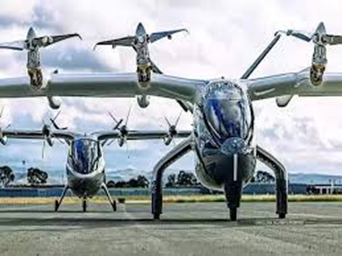
    • Bengaluru firm begins ground testing of electric flying taxi

    About

    • What it is : The ground testing for the half-scale electric vertical take-off and landing (eVTOL) demonstrator, SYLLA SYL-X1 developed by Bengaluru-based Sarla Aviation.

    Sarla’s flagship programme :

    • Objective : it is a six-seater electric flying taxi. designed to dramatically reduce commute times in India’s most congested cities like Bengaluru, Mumbai, Delhi, and Pune.
    • Launched by : the Bangalore International Airport Limited (BIAL) and Sarla Aviation.
  • Transport Dept. rolls out AI-powered ‘Smart Lock’ to curb LLR fraud

    Transport Dept. rolls out AI-powered ‘Smart Lock’ to curb LLR fraud

    News-

    •  the Karnataka Transport Department has rolled out an AI-powered ‘Smart Lock’ system

    About  ‘Smart Lock’

    • It uses artificial intelligence, facial recognition, and behavioural monitoring to ensure that only genuine applicants take the test
    • Aim : to end malpractice and improve transparency in the licensing process.
    • Developed by : the new mechanism developed by the Union Ministry of Road Transport and Highways
    • It has been integrated into the Sarathi Parivahan Seva por tal as an additional security layer.
    • It uses artificial intelligence, facial recognition, and behavioural monitoring to ensure that only genuine applicants take the test.
  • Karnataka Non-major Ports Iron Ore Handling Policy, 2025

    Karnataka Non-major Ports Iron Ore Handling Policy, 2025

    News-

    • State government approves policy for iron ore exports from non-major ports in Karnataka

    Background

    • Amid large-scale violation of rules in extraction of iron ore and large quantities of iron ore export illegally, the State government had banned export of iron ore from 10 non-major ports in 2010 under the Karnataka Ports (Landing and Shipping Fees) Act, 1961.
    • However, in 2022, the Supreme Court allowed export of iron ore from these ports strictly under the policy of Indian government.
    • It permitted export of iron ore through ports in Karnataka as is being done in the rest of the country.

    About new policy

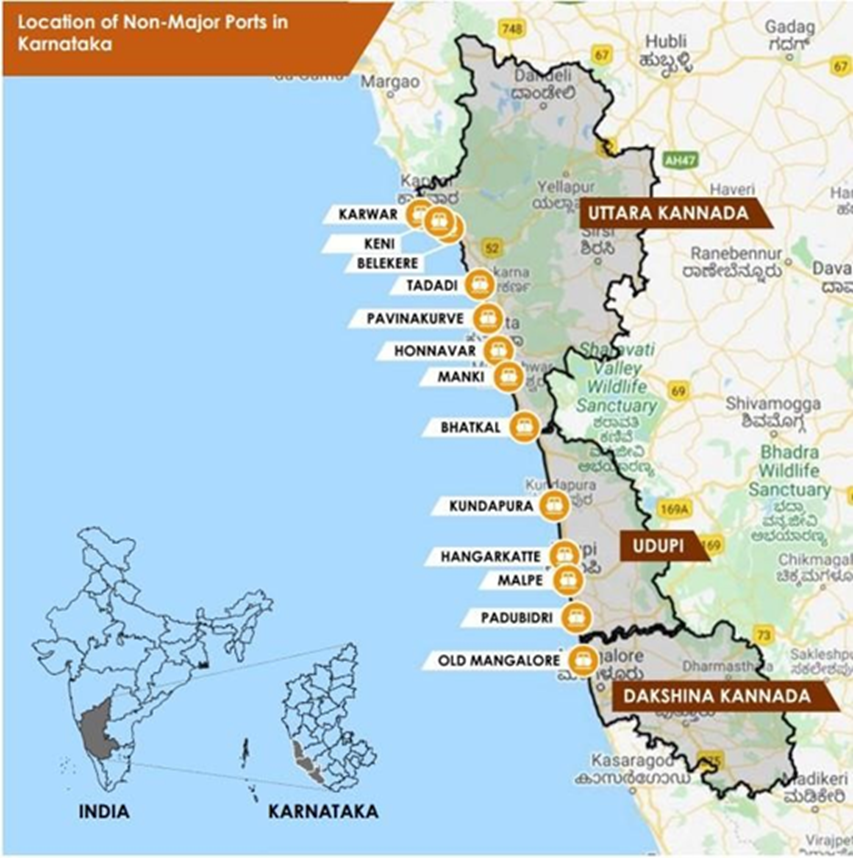
    • To clear the export of iron ore from minor ports in Karnataka, the State government approved Karnataka Non-major Ports Iron Ore Handling Policy, 2025/
    • Objective : handling of iron ore through non-major ports under the Karnataka Maritime Board.
    • “The policy is a standard operating procedure for the export of iron ore from these ports.

    List of Karnataka’s 13 Non-Major Ports:

    1. Karwar (All-weather, deepwater)
    2. Belekeri
    3. Tadri (Tadadi)
    4. Pavinakuruva (Pavinakurve)
    5. Honnavar
    6. Manki
    7. Bhatkal
    8. Kundapur (Kundapura)
    9. Hangarakatta
    10. Malpe
    11. Padubidri
    12. Old Mangalore

    Baindur (Byndoor) (Udupi district)

    Panel formed to implement SEP recommendations

    • Headed by : The State government has appointed a five-member expert committee headed by the Principal Secretary of the Higher Education Department
    • Aim : to examine and implement the recommendations related to higher education in the State Education Policy (SEP) final report, submitted to the government by the SEP Commission.
    • composition : The vice-president of the Karnataka State Higher Education Council, the Commissioner of the Department of Collegiate and Technical Education and the Director of the Department of Technical Education are members of the committee, and the Special Officer of the Higher Education Department is the member-secretary.
    • timeline : The committee has been given two weeks’ time to submit its report to the government.

    Note :

    • The SEP Commission, headed by educationist Sukhdeo Thorat, submitted the final report of the State Education Policy consisting of 2,197 pages to the government on August 9, 2025.
    • The report made a total of 26 major recommendations related to primary education, 52 to higher education, and 20 recommendations to professional education.
  • Digital Mobile Planetarium programme

    Digital Mobile Planetarium programme

    • Launch Date: The upgraded programme was flagged off on November 27, 2025.
    • Implementing Authority: Department of Science & Technology, Government of Karnataka and executed by KSTePS ( karnataka science and technology promotion society).
    • Objective: To bridge the rural-urban gap in science education and ignite scientific curiosity among students in remote areas who cannot access city planetariums.
    • Target Audience: Students of Government schools in rural Karnataka.
    • Key Features:
    • The initiative uses custom-built vehicles equipped with a 5-meter inflatable dome.
    • It features 360-degree fish-eye projection systems for an immersive experience.
    • The vehicles are air-conditioned and equipped with advanced audio systems.
  • Kuvempu national award, 2025

    Kuvempu national award, 2025

    News –

    Konkani writer Mahabaleshwar Sail chosen for Kuvempu national award, 2025

    Award: Kuvempu National Award 2025 (Kuvempu Rashtriya Puraskar)

    Awardee: Mahabaleshwar Sail (Noted Konkani writer)

    Issuing Authority: Rashtrakavi Kuvempu Pratishtana (Rashtrakavi Kuvempu Trust)

    About Award:

    • It is a national-level literary award conferred annually to a writer who has made significant contributions to any of the languages recognized by the Constitution of India.
    • Instituted in memory of the late Kannada Poet Laureate Kuvempu, it is presented on his birth anniversary (December 29), which is observed as ‘Vishwa Manava Dina’ (Universal Brotherhood Day).
    • The award carries a cash prize of ₹5 lakh, a silver medal, and a citation.

    About mr.sail

    • Sail served in the Indian Army and participated in the Indo-Pak War in 1965. He also served in the United Nations Peacekeeping Force on the Israel-Egypt border in 1964-65. After his military service, he worked in the postal department.
    • Sail’s first novel, Kaali Ganga, was published in 1996 and it was based on the lives of farmers along Kali river in Karwar.
    • Some of his well-known works include Hawthan, Paltadcho Munis, Yug Sanvar and Vikhar Vilkho