
Right to Education (RTE) Act, 2009
News –
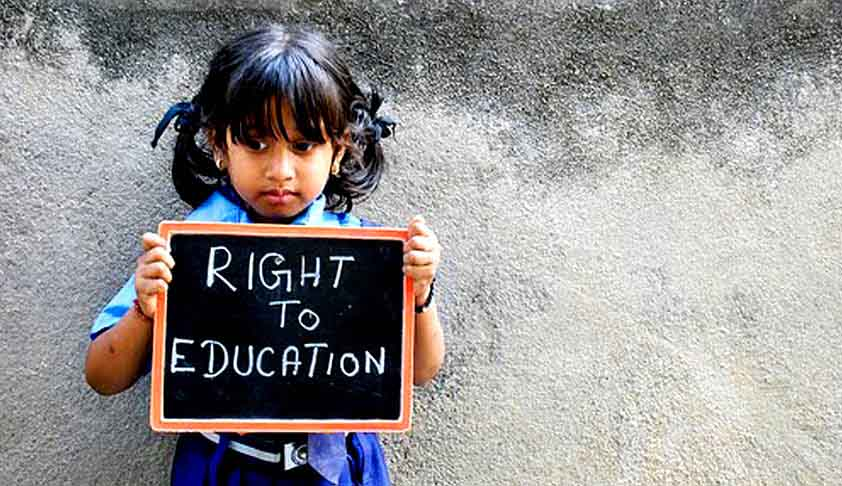
- The State government has decided to extend free and compulsory education for Scheduled Caste/Scheduled Tribes (SC/ST) students up to class 10 under the Right to Education (RTE) Act, 2009.
Right to Education (RTE) Act, 2009.
- It is a landmark legislation that operationalises Article 21A of the Indian Constitution, establishing free and compulsory education as a Fundamental Right for every child aged 6 to 14 years.
Constitutional provisions
- Fundamental Right: 86th Amendment Act (2002) introduced Article 21A, making education a fundamental right for children aged 6–14.
- Legal Basis: Unnikrishnan vs. State of Andhra Pradesh (1993) affirmed education as part of the Right to Life.
- Effective Date: The Act came into force on 1 April 2010.
Additional Information -Schemes related to education in Karnataka 2026
- Karnataka provides several key educational benefits and scholarships through its unified State Scholarship Portal (SSP).
- Vidyasiri Allowance: Gives ₹1,500 monthly for food and housing to OBC/SC/ST/Minority students without government hostel placement.
- Free Bus Travel: Grants free state bus passes to all male and female school and college students.
- Post-Matric Fee Reimbursement: Covers tuition fees for higher education for underprivileged communities.
- Topper Incentives: Awards cash prizes to high-scoring SSLC and PUC students.
National AI and Digital Water Summit in Bengaluru
News –
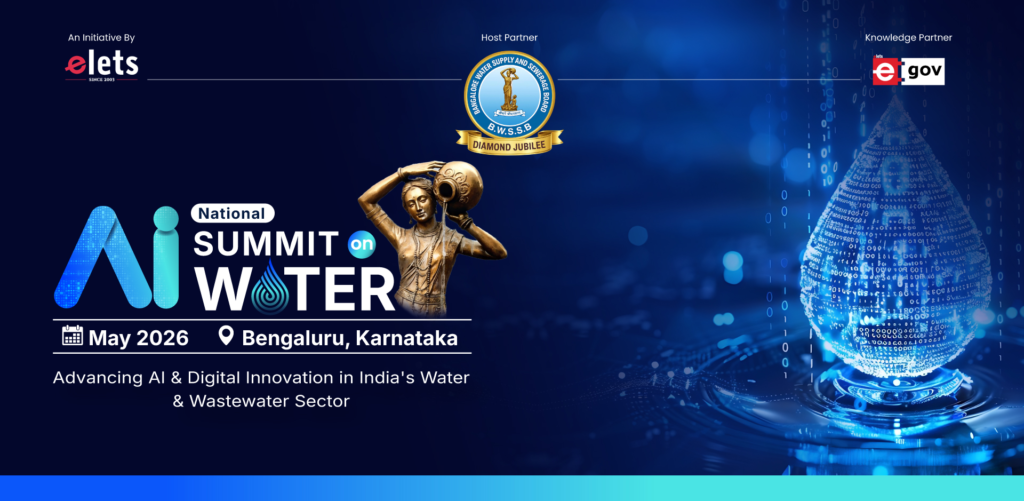
- Bangalore Water Supply and Sewerage Board (BWSSB) is hosting India’s first and largest National AI and Digital Water Summit.
- Host and Date: The summit will be organized by the BWSSB in Bengaluru on May 27.
National AI and Digital Water Summit in Bengaluru
- Objective: To bring together experts and policymakers to discuss the use of artificial intelligence and digital technologies for managing urban water systems.
- Key Discussion Topics: The talks will focus on AI-based water governance, smart utility systems, digital twins, IoT (Internet of Things) monitoring, predictive analytics, reusing wastewater, and sustainable funding for urban infrastructure.
- ‘Five Panchasutras’ Framework: BWSSB will present a new framework focused on five main areas:
- Artificial intelligence
- Data-driven governance
- Smart infrastructure,
- Sustainable investment,
- Climate-resilient water security systems.
Additional Information – Water conservation schemes in Karnataka
- Jalamrutha: Focuses on mass water literacy and community-led rejuvenation of local water bodies.
- Jala Sanjeevini: Employs geo-spatial technology to build farm ponds and check dams under MGNREGS.
- Atal Bhujal Yojana: Uses community-led Water Security Plans to manage water-stressed groundwater zones.
- Pradhan Mantri Krishi Sinchayee Yojana (PMKSY): Builds watershed infrastructure like check dams to protect marginal farmers from drought.
KSRTC wins international award for training excellence
News –
- The Karnataka State Road Transport Corporation (KSRTC) has received both national and international recognition, winning the Golden Globe Tigers Awards 2026 for its initiatives in employee training and public transport innovation.
- Event & Category: The corporation was conferred the award under the “Excellence in Training” category during a ceremony held on May 20 in Kuala Lumpur, Malaysia.
About – The Karnataka State Road Transport Corporation (KSRTC)
- It is Karnataka’s state-owned public bus service, linking major cities across South India.
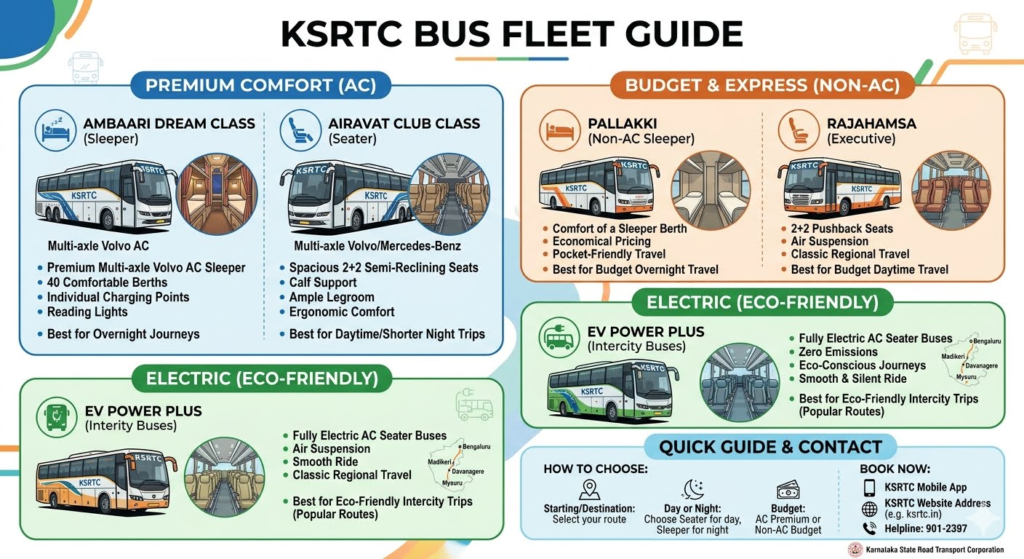
Popular Bus TypesPremium AC:
-
- Ambaari Dream Class (Sleeper)
- Airavat Club Class (Seater).
- Budget & Express: Pallakki (Non-AC Sleeper)
- Rajahamsa (Executive).
- Electric: EV Power Plus intercity buses.
- Shakti Scheme: Free travel for women residents on non-premium buses.
108 Arogya Kavacha Centralised Command and Control Centre
News –
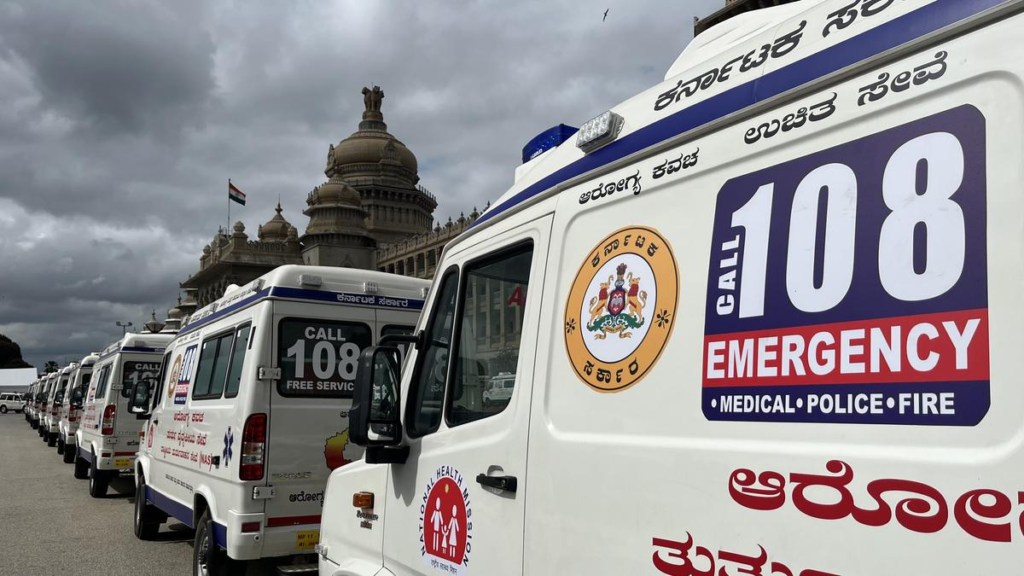
- Chief Minister Siddaramaiah inaugurated the newly government-owned ‘108 Arogya Kavacha Centralised Command and Control Centre‘ in Bengaluru, making Karnataka the first state in the country to establish a fully government-run emergency ambulance command system.
The 108 Arogya Kavacha Centralised Command and Control Centre
- It is a 24/7 government-managed medical emergency facility in Basaveshwaranagar, Bengaluru.
Key Features
- Location: Basaveshwaranagar, Bengaluru.
- Management: 100% Karnataka government-run.
- Capacity: 50-seat emergency call center.
- Fleet: Tracks 715 “108” ambulances.
- Technology: C-DAC real-time GPS platform.
- Integrations: Connects with 112, 104, and eSanjeevani.
Integration of e-Swathu with Svamitva Yojana in Karnataka
News –
- The Karnataka Revenue Department plans to integrate its rural property record system with the Central government’s mapping scheme to streamline land records.
e-Swathu
- It is a digital e-governance platform developed by the Rural Development and Panchayat Raj (RDPR) Department of Karnataka.
- It maintains digital ownership and physical records for properties located within Gram Panchayat jurisdictions (village limits/Gram Tana)
Primary Objectives:
- Prevents forgery, unauthorized layouts, and fraudulent land transactions.
- Brings all rural properties into the formal tax net, significantly boosting local government revenue.
- Promotes e-governance by cutting out middlemen and reducing physical visits to government offices
e-Swathu 2.0:
- Launched by the Karnataka government to upgrade the platform with Aadhaar-linked workflows, geo-tagging, and faster processing timelines
Differences between e-Swathu (rural) and BBMP’s E-Aasthi (urban)
|
Feature |
e-Swathu (Rural) |
E-Aasthi (Urban) |
|
Primary Jurisdiction |
Gram Panchayats (villages and rural outskirts). |
Bruhat Bengaluru Mahanagara Palike (BBMP). |
|
Nodal Department |
Rural Development and Panchayat Raj (RDPR). |
Urban Development Department / BBMP. |
|
Central Integration |
Increasingly synced with the central SVAMITVA Yojana. |
Integrated with GIS mapping and urban land registry reforms. |
Additional Information – SVAMITVA Yojana.
-
- Full form – Survey of Villages Abadi and Mapping with Improvised Technology in Village Areas
- Financing – It is a Central Sector Scheme
- Implementation – Ministry of Panchayati Raj launched in 2020.
- Target Area: Rural inhabited lands (Abadi area only).
- Exclusion: Agricultural land is excluded.
- Core Output: Issuance of Property Cards (Title Deeds).
Core Objectives
- Asset Monetization: Allows rural citizens to use property as collateral for bank loans.
- Dispute Reduction: Minimizes property disputes through clear boundary demarcation.
- Local Revenue: Helps Gram Panchayats determine accurate property taxes.
- Spatial Planning: Uses GIS data to draft better Gram Panchayat Development Plans (GPDP).
Two mountaineers from Karnataka scale Mount Everest

News –
- Chinmayee Trishulamurthy and Santosh Devarajappa from Karnataka successfully climbed Mount Everest on May 12, 2026.
- Achievement: The duo scaled Mount Everest at a height of 29,031 feet on May 12, 2026, overcoming freezing temperatures and powerful winds.
Mount Everest
- It is the highest peak on Earth, standing at 8,848.86 metres.
- It sits in the Himalayas on the border between Nepal (Sagarmatha) and Tibet (Chomolungma).
Facts
- Geology: It is a young Fold Mountain formed by the collision of the Indian and Eurasian plates. It is still rising.
- Measurement: The current height was jointly announced by Nepal and China. It was originally identified as Peak XV by the Great Trigonometric Survey of India and named after Sir George Everest.
- Ecology: Critical issues include glacial retreat due to climate change and environmental degradation from high-altitude tourism waste.
Additional Information – Mountain ranges of karnataka
The Western Ghats (Malnad Region)
- Mullayanagiri (1,930 m): Highest peak in Karnataka; located in Baba Budangiri Range (Chikkamagaluru).
- Baba Budangiri: Birthplace of coffee cultivation in India; rich in iron ore (Kemmangundi).
- Kudremukh (1,894 m): Second highest peak; houses Kudremukh National Park (Shola-grassland ecosystem).
- Gangamoola: Peak inside Kudremukh range; origin point of rivers Tunga, Bhadra, and Netravati.
- Brahmagiri Hills: Located in Kodagu; contains Talakaveri, the origin source of the Kaveri River.
- Pushpagiri / Kumara Parvata (1,712 m): Second highest peak in Coorg; adjacent to Pushpagiri Wildlife Sanctuary.2.
The Eastern Ghats & Transition Zones
- BR Hills (Biligirirangan): Ecological bridge connecting Western and Eastern Ghats; declared Tiger Reserve (BRT).
- MM Hills (Male Mahadeshwara): Elephant corridor transitioning into the Eastern Ghats (Chamarajanagar).
Deccan Plateau / Plains (Maidan Region)
- Nandi Hills: Granitic structure; river watershed for Arkavathi, Ponnaiyar, and Palar.
- Savandurga: Located near Bengaluru; one of the largest monolithic hills in Asia.
Karnataka logs gains in maternal and child health
News –
- According to the National Family Health Survey-6 (NFHS-6) for 2023-24, Karnataka has recorded significant improvements across several maternal and child health indicators compared to the previous NFHS-5 (2019-21), although child malnutrition remains a challenge.
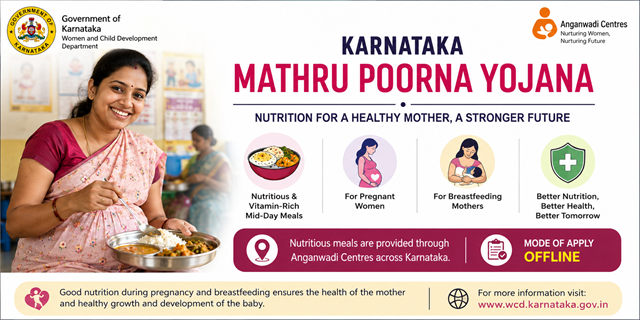
Mathru Poorna Yojana
-
- Objective: Provides one hot, cooked nutritious meal daily to pregnant and lactating mothers for at least 300 days a year.
- Benefits: The meal includes rice, sambar, vegetables, pulses, an egg, and 150 ml of milk to combat maternal anemia and low birth weight.
- Delivered via local Anganwadi Centres
Integrated Child Development Services (ICDS) & Srushti / Pushti Schemes
- Objective: Holistic development of children under 6 years, adolescent girls, and mothers.
- Benefits: Distributes Take-Home Rations (THR) under the Pushti scheme. The Srushti Scheme specifically supplies milk powder and eggs to children up to 5 days a week to prevent severe acute malnutrition (SAM)
Karnataka Samagra Mathru Arogya Palane Scheme
- Objective: A state-specific umbrella initiative consolidating multiple financial and medical safety nets. Key Sub-Schemes Included:
- Prasoothi Araike Scheme: Offers ₹2,000 for BPL mothers and ₹3,000 for SC/ST mothers in two installments to manage post-natal healthcare expenses.
- Madilu Kit Scheme: Distributes a post-delivery hygiene kit consisting of 19 essential daily use items (worth ₹1,500) for mothers who deliver in government hospitals.
- Thayi Bhagya & Thayi Bhagya Plus: Provides cashless pre-and-post-delivery assistance, including a ₹1,000 allowance if a BPL/SC/ST mother is forced to deliver in a non-empanelled private facility
Arogya Kavacha (108 Emergency Ambulance)
- Objective: Critical medical transit.
- Benefits: Provides 24×7 free emergency ambulance transportation to take pregnant women from home to healthcare facilities and secure a free drop-back home 48 hours post-delivery
Bhagyalakshmi Scheme
- Objective: Financial security for female children born into BPL families.
- Benefits: A fixed deposit of ₹50,000 is registered in the name of the girl child, which matures into a significant lump sum when she reaches 18 years of age
Karnataka Quantum Task Force
News –
- The Karnataka government has issued an order to create the Karnataka Quantum Task Force, aiming to make the state a national hub for quantum technology and innovation.
- Chairperson: Arindam Ghosh, Professor at IISc Bengaluru, has been appointed to lead the task force.
Quantum computing
- Quantum computing is a multidisciplinary field comprising aspects of computer science, physics, and mathematics that utilizes quantum mechanics to solve complex problems faster than on classical computers.
- Quantum mechanics – It is a science dealing with the behavior of matter and light on the atomic and subatomic scale
Applications
- Drug discovery: Simulating complex molecules to develop new drugs and materials, leading to accelerated medical innovation.
- Financial modeling: Optimizing financial portfolios and managing risk with unparalleled accuracy and speed.
- Cryptography: Breaking existing encryption methods and developing new, quantum-resistant ones.
- Machine learning: Revolutionizing AI by training algorithms on massive datasets much faster, leading to breakthroughs in natural language processing, computer vision, and more.
- Materials science: Designing novel materials with superior properties like high-temperature superconductors or efficient solar cells.
Initiatives by the Government of India
- National Mission on Quantum Technologies and Applications (NM-QTA:
- Quantum Computing Applications Lab (QCAL)
75th anniversary of Kagodu Satyagraha
News –
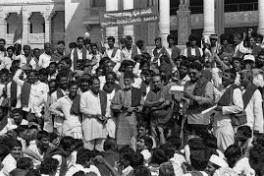
- The 75th anniversary of the Kagodu Satyagraha is being observed through a series of commemorative events.
About
- Launched in March 1951 in Kagodu village, Sagar taluk (Shimoga district, Karnataka).
- This historic uprising is considered the first peasant movement in independent India and a critical milestone for subsequent land reform legislation
Core Issues
- The Trigger: Landlords (Zamindars) altered the kolaga (traditional measuring bowl) to extract more crop share from tenants.
- The Conflict: Landlords evicted protesting farmers; police responded with mass arrests and violence.
- Key Leaders – H. Ganapathiyappa: Formed the Sagara Taluk Raitha Sangha to mobilize local farmers.
- National Socialists: Dr. Ram Manohar Lohia and Jayaprakash Narayan backed the movement; Lohia was arrested in Sagar.
Historical Impact
- Iconic Slogan: Birthed the phrase “Uluvavane Neladodeya” (“The tiller is the owner of the land”).
- Policy Shift: Transitioned India’s struggle from anti-colonialism to internal anti-feudalism.
- Land Reforms: Formed the ideological foundation for Karnataka’s landmark 1970s land reform laws.
Semiconductor training fabrication facility inaugurated at IISc Bengaluru
News –
- President Droupadi Murmu virtually inaugurated a new Semiconductor Training Fabrication (Fab) Facility at IISc Bengaluru to help build a skilled and inclusive workforce for the nation.
Key Specifications and Capacity
- Size: The facility boasts a dedicated 3,200 sq. ft. cleanroom.
- Equipment: It is outfitted with advanced semiconductor processing, lithography, and device characterisation tools, including a Scanning Electron Microscope.
- Capacity: It is structured for workforce development, built to train up to 700 students annually.
- Core Curriculum: The training will provide industry-oriented, experiential learning covering semiconductor fabrication, microfabrication, cleanroom operations, and device manufacturing.
Additional Information – Semiconductor Chips
- These are materials which have a conductivity between conductors and insulators.
- Example – They can be pure elements, silicon or germanium or compounds; gallium, arsenide or cadmium selenide.
- Significance of Semiconductor Chips – They are the basic building blocks that serve as the heart and brain of all modern electronics and information and communication technology products.
- Applications – These chips are now an integral part of contemporary automobiles, household gadgets and essential medical devices such as ECG machines.
India Semiconductor Mission (ISM)
- Launched by – Ministry of Electronics and Information Technology.
- Aim – To build a vibrant semiconductor manufacturing ecosystem to enable India’s emergence as a global hub for electronics manufacturing and design.
Secretariats to address public grievances and NRI issues in Karnataka
News –
- The Government of Karnataka will establish two exclusive secretariats: one to handle public grievances and another for NRI issues.
- Public Grievance Secretariat: This will be headed by a Minister and will primarily focus on holding meetings with protesting organizations to examine and address their justified demands.
- NRI Investments: The NRI secretariat will resolve NRI-related issues, and appropriate laws will be amended to make it easier for NRIs to invest in Karnataka.
Additional Information – Janaspandana portal
- The official public grievance portal for the Government of Karnataka is the Integrated Public Grievance Redressal System (iPGRS), commonly known as Janaspandana.
- Mandate – This single integrated platform allows citizens to file, track, and resolve complaints across various state government departments
Core Features of Janaspandana (iPGRS)
- Time-Bound Redressal: Every department operates under strict timelines to address your lodged complaints.
- Escalation Matrix: Issues not resolved within the fixed period automatically move up to senior supervisory officials.
- Multi-Channel Login: You can access your account using DigiLocker, PAN card, Aadhaar, or your mobile number.
- Localization: The interface is fully accessible in both Kannada and English.
Sakala service –
- It ensures time-bound government services in Karnataka. Delays trigger applicant compensation.
Core Features
- Mandatory Deadlines: Every service has a fixed processing timeline.
- GSC Number: Unique tracking ID provided upon application submission.
- Status Tracking: Real-time monitoring via the Sakala online portal.
- Officer Penalties: Defaulters pay fines that fund citizen compensation.
Kannada Sahitya Academy to release 54 books on women achievers
News –
- The Karnataka Sahitya Academy (KSA) officially released this milestone series of 54 books on June 5, 2026, under the leadership of Academy President L.N. Mukundraj
About the Project
-
- Published under the “Mahila Munnade” (Women’s March forward) initiative,
- Led by – Department of Kannada and Culture.
- Objective – It aims to preserve the legacies of exceptional women from diverse fields—such as science, journalism, politics, theatre, and social work—who have historically been pushed to the periphery of public memory.
Key Personalities & Books Featured
- Some of the notable titles and biographical subjects include:
- Gauri Lankesh: A biographical work written by Mallige Sirimane, detailing the late activist-journalist’s fierce battles and contributions to public interest journalism.
- Kamaladevi Chattopadhyay: A book authored by senior journalist K. Shanthakumari, celebrating the iconic freedom fighter and social reformer.
- Sara Aboobacker: A profile written by Sabiha Bhoomi Gowda, chronicling the life of the groundbreaking Kannada novelist and translator.
- Jammanni Devi: Authored by Divya K.L., focusing on her unique socio-cultural contributions.
- Rehamanavva Kalmani: Authored by H.S. Patil.Leelavathi Devadas: Written by Rita Rini.
- Kamala Hampana: Documented by Chitthaiah Pujar.
Mahila Munnade (“Women’s March Forward”)
- It is a grassroots feminist NGO based in Mandya, Karnataka.
- It focuses on empowering marginalized women and fighting gender discrimination.
Core Activities
- Victim Support: Provides counseling and legal aid for domestic violence, dowry harassment, and assault.
- Cultural Defiance: Uses traditionally male-dominated Nagari (drum-beating) performances to challenge caste and gender stigmas.
- Grassroots Advocacy: Campaigns against female foeticide, promotes women’s safety, and demands better political representation.
- Key Leadership: Founded by social activist Mallige Sirimane, with key advocacy led by Sushma Varma.
‘Praja Seve’ (Public Service) Department
News –
- Karnataka Chief Minister D.K. Shivakumar announced the ‘Praja Seve’ (Public Service) Department to handle public grievances.
About –
- New Ministry: Led by a Cabinet Minister and a senior IAS officer.
- Consolidation: Merges Administrative Reforms, Public Grievances, and Sakala Mission.
- Local Outreach: Mandates regular grievance meetings in all assembly constituencies.
- Tech Upgrade: Deploys iPGRS 2.0 system for transparent, time-bound tracking.
Kempegowda International Airport (KIA)
News –
- Bengaluru’s Kempegowda International Airport (KIA) officially secured third place globally—with an impressive score of 18.6 out of 20—in a comprehensive study assessing family-friendly travel amenities.
About-
- The global study by AttractionTickets.com evaluated over 140 major airports to determine the best destinations for transiting with children.
KIA was praised for a variety of key offerings:
- Sensory Rooms: Recognition as one of the first Indian airports with dedicated sensory rooms for neurodivergent passengers.
- Family Amenities: High marks for baby-changing facilities, accessible spaces, and dedicated children’s play areas.
- Terminal Environment: The serene, modern architecture of Terminal 2 (“Terminal in a Garden”) provides a low-stress, aesthetically pleasing environment for families.
Hrudaya Jyothi scheme
News –
- The Dr. Puneeth Rajkumar Hrudaya Jyothi scheme has successfully treated 15,908 out of 18,804 diagnosed STEMI heart attack patients.
Dr. Puneeth Rajkumar Hrudaya Jyothi scheme
- It is a Karnataka government initiative providing free, rapid treatment to heart attack victims during the critical “Golden Hour.”
Key Details
- Fast Diagnosis: AI analyzes ECGs at local hospitals within 5 minutes.
- Free Injections: Eligible patients receive expensive clot-busting medicine (Tenecteplase) for free.
- Network: Links 86+ rural hospitals (“spokes”) to major cardiac centers (“hubs”).
- Goal: Reduces death rates by treating rural patients before they can travel to distant cities.




Leave a Reply