Category: National and International Current Affairs

  • Universal Health Coverage (UHC) | Blue Cities

    Universal Health Coverage (UHC)

    Syllabus: GS2/Health

    In News

    • Investing in healthcare boosts resilience and productivity, helping India achieve affordable universal care and a Viksit Bharat by 2047.

    Universal Health Coverage (UHC)

    • Universal health coverage (UHC) means that all people have access to the full range of quality health services they require without any financial hardship.

    Various Steps

    • National Health Mission—launched in 200 establishes community-owned and decentralised health systems to provide accessible, affordable, and quality healthcare services to vulnerable populations.
    • Ayushman Bharat – Pradhan Mantri Jan Aarogya Yojana (AB-PMJAY) to achieve universal health care. It is the world’s largest public healthcare scheme with crores of vulnerable Indian families enrolled in it.
    • National Health Policy 2017- It addresses changing healthcare challenges in India such as the rise of lifestyle diseases like non-communicable diseases,

    Blue Cities

    Syllabus: GS3/Economy

    Context

    • Around the world, leading maritime hubs are transforming into “blue cities”.

    Blue Cities

    • It refers to coastal or port cities that integrate ocean-based economic activities with sustainable urban development.
    • The concept is rooted in the idea of a “Blue Economy” — using ocean resources for economic growth while preserving the health of marine ecosystems.

    Opportunity for India

    • India has a 11,098.81 km coastline, 13 major ports, 200+ non-major ports.

    India’s Pilot Blue Cities

    1. Mumbai: Combine port logistics with sustainable finance and innovation.
    2. Vizag: Naval and shipbuilding expertise.
    3. Chennai: Tech and advanced manufacturing integration.
    4. Mundra: Private investment and clean-energy logistics.
    5. Kochi: Maritime services and offshore renewables.

    Additional Information – India’s Port Sector

    • India has 13 major ports (central government controlled) and 217 minor ports (state government controlled).
    • The ports are managed by the Ministry of Ports, Shipping and Waterways.
    • India’s Maritime Sector Overview: Handles 95% of India’s trade by volume and 70% by value, with port infrastructure critical to the economy.
    • Port Ranking Improvement: India’s port ranking improved from 54th in 2014 to 38th in 2023, with nine Indian ports now in the top 100 globally.
    • Maritime Sector’s Importance: India is the 16th-largest maritime nation, occupies a key position in global shipping, with major trade routes passing through its waters.
  • Coal India Limited (CIL) | North Eastern Science & Technology (NEST) Cluster | International Day for Biosphere Reserves | Torkham Border

    Coal India Limited (CIL)

    Syllabus: GS3/ Energy and Infrastructure

    Context

    • Coal India Limited (CIL), is marking the completion of 50 years of its establishment.

    Coal India Limited

    • It is a Maharatna Public Sector Undertaking under the Ministry of Coal.
    • It was established in November 1975.
    • Headquarters: Kolkata.
    • Products: CIL produces coking coal, semi-coking coal, non-coking coal, washed and beneficiated coal, coal fines, and coke.
    • Strategic Relevance: It contributes to 80% of total domestic coal production and 75% of total coal based generation.

    Additional Information – Public Sector Undertakings (PSUs)

    • Meaning: These are government-owned companies or corporations in which the central or state government holds a majority stake (51% or more).
    • GDP Contribution: Contributed around 13–14% to India’s GDP ( Ministry of Finance).
    • Role in Job Creation: Directly employ about 9–10 lakh individuals, with a much larger indirect employment impact across core and infrastructure sectors.
    • Total CPSEs: India has over 250 Central Public Sector Enterprises, categorized into Maharatna, Navratna, and Miniratna.
    • Core Sector Dominance: PSUs retain a major role in energy, mining, defense, and transport, but private sector presence is rising.

    North Eastern Science & Technology (NEST) Cluster

    Syllabus: GS3/Infrastructure

    Context

    • The Union Minister for Communications and Development of North Eastern Region inaugurated the North Eastern Science & Technology (NEST) Cluster at IIT Guwahati.

    North Eastern Science & Technology (NEST) Cluster

    • Mandate – It will serve as the centre of the Northeast’s innovation ecosystem, transforming local wisdom into global solutions.

    It will focus on four verticals:

    1. Grassroots Innovation
    2. Semiconductors & Artificial Intelligence
    3. Bamboo-Based Technologies
    4. Biodegradable Plastics.

    International Day for Biosphere Reserves

    Syllabus: GS3/Environment Conservation

    Context

    • The International Day for Biosphere Reserves was observed on 3rd November.

    International Day for Biosphere Reserves

    Biosphere reserves

    • Definition – They are the protected areas identified by national governments for conserving biodiversity and promoting sustainable development.
    • It includes terrestrial, marine and coastal ecosystems.
    • They are nominated by national governments and remain under the sovereign jurisdiction of the states where they are located.
    • Biosphere reserves in India India has 18 Biosphere Reserves covering 91,425 sq. km, with 13 recognized by UNESCO.
    • Note – In 2025, India’s Cold Desert Biosphere Reserve in Himachal Pradesh was included in UNESCO’s World Network of Biosphere Reserves.

    Additional Information – World Network of Biosphere Reserves (WNBR)

    • Established in – It was established by UNESCO in 1971.
    • It covers internationally designated protected areas, known as biosphere reserves.
    • They are created under the Man and the Biosphere Programme (MAB).
    • Recognised by – These are internationally recognized within the UNESCO’S Man and the Biosphere Programme (MAB Programme).

    Connect with the basics

    Man and the Biosphere (MAB) program

    ●    Launched in  – It is an intergovernmental scientific program launched in 1971 by UNESCO to establish a scientific basis for enhancing the relationship between people and their environments.

    ●    World Network of Biosphere Reserves(WNBR) – Under the program, UNESCO has established the World Network of Biosphere Reserves(WNBR).

    ●    12 biosphere reserves of India – There are 12 biosphere reserves of India which have been recognized internationally under the Man and Biosphere(MAB) Reserve program.

    1) Nilgiri

    2) Gulf of Mannar

    3) Sunderban

    4) Nanda Devi

    5) Nokrek

    6) Pachmarhi

    7) Similipal

    8) Achanakmar – Amarkantak

    9) Great Nicobar

    10) Agasthyamala

    11) Khangchendzonga (2018)

    12) Panna(2020)

    13)Cold Desert, Himachal Pradesh(2025) – newly added

    Biosphere Conservation

    ●    A scheme called Biosphere Reserve has been implemented by the Government of India since 1986.

    ●    The State Government prepares the Management Action Plan which is approved and monitored by the Central MAB Committee.

    Biosphere Reserves in India

    ●    There are 18 biosphere reserves in India

    1. Cold Desert, Himachal Pradesh
    2. Nanda Devi, Uttrakhand
    3. Khangchendzonga, Sikkim
    4. Dehang-Debang, Arunachal Pradesh
    5. Manas, Assam
    6. Dibru-Saikhowa, Assam
    7. Nokrek, Meghalaya
    8. Panna, Madhya Pradesh
    9. Pachmarhi, Madhya Pradesh
    10. Achanakmar-Amarkantak, Madhya Pradesh-Chhattisgarh
    11. Kachchh, Gujarat (Largest Area)
    12. Similipal, Odisha
    13. Sundarban, West Bengal
    14. Seshachalam, Andhra Pradesh
    15. Agasthyamala, Karnataka-Tamil Nadu-Kerala
    16. Nilgiri, Tamil Nadu-Kerala
    17. Gulf of Mannar, Tamil Nadu
    18. Great Nicobar, Andaman & Nicobar Island

    Torkham Border

    Syllabus:International relations

    Context

    • The Torkham border crossing between Afghanistan and Pakistan has reopened after nearly weeks of closure following deadly border clashes.

    Torkham Border

    • Location – The Torkham border is a major crossing point between Afghanistan and Pakistan, located along the Grand Trunk Road on the international border.
    • Connectivity – It connects Nangarhar province of Afghanistan with Khyber Pakhtunkhwa province of Pakistan.
    • It is the busiest port of entry between the two nations, serving as a key hub for transport, trade, and logistics.
  • High Seas Treaty | India and Bahrain’s Bilateral Relations | Maldives Becomes First Nation to Enforce Generational Tobacco Ban | Encephalomyocarditis Virus (EMCV) | National Company Law Appellate Tribunal (NCLAT) | Pradhan Mantri Fasal Bima Yojana

    High Seas Treaty

    Syllabus – Environment

    In News

    • The High Seas Treaty, ratified by over 60 countries, will take effect in January 2026.

    BBNJ Treaty (High Seas Treaty)

    • Objective – It is a landmark international agreement aimed at the conservation and sustainable use of marine biological diversity in areas beyond national jurisdiction.
    • Significance – It is a significant step towards protecting the ocean, promoting equity and fairness, tackling environmental degradation, and preventing biodiversity loss in the high seas.
    • Adopted in – It was adopted by consensus at the 5th BBNJ Intergovernmental Conference in New York in March 2023.
    • Member countries – Currently, it has been signed by representatives from more than 80 countries.

    India and Bahrain’s Bilateral Relations

    Syllabus: GS2/IR

    Context

    • External Affairs Minister S Jaishankar met Bahrain’s Foreign Minister and discussed cooperation in defence and security.

    India and Bahrain’s Bilateral Relations

    • Bilateral trade: USD 1.64 billion (FY 2024–25); India among Bahrain’s top five trading partners.
    • Gateway to the Gulf: Bahrain, located near the western shores of the Gulf, serves as a strategic entry point for India into the Gulf Cooperation Council (GCC) region.
    • Energy Security: Bahrain, though a smaller oil producer compared to other GCC states, plays a role in India’s energy diversification strategy and refined petroleum trade.

    Additional Information – Bahrain (Capital: Manama)

    Political Features

    • Bahrain is the third-smallest nation in Asia.
    • Location: Lies in West Asia, in the Persian Gulf.
    • Border: It is an archipelago of islands and has no land borders with other countries.
    • Neighbouring Water Bodies: Persian Gulf.
    • Gulf Cooperation Council (GCC)
    • It is a political and economic union of six Arabian Peninsula countries
    • Members: Bahrain, Kuwait, Oman, Qatar, Saudi Arabia, and the United Arab Emirates.
    • Establishment: Founded on May 25, 1981, through an agreement signed in Riyadh, Saudi Arabia.
    • Objectives: To achieve unity and coordination among member states in all fields, including economic, security, cultural, and social cooperation.
    • Headquarters: Riyadh, Saudi Arabia.

    Maldives Becomes First Nation to Enforce Generational Tobacco Ban

    Syllabus: GS2/ Health

    In News

    • The Maldives has become the first country worldwide to impose a historic generational ban on tobacco and vaping.

    Generational Ban

    • A generational ban on tobacco refers to a progressive legal prohibition designed to create a tobacco-free generation by banning tobacco sales and usage for all individuals born after a specified date.

    Additional Information – Maldives

    • Capital: Male
    • Official language: Dhivehi (an Indo-European language); Arabic, Hindi, and English are also spoken.
    • Religion: Islam is the state religion
    • Economy: Heavily dependent on tourism, along with fisheries and foreign aid.
    • Constitution: The 2008 Constitution defines a presidential system with direct elections for a maximum of two five-year terms.

    Geographical Features

    • It is home to the 7th largest coral reef system in the world, contributing 3.14% of global reef area.
    • The country has no rivers or streams and the average elevation is under 2 meters, making it highly vulnerable to sea-level rise.
    • The Maldives is an archipelagic state consisting of about 1,200 coral islands grouped in 26 atolls, located in the north-central Indian Ocean.
    • It is strategically positioned making it vital for maritime trade and security in the IOR.

    Encephalomyocarditis Virus (EMCV)

    Syllabus: GS2/Health

    In News

    • Delhi zoo’s lone African elephant died from the rare rodent-borne encephalomyocarditis virus (EMCV) — the first such case reported in any Indian zoo.

    Encephalomyocarditis Virus (EMCV)

    • Pathogen– It is a small, single-stranded RNA virus
    • It causes myocarditis, encephalitis, neurological disorders, reproductive issues, and diabetes across various mammalian species.
    • Transmission : Consumption of food and water contaminated with rodent urine or feces
    • Occurrence : EMCV was first identified in 1945 from a gibbon in Florida

    National Company Law Appellate Tribunal (NCLAT)

    Syllabus: GS2/ Governance

    Context

    • The Supreme Court refused to intervene with an order of the National Company Law Appellate Tribunal (NCLAT) which had allowed Aakash Educational Services Ltd, a subsidiary of Byju’s, to proceed with its proposed rights issue.

    National Company Law Appellate Tribunal (NCLAT)

    • Constituted under – Section 410 of the Companies Act, 2013, with effect from 2016.
    • Legal status – It functions as a quasi-judicial body to hear appeals against orders of the National Company Law Tribunal (NCLT) and several other regulatory authorities.
    • It also serves as the Appellate Tribunal for hearing appeals against orders passed by the
    1. National Company Law Tribunal (under Section 61 of the Insolvency and Bankruptcy Code, 2016),
    2. Insolvency and Bankruptcy Board of India (under Sections 202 and 211 of the IBC),

    Pradhan Mantri Fasal Bima Yojana

    Syllabus: GS3/Economy

    In News

    • The Union Agriculture Minister has ordered on-field investigations into extremely low insurance payouts under the Pradhan Mantri Fasal Bima Yojana.

    Pradhan Mantri Fasal Bima Yojana(PMFBY)

    • Implementation – Ministry of Agriculture & Farmers Welfare
    • Launched in – It is an insurance service for farmers for their yields, launched in 2016.

    Objectives:

    • To provide insurance coverage and financial support to the farmers in the event of failure of any of the notified crops as a result of natural calamities, pests and diseases.
    • To stabilise the income of farmers to ensure their continuance in farming.
    • To encourage farmers to adopt innovative and modern agricultural practices.
    • To ensure flow of credit to the agriculture sector.

    Key features of the PMFBY

    Premium rates

    • There will be a uniform premium of only 2% to be paid by farmers for all Kharif crops and 1.5% for all Rabi crops (winter sown).
    • In case of annual commercial and horticultural crops, the premium to be paid by farmers will be only 5%.
    • The balance premium will be paid by the Government (to be shared equally by the central and state government).
    • The idea is to provide a fully insured amount to the farmers against crop loss on account of natural calamities.
  • Saudi Arabia Ends Kafala System | Exercise Ocean Sky 2025 | Project Arunank | ICGS Ajit and ICGS Aparajit | Indo-Tibetan Border Police (ITBP) Raising Day | Carabid Beetles | Pilot Whales

    Saudi Arabia Ends Kafala System

    Syllabus: GS2/ International Relations

    In News

    • In a landmark labour reform, Saudi Arabia has officially scrapped the decades-old Kafala (sponsorship) system.

    Kafala system

    • The Kafala system required foreign workers to have a Saudi sponsor, usually their employer, who controlled their visa and legal status.
    • This meant that workers couldn’t change jobs, leave the country, or even renew their residence permits without the sponsor’s consent.

    Why did Saudi Arabia scrap the system

    • Human rights bodies long argued that this system often led to worker exploitation and abuse, as employees were left with little legal recourse if their employers withheld salaries or passports.
    • The reform aligns with Saudi Crown Prince Mohammed bin Salman’s Vision 2030, which aims to modernise the economy, attract foreign investment, and reduce the kingdom’s reliance on oil.

    Exercise Ocean Sky 2025

    Syllabus: GS3/ Defence

    Context

    • The Indian Air Force (IAF) is participating in Exercise Ocean Sky 2025, a multinational air combat exercise hosted by the Spanish Air Force at Gando Air Base, Spain.

    Exercise Ocean Sky 2025

    • Objective – The exercise aims to foster mutual learning, enhance interoperability, sharpen air combat skills, and strengthen defence cooperation with friendly nations.
    • The exercise brings together more than 50 aircraft from Spain, Germany, Greece, Portugal, India, and the United States, including India’s Su-30MKI fighter jets.

    Project Arunank

    Syllabus: GS3/Defence

    In News

    • Project Arunank of the Border Roads Organisation (BRO) marked its 18th Raising Day in Naharlagun, Arunachal Pradesh.

    Project Arunank

    • It was established in 2008
    • It has built over 696 km of roads and 1.18 km of major bridges, enhancing connectivity to remote areas and supporting Armed Forces operations.
    • It has embraced sustainable technologies such as Steel Slag, Geo Cells, and GGBFS Concrete to improve infrastructure
    • Environmental efforts include planting 23,850 trees under the ‘Ek Ped Maa Ke Naam’ initiative.

    AdditionalInformation – Border Roads Organisation (BRO)

    • Established in – It was formed in 1960 by Pandit Jawaharlal Nehru
    • Objective – To coordinate the speedy development of an adequate road communication network of roads in the North and the North-Eastern border regions of the country.
    • Functions under – It works under the administrative control of the Ministry of Defence.
    • Significance – Support the armed forces meet their strategic needs by committed, dedicated and cost-effective development and sustenance of the infrastructure.
    • Recent  and upcoming Projects: This includes the construction of Sela Tunnel in Arunachal Pradesh on Balipara-Chariduar-Tawang Road.

    ICGS Ajit and ICGS Aparajit

    Syllabus: GS3/Defence

    In News

    • The Indian Coast Guard launched two advanced Fast Patrol Vessels—ICG Ship Ajit and ICGS Aparajit—at Goa Shipyard Limited (GSL).

    ICGS Ajit and ICGS Aparajit

    • These vessels are the seventh and eighth in a series of eight indigenously built Fast Patrol Vessels
    • Built by – Goa Shipyard Limited (GSL).
    • Significance – The FPVs are designed for multi-mission roles such as fisheries protection, coastal patrol, anti-smuggling, anti-piracy, and search and rescue operations, especially around India’s island territories and Exclusive Economic Zone.

    Indo-Tibetan Border Police (ITBP) Raising Day

    Syllabus: GS 3/Security Agencies

    In News

    • The 64th raising day of Indo-Tibetan Border Police (ITBP) was observed recently.

    Indo-Tibetan Border Police (ITBP)

    • Established on – October 24, 1962
    • It guards the 3,488 km-long India-China border, stretching from the Karakoram Pass in Ladakh to Jachep La in Arunachal Pradesh.
    • It also plays a crucial role in internal security operations, including anti-Naxal duties in Chhattisgarh.
    • Many of the ITBP’s Border Out Posts are located at altitudes between 9,000 and 18,800 feet, where temperatures can plummet to minus 45 degrees Celsius during winters.

    Relevance

    • It is recognised as a specialised armed police force.
    • It trains its personnel in mountaineering, skiing, and tactical combat,
    • to maintain readiness for disaster response and relief operations in the Himalayan region.

    Carabid Beetles

    Syllabus: GS3/ Environment

    Context

    • Recent research in Italy has shown that carabid ground beetles can serve as potential bioindicators of microplastic pollution in soil.

    Carabid Beetles

    • They belong to the family Carabidae
    • They are nocturnal predators that inhabit nearly all terrestrial ecosystems worldwide.
    • Species diversity: Around 34,000 species globally and over 1,000 species recorded in India.
    • Physical traits: Flattened, elongated bodies (mostly dark or metallic-shiny), and prominent mandibles for predation.

    Ecological Role:

    • Natural pest controllers: Feed on a variety of agricultural pests like caterpillars, slugs, aphids, weevils, and snails.
    • Indicator of soil quality: High carabid diversity reflects low pesticide use, good organic matter, and balanced soil moisture.

    Pilot Whales

    Syllabus: GS3/Species in News

    Context

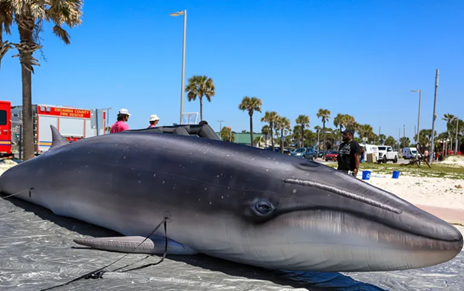
    • More than two dozen pilot whales have died after becoming stranded on a remote beach in New

    Pilot Whales

    Scientific name:

    1. Globicephala melas (Long-finned Pilot Whale).
    2. Globicephala macrorhynchus (Short-finned Pilot Whale).
    • Family: Delphinidae (Oceanic dolphins).
    • Despite their name, they are not true whales but large oceanic dolphins.
    • They were named pilot whales because it was thought that each pod followed a ‘pilot’ in the group.
    • Distinctive Appearance: Pilot whales have a distinctive appearance characterized by a bulbous forehead and a long, black body with a white or light-gray saddle patch behind the dorsal fin.

    Habitat & Distribution:

    1. Long-finned species – They prefer cooler waters (North Atlantic, Southern Ocean).
    2. Short-finned species – They prefer warmer tropical and subtropical waters (Indian Ocean and Arabian Sea).
    • Conservation Status: IUCN Red List
    1. Short finned whales – Least Concerned.
    2. long finned whales – Data deficiency.
  • Chrysanthemum Flowers or Gul-e-Dawood | International Convention Against Doping in Sport | Strengthening Governance through Blockchain Technology | Makhananomics | Cloud Seeding | Sree Narayana Guru | Gyan Bharatam Mission

    Chrysanthemum Flowers or Gul-e-Dawood

    Syllabus: GS3/Environment

    In News

    • Kashmir’s new Chrysanthemum Garden, Bagh-e-Gul-e-Dawood will open near the Zabarwan range, featuring over 30 lakh blooms across 50+ varieties.

    Chrysanthemum

    • It is a perennial flowering plant from the Asteraceae family.
    • It is widely cultivated in China, Japan, Europe, and the U.S. for its medicinal properties and use in aromatic beverages.
    • Uniqueness – It is  rich in phenolic compounds and exhibits potent antioxidant, antimicrobial, anti-inflammatory, anticancer, and other therapeutic activities.

    International Convention Against Doping in Sport

    Syllabus: Miscellaneous

    In News

    • India was re-elected as Vice-Chairperson of the Bureau representing the Asia-Pacific during the 10th Session of UNESCO’s International Convention against Doping in Sport, held in Paris.

    Doping and its Concerns

    • Doping refers to the practice of using banned chemical substances, known as performance enhancing drugs (PEDs), by athletes.

    Conventions and Declarations related to Anti-Doping

    Copenhagen Declaration

    • Held in – Copenhagen Declaration on Anti-Doping in Sport was agreed upon by governments at the Second World Conference on Doping in Sport held in Copenhagen, Denmark in 2003.
    • Purpose – The declaration was the political document through which governments signalled their intention to formally recognise and implement the World Anti-Doping Code.
    • Significance – This declaration was the first step toward the preparation of the UNESCO International Convention against doping in sports.
    • India agreed to this declaration in the year 2003.

    International Convention Against Doping in Sport

    • It is also known as the ‘UNESCO Anti-Doping Convention’.
    • It was adopted at the General Conference of UNESCO in Paris in 2005. It entered into force in 2007.
    • Objective – To promote the prevention of and the fight against doping in sports, with a view to its elimination.
    • India ratified this convention in 2007.
    • Note – National Anti-Doping Agency, an autonomous body under the Ministry of Youth Affairs, is responsible for adopting, implementing and enforcing anti-doping programmes in India.

    Strengthening Governance through Blockchain Technology

    Syllabus: GS2/ Governance. GS3/ Science and Technology

    Context

    • India is accelerating its adoption of blockchain technology to transform governance, enhance transparency, and strengthen digital trust through the National Blockchain Framework (NBF).

    Connect with the basics- Blockchain

    • Definition – Blockchain is a distributed, transparent, secure, and immutable database that functions like a ledger of records or transactions, resistant to tampering and accessible across a network of computers.

    Applications of Blockchain Technology

    Blockchain technology has numerous applications across various industries due to its secure, transparent, and decentralized nature.

    1. Cryptocurrencies: Enabling secure digital currencies like Bitcoin and Ethereum.
    2. Smart Contracts: Automating agreements without intermediaries.
    3. Supply Chain Management: Enhancing transparency and traceability.
    4. Healthcare: Securing patient records and improving data sharing.
    5. Banking and Finance: Streamlining cross-border payments and fraud detection.
    6. Voting Systems: Ensuring transparent and tamper-proof elections.
    7. Identity Management: Offering secure, verifiable digital identities.
    8. Real Estate: Simplifying property transfers with tokenized assets.
    9. Gaming: Enabling ownership of in-game assets and NFTs.
    10. Energy Sector: Supporting peer-to-peer energy trading.

    National Blockchain Framework (NBF)

    • Launched in- 2024
    • Developed by – Ministry of Electronics and Information Technology (MeitY)
    • Objective – to accelerate the development and deployment of permissioned blockchain-based applications.

    Makhananomics

    Syllabus: GS3/Economy

    In News

    • Prime Minister Narendra Modi described the newly launched National Makhana Board as a transformative “revolution” for the sector.

    Makhana (Euryale ferox)

    • It is a flowering plant classified in the water lily family (Nymphaeaceae).
    • Climatic condition: Requires a temperature range of 20-35°C, and annual rainfall between 100- 250 cm.
    • It is a fully organic non-cereal food found principally in India but also in Korea, Japan, as well as parts of eastern Russia.
    • Bihar accounts for ~90% of India’s makhana production.
    • GI Tag: In 2022, ‘Mithila Makhana’ was conferred a GI tag.

    Cloud Seeding

    Syllabus: GS3/Environment

    Context

    • Delhi Chief Minister has said cloud seeding is essential for the national capital as it could play a key role in controlling rising pollution levels during the winter season.

    Cloud Seeding or Artificial Rain

    • Definition – Artificial rain refers to inducing precipitation by injecting certain chemicals into clouds to accelerate the process of raindrop formation.
    • Cloud seeding involves dispersing substances like:
    1. Silver iodide (AgI)
    2. Potassium iodide
    3. Sodium chloride
    4. Dry ice (CO₂)
    • Conditions Required: Potential rain-bearing clouds, sufficient humidity and atmospheric instability & Favorable wind and temperature conditions.

    Advantages of Cloud Seeding

    • Air Pollution Mitigation: In cities like Delhi, artificial rain can wash down particulate matter and other pollutants, providing temporary relief from severe air pollution.
    • Drought Mitigation and Water Resource Augmentation: States like Maharashtra and Karnataka have used cloud seeding to combat water shortages (e.g., “Project Meghdoot” and “Varshadhari”).
    • Forest Fire Control: By increasing moisture levels, cloud seeding can potentially reduce the risk and intensity of wildfires.

    Sree Narayana Guru

    Syllabus: GS1/Modern History

    Context

    • The President of India inaugurated the observance of the Mahasamadhi centenary of Sree Narayana Guru at Sivagiri Mutt, Varkala, Kerala.

    Sree Narayana Guru(1856–1928)

    • He was born in 1856 in Kerala into the Ezhava community, which faced severe caste disabilities.
    • He was a saint, philosopher, and one of the foremost social reformers in modern India who challenged caste oppression and emphasized spiritual reform as the path to social reform.
    • Sree Narayana Guru known for blending Advaita Vedanta with a call for social justice.

    Key Contributions

    • Social Philosophy: Propagated the radical message: “One Caste, One Religion, One God for Man”.
    • Rejected birth-based caste hierarchy and promoted dignity of labour.
    • Institution Building: Founded Sree Narayana Dharma Paripalana Yogam (SNDP, 1903) to advance education, social empowerment, and reform.
    • Aruvipuram Movement (1888): Consecrated a Shiva idol himself, breaking the Brahmin monopoly over temple ritual Built temples, schools, and ashrams for the common people with egalitarian access.
    • Political & Social Movements: Extended moral and ideological support to the Vaikom Satyagraha (1924–25) for temple entry rights of lower castes.
    • Educational Upliftment: Stressed education as the foundation of empowerment and upliftment.

    Gyan Bharatam Mission

    Syllabus: GS1/Culture

    Context

    • The Gyan Bharatam Mission on manuscripts under the Union Culture Ministry, signed Memorandums of Understanding with around 20 institutes for conservation, upkeep and digitisation of manuscripts.

    Gyan Bharatam Mission

    • Purpose – The mission aims to preserve and protect manuscripts found across the country.
    • Objective: To undertake the “survey, documentation and conservation” of more than one crore manuscript heritage lying with academic institutions, museums, libraries, etc.
    • Significance of Mission: Preserving historical value, unveiling ancient Indian knowledge to the world, ensuring longevity and round-the-clock access to Manuscripts, etc.

    Basic terms – Manuscripts

    • A manuscript is a handwritten composition on paper, bark, palm leaf etc. dating back at least 75 years that has significant scientific, historical or aesthetic value.
    • g. Bakhshali manuscript (Third or fourth century A.D.), an ancient Indian mathematical text written on birch bark, is considered to be the earliest recorded example of use of zero.
    • India possesses an estimated 10 million manuscripts in 80 ancient scripts like Brahmi, Kushan, Gaudi, Lepcha, and Maithili.

    Other initiatives for manuscript conservation in India

    • National Manuscripts Mission (NMM): Launched In 2003, by the Ministry of Tourism and Culture to locate and preserve manuscripts.
    • National Library of India, Kolkata: It has about 3600 rare and historically important manuscripts.
    • Asiatic Society of Bengal: Founded on Jan. 15, 1784, by Sir William Jones, undertakes digitization of ancient manuscripts.
  • Online National Drugs Licensing System | Cassava/Tapioca crops | 5th Edition of “An Eye on Methane: From Measurement to Momentum” | International Day of the Snow Leopard 2025

    Online National Drugs Licensing System

    Syllabus: GS2/ Health, GS3/ Governance

    Context

    • The Drugs Controller General of India (DCGI) has directed digital monitoring on the Online National Drugs Licensing System (ONDLS) for tracking the supply chain of high-risk solvents.

    Online National Drugs Licensing System

    • It is a Drugs Controller General of India (DCGI) in India for processing drug- and cosmetic-related applications for manufacturing and sales licences, and various certificates.
    • It is developed by the Centre for Development of Advanced Computing (CDAC) in coordination with the Central Drugs Standard Control Organisation (CDSCO).

    Additional Information – Central Drugs Standard Control Organization (CDSCO)

    • Established under – It is the Central Drug Authority and is responsible for carrying out duties entrusted by the Drugs and Cosmetics Act,1940.
    • Responsibilities:
      • Adoption of drugs.
      • clinical trials, please.
      • establishing the criteria for drugs.
      • control over the country’s imported drugs’ quality.
      • Coordination of state drug control organizations’ effort

    Other Drug Regulatory Bodies in India

    • Drugs Controller General of India (DCGI): It is in charge of approving licenses for specific kinds of medications. He or she also serves as the head of the CDSCO department of the Indian government.
    • Drug Price Control Order (DPCO): To keep certain necessary medications in India accessible for the general people, the DPCO controls their prices.
    • Drugs and Cosmetics Act, 1940: This act regulates domestic drug use.

    Cassava/Tapioca crops

    Syllabus: GS3/Agriculture

    Context

    • A tiny parasitic wasp, Anagyrus lopezi, has been successfully used for biological control of the invasive cassava mealybug in tapioca plantations.

    Cassava (Also called ‘Bread of the Tropics’)

    • Known as – ‘Yuca’ or ‘Manioc’.
    • It is a root vegetable grown through stem cuttings.
    • It is a tall semi-woody perennial shrub or tree native to South America and was introduced in Africa & Asia by Portuguese sailors.
    • Nigeria is the world’s largest producer of Cassava.
    • It has numerous health benefits as it is rich in energy & vitamins.
    • Significance – Under India’s National Policy on Biofuels (2018), cassava is recognized as a raw material for ethanol production, enhancing its significance beyond food security.

    5th Edition of “An Eye on Methane: From Measurement to Momentum”

    Syllabus: GS3/ Environment

    In News

    • The UN Environment Programme (UNEP) has released the fifth edition of its flagship publication — “An Eye on Methane: From Measurement to Momentum” report.

    Key Highlights of the 2025 Report

    • Methane emissions from energy, agriculture, and waste sectors remain high, despite available cost-effective mitigation technologies.
    • Methane has 80 times more warming potential than CO₂ over 20 years.
    • Approximately 60% of current methane emissions originate from human activities, with the largest contributors being agriculture, fossil fuel extraction and use, and landfill waste.
    • The report highlights India’s effective role in the Global Methane Pledge (GMP) and its efforts through SATAT, National Biogas Mission, and waste-to-energy projects.

    International Day of the Snow Leopard 2025

    Syllabus: GS3/ Environment

    Context

    • India celebrated International Snow Leopard Day on October 23, with a nationwide campaign “#23for23”.

    International Day of the Snow Leopard 2025

    • In 2024, the United Nations General Assembly proclaimed October 23 as the International Day of the Snow Leopard.
    • Objective – to enhance international and regional cooperation for Snow Leopard
    • The ‘#23for23’ campaign is an initiative of the Global Snow Leopard and Ecosystem Protection Programme (GSLEP) and the Snow Leopard Trust Worldwide.

    Snow Leopard

    • Scientific name – Panthera uncia
    • Habitats – The Snow Leopard lives at high altitudes in the steep mountains of Central and Southern Asia, and in an extremely cold climate.
    • Range states – Jammu and Kashmir, Himachal Pradesh, Uttarakhand, Sikkim .
    • Ghost of the mountains – The Snow Leopard is also known as Ghost of the mountains
    • Bio indicator – It acts as an indicator of the health of the mountain ecosystem
    • Snow Leopard capital of the world – Hemis, Ladakh.
    • International Snow Leopard Day – It is observed on 23rd October.

    Conservation status 

    • IUCN Red List- Vulnerable
    • CITES convention – Appendix I
    • Indian Wildlife (Protection) Act 1972– Schedule I

    Conservation Efforts Launched by India

    1. Project Snow Leopard (PSL)
    • Launched in – 2009
    • Objective – To promote an inclusive and participatory approach to conserve snow leopards and their habitat.
    1. Species recovery programme – Snow Leopard is in the list of 21 critically endangered species for the recovery programme of the Ministry of Environment Forest & Climate Change.
    2. Snow Leopard conservation breeding programme – It is undertaken at Padmaja Naidu Himalayan Zoological Park, Darjeeling, West Bengal.
    3. HimalSanrakshak – It is a community volunteer programme, to protect snow leopards, launched on 23rd October 2020.
    4. First National Protocol –  was also launched In 2019.
    5. SECURE Himalaya – Global Environment Facility (GEF) , United Nations Development Programme (UNDP) funded the project on conservation of high altitude biodiversity and reducing the dependency of local communities on the natural ecosystem.

    International Conservation Efforts

    • SNOW LEOPARD ECOSYSTEM PROTECTION PROGRAM – It seeks to address high-mountain development issues using the conservation of the endangered snow leopard as a flagship program.
    • Bishkek Declaration – In 2013, the 12 snow leopard range countries signed and agreed to secure at least 20 snow leopard landscapes across by 2020
    • International Year of the Snow Leopard – Year ‘2015’ was designated as International Year of the Snow Leopard

    Recent Census

    • The exercise reported 718 snow leopards in India
    • It was conducted from 2019 to 2023.
    • Conducted by – The program was conducted by the Wildlife Institute of India (WII) with the help of all snow leopard range states and two conservation partners – the Nature Conservation Foundation, Mysuru (Karnataka), and WWF (World Wildlife Fund)-India.
    • Based on data analysis, the estimated population of 718 snow leopards in different states/UTs are as follows – Ladakh (477), Uttarakhand (124), Himachal Pradesh (51), Arunachal Pradesh (36), Sikkim (21), and J & K (9).
  • 2025 Sakharov Prize | Government Defends Forest Rights Act in Supreme Court | Deendayal Antyodaya Yojana – National Rural Livelihood Mission (DAY-NRLM) | The UN’s Early Warnings for All (EW4All) Initiative

    2025 Sakharov Prize

    Syllabus: Miscellaneous

    Context

    • Two imprisoned journalists Andrzej Poczobut in Belarus and Mzia Amaghlobeli in Georgia—have won the 2025 Sakharov Prize.

    Sakharov Prize

    • Established in – 1988
    • Named after – Soviet dissident and Nobel Peace laureate Andrei Sakharov.
    • It is the European Union’s highest human rights award,
    • Mandate – It honours individuals or groups defending human rights and fundamental freedoms.

    Do you know?

    ●    Several Sakharov laureates, including Nelson Mandela, Malala Yousafzai, Denis Mukwege, and Nadia Murad, later went on to win the Nobel Peace Prize.

    ●    Interestingly, Venezuelan opposition leader María Corina Machado, who won the 2025 Nobel Peace Prize earlier this month, received the Sakharov Prize last year.

    Government Defends Forest Rights Act in Supreme Court

    Syllabus: GS2/ Governance, GS3/ Environment

    Context

    • The Central Government has defended the Forest Rights Act (FRA), 2006, before the Supreme Court.
    • It emphasizes that the legislation is restoring the dignity, livelihoods, and cultural identity of India’s forest-dependent communities.

    Forest Rights Act, 2006

    • The Scheduled Tribes and Other Traditional Forest Dwellers (Recognition of Forest Rights) Act, 2006, popularly known as the Forest Rights Act (FRA).
    • It legally recognizes the rights of forest-dwelling Scheduled Tribes and other traditional forest dwellers over forest land and resources they have traditionally used for generations.

    Deendayal Antyodaya Yojana – National Rural Livelihood Mission (DAY-NRLM)

    Syllabus: GS2/Governance/GS3/Poverty

    Context

    • The Deendayal Antyodaya Yojana – National Rural Livelihood Mission (DAY-NRLM), implemented by the Ministry of Rural Development, is one of the world’s largest poverty alleviation programmes.

    Deendayal Antyodaya Yojana

    • Launch: It was launched in 2010 by restructuring the earlier Swarnajayanti Gram Swarozgar Yojana (SGSY), the initiative was renamed in 2016 as Deendayal Antyodaya Yojana – National Rural Livelihood Mission (DAY-NRLM).
    • Financing – It is a centrally sponsored scheme.
    • Aimto reduce rural poverty through self-employment and skilled wage employment.
    • Women Centric Model: The mission promotes economic independence by linking women to credit, markets, and technology through SHGs and federations.

    The UN’s Early Warnings for All (EW4All) Initiative

    Syllabus: GS 3/Environment

    In News

    • The World Meteorological Organization (WMO) rallied its 193 Member States to commit to universal early warning coverage by 2027 under the UN’s Early Warnings for All (EW4All) initiative.

    Basics – Early Warning System (EWS)

    • It is an integrated approach that combines hazard monitoring, forecasting, disaster risk assessment, communication, and preparedness to enable timely action for saving lives, livelihoods, and assets at risk.​

    UN’s Early Warnings for All (EW4All) Initiative

    • Launched in 2022
    • Co-led by WMO, the UN Office for Disaster Risk Reduction (UNDRR), the International Telecommunication Union (ITU), and the International Federation of Red Cross and Red Crescent Societies (IFRC).
    • Aim – Its goal is to ensure that every person — regardless of where they live — is protected by life-saving alerts for hazards such as cyclones, floods, heat waves or droughts.
  • Gallantry Awards | Central Bureau of Investigation (CBI) | Police Commemoration Day | Global Forest Resources Assessment (GFRA) 2025 | Iran Ratifies UN Convention Against Terror Financing

    Gallantry Awards

    Syllabus: GS3/Defence

    Context

    • President Droupadi Murmu approved 127 Gallantry awards and 40 Distinguished Service awards to the Armed Forces.

    Gallantry Awards

    • Honoured by – Government of India
    • It is given to honour acts of bravery, sacrifice, and exceptional courage by members of the armed forces, paramilitary forces, and civilians.
    • They are classified as wartime (gallantry in the face of enemy) and peacetime awards.
    • Administered by: Ministry of Defence (for armed forces) and Ministry of Home Affairs (for police and civilians).
    • Awarded by: President of India.
    • These gallantry awards are announced twice in a year – first on the occasion of the Republic Day and then on the occasion of the Independence Day.
    • Wartime Gallantry Awards: Param Vir Chakra (PVC), Mahavir Chakra (MVC) and Vir Chakra.
    • Peacetime Gallantry Awards: Ashok Chakra, Kirti Chakra, Shaurya Chakra.

    Gallantry Awards

    • Order of Precedence: Param Vir Chakra (PVC), Ashoka Chakra (AC), Maha Vir Chakra (MVC), Kirti Chakra (KC), Vir Chakra (VrC), Shaurya Chakra (SC).
    • All six awards can be conferred posthumously.

    Central Bureau of Investigation (CBI)

    Syllabus: GS3/Security Forces

    In News

    • The Supreme Court transferred the investigation into the Karur stampede from the Tamil Nadu Police Special Investigation Team (SIT) and the Justice Aruna Jagadeesan Commission to the Central Bureau of Investigation (CBI).

    Central Bureau of Investigation

    • Set up in – It was set up in 1963 by a resolution of the Ministry of Home Affairs.
    • Established under – It comes under the administrative control of the Department of Personnel and Training (DoPT) of the Ministry of Personnel, Public Grievances and Pensions.
    • Recommended by – It was established on the recommendation of the Santhanam Committee.
    • Legal status – The CBI is not a statutory body. It derives its powers from the Delhi Special Police Establishment (DSPE) Act, 1946.

    Functions 

    1. The CBI is the main investigating agency of the Central Government.
    2. It also provides assistance to the Central Vigilance Commission and Lokpal.
    3. It is also the nodal police agency in India which coordinates investigations on behalf of Interpol Member countries.

    Police Commemoration Day

    Syllabus: GS3/Internal Security

    Context

    • Police Commemoration Day was observed on 21st October at the National Police Memorial to honour the valour and sacrifice of police personnel.

    About

    • On October 21, 1959, Indian policemen were martyred in an ambush by Chinese troops at Hot Springs, Ladakh.
    • The day commemorates their supreme sacrifice and all police personnel who have laid down their lives in the line of duty.
    • A memorial was erected at Hot Springs and members of Police Forces from different parts of the country trek to Hot Springs to pay homage to the martyrs.
    • Since the year 2012, the Police Commemoration Day Parade has been held at the National level at the Police Memorial.

    National Police Memorial (NPM)

    • Dedicated by: Prime Minister on Police Commemoration Day, 2018.
    • Location: Chanakyapuri, New Delhi.
    • The Memorial gives police Forces a sense of national identity, pride, unity of purpose, common history and destiny.
    • It comprises a Central Sculpture, a Wall of Valour and a museum.
    • The Wall of Valour: 30 feet tall granite sculpture stands at the police memorial with the names of over 35,000 martyrs who sacrificed their lives in the line of duty.

    Additional Information

    • ‘Police’ and ‘Public Order’ are state subjects under the Seventh Schedule of the Constitution of India
    • SMART Policing: The SMART Policing Initiative was introduced by the Prime Minister of India in 2014 to modernize and transform Indian policing.
    • Assistance to State & UTs for Modernization of Police (ASUMP) Scheme – to strengthen police infrastructure with the latest technology, weaponry, communication equipment, etc
    • ‘CyTrain’ portal: It is a Massive Open Online Courses (MOOC) platform, developed for capacity building of police officers/judicial officers. It provides online courses on critical aspects of cybercrime investigation, forensics, prosecution, etc.

    Global Forest Resources Assessment (GFRA) 2025

    Syllabus: GS3/ Environment

    Context

    • India has moved up to the 9th position in terms of total forest area globally, as per the Global Forest Resources Assessment (GFRA) 2025, released by the Food and Agriculture Organization (FAO) in Bali.

    Global Forest Resources Assessment (GFRA) 2025

    • It is published once in 5 years
    • Total Global forests cover – 4.14 billion hectares (32% of total land area).
    • Countries with largest forest cover – Russia has the largest forest cover followed by Brazil, Canada, the USA, China, Congo, Australia, Indonesia, India and Peru.
    • Note- the world continues to lose 10.9 million hectares of forest every year (2015–2025), a rate still considered alarmingly high.

    India’s Forest Cover Status:

    • India’s forest cover – 7 million hectares (2% of global forest area.
    • India has maintained its third position worldwide after China and Russia In terms of annual forest gain.
    • India Moves up to 9th Position Globally in Forest Area

    Government Initiatives toward forest conservation

    • ‘Ek Ped Maa Ke Naam’ campaign – It encourages citizens to plant trees and enhance environmental consciousness.
    • National Mission for a Green India (GIM): A mission under the National Action Plan on Climate Change (NAPCC) that aims to increase forest cover and improve existing forest quality to combat climate change.
    • Compensatory Afforestation Fund Act (2016): An act that ensures funds for afforestation and related activities by requiring users of forest land for non-forest purposes to pay compensatory levies.
    • Eco-Sensitive Zones (ESZs): Areas designated around Protected Areas (National Parks and Wildlife Sanctuaries) to act as a buffer and minimize the negative impact of certain human activities on fragile ecosystems.
    • Joint Forest Management (JFM): A program that fosters partnerships between state forest departments and local communities to protect, and regenerate forest resources.

    Iran Ratifies UN Convention Against Terror Financing

    Syllabus: GS2/ International Relations, GS3/ Security

    Context

    • Iran has ratified a law to join the United Nations International Convention for the Suppression of the Financing of Terrorism (CFT) in a bid to align with global financial norms.
    • FATF status: As of October 2025, Iran remains on the FATF blacklist for its failure to adopt sufficient anti-money laundering (AML) and counter-terrorist financing (CFT) standards.
    • The ratification is seen as a first step toward potential re-evaluation by the FATF.

    Convention Against Terror Financing

    • Adoption – It was adopted by the United Nations General Assembly on 9 December 1999 (Resolution 54/109).
    • Objective: To criminalize the financing of terrorism and establish international cooperation mechanisms to prevent, investigate, and prosecute such offences.
    • International Legal Framework: Complements other UN instruments such as the UN Security Council Resolution 1373 (2001) and the UN Convention against Transnational Organized Crime (2000).

    India has ratified the CFT and has incorporated its provisions through:

    • Unlawful Activities (Prevention) Act (UAPA), 1967
    • Prevention of Money Laundering Act (PMLA), 2002.

    Additional Information – Financial Action Task Force

    • Established – The Financial Action Task Force (FATF) is an inter-governmental body established in 1989 during the G7 Summit in Paris.
    • Objective – To set standards and promote effective implementation of legal, regulatory and operational measures for combating money laundering, terrorist financing and other related threats to the integrity of the international financial system.
    • Secretariat – It is located at the Organisation for Economic Cooperation and Development (OECD) headquarters in Paris.
    • Member Countries – 37 member countries where India is also a member.

    FATF has two lists

    • Grey List – Countries that are considered safe haven for supporting terror funding and money laundering are put in the FATF grey list. This inclusion serves as a warning to the country that it may enter the blacklist.
    • Black List – Countries known as Non-Cooperative Countries or Territories (NCCTs) are put in the blacklist. These countries support terror funding and money laundering activities. The FATF revises the blacklist regularly, adding or deleting entries.
  • Japan Elects First Female Prime Minister | Chandrayaan-2 mission | CAQM Invokes Stage-II of Graded Response Action Plan (GRAP) in Entire NCR | New Monoclonal Antibody Shows Early Promise Against Malaria | UDAN Scheme

    Japan Elects First Female Prime Minister

    Syllabus: GS2/IR

    Context

    • The Prime Minister extended congratulations to Sanae Takaichi, Japan’s newly-elected and first woman Prime Minister.
    • He emphasized that partnership between India and Japan plays a vital role in ensuring peace, stability, and prosperity across the Indo-Pacific region

    Chandrayaan-2 mission

    Syllabus: GS3 / Science and Technology

    Context

    • The Chandrayaan-2 mission has made the first-ever observation of the Sun’s Coronal Mass Ejection (CME) on the Moon using its onboard scientific instruments.

    Chandrayaan-1

    • It was launched in 2008.
    • It was India’s first lunar mission.
    • It made India the fifth country to reach the Moon.
    • The mission’s most significant discovery was the presence of water molecules on the lunar surface, a finding confirmed by NASA.

    Chandrayaan-2

    • It was launched in 2019 with an orbiter, a lander (Vikram), and a rover (Pragyan).
    • The mission aimed to achieve a soft landing on the lunar surface, but ISRO lost contact with the lander just before touchdown, resulting in a crash landing.
    • Despite this setback, the orbiter continued functioning and provided crucial data on the Moon’s surface and atmosphere.

    Chandrayaan-3,

    • It is a follow-on mission to Chandrayaan-2, successfully achieved a soft landing on the Moon’s south pole in 2023.

    Lander payloads:

    • Chandra’s Surface Thermophysical Experiment (ChaSTE) – to measure the thermal conductivity and temperature
    • Instrument for Lunar Seismic Activity (ILSA) – for measuring the seismicity around the landing site etc.

    Rover payloads:

    • Alpha Particle X-ray Spectrometer (APXS) & Laser Induced Breakdown Spectroscope (LIBS) for deriving the elemental composition in the vicinity of landing site.

    CAQM Invokes Stage-II of Graded Response Action Plan (GRAP) in Entire NCR

    Syllabus: GS3/ Environment

    In News

    • The Commission for Air Quality Management (CAQM) has invoked Stage-II of the Graded Response Action Plan (GRAP) in the entire National Capital Region.

    Graded Response Action Plan (GRAP)

    • Objective – It is a set of emergency measures implemented in Delhi-NCR to control air pollution based on the Air Quality Index (AQI) levels.
    • Implementation – It was formulated by the Environment Pollution (Prevention & Control) Authority (EPCA) and enforced by CAQM from 2021.

    GRAP is divided into four stages corresponding to AQI levels:

    • Stage I – Poor (AQI 201–300)
    • Stage II – Very Poor (AQI 301–400)
    • Stage III – Severe (AQI 401–450)
    • Stage IV – Severe+ (AQI >450)

    Why Do Air Quality Deteriorate in NCR during Winters?

    • Stubble burning in Punjab and Haryana.
    • Low wind speed and temperature inversion trapping pollutants.
    • Vehicular emissions, construction dust, and Diwali fireworks add to the load.
    • Urban heat island effect and regional topography aggravate stagnation of pollutants.

    Commission for Air Quality Management

    • Constituted under: The Commission for Air Quality Management in NCR and Adjoining Areas Act, 2021.
    • Jurisdiction: Delhi, Haryana, Punjab, Rajasthan, and Uttar Pradesh.
    • Purpose: To coordinate and implement region-wide measures for air quality improvement, replacing the earlier EPCA.

    New Monoclonal Antibody Shows Early Promise Against Malaria

    Syllabus: GS2/ Health, GS3/ Science and Technology

    Context

    • A novel monoclonal antibody (mAb) named MAM01, has demonstrated strong, dose-dependent protection against malaria in an early clinical trial.

    Monoclonal Antibodies (mAbs)

    • Monoclonal antibodies (mAbs) are lab-created proteins that mimic your body’s natural antibodies to fight specific foreign invaders, such as viruses, bacteria, and cancer cells.
    • They are a powerful form of targeted therapy because they are designed to bind only to a single, specific target

    Malaria

    • Responsible pathogen – Malaria is an acute febrile illness caused by Plasmodium parasites.
    • Vector – It spreads from people to people through the bites of infected female Anopheles mosquitoes. It is preventable and curable.
    • Transmission – Malaria is not contagious and cannot spread from one person to another; the disease is transmitted through the bites of female Anopheles mosquitoes.
    • Five species of parasites can cause malaria in humans and 2 of these species Plasmodium falciparum and Plasmodium vivax – pose the greatest threat.

    Symptoms

    • Infants, children under 5 years, pregnant women, travelers and people with HIV or AIDS are at higher risk. Severe symptoms include:
      • extreme tiredness and fatigue
      • impaired consciousness
      • multiple convulsions
      • difficulty breathing
      • dark or bloody urine
      • jaundice (yellowing of the eyes and skin)
      • abnormal bleeding.

    Initiatives to Control Malaria by WHO

    • WHO’s Global technical strategy for malaria 2016–2030 – It aims to reduce malaria case incidence and mortality rates by at least 40% by 2020, at least 75% by 2025 and at least 90% by 2030 against a 2015 baseline.
    • ‘E-2025 Initiative’: The WHO has identified 25 countries with the potential to eradicate malaria by 2025 under the initiative.
    • High Burden to High Impact (HBHI) initiative: WHO has initiated the initiative in 11 high malaria burden countries, including India.

    Indian Government Initiatives to Control Malaria

    • National target – The Government of India set a target to eliminate malaria in India by 2027.
    • National Framework for Malaria Elimination (NFME) – It has been developed and launched in 2016 aligned with the Global Technical Strategy (GTS) for malaria elimination 2016-2030.
    • Malaria Elimination Research Alliance-India (MERA-India): It was established by the Indian Council of Medical Research (ICMR) as a conglomeration of partners working on malaria control.

    UDAN Scheme

    Syllabus: GS3/Infrastructure

    Context

    • Ude Desh Ka Aam Nagrik (UDAN) scheme has completed 9 Years.

    UDAN Scheme

    • It is a regional connectivity scheme launched in 2016.
    • The first UDAN flight operated between Shimla and Delhi in 2017.
    • Ministry: Ministry of Civil Aviation.
    • Aim: To make air travel affordable and accessible to the common citizen by connecting Tier-2 and Tier-3 cities to major hubs.

    Implementation:

    • Viability Gap Funding (VGF): Financial support to airlines to ensure affordable fares.
    • Airfare Cap to ensure affordability.
  • Seventh National Security Guard (NSG) Hub to Come up in Ayodhya | Exercise Samudra Shakti 2025 | Dr. APJ Abdul Kalam | The ‘Critical Factor’ in India’s Clean Energy Ambitions | SAIME model (Aquaculture model) of Sundarbans wins FAO recognition | Indian wolf

    Seventh National Security Guard (NSG) Hub to Come up in Ayodhya

    Syllabus :GS3/Security Forces

    In News

    • Union Home Minister Amit Shah announced that a new NSG hub will be set up in Ayodhya, Uttar Pradesh.
    • This will be the seventh NSG hub, joining existing ones in Mumbai, Chennai, Kolkata, Hyderabad, Ahmedabad, and Jammu.

    National Security Guard (NSG)

    • Elite Counter-Terrorism Force: The NSG is a specialized force trained to combat terrorism and handle critical security situations.
    • Establishment: In 1984, following Operation Blue Star. Created under the National Security Guard Act, 1986.
    • Administrative and operational control: Union Ministry of Home Affairs
    • Motto: “Sarvatra Sarvottam Suraksha” (Everywhere, Supreme Security)
    • Key Roles: Counter-terrorism operations, Hijacking situations, Bomb disposal and post-blast investigations, VIP security.

    Exercise Samudra Shakti 2025

    Syllabus: GS3/ Defence

    Context

    • The Indian Navy is hosting the fifth edition of the Indo-Indonesian Joint Bilateral Maritime Exercise, ‘Samudra Shakti – 2025’ at Visakhapatnam.

    Exercise Samudra Shakti 2025

    • Place – Visakhapatnam
    • Participating countries – India and Indonesia
    • Type – Bilateral Maritime Exercise

    Dr. APJ Abdul Kalam

    Syllabus: Miscellaneous

    Context

    • Birth anniversary of former President Dr. A.P.J. Abdul Kalam (1931–2015) was observed recently.

    Dr. APJ Abdul Kalam

    • Born on 15 October in Rameswaram, Tamil Nadu,
    • He was a renowned aeronautical engineer and scientist, widely known as the “Missile Man of India.”
    • As Project Director at ISRO, he led the development of India’s first Satellite Launch Vehicle (SLV-III), successfully launching the Rohini satellite in 1980.
    • Later, at DRDO, he spearheaded the Integrated Guided Missile Development Programme (IGMDP), overseeing the development of the AGNI and PRITHVI missiles and India’s nuclear capabilities, including the Pokhran-II nuclear tests.
    • He served as the 11th President of India (2002–2007) and is fondly remembered as the ‘People’s President.’
    • His literary works include Wings of Fire, India 2020, My Journey, and Ignited Minds.
    • He was awarded the Padma Bhushan (1981), Padma Vibhushan (1990), and the highest civilian honour, Bharat Ratna (1997).

    The ‘Critical Factor’ in India’s Clean Energy Ambitions

    Syllabus: GS3/ Economy

    Context

    • As India targets 500 GW of renewable energy capacity by 2030 and net-zero emissions by 2070, securing access to critical minerals has become a national priority.

    Critical Minerals

    • These are minerals that are essential for economic development and national security.
    • The lack of availability of these minerals could potentially lead to “supply chain vulnerabilities and even disruption of supplies”.

    List of Critical Minerals

    • A total of 30 minerals were found to be most critical for India : Antimony, Beryllium, Bismuth, Cobalt, Copper, Gallium, Germanium, Graphite, Hafnium, Indium, Lithium, Molybdenum, Niobium, Nickel, PGE, Phosphorous, Potash, Rare Earth Elements (REEs), Rhenium, Silicon, Strontium, Tantalum, Tellurium, Tin, Titanium, Tungsten, Vanadium, Zirconium, Selenium and Cadmium.

    India’s Policy Push for Mineral Exploration

    • Domestic Reserves: India has vast untapped mineral potential, with lithium in Jammu and Kashmir (J&K) and Rajasthan, and REEs in Odisha and Andhra Pradesh.
    • Policy Initiatives: National Mineral Exploration Policy (NMEP), 2016 and Mines and Minerals (Development and Regulation) Act, 2021 have accelerated exploration through private participation and advanced surveys.
    • KABIL (Khanij Bidesh India Ltd) is acquiring overseas mineral assets to ensure supply security.
    • National Critical Mineral Mission (NCMM) – It aims to strengthen the value chain from exploration to recovery.

    SAIME model (Aquaculture model) of Sundarbans wins FAO recognition

    Syllabus: GS3/Environment/Economy

    In News

    • The Sustainable Aquaculture in Mangrove Ecosystems (SAIME) model received Global Technical Recognition from the UN’s Food and Agriculture Organization (FAO).

    Sustainable Aquaculture in Mangrove Ecosystems (SAIME) model

    • Developed by – Nature Environment and Wildlife Society (NEWS) in West Bengal’s Sundarbans.
    • Objective – It is a community-based initiative that integrates sustainable aquaculture practices with mangrove conservation and restoration
    • Significance – It enhances coastal resilience, supports sustainable livelihoods, promotes chemical-free shrimp farming, and aids carbon sequestration and climate action.

    Sundarbans in West Bengal

    Geographical location  

    • It is a vast contiguous mangrove forest ecosystem present in the coastal region of Bay of Bengal
    • It spread over India and Bangladesh on the Ganges, Brahmaputra and Meghna delta.

    Conservation efforts  

    • UNESCO World Heritage site – Sundarbans National Park was designated a UNESCO World Heritage site in 1987.
    • Biosphere Reserve – Sunderbans was designated as a Biosphere Reserve by UNESCO in 2001.
    • Wetland of International Importance – Sundarban Wetland, India was recognised as the ‘Wetland of International Importance’ under the Ramsar Convention in January 2019.
    • Flora and Fauna – Sunderban National Park is known for its wide range of fauna, including 260 bird species and is home to the Royal Bengal tiger, Gangetic dolphins and Estuarine crocodile

    Indian wolf

    Syllabus: GS3/Species  in News

    News

    • The International Union for Conservation of Nature (IUCN) has for the first time evaluated the Indian wolf (Canis lupus pallipes)

    Indian wolf (Canis lupus pallipes)

    • Distribution – The Indian Wolf is primarily found in India and Pakistan, with its historic range confined south of the Himalayas .
    • It is mainly found in sixteen states with major populations in Maharashtra, Madhya Pradesh, Gujarat, Rajasthan, and Karnataka.
    • Threats : Habitat loss, persecution, and human-wildlife conflict.
    • It is one of the most ancient wolf lineages
    • It is now listed as Vulnerable on the IUCN Red List.