
Moon Base Programme
Science & Technology
In News
- US space agency NASA has invited ISRO to join its Moon Base programme building on partnership under the Artemis Accords.
Moon Base
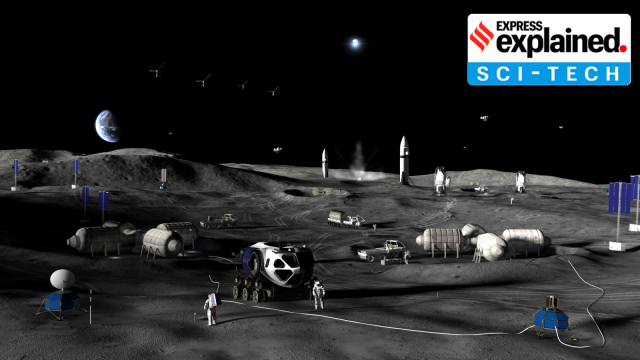
- It is humanity’s first lunar outpost, a place where astronauts will live, work, and explore near the Moon’s South Pole.
- NASA and its partners will build the infrastructure needed to support an enduring human presence on the lunar surface while advancing science, technology, and exploration for the benefit of all.
Additional Information – Artemis Accord
- Objective – These are a set of principles and guidelines for international cooperation in space exploration.
- Status – They are not a legally binding instrument.
- Launched by – They were announced by NASA in 2020 and named after NASA’s Artemis program which is aimed at returning humans to the Moon by the mid-2020s.
- Members: Artemis Accords has 39 members including Australia, France, Germany, India, Japan, United Kingdom, United States of America etc.
- India’s membership – India joined the Artemis Accords in 2023.
- Note – Russia and China are not part of the Artemis Accords.
Total Solar Eclipse
Science & Technology
Context
- Recently, a total solar eclipse occurred, providing an important opportunity to understand celestial mechanics, the Earth–Moon system and solar phenomena.
Solar Eclipse
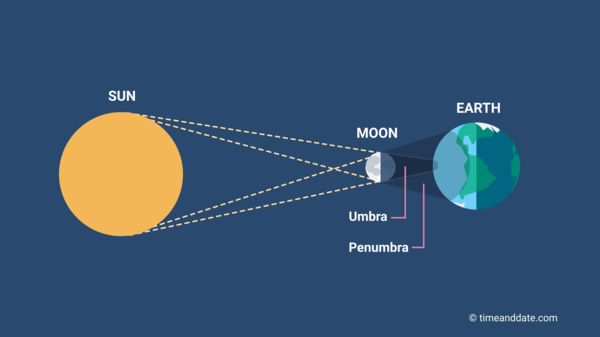
- It occurs when the Moon is between the Sun and Earth and the shadow of the Moon is cast on Earth, blocking the Sun’s light from reaching certain parts of the world.
Solar eclipse
- Solar eclipses are classified mainly into three types:
- Total Solar Eclipse (Umbra): The Moon fully blocks the visible disc of the Sun. Those in the line of totality will get to experience a brief darkness in the daylight.
- Partial Solar Eclipse (Penumbra): The Moon obscures part of the Sun, causing a ‘bite’ to be taken out of the solar disc.
- Annular Solar Eclipse (Antumbra): When the Moon is approaching the point of its orbit farthest from Earth, its apparent size is smaller than the Sun. It therefore leaves a dazzling outer ring, commonly known as the ‘Ring of Fire’.
Black-necked Cranes (BNC)
Environment
Context
- The Bombay Natural History Society (BNHS) has sterilised over 2,950 Free Ranging Dogs (FRD) to save Black-necked Cranes (BNC) and wildlife in Ladakh.
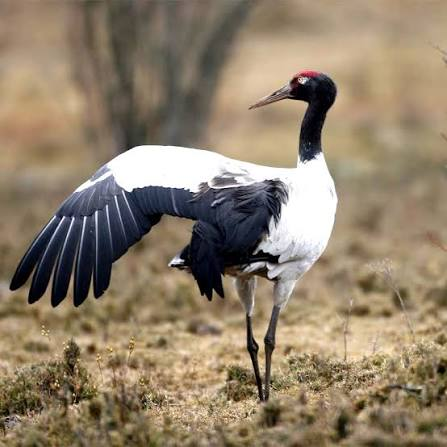
Black-necked Crane (Grus nigricollis)
- It is one of the 15 crane species found worldwide
- It is considered the only high-altitude/alpine crane species.
- Habitat & Distribution: In India, it is found in Ladakh and Arunachal Pradesh, particularly in high-altitude wetlands and marshes.
- Its global range extends across the Tibetan Plateau and adjoining Himalayan regions, including China, India, Bhutan and Nepal.
- Population: Fewer than 100 Black-necked Cranes are estimated to remain in India, out of a global population of around 15,000.
- Major Threats: Predation by free-ranging dogs, changing agricultural practices, rapid and unregulated development around high-altitude wetlands.
Conservation Status:
-
- The species receives the highest legal protection under Wildlife (Protection) Act, 1972 – Schedule I
- IUCN Red List – Near Threatened
- It is also protected under CITES and the Convention on the Conservation of Migratory Species
- Near Threatened under IUCN Red List.
- State Bird: It is the State bird of Ladakh and holds special significance in Ladakh’s Buddhist culture.
Additional Information – Bombay Natural History Society (BNHS)
- BNHS is one of the largest and oldest non-governmental organizations in India dedicated to nature conservation and biodiversity research.
- Founded on September 15, 1883, in Mumbai, its mission is to conserve nature through action based on research, education, and public awareness.




















Leave a Reply