
Rajghat Excavations
GS1/History and Culture
Context
- Banaras Hindu University (BHU) recently opened 22 boxes containing over 10,000 artefacts excavated from Rajghat, Varanasi, in 1957 under the supervision of archaeologist T.N. Roy.
Findings:
- Painted Black Ware, sculptures, coins, tools, seals and objects of copper, ivory and bone; some seals bear Brahmi script.
- Location: Rajghat lies near the Ganga–Varuna confluence in Varanasi.
- Significance: Important archaeological site of the Middle Ganga Valley, linked to ancient Varanasi/Kashi Mahajanapada.
- Evidence: Seals bearing the name ‘Varanasi’ establish its association with ancient Varanasi.
- First identified: 1939, during expansion of Kashi railway station.
Additional Information – Rajghat, Varanasi
- Location: On the north-eastern edge of Varanasi, near the Ganga–Varuna confluence.
- Archaeological site: Important site of the Middle Ganga Valley, associated with ancient Varanasi/Kashi Mahajanapada.
- Excavation: Major excavation in 1957 under archaeologist T.N. Roy.
- Findings: Painted Black Ware, coins, sculptures, tools, copper/ivory/bone objects and Brahmi-inscribed seals.
- Key evidence: Seals bearing the name ‘Varanasi’ establish its link with ancient Varanasi.
- First identified: 1939, during expansion of Kashi railway station.
Liberia
Places in News
Context
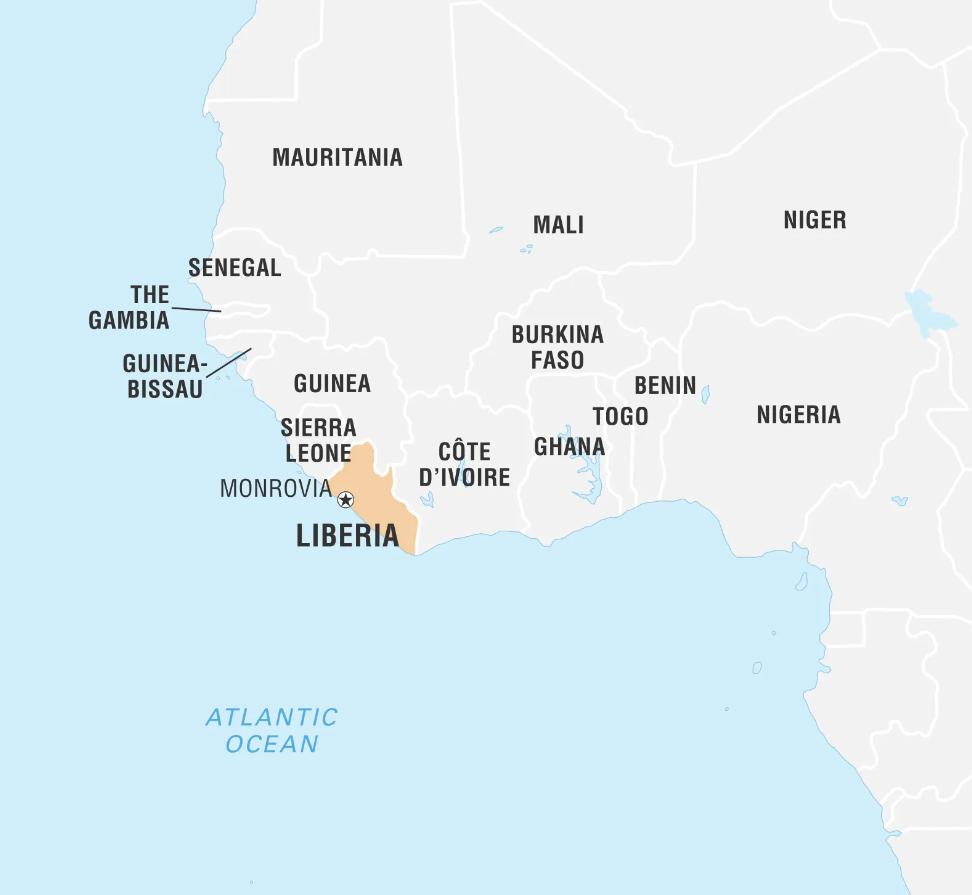
- A 12-member delegation of Liberian lawmakers visited India to study women’s political participation and gender-responsive governance under the framework of South-South cooperation.
Liberia (Capital: Monrovia)
- Location: Capital: Monrovia | West Africa
- Borders: Sierra Leone (W), Guinea (N), Côte d’Ivoire (E), Atlantic Ocean (S).
- History: One of Africa’s two countries never formally colonised by a European power; the other is Ethiopia.
- Climate: Tropical, humid with heavy seasonal rainfall.
- Biodiversity: Contains 35–40% of remaining Upper Guinean rainforest; Sapo National Park is a major protected area.
- International: Founding member of UN (1945) and OAU (1963) → later AU.
- India–Liberia: India deployed the first-ever all-female police unit in Liberia in 2007 under UN peacekeeping; served till 2016.
Right to Walk: Strengthening Pedestrian Safety in India
Governance
Context
- After the Supreme Court’s order recognising the right to walk on footpaths as a fundamental right
- Andhra Pradesh (2026): First state to formulate a dedicated Pedestrian Safety & Universal Accessibility Policy.
- 3-step approach: Road safety audits → Footpath improvement/removal of encroachments → Behavioural change.
- Coverage: Urban, peri-urban, satellite towns and rural areas.
- Footpath audits: Prioritises 15–20 pedestrian black spots; 20% of roads to be surveyed within one year.
- Legal provision: Section 198A, Motor Vehicles Act, 1988 → ₹1 lakh fine on officials/contractors/consultants for infrastructure or design failures causing pedestrian death/disability.
- Pedestrian deaths (2024): 36,526 out of 1.77 lakh road-accident deaths.
Right to Walk
- SC: Recognised safe, well-maintained and demarcated footpaths as a Fundamental Right in Maniyar Iliyaz @ Shaik Riyaz v. P. Ayyappan & Ors.
- Derived from Article 19(1)(d) – freedom of movement + Article 21 – life and personal liberty.
Garbhini Mitra Course
Government schemes

News
- The All India Institute of Ayurveda (AIIA) has introduced the Garbhini Mitra Course for the 2026–2027 academic session.
Garbhini Mitra Course
- Offered by: All India Institute of Ayurveda (AIIA), Sarita Vihar, New Delhi.
- Aim: Train personnel to provide pregnancy and postnatal health education and community support.
- Batch size: 20 students.
- Ayurvedic basis: Garbhini Paricharya (antenatal), Sutika Paricharya (postnatal) and Garbhadhana Vidhi (pre-conception).
- Skills: Trimester-wise diet, lifestyle, pregnancy-safe yoga, emotional support, newborn care and basic life support.
- Eligibility: 18+ years + 10+2 pass from a recognised board.
Polysilicon Manufacturing in India
Science & Technology
Context
- The government is considering a new Production-Linked Incentive (PLI) scheme for polysilicon manufacturing to develop an integrated domestic solar PV supply chain.
India’s Solar Manufacturing Position
- Installed solar capacity: ~163 GW, the largest renewable energy source in India.
- Manufacturing: ~173 GW solar module and ~25–30 GW solar cell capacity.
- Key gap: India remains dependent on imports of polysilicon, ingots and wafers.
- China: Accounts for 85%+ of global PV supply capacity with an integrated solar manufacturing chain.
Polysilicon
- Highly purified silicon used to manufacture crystalline-silicon solar cells.
- Produced from quartz/silica through energy-intensive purification.
- High purity is essential for efficient solar-cell performance.
Solar value chain:
- Quartz/Silica → Polysilicon → Ingot → Wafer → Cell → Module → Solar Panel
INS Mangrol
Defence
Context
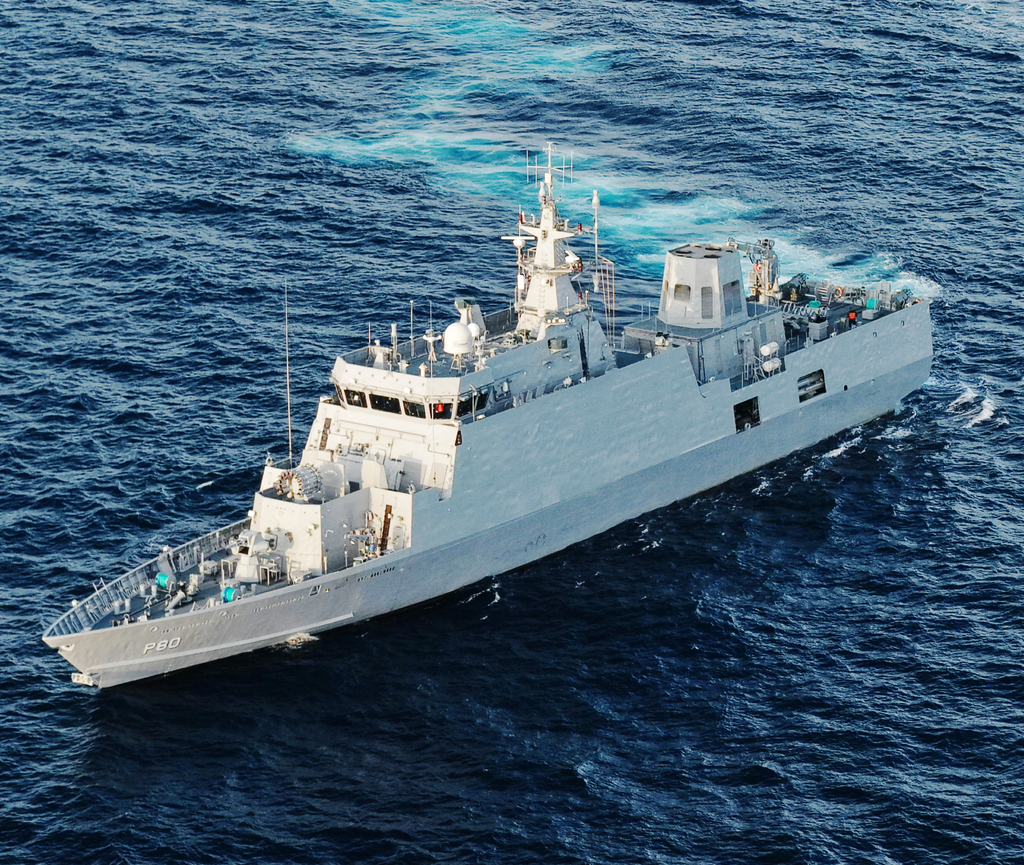
- ‘Mangrol’, the third Anti-Submarine Warfare Shallow Water Craft built by Cochin Shipyard Limited (CSL), Kochi, was delivered to the Indian Navy.
INS Mangrol
- Type: Kalvari-class (Scorpène) diesel-electric submarine of the Indian Navy.
- Built by: Mazagon Dock Shipbuilders Limited (MDL) under Project-75.
- Commissioned: 2024.
- Named after: Mangrol, a coastal town in Gujarat.
- Key features: Stealthy, designed for anti-submarine warfare, anti-surface warfare, intelligence, surveillance and reconnaissance.
- Significance: Strengthens India’s underwater warfare capability and supports Aatmanirbhar Bharat in defence manufacturing.
- Project-75: Involves construction of six Scorpène-class submarines in India.






Leave a Reply