
Pradhan Mantri Khanij Kshetra Kalyan Yojana
Economy
News
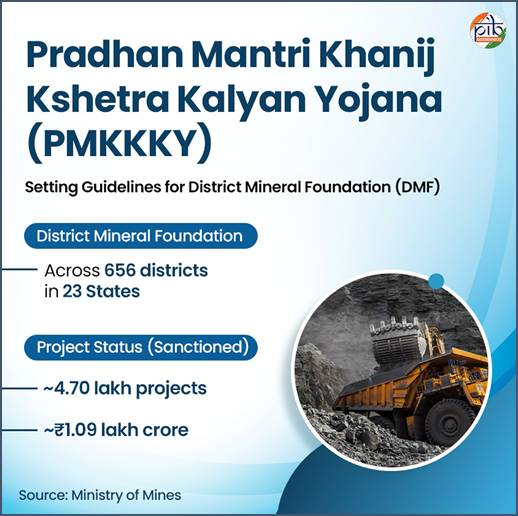
- Pradhan Mantri Khanij Kshetra Kalyan Yojana (PMKKKY) is promoting education, healthcare, drinking water, and livelihood opportunities in the mining-affected areas.
Pradhan Mantri Khanij Kshetra Kalyan Yojana (PMKKKY)
- Launched: September 2015
- Aim: Ensure mining-affected communities benefit from mineral extraction and receive social & physical infrastructure.
- Implemented through: District Mineral Foundations (DMFs) – non-profit trusts under the MMDR Act, 1957.
- DMFs: Function under the State Government.
Key Features
-
Welfare & development projects in mining-affected areas.
-
Addresses environmental, health and socio-economic impacts of mining.
-
Promotes sustainable livelihoods.
-
Special safeguards for Scheduled & Tribal Areas through PESA, 1996 and Forest Rights Act, 2006.
Funding
-
10% contribution: Mining leases granted on/after 12 Jan 2015.
-
30% contribution: Leases granted before 12 Jan 2015.
Cheetah Reintroduction
Environment
Context
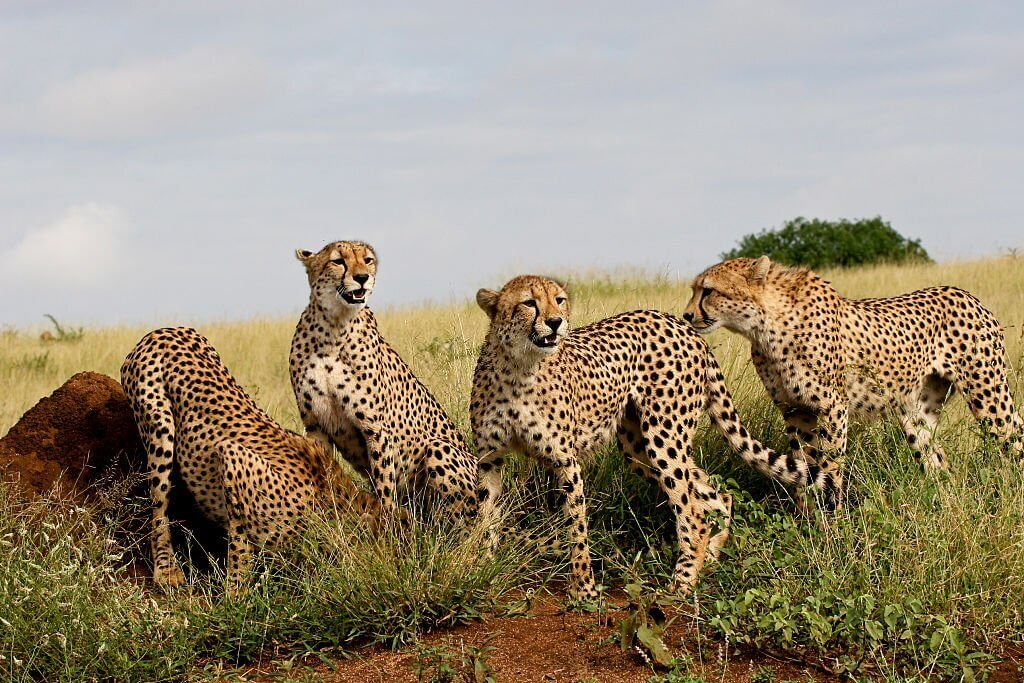
- Kuno National Park has reported an unusual coalition of two unrelated male cheetahs, highlighting the emergence of natural social behaviour in the reintroduced population.
About
- India declared the cheetah extinct in 1952, after decades of over-hunting, habitat fragmentation, and depletion of prey species.
- The launch of Project Cheetah in 2022 and the arrival of cheetahs from Namibia and South Africa created the world’s first intercontinental relocation programme for a large carnivore.
- Botswana – It’s a landlocked country with nearly 70% of its landmass covered by the Kalahari Desert, and holds one of the world’s largest wild cheetah populations.
Project Cheetah
-
- Overview: Project Cheetah is India’s ambitious attempt to reintroduce the cheetah in suitable open forest and grassland ecosystems.
- Launched By: National Tiger Conservation Authority (NTCA), a statutory body under the Wildlife (Protection) Act, 1972 (amended 2006).
- Uniqueness – It is the world’s first intercontinental translocation of a large wild carnivore.
Translocations So Far:
- 8 cheetahs from Namibia in 2022
- 12 cheetahs from South Africa in 2023
- 8 cheetahs from Botswana (2025 announcement)
Cheetah(Acinonyx jubatus)
-
- It is the world’s fastest mammal and the only large carnivore to have gone extinct in India (1952).
- Unlike other big cats, cheetahs do not roar.
- There are two main species: the African cheetah (Vulnerable) and the Asiatic cheetah (Critically Endangered), found only in eastern Iran and parts of Africa.
News
- The Prime Minister has paid homage to Saratchandra Chattopadhyay on his 150th birth anniversary.
Sarat Chandra Chattopadhyay (1876–1938) – UPSC
- Born: Devanandapur, Bengal (1876); later lived in Rangoon (Myanmar).
- Associated with the Indian freedom movement; President of Howrah Congress unit (1921–36).
- Major Bengali novelist known for portraying women, social oppression and orthodox social norms.
- Major works: Devdas, Srikanta, Pather Dabi, Parinita, Biraj Bau, Palli Samaj, Charitraheen and Swami.
- Pather Dabi: Depicts revolutionary nationalism and anti-colonial resistance.
- Srikanta: Narrates the life and experiences of a wandering protagonist.
- His works gained pan-Indian and international popularity.
Melanoma
Health
Context
- Thousands of patients in India are diagnosed with melanoma, a type of skin cancer, each year.
Melanoma
- Melanoma: Skin cancer arising from melanocytes, which produce melanin.
- Major risk factor: Excessive UV radiation from sunlight/tanning devices.
- Appearance: New dark spot or change in an existing mole.
- Nature: Less common than basal/squamous cell cancers but more aggressive and can metastasize.
- Early detection: Treatment is generally more successful when detected early.
Human Skin
|
Cell |
Key function |
|
Squamous cells |
Thin, flat cells forming the upper epidermis |
|
Basal cells |
Round cells beneath squamous cells |
|
Melanocytes |
Produce melanin, giving skin its colour |
Canada to Become First ‘Associate Member’ of European Union (EU)
International
Context
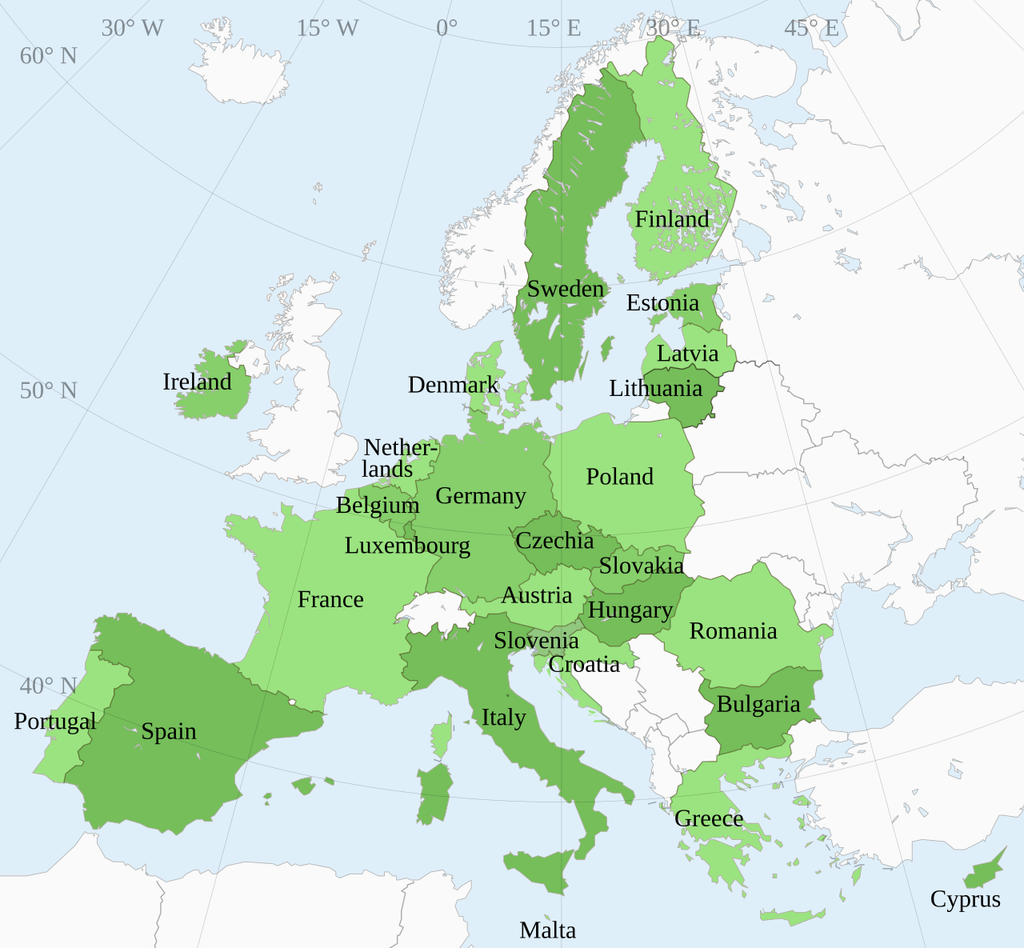
- The European Commission President Ursula von der Leyen has proposed opening the door for Canada to become the EU’s first “associate member.”
EU–Canada “Associate Member” – UPSC
-
Associate membership: Proposed idea for closer Canada–EU integration without full EU membership.
-
Possible areas: Trade, technology, defence, energy, critical minerals, AI and Arctic cooperation.
-
Status: Not currently defined under EU treaties; rights and obligations are yet to be negotiated.
European Union (EU) – UPSC
-
EU: Political and economic union of 27 European countries.
-
1951: European Coal and Steel Community (ECSC) – 6 founding members.
-
1957: European Economic Community (EEC) established by Treaty of Rome.
-
1993: EU formally established by Maastricht Treaty.
-
Currency: 21 of 27 members use the Euro.
-
Key areas:
Single market, trade, economic cooperation, common policies and regional integration.
Net Zero Portal and NAPCC Dashboard
Environment

Context
- The Union Minister of State for Environment, Forest and Climate Change launched India’s Net Zero Portal and the National Action Plan on Climate Change (NAPCC) Dashboard on the occasion of World Ozone Day 2026.
Net Zero Portal
- Centralised digital platform for voluntary registration & disclosure of Net Zero commitments by Indian entities.
- Entities can report GHG emissions, Net Zero targets & annual progress.
- Scope 1 & 2: encouraged reporting.
- Scope 3: reporting remains voluntary.
NAPCC Dashboard
- Digital platform to track implementation of 8 National Missions under the National Action Plan on Climate Change (NAPCC).
- NAPCC launched in 2008.
- Enables inter-ministerial coordination, progress assessment & identification of implementation gaps.
India’s Updated Climate Targets
|
Indicator |
Target |
|
Emissions intensity of GDP |
47% reduction by 2035 from 2005 |
|
Non-fossil installed power capacity |
60% by 2035 |
|
Net Zero |
2070 |
-
India achieved 52.57% non-fossil installed capacity by Feb 2026.
Additional Information – National Action Plan on Climate Change (NAPCC) –
-
Launched: 2008 by Government of India.
-
Aim: Address climate change mitigation and adaptation through coordinated national action.
-
Comprises 8 National Missions:
|
Mission |
Focus |
|
Solar Mission |
Solar energy |
|
Enhanced Energy Efficiency |
Energy efficiency |
|
Sustainable Habitat |
Sustainable cities |
|
Water Mission |
Water conservation |
|
Himalayan Ecosystem |
Himalayan ecology |
|
Green India Mission |
Forest cover & carbon sinks |
|
Sustainable Agriculture |
Climate-resilient agriculture |
|
Strategic Knowledge |
Climate science & knowledge |


















Leave a Reply