
Hyderabad Liberation Day
Polity
News
- The Union government notified 17 September as Hyderabad Liberation Day in 2024 to commemorate Hyderabad’s liberation from the Nizam’s rule in 1948.
About
- Date: 17 September; the Union Government officially notified it as Hyderabad Liberation Day in 2024.
- Context: After Independence, Nizam Mir Osman Ali Khan sought an independent Hyderabad and signed a Standstill Agreement with India on 29 November 1947.
- Razakars: A volunteer force of Majlis-e-Ittehad-ul-Muslimeen, led by Qasim Razvi, which opposed Hyderabad’s accession to India.
- Trigger: Failed negotiations, Razakar violence and incursions into Indian territory contributed to India’s decision to intervene.
- Operation Polo: India launched the military operation on 13 September 1948, officially described as a “Police Action.”
- Liberation: The Nizam announced a ceasefire on 17 September; Hyderabad State Forces formally surrendered on 18 September 1948.
CITES
Environment
Context
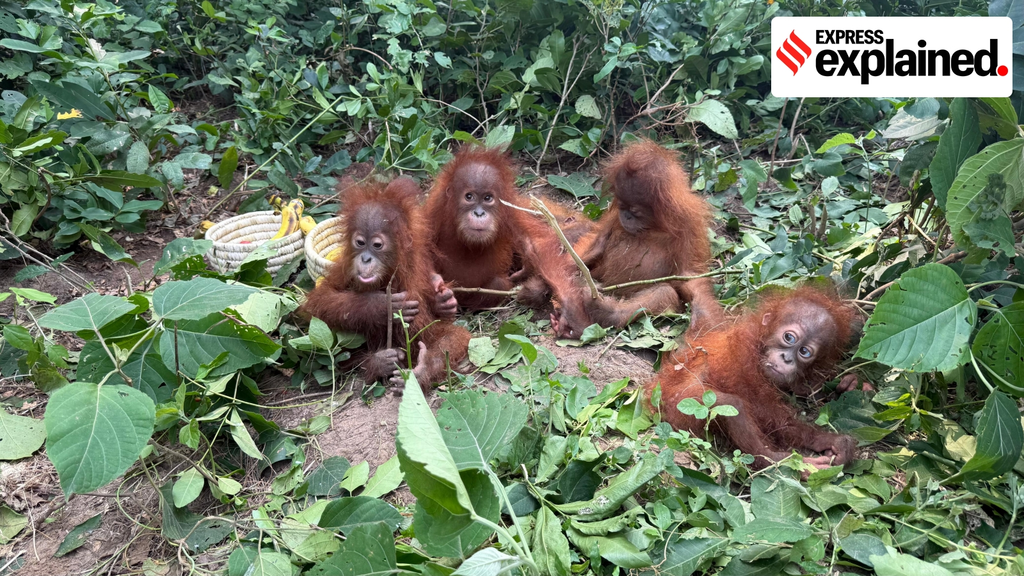
- Recently found 5 orangutans in Odisha’s Balasore’s forest, has raised questions regarding illegal wildlife trade and CITES regulations.
CITES
- Abbreviation – Convention on International Trade in Endangered Species of Wild Flora & Fauna
- CITES was conceptualized in 1963 at a meeting of the (IUCN) International Union For Conservation of Nature.
- Establishment – It came into force in 1975 and consists of 183 member-countries
- Headquarter – Geneva, Switzerland,
- Administered by – United Nations under its UNEP (United Nations Environment Programme) Wing.
- CITES is legally binding on the Parties; it does not take the place of national laws.
Appendices
- Appendix 1 – It lists species that are threatened with extinction nd are or may be affected by trade.
- Appendix 2 – This list includes species not necessarily threatened with extinction, but in which trade must be controlled in order to avoid utilization incompatible with their survival.
- Appendix 3 – It contains species that are protected in at least one country, which has asked other CITES Parties for assistance in controlling the trade.
News
- The Prime Minister has paid homage to Saratchandra Chattopadhyay on his 150th birth anniversary.
Sarat Chandra Chattopadhyay (1876–1938) – UPSC
- Born: Devanandapur, Bengal (1876); later lived in Rangoon (Myanmar).
- Associated with the Indian freedom movement; President of Howrah Congress unit (1921–36).
- Major Bengali novelist known for portraying women, social oppression and orthodox social norms.
- Major works: Devdas, Srikanta, Pather Dabi, Parinita, Biraj Bau, Palli Samaj, Charitraheen and Swami.
- Pather Dabi: Depicts revolutionary nationalism and anti-colonial resistance.
- Srikanta: Narrates the life and experiences of a wandering protagonist.
- His works gained pan-Indian and international popularity.
Pradhan Mantri Awas Yojana Urban (PMAY-U)
Government Schemes
Context (PIB):
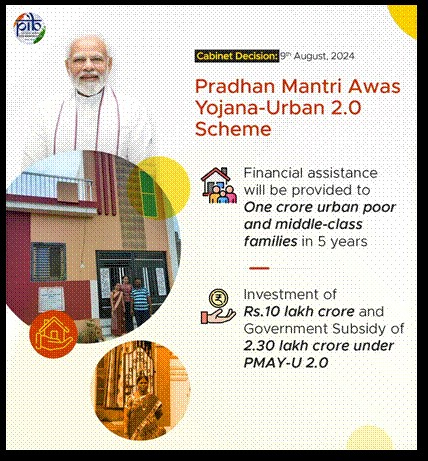
- Pradhan Mantri Awas Yojana-Urban (PMAY-U) and PMAY-U 2.0 have delivered over 1 crore pucca houses to beneficiaries.
About –
- Ministry: Ministry of Housing & Urban Affairs (MoHUA).
- Launched: 2015 under the National Mission for Urban Housing.
- Objective: Provide pucca houses with basic amenities to eligible urban households.
- Target beneficiaries: Economically Weaker Sections (EWS), Low-Income Groups (LIG) and other eligible urban households.
- PMAY-U 2.0: Approved in 2024 to support construction, purchase or rental of houses for 1 crore additional urban families over 5 years.
- Key components under PMAY-U 2.0:
- Beneficiary-Led Construction (BLC)
- Affordable Housing in Partnership (AHP)
- Affordable Rental Housing (ARH)
- Interest Subsidy Scheme (ISS)
- Funding: Implemented through Central and State/UT governments, with beneficiary participation depending on the component.
- Focus: Affordable housing, improved living conditions and reduction of the urban housing deficit
SARAL AI
Science & technology
Context (DD):
- The CSIR-National Institute of Science Communication and Policy Research (CSIR-NIScPR) is leveraging SARAL AI to convert research published in its journals into engaging and accessible videos.
About –
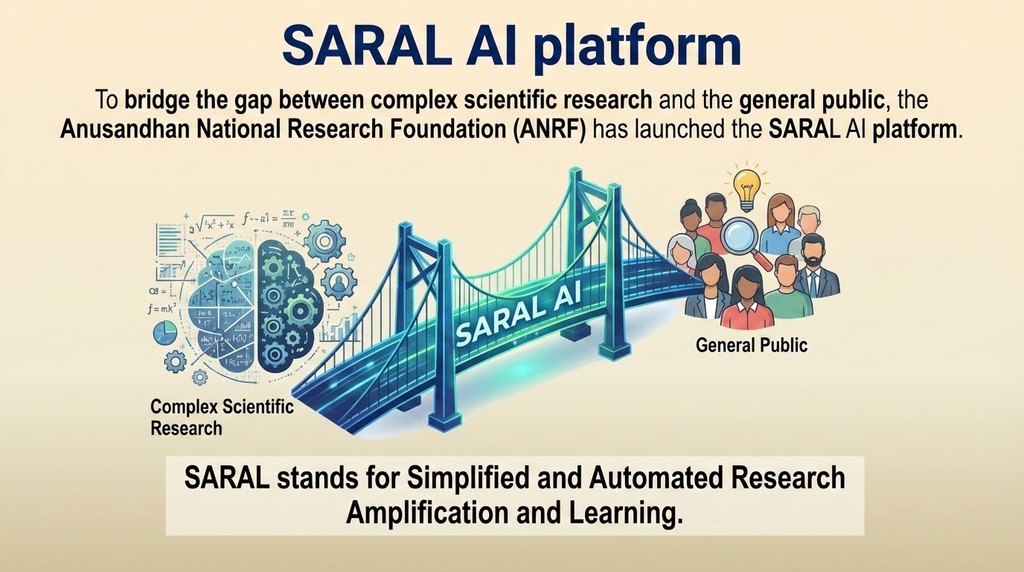
- Full form: Simplified and Automated Research Amplification and Learning (SARAL).
- Nature: AI-enabled platform for converting research papers into accessible video summaries.
- Initiative of: Anusandhan National Research Foundation (ANRF).
- Implementation/Use: CSIR-NIScPR is leveraging SARAL AI for research published in its journals.
- Key feature: Converts complex research papers into easy-to-understand video presentations.
- Languages: Videos can be made available in multiple Indian languages.
- Objective: Democratise research by making scientific knowledge more accessible and engaging.
- Significance: Uses AI to make research communication smoother, faster and more accessible.
World Circular Economy Forum 2026
International
Context (AIR):
- India is hosting the 10th World Circular Economy Forum (WCEF) 2026 in Gandhinagar, Gujarat.
About –
- Host: India; Gandhinagar, Gujarat.
- Edition: 10th WCEF.
- First in South Asia: 2026 marks the first time the forum is being held in South Asia.
- Organisers: Finnish Innovation Fund (Sitra) and Central Pollution Control Board (CPCB).
- Launched: 2017 by Sitra.
- Nature: Annual global platform bringing together governments, businesses, policymakers, international organisations, experts and innovators.
- 2026 Theme: “Circular Economy: Transition for People and Prosperity.”
- Circular Economy: Moves away from the “take–make–dispose” model by promoting reduce, reuse, repair, refurbishment, remanufacturing and recycling.
- Objective: Keep resources in use for longer, reduce resource consumption and minimise waste.
VIMARSH 2026
Defense
Context (DDN)
- Defence Research and Development Organisation (DRDO) organised an industry synergy meet, VIMARSH 2026, with the theme ‘Varta se Vikas’ to strengthen collaboration with industry.
About
- Organiser: Defence Research and Development Organisation (DRDO).
- Theme: “Varta se Vikas”.
- Objective: Strengthen DRDO–industry collaboration and promote participation of MSMEs and deep-tech start-ups in defence technology.
- Support measures: Direct funding, incubation, access to testing facilities and opportunities across the defence technology value chain.
- Source-code sharing: A secure framework was introduced to share DRDO-developed software source code with licensed industries.
- Purpose: Support software-defined defence and address technology obsolescence.
- SAMAR 2.0: DRDO signed an agreement with the Quality Council of India (QCI) for the System for Advance Manufacturing Assessment and Rating (SAMAR) 2.0.
- Purpose of SAMAR 2.0: Assess and benchmark the manufacturing maturity of domestic defence enterprises.


Leave a Reply