
Economic Advisory Council to the Prime Minister (EAC-PM)
Polity
Context
- The Prime Minister chaired a meeting of the Economic Advisory Council to the Prime Minister (EAC-PM) during which members discussed measures to sustain and accelerate India’s economic growth amid an uncertain global environment.
Economic Advisory Council to the Prime Minister (EAC-PM)
- The EAC-PM, an independent body constituted to advise the Prime Minister on economic and related issues.
- It is currently chaired by S. Mahendra Dev.
- Members: At present, there are a Chairman, 3 Full-Time Members and 11 Part-Time Members in the EAC-PM.
- Functions: Analyzing any issue, economic or otherwise, referred to it by the Prime Minister and advising him thereon, addressing issues of macroeconomic importance.
PM E-DRIVE
Environment
Context
- The Delhi Government has announced the induction of 2,800 new low-floor electric buses under the PM Electric Drive Revolution in Innovative Vehicle Enhancement (PM E-DRIVE)
- Objective – to strengthen public transport and accelerate the transition towards sustainable urban mobility.
PM E-DRIVE
- The scheme was launched by the Government of India in 2024 to accelerate the transition towards electric mobility.
- The scheme has a total financial outlay of ₹10,900 crore.
- Duration: Initially approved for two years (2024–26), its duration has now been extended to 31 March 2028, while retaining the same outlay.
Objectives:
- To accelerate the adoption of electric vehicles (EVs) across the country.
- To develop a robust EV charging infrastructure.
- To strengthen the domestic EV manufacturing ecosystem.
- To reduce dependence on fossil fuels and lower vehicular emissions.
- To promote the Make in India initiative through the Phased Manufacturing Programme (PMP).
- The scheme supports the procurement of 14,028 electric buses across nine major cities with populations exceeding 40 lakh.
Major Abhilasha Barak Conferred UN Award
International

Context
- Prime Minister congratulated Major Abhilasha Barak on being conferred the UN Military Gender Advocate of the Year Award.
About
- Major Barak is currently serving with the United Nations mission in Lebanon, has been honoured with the award for her outreach efforts with women and girls during her deployment in the West Asian nation.
- She is also the first woman combat helicopter pilot of the Indian Army.
- Nomination – Each year, the awardee is selected from among candidates nominated by force commanders and heads of mission from all peace operations.
- India is among the largest troop and police contributing countries to UN peacekeeping missions.
United Nations peacekeepers
- The United Nations (UN) Peacekeepers, commonly known as the ‘Blue Helmets’
- They are military, police, and civilian personnel deployed by the United Nation
- Objective – to help countries transition from conflict to peace.
- Duties – It includes protecting civilians, preventing conflict, strengthening security, and supporting peace processes.
- Peacekeeping operations are authorized by the UN Security Council and supported by member states, with personnel drawn from many countries around the world.
Food Planet Prize 2026
Miscellaneous
Context
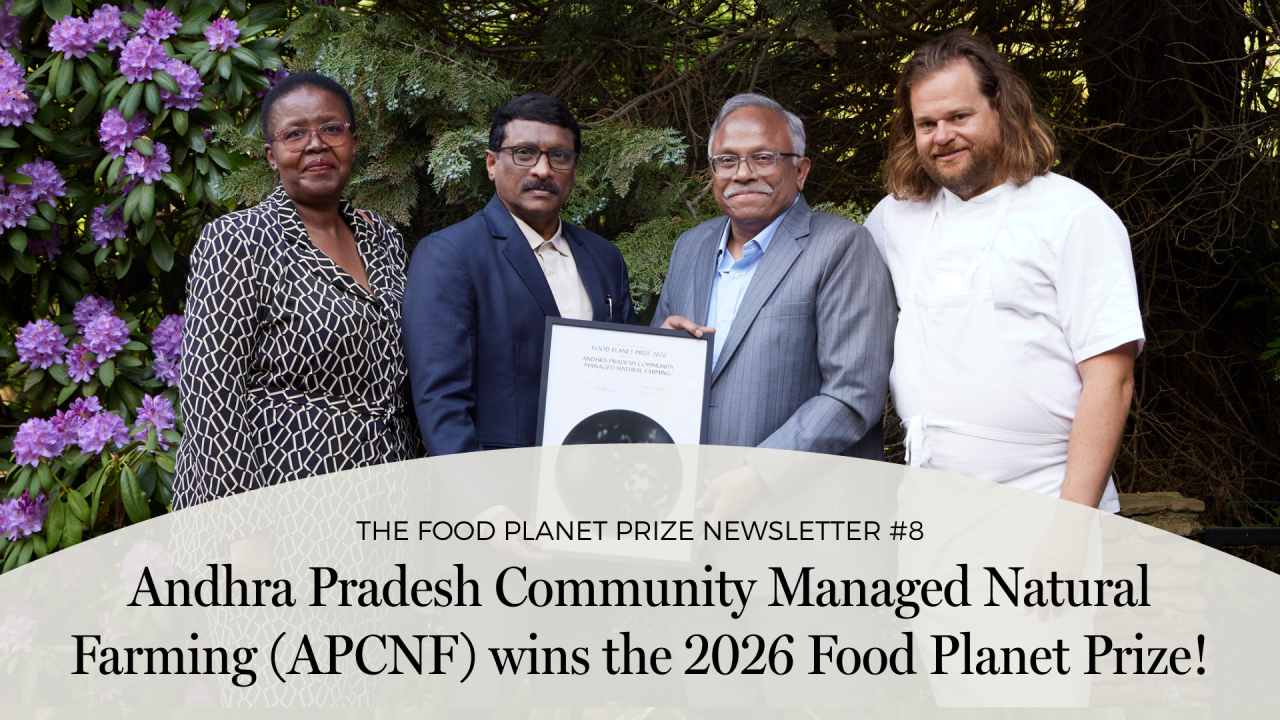
- The Andhra Pradesh Community Managed Natural Farming (APCNF) programme has won the Food Planet Prize 2026.
About the Prize
- The Food Planet Prize was established in 2019 by the Curt Bergfors Foundation, Sweden.
- It is regarded as the world’s largest environmental award dedicated to transforming global food systems.
- The award carries a prize of US$ 1.5 million (about ₹14 crore).
- Note – APCNF’s selection marks the first time an Indian initiative has won the award.
Andhra Pradesh Community Managed Natural Farming (APCNF)
- Launched in 2016
- Launched by – Rythu Sadhikara Samstha (RySS)
- Mandate – the programme promotes natural farming by reducing dependence on chemical fertilisers and pesticides.
- Uniqueness – it covers over 8,000 villages and nearly 18 lakh farmer families, making it one of the world’s largest community-led agroecology initiatives.
- The Andhra Pradesh model is now being studied and replicated in several Indian states, as well as countries like Sri Lanka and Zambia.
Additional Information – Natural Farming
- It is a chemical free farming, involving livestock (preferably local breed of cow) integrated natural farming methods and diversified crop systems rooted in the Indian traditional knowledge.
- It is largely based on on-farm biomass recycling with major stress on biomass mulching, use of on-farm cow dung-urine formulations; maintaining soil aeration and exclusion of all synthetic chemical inputs.
National Mission on Natural Farming (NMNF)
- Launched in – November 2024
- It is a centrally sponsored Scheme
- Objective – to promote chemical-free, ecosystem-based natural farming rooted in traditional knowledge.




Leave a Reply