
Awiqli drug
Science & technology
In News
- Danish pharmaceutical giant Novo Nordisk launched its weekly insulin shot (icodec) in India , making blood sugar control easier and more convenient for Indian diabetics.
Icodec/Awiqli drug
- Uniqueness – The world’s first once-weekly basal insulin injection.
- Developer: Engineered and manufactured by Danish multinational Novo Nordisk.
- Target Diseases: Indicated for adults with Type 2 Diabetes (and Type 1 in specific jurisdictions like India).
- Impact Metric: Drastically reduces the treatment burden from 365 daily injections to just 52 injections per year.
Additional Information – Diabetes
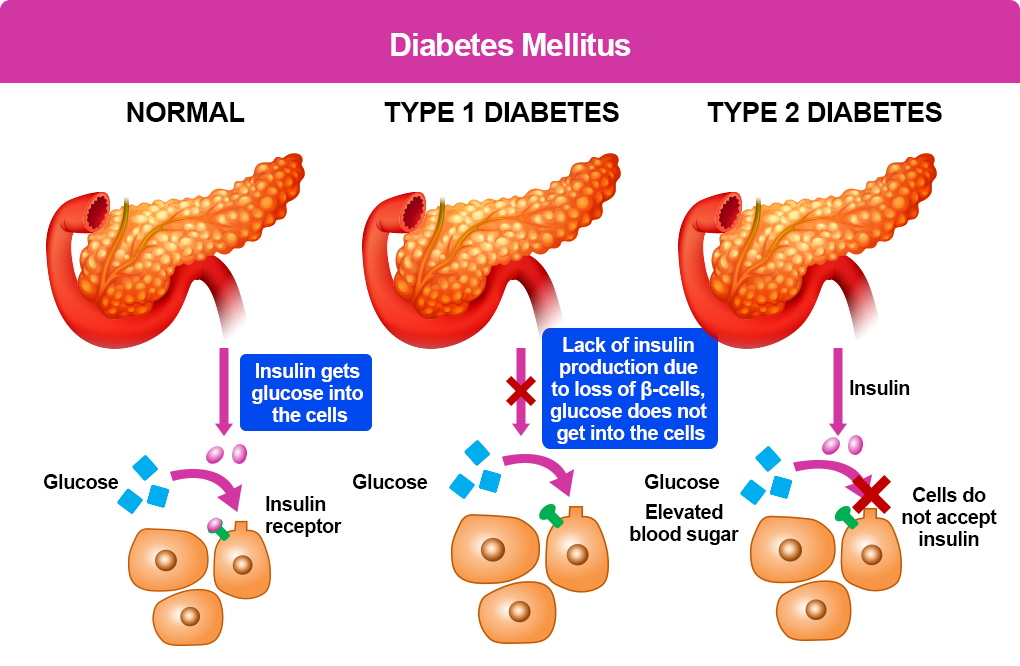
- Diabetes is a chronic metabolic disorder in which the body either does not produce enough insulin or cannot effectively use the insulin it produces.
- This leads to high levels of glucose (sugar) in the blood.
- Insulin: Insulin is a hormone produced by the pancreas.
- It helps glucose (from food) enter cells, where it is used for energy.
Types of Diabetes
- It is an autoimmune disease where the body’s immune system destroys insulin-producing cells. The body produces little or no insulin.
- It usually begins in childhood or adolescence.
- It requires lifelong insulin injections.
Type 2 Diabetes
-
- This is the most common type of diabetes. The body doesn’t produce enough insulin.
- It is usually linked to obesity, sedentary lifestyle, unhealthy diet and family history.
- It can be managed with diet, exercise, oral medications, and sometimes insulin.
Gestational Diabetes:
- This occurs during pregnancy and usually disappears after delivery, but increases the risk of type 2 diabetes later in life.
Operation Amistad
Defence

In News
- Operation Amistad has concluded successfully with the return of the Indian contingent to New Delhi.
Operation Amistad
- It is India’s Humanitarian Assistance and Disaster Relief (HADR) mission following the devastating earthquakes in Venezuela.
Major International HADR Operations/Evacuation / Relief Operations
- India has emerged as a dependable first responder in the Indian Ocean Region and beyond, guided by the principles of “Vasudhaiva Kutumbakam” and SAGAR (Security and Growth for All in the Region).
- India provides humanitarian assistance, disaster relief, evacuation, medical aid and reconstruction support to the global community through the joint efforts of the Army, Navy and Air Force.
- The induction of INS Sunayna as IOS SAGAR (2025) with personnel from Indian Ocean countries is a reflection of India’s commitment towards collective maritime security, regional cooperation and capacity building.
India’s major HADR operations include
- Operation Maitri (Nepal, 2015) for rapid rescue, relief, and $2 billion commitment for reconstruction after the earthquake;
- Operation Devi Shakti (Afghanistan, 2021) for the evacuation of 669 people and humanitarian aid;
- Mission SAGAR (2020 onwards) where the Indian Navy provided food, medical oxygen and relief materials to 15 Indian Ocean countries during the COVID-19 pandemic; and
- Operation Samudra Setu (2020) to repatriate 3,992 Indians by sea.
- Operation Ganga (Ukraine, 2022) to evacuate more than 18,000 Indian citizens during the conflict,
- Operation Dost (Türkiye and Syria, 2023) to send medical teams, field hospitals, rescue teams and more than 135 tonnes of relief material after the deadly earthquakes,
- Operation Kaveri (Sudan, 2023) to ensure the safe evacuation of Indian nationals during civil conflict
- Operation Brahma (Myanmar, 2025) to provide approximately 750 tonnes of humanitarian assistance, field hospital for earthquake-hit Myanmar.
GI Tag to Jodhpur Mojari
Economy

Context
- The iconic Jodhpur Mojari, a handcrafted footwear tradition from Rajasthan, has been awarded the Geographical Indication (GI) tag.
Jodhpur Mojari
- It is a leather boot known for its high craftsmanship, delicate embroidery and timeless style.
- It is predominantly created by the Jinagar community who were traditionally engaged in saddle manufacture.
Connect with the basics – Geographical Indication or GI Tag
- It is a name or a sign given to certain products related to a specific geographical location or origins like a region, town, or country.
- A certification for unique products – GI Tag may be regarded as a certification for a particular product with certain specific qualities or has a specific reputation because of its geographical origin.
- GI Tags can be issued for wine and spirit drinks, foodstuffs, agricultural products, handicrafts, and industrial products.
- Trade-Related Aspects of Intellectual Property Rights (TRIPS) – At the International level, GI is governed by the World Trade Organisation’s (WTO’s) Agreement on Trade-Related Aspects of Intellectual Property Rights (TRIPS).
- Geographical Indications of Goods (Registration and Protection) Act – In India, Geographical Indications registration is administered by the Geographical Indications of Goods (Registration and Protection) Act, 1999, which came into force in September 2003.
- Darjeeling tea – The first product in India to be accorded with the GI tag was Darjeeling tea in 2004-05.
GI tags of 2026
|
Product Name |
State / UT |
Category / Description |
|
Assam Bihu Pepa |
Assam |
Traditional musical instrument made of buffalo horn |
|
Assam Bamboo Crafts |
Assam |
Handcrafted furniture and home decor items |
|
Karbi Anglong Handloom Products |
Assam |
Intricately woven tribal textiles and garments |
|
Deuri Handloom Products |
Assam |
Traditional ethnic apparel of the Deuri community |
|
Chandannagar’s Jolbhora Sandesh |
West Bengal |
Iconic heritage sweet filled with liquid jaggery |
|
Janai’s Manohara |
West Bengal |
Traditional historic sweet with a distinct texture |
|
Balagarh Wooden Boats |
West Bengal |
Hand-built heritage wooden river vessels |
|
Khurasani Imli of Mandu |
Madhya Pradesh |
Nutritious, sweet-sour fruit from local Baobab trees |
|
Ponduru Khadi |
Andhra Pradesh |
Hand-spun cotton fabric using indigenous cotton varieties |
|
Woraiyur Cotton Saree |
Tamil Nadu |
Fine, lightweight traditional handloom sarees |
|
Kavindapadi Nattu Sakkarai |
Tamil Nadu |
Naturally processed, unrefined organic country sugar |
|
Thooyamalli Rice |
Tamil Nadu |
Traditional white rice variety shaped like jasmine buds |
|
Mathura Zari Dress |
Uttar Pradesh |
Ornate garments featuring intricate zari-zardosi embroidery |
|
Bhagaiya & Kuchai Silk |
Jharkhand |
Premium, organic tribal silks |
|
Munda Jewellery |
Jharkhand |
Traditional cultural ornaments of the Munda tribe |
India’s First Hydrogen Train
Science and Tech

Context
- Indian Railways has notified India’s first hydrogen-powered train, which is expected to be flagged off by Prime Minister Narendra Modi on 17 July.
India’s first hydrogen-powered train
- Launch Date: Scheduled for July 17, 2026.
- Route: Jind to Sonipat (89 km) in Haryana.
- Global Status: Puts India in an elite club (with Germany, Sweden, China, US, Japan).
- Maker: Integral Coach Factory (ICF), Chennai, under RDSO supervision.
- Specs: 10-car Broad Gauge trainset (longest broad-gauge hydrogen train globally).
- Speed & Power: Max speed 75 kmph; capacity of 2400 kW.
- Fuel Station: Dedicated 3,000-kg storage and refueling hub set up at Jind.
Ken-Betwa River Linking Project
Economy
Context
- Residents of several villages who are being impacted by the Ken-Betwa river linking project, have restarted their agitation over their demands of better compensation and rehabilitation.
Ken-Betwa Link Project
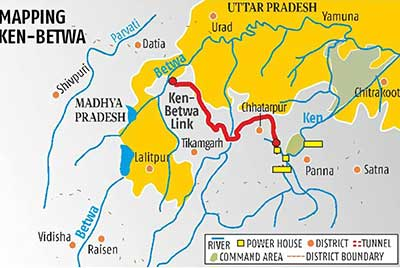
- It is a project proposed to transfer excess water from the River Ken to the Betwa basin through the use of a concrete canal.
- Objective – to provide irrigation to the Bundelkhand region of UP, which is one of the worst drought-affected areas in India.
- Beneficiary states – Madhya Pradesh and Uttar Pradesh.
- Significance – It will meet the irrigation purposes, drinking water, and electricity needs of 6 districts in both states.
- Biodiversity Concerns – Nearly 8,650 hectares of forest land including part of Panna National Park in Madhya Pradesh will be submerged if the project were to become a reality.
Conservation Projects for River Dolphins & Snow Leopards
Environment
Context
- The governing body of the National Compensatory Afforestation Fund Management and Planning Authority (CAMPA) gave the nod to four new conservation projects for river dolphins, snow leopards, wild water buffalo, and Indian rhinoceros along with continued support for the conservation of Manipur’s brow-antlered deer, Sangai.
Snow Leopard
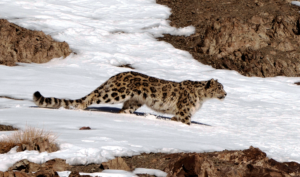
- Scientific name – Panthera uncia
- Habitats – The Snow Leopard lives at high altitudes in the steep mountains of Central and Southern Asia, and in an extremely cold climate.
- Range states – Jammu and Kashmir, Himachal Pradesh, Uttarakhand, Sikkim
- Ghost of the mountains – The Snow Leopard is also known as Ghost of the mountains
- Bio indicator – It acts as an indicator of the health of the mountain ecosystem
- Snow Leopard capital of the world – Hemis, Ladakh.
- International Snow Leopard Day – It is observed on 23rd October.
Conservation status
- IUCN Red List- Vulnerable
- CITES convention – Appendix I
- Indian Wildlife (Protection) Act 1972– Schedule I
Conservation Efforts Launched by India
- Project Snow Leopard (PSL)
- Launched in – 2009
- Objective – To promote an inclusive and participatory approach to conserve snow leopards and their habitat.
- Species recovery programme – Snow Leopard is in the list of 21 critically endangered species for the recovery programme of the Ministry of Environment Forest & Climate Change.
- Snow Leopard conservation breeding programme – It is undertaken at Padmaja Naidu Himalayan Zoological Park, Darjeeling, West Bengal.
- HimalSanrakshak – It is a community volunteer programme, to protect snow leopards, launched on 23rd October 2020.
- First National Protocol – was also launched In 2019.
- SECURE Himalaya – Global Environment Facility (GEF) , United Nations Development Programme (UNDP) funded the project on conservation of high altitude biodiversity and reducing the dependency of local communities on the natural ecosystem.
International Conservation Efforts
- SNOW LEOPARD ECOSYSTEM PROTECTION PROGRAM – It seeks to address high-mountain development issues using the conservation of the endangered snow leopard as a flagship program.
- Bishkek Declaration – In 2013, the 12 snow leopard range countries signed and agreed to secure at least 20 snow leopard landscapes across by 2020
- International Year of the Snow Leopard – Year ‘2015’ was designated as International Year of the Snow Leopard
Recent Census –
- The exercise reported 718 snow leopards in India
- It was conducted from 2019 to 2023.
- Conducted by – The program was conducted by the Wildlife Institute of India (WII) with the help of all snow leopard range states and two conservation partners – the Nature Conservation Foundation, Mysuru (Karnataka), and WWF (World Wildlife Fund)-India.
- Based on data analysis, the estimated population of 718 snow leopards in different states/UTs are as follows – Ladakh (477), Uttarakhand (124), Himachal Pradesh (51), Arunachal Pradesh (36), Sikkim (21), and J & K (9).
Wild Water Buffalo (Bubalus Arnee)
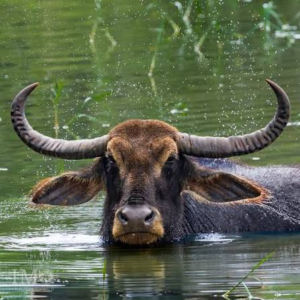
- It is also called Asiatic buffalo.
- It is a large bovine native to the Indian subcontinent and Southeast Asia.
- Habitat: The wild water buffalo occurs in India, Nepal, Bhutan, Thailand, and Cambodia.
- Indian distribution – Kaziranga, Manas and Dibru-Saikhowa National Parks, Laokhowa Wildlife Sanctuary and Bura Chapori Wildlife Sanctuary and in a few scattered pockets in Assam,
- IUCN status: Endangered.
Indian rhinoceros (Greater One-Horned Rhino)
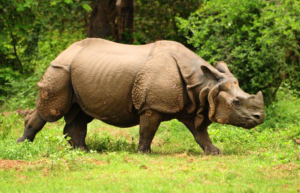
- Scientific name – Rhinocerotidae
- Habitats – Rhinos’ habitats include tropical and subtropical grasslands, savannas and shrublands, tropical moist forests, deserts and shrublands.
- In India, it is found in Assam – Kaziranga National Park, Manas National Park, Pobitora Reserve Forest, Orang National Park, and Laokhowa Reserve Forest.
- Three species of rhino – There are three species of rhino in Asia — Greater one-horned, Javan, and Sumatran.
- Rhino range countries – India, Nepal, Bhutan, Indonesia, and Malaysia. These countries are also known as Asian Rhino Range Countries.
- Great one-horned rhino – The Indian state of Assam is home to the largest population of greater-one horned rhinos, with more than 90% in Kaziranga National Park.
- World Rhino Day – It is celebrated on September 22nd of every year.
Conservation status
- IUCN – Vulnerable
- Wildlife (Protection) Act 1972 – Schedule I
River Dolphins
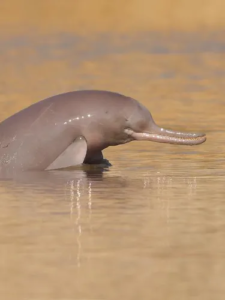
- India is home to two species of freshwater dolphins: Ganges (Platanista gangetica) and Indus (Platanista minor).
Ganges River Dolphin (Platanista Gangetica)
Characteristics
- Functionally blind; relies on echolocation for hunting.
- Known as Susu due to the sound it makes while breathing.
- Exclusively freshwater species, inhabiting Ganga and Brahmaputra river basins in India, Nepal, and Bangladesh.
- Threats: Habitat destruction, pollution and hunting.
conservation Status
- Indian Wildlife (Protection) Act, 1972: Schedule I
- CITES (Convention on International Trade in Endangered Species): Appendix I
- CMS (Convention on Migratory Species): Appendix I
- IUCN Red List: Endangered
National & State Recognition
- Declared India’s National Aquatic Animal in 2009.
- Recognized as the State Aquatic Animal of Assam.
Indus River Dolphin (Platanista minor)
Characteristics:
- Functionally blind, navigates using echolocation.
- Locally called Bhulan in the region.
- Found mainly in the Indus River System (Pakistan) with a small population in India’s Beas River.
- Threats: Habitat fragmentation, Restricted range, leading to population isolation.
Conservation Status:
-
- Indian Wildlife (Protection) Act, 1972: Schedule I
- CITES: Appendix I
- IUCN Red List: Endangered.
- State Recognition:Declared the State Aquatic Animal of Punjab.
Do You Know?
-
- One more species of Dolphin i.e. Irrawaddy dolphin found in India in Chilika Lake (Asia’s largest brackish water lagoon) in Odisha.
- Unlike the other two species, Irrawaddy dolphins are not blind and have a bulbous head with no beak.
- IUCN Red List Conservation status: Critically Endangered.
Brow-antlered deer
- The Sangai, also known as the Manipur brow-antlered deer.
- It is a deer species found exclusively in Manipur, within the Keibul Lamjao National Park, India.
- It serves as the official state animal of Manipur and is famously nicknamed the “dancing deer” due to its unique, delicate gait over its marshy habitat.
















Leave a Reply