
Methane Gas Explosion in Sikkim
Environment
News –
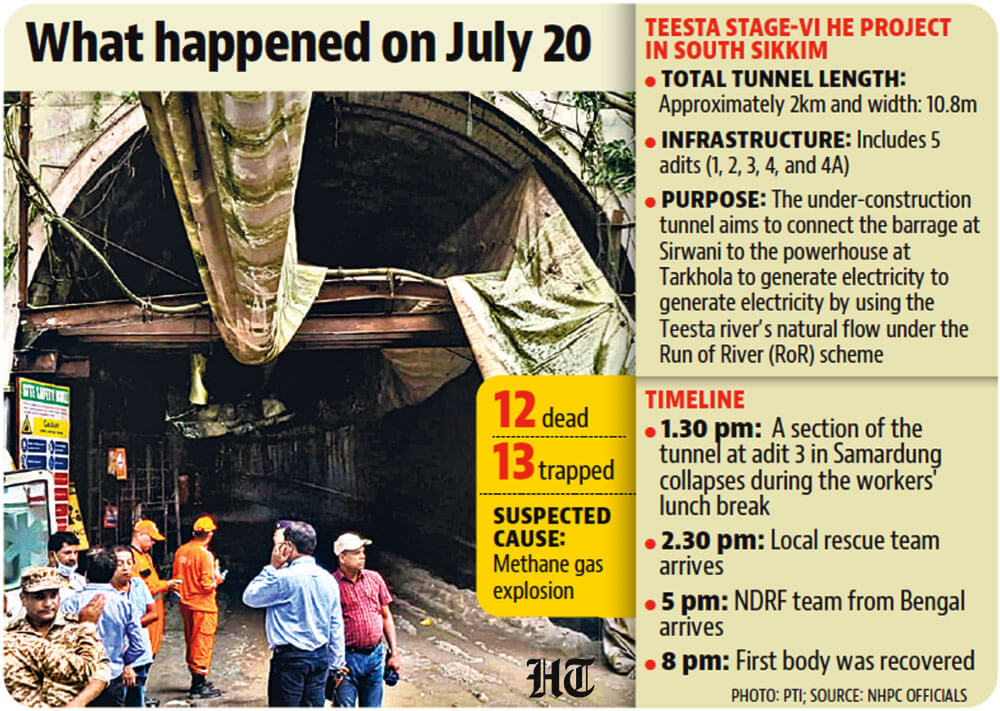
- A suspected methane gas explosion inside an under-construction tunnel of the Teesta Hydroelectric Project in Sikkim, resulted in the death of at least 20 people.
Methane
- Methane (CH₄) is a colorless, odorless, and highly flammable gas, and it is the primary component of natural gas.
- It has a relatively short atmospheric lifetime of about 12 years, compared to carbon dioxide.
- Methane as a Greenhouse Gas: Methane is a highly potent greenhouse gas with a strong short-term warming impact.
- It is over 80 times more effective than carbon dioxide at trapping heat over a 20-year period.
- It is responsible for around 30% of the current global warming since the pre-industrial era.
- Major Sources: Human-driven emissions arise mainly from oil and gas production, coal mining, livestock enteric fermentation (burps), and decomposing waste in landfills.
- Natural sources include Wetlands, marine sediments and hydrates and geological Sources like volcanoes.
Mission Golden Spice
Economy
Context –
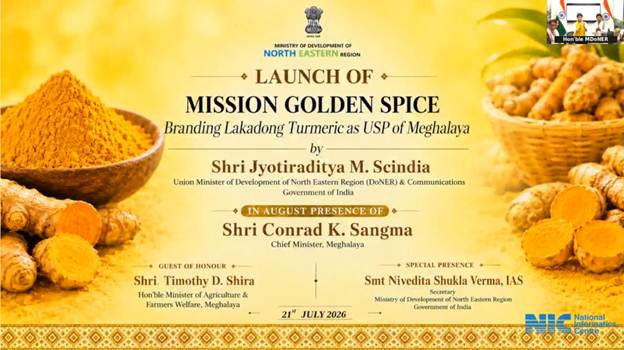
- The Ministry of Development of North Eastern Region launched Mission Golden Spice to develop Meghalaya’s GI-tagged Lakadong turmeric as a global premium spice.
- Significance – It advances the ‘Ashtalakshmi initiative’, which identifies a Unique Selling Proposition (USP) for each of the northeastern states.
Lakadong Turmeric
- It is a premium variety of turmeric cultivated in Meghalaya’s Jaintia Hills and is renowned for its high curcumin content of 7–12%, compared with 2–3% in conventional varieties.
- Traditionally cultivated by indigenous farmers without synthetic fertilisers or pesticides, using heirloom seed rhizomes (100% organic).
- It was formally granted a GI tag in 2024.
- India is the largest producer, consumer and exporter of turmeric, accounting for over 70% of global production.
- Major producing states – Telangana, Maharashtra, Tamil Nadu and Andhra Pradesh.
Gems of India Challenge
Polity
News-
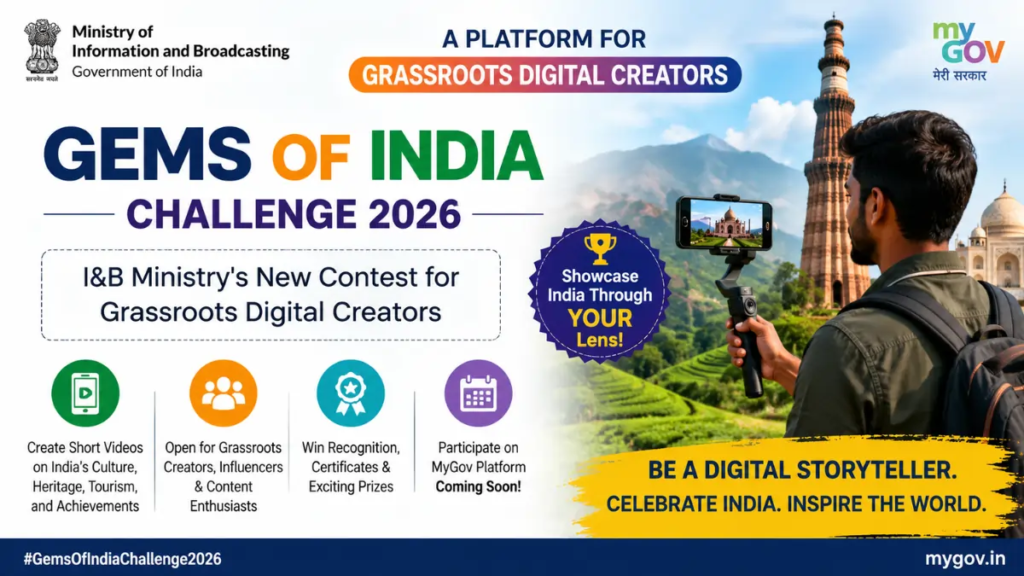
- The Ministry of Information and Broadcasting (MIB) launched the pilot phase of Gems of India Challenge.
About
- Objective – It is a nationwide initiative to identify, nurture and promote grassroots digital creators.
- The challenge, built on MyWAVES platform under WAVES OTT, invites citizens to create short videos showcasing unique stories and cultural heritage of their districts.
- The pilot phase will cover Andaman and Nicobar Islands, Arunachal Pradesh, Chandigarh, Dadra and Nagar Haveli and Daman and Diu, Goa, and Ladakh.
- It offers district-level awards of ₹50,000 each for up to 20 creators per district, state-level awards of two lakh rupees, and national awards of five lakh rupees during the nationwide rollout.
- WAVES – It is an Over-The-Top (OTT) platform by Prasar Bharati, was launched at 55th International Film Festival of India (IFFI), held in Panaji, Goa, on 20th November 2024.
- MyWAVES is a new feature within WAVES OTT platform that enables citizens to create, upload and share content aimed at promoting the ‘Orange Economy’.
Connect with basics – Orange Economy
-
- It is also known as the Creative Economy
- It refers to knowledge-based economic activities where individual creativity, skill, talent, and cultural heritage are transformed into economic value through Intellectual Property (IP).
- Origin: Coined by Colombian economists Felipe Buitrago and Iván Duque (former President of Colombia) in their 2013 book, The Orange Economy: An Infinite Opportunity.
- Symbolism: The color orange was chosen as it has historically been associated with culture, creativity, and identity.
- Core Sectors: Includes film, music, gaming, animation, visual effects (AVGC), fashion, publishing, software development, and cultural tourism.
- Recent developments – Karnataka’s AVGC-XR Policy 3.0 (2024–2029) is a strategic framework designed to establish the state as a global leader in Animation, Visual Effects, Gaming, Comics, and Extended Reality
Naying Hydro Electric Project
Economy
News-
- The Ministry of Information and Broadcasting (MIB) launched the pilot phase of Gems of India Challenge.
About
- Objective – It is a nationwide initiative to identify, nurture and promote grassroots digital creators.
- The challenge, built on MyWAVES platform under WAVES OTT, invites citizens to create short videos showcasing unique stories and cultural heritage of their districts.
- The pilot phase will cover Andaman and Nicobar Islands, Arunachal Pradesh, Chandigarh, Dadra and Nagar Haveli and Daman and Diu, Goa, and Ladakh.
- It offers district-level awards of ₹50,000 each for up to 20 creators per district, state-level awards of two lakh rupees, and national awards of five lakh rupees during the nationwide rollout.
- WAVES – It is an Over-The-Top (OTT) platform by Prasar Bharati, was launched at 55th International Film Festival of India (IFFI), held in Panaji, Goa, on 20th November 2024.
- MyWAVES is a new feature within WAVES OTT platform that enables citizens to create, upload and share content aimed at promoting the ‘Orange Economy’.
Connect with basics – Orange Economy
-
- It is also known as the Creative Economy
- It refers to knowledge-based economic activities where individual creativity, skill, talent, and cultural heritage are transformed into economic value through Intellectual Property (IP).
- Origin: Coined by Colombian economists Felipe Buitrago and Iván Duque (former President of Colombia) in their 2013 book, The Orange Economy: An Infinite Opportunity.
- Symbolism: The color orange was chosen as it has historically been associated with culture, creativity, and identity.
- Core Sectors: Includes film, music, gaming, animation, visual effects (AVGC), fashion, publishing, software development, and cultural tourism.
- Recent developments – Karnataka’s AVGC-XR Policy 3.0 (2024–2029) is a strategic framework designed to establish the state as a global leader in Animation, Visual Effects, Gaming, Comics, and Extended Reality
Odesa Port
International
News –
- India condemned the attack on the vessel MV GOLDEN LEO, a commercial cargo vessel, claiming lives of four Indian Nationals while departing the port of Odesa in Ukraine.
Odesa Port
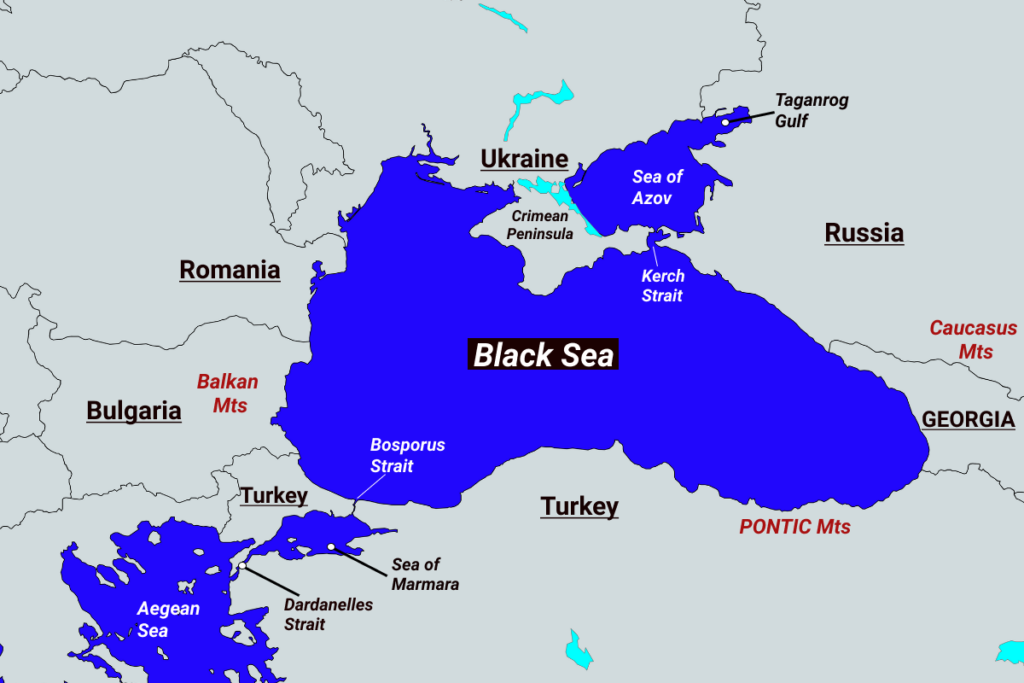
- Odesa port is one of the largest ports of Black Sea-Azov basin, located in the northwestern part of Black Sea.
Black Sea
- Located in – The Black Sea is located between Eastern Europe and Western Asia.
- Surrounded by – It is surrounded by the Pontic, Caucasus, and Crimean Mountains in the south, east and north respectively.
- Uniqueness – There is a significant absence of oxygen in the water (anoxic waters).
- Connectivity – The Black Sea is also connected to the Sea of Azov by the Strait of Kerch.
- Turkish straits system – Dardanelles, Bosporus and Marmara Sea forms a transitional zone between the Mediterranean and the Black Sea.
- Bordering countries of Black Sea are – Russia, Ukraine, Georgia, Turkey, Bulgaria and Romania.
Patent Mitra Initiative
Economy

News
- Indian Council of Medical Research (ICMR) licensed three indigenous biomedical technologies to domestic manufacturers under its Medical Innovations Patent Mitra initiative.
Patent Mitra Initiative
- It is a centralized digital platform acting as an Intellectual Property (IP) incubator for India’s healthcare sector.
- The National Medical Commission (NMC) has mandated all Indian medical colleges to adopt it.
Institutional Structure
- Lead Agency: Developed and managed by the Indian Council of Medical Research (ICMR).
- Key Partners: Guided by NITI Aayog alongside the Department of Pharmaceuticals (DoP) and DPIIT.
Core Objectives
- Lowering Barriers: Eliminates high costs and bureaucratic hurdles of filing domestic and international patents.
- Commercialization: Translates lab research into real-world diagnostics, therapeutics, and medical devices.
- Self-Reliance: Boosts local biomedical manufacturing under the “Make in India” vision.
Connect with the basics – Intellectual Property rights
- Definition – It means providing property rights through patents, copyrights and trademarks.
- Holders of intellectual property rights have monopoly on the usage of property or items for a specified time period.
Types of intellectual property
- Patents – It is used for protecting new inventions, ideas or processes. Patent holders need to pay periodic government renewal fees. An approved patent is for a limited time period.
- Copyrights – It protects the ideas, examples would be written works, music, art etc.
- Trademarks – It is something that protects the symbols, colors, phrases, sounds, design etc.
- Trade Secrets – It may be strategies, systems, formulas or other confidential information of an organization that provides them competitive advantage in the market.
National IPR Policy
- Adopted in – May 2016
- Objective – To guide future development of IPRs in the country.
- Motto – Creative India; Innovative India
- Cell for IPR Promotion & Management (CIPAM) – It is set up under the aegis of DIPP; is to be the single point of reference for implementation of the objectives of the National IPR Policy.
- TRIPS – India’s IPR regime is in compliance with the WTO’s agreement on Trade-Related Aspects of Intellectual Property Rights (TRIPS).
KAPILA
- Abbreviation – Kalam Program for Intellectual Property Literacy and Awareness campaign.
- Nodal Ministry – Ministry of Education
Objectives of the campaign include
- To create awareness regarding Intellectual Property Rights(IPR) in Higher Education Institutions(HEIs).
- To develop a training program on IPR for faculty and students of Higher Education Institutions.
Additional Information – World Intellectual Property Organization (WIPO)
-
- It is a self-funding agency of the United Nations, that serves the world’s innovators and creators, ensuring that their ideas travel safely to the market and improve lives everywhere.
- History: WIPO was established in 1967 by the WIPO Convention.
- Members: The organization has 193 member states including both developing and developed nations like India, Italy, Israel, Austria, Bhutan, Brazil, China, Cuba, Egypt, Pakistan, the U.S. and the U.K.
- India joined WIPO in 1975.
- Headquarters: Geneva, Switzerland.
Leave a Reply