Statewide respiratory health surveillance program for traffic police
News –
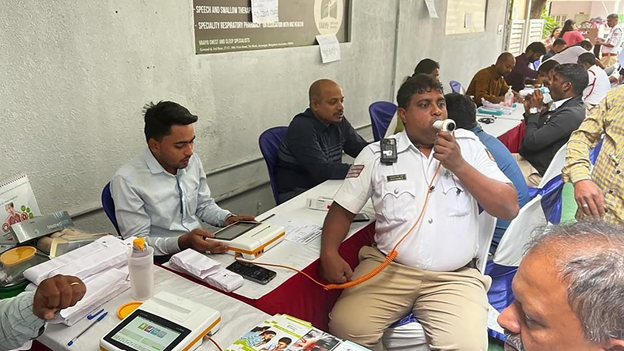
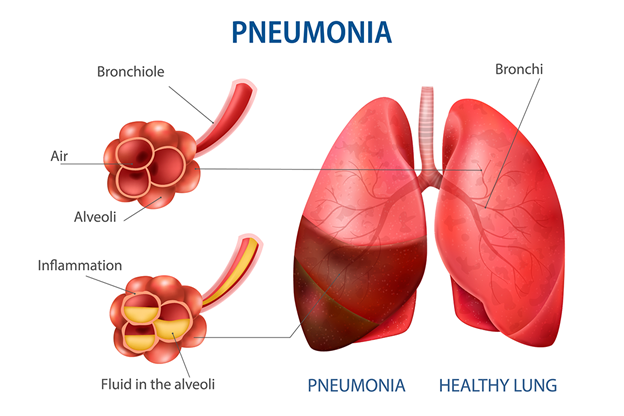
The Karnataka Home Department launched a first-of-its-kind Statewide respiratory health surveillance program for traffic police and frontline personnel.
This expansion follows a rigorous two-year screening project in Bengaluru involving 3,287 traffic police, which identified significant risk factors associated with constant urban air pollution exposure.
Implementation Agency: The government has officially partnered with the Vaayu Respiratory Foundation as the primary technical agency to drive the programme.
Integrated Public Grievance Redressal System for gig workers
News –
Karnataka government became the first state in India to launch and operationalize a dedicated digital grievance redressal system for platform-based gig workers.
Basic term –
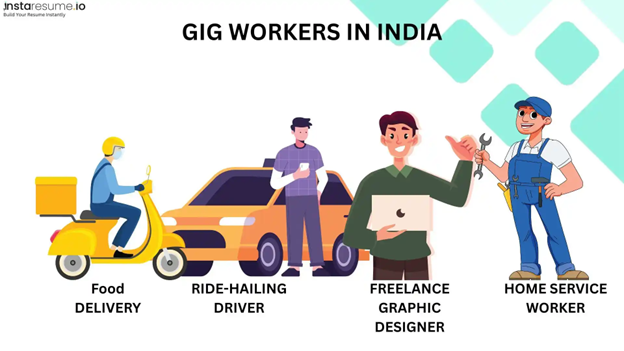
A gig worker is an individual who performs short-term, project-based, or on-demand tasks as an independent contractor rather than a traditional full-time employee.
Integrated Public Grievance Redressal System for gig workers
Eligible Issues – Account deactivation, payment withholding, and penalties.
Company Timeline: Platforms must rule on disputes within 45 days.
Additional Information – Karnataka Platform-Based Gig Workers (Social Security and Welfare) Act, 2025
Mandate – to provide legal recognition and social protection to approximately 400,000 gig workers.
Key Features
Welfare Board & Fund: Establishes a tripartite Gig Workers Welfare Board headquartered in Bengaluru to oversee registrations and schemes.
It also creates a dedicated Welfare Fund financed by a “welfare fee” of 1% to 5% of the payout per transaction, levied on aggregator platforms.
Registration: All gig workers must be registered and assigned a Unique ID applicable across all platforms to access benefits.
Algorithmic Transparency: Platforms are required to disclose details about their automated monitoring and decision-making systems (algorithms) in simple language to ensure fairness in task allocation and earnings.
Grievance Redressal: A two-tier mechanism is mandated: first through an Internal Dispute Resolution Committee (IDRC) at the platform level, followed by an appeal to the Welfare Board.
Termination Protections: Platforms cannot deactivate or terminate a worker without providing a valid written reason and a 14-day prior notice (except in cases of bodily harm).
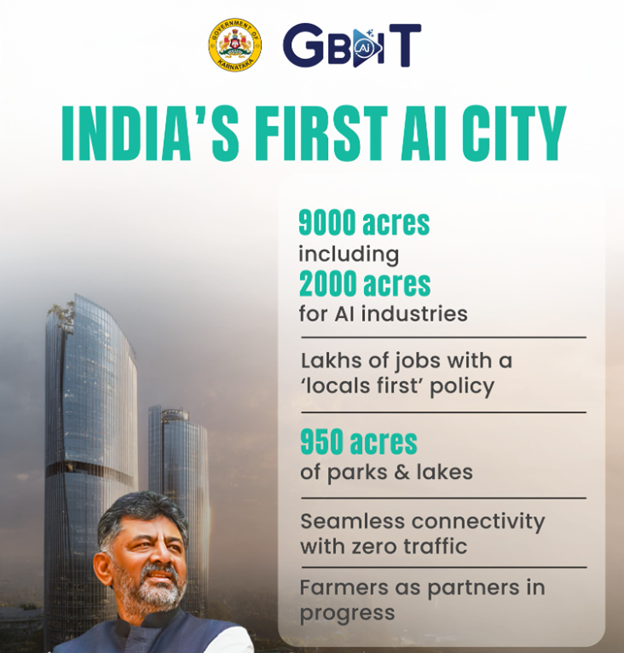
It is also known as the Greater Bengaluru Innovation and Tech City (GBIT).
It is an upcoming Rs 18,133-crore futuristic “work-live-play” metropolis.
Located in the Bidadi region about 30 km from central Bengaluru,
Area – the project spans approximately 7,481 acres across nine villages.
Significance – to serve as Bengaluru’s second Central Business District (CBD) to alleviate urban congestion.
Key details of the project include:
India’s First AI City: Dedicated space—roughly 2,000 acres—is earmarked to house AI-driven industries, tech hubs, and next-generation innovation centers.
Design & Concept: Built on the “work-live-play” model, the smart-green city will feature residential zones, world-class medical and educational hubs,commercial spaces, and interconnected blue-green infrastructure (restored lakes and parks).
Connectivity: The township features a “zero-traffic” layout integrated with high-speed transit. It will be directly connected to major highways like the Bengaluru-Mysuru Expressway, NICE Road, and the Satellite Town Ring Road (STRR), with planned extensions for metro and suburban rai
Compensation: Land acquisition spans villages including Byaramangala, Bannigiri, Hosuru, and Vaderahall
Landowners are provided a choice between direct cash compensation or 9,693 sq. ft. of developed residential plot per acre acquired.
The Karnataka government will establish three sustainable data parks to decentralize tech infrastructure outside Bengaluru.
About
Bengaluru: A 500MW park will be developed near Hoskote. It will be powered directly by solar energy from the Pavagada Solar Park and utilize 60 MLD of secondary-treated water supplied by the Bengaluru Water Supply and Sewerage Board (BWSSB).
Mangaluru: Around 350 acres of Karnataka Industrial Areas Development Board (KIADB) land have been identified in the Baikampady Industrial Area.
Mysuru: Earmarked as the state’s second major IT hub, suitable land parcels are currently being evaluated and finalized for the third part.
The Kannada Development Authority (KDA) submitted a landmark report titled “Why do children fail in Kannada?” to the state government.
It recommends making Kannada learning compulsory across all school boards (including CBSE and ICSE)
Key Recommendations & Policy Measures
Mandatory Across All Boards: Kannada must be taught as a compulsory first or second language in all schools in the state, regardless of the curriculum.
25% Government Job Quota: At least 25% of state government jobs will be reserved for children who have studied in Kannada medium up to at least Class 10.
Bilingual Policy: The committee has advised replacing the three-language formula with a bilingual policy to reduce the academic load on students.Early
Childhood Learning: The report demands that Kannada be made mandatory at all levels, starting from Anganwadi and pre-primary, with heavily language-focused textbooks instead of content-based ones
Legal Backing: These suggestions align with the broader implementation of the Kannada Language Learning Act, 2015, which has been in effect since 2017.
Additional Information – The Kannada Language Learning Act, 2015
Mandate – It is a Karnataka state law mandating that Kannada be taught as a compulsory subject (either as the first or second language) in all schools from Standards I to X.
The act applies to all schools across the state, including CBSE, ICSE, and state board institutions.
The Pan-IIT Bangalore Summit 2026 took place on May 16, 2026, at the Taj Yeshwantpur in Bengaluru,
About
Organised by – Government of Karnataka and the Pan-IIT Alumni India Association.
Theme: Centered strictly on “Technology Sovereignty”
Mandate – to foster national self-reliance and deep-tech innovation.
Core Focus Tracks: Featured specialized independent sessions on AI, deep-tech, semiconductors, defense, energy, mobility, and healthcare.
Massive Hackathon: Included a competition with over 12,000 participants focused on solving real-world digital governance challenges provided directly by the state government.
The Union Government’s Urban Challenge Fund (UCF) allocates ₹1 lakh crore in Central Assistance to promote market-led, reform-driven urban transformation across India.
Out of this nationwide fund, Karnataka expects a baseline allocation of approximately ₹5,000 crore to ₹5,500 crore
Urban Challenge Fund (UCF)
Objective – It is a flagship scheme designed to transform India’s urban landscape by shifting from traditional grants to market-linked, reform-driven infrastructure financing.
Financing – Centrally Sponsored Scheme
Nodal Ministry: Ministry of Housing and Urban Affairs (MoHUA)
Timeline: FY 2025–26 to FY 2030–31
Three Strategic Verticals
Cities as Growth Hubs: High-impact transit-oriented development (TOD), economic corridors, and greenfield townships.
Creative Redevelopment: Retrofitting congested city cores, heritage sites, and regenerating brownfield areas.
Water and Sanitation: Modernizing solid waste management, legacy waste remediation, and clean water supply grids.
PCV Vaccine: Rolled out under the Universal Immunization Programme (UIP). Protects against pneumonia, meningitis, and sepsis.
SAANS Campaign: Social Awareness and Action to Neutralise Pneumonia Successfully. Drives early identification in under-5 children.
Integrated Action Plan for Prevention and Control of Pneumonia and Diarrhea – Integrated strategy targeting India’s two highest under-5 child killers: pneumonia and diarrhea.
Global Frameworks
Global Action Plan for the Prevention and Control of Pneumonia and Diarrhoea (GAPPD) : WHO/UNICEF plan aiming for fewer than 3 child pneumonia deaths per 1,000 live births.
World Pneumonia Day: Observed every year on November 12.