Category: State Current Affairs

  • HPV vaccination drive to prevent cervical cancer

    HPV vaccination drive to prevent cervical cancer

    News – 

    • The Karnataka government, in alignment with a nationwide initiative, officially launched a major Human Papillomavirus (HPV) vaccination drive on February 28, 2026, to prevent cervical cancer among adolescent girls. 

     Key Details of the Vaccination Drive

    • Target Group: The campaign primarily targets girls who have completed 14 years of age but are below 15 years.
    • Scale of the Initiative: Approximately 6 lakh girls in Karnataka have been identified as eligible beneficiaries, contributing to a national target of nearly 1.15 crore girls.
    • Vaccine Type & Dosage: The drive uses the quadrivalent Gardasil-4 vaccine, which protects against four common HPV strains (6, 11, 16, and 18). Under the current national guidelines, it is administered as a single-dose intramuscular injection.
    • Cost: The vaccine is provided free of cost at government health facilities.
    • Duration: The initial intensive campaign is set for three months (90 days) in mission mode, after which the vaccine will be integrated into routine immunization days
  • Karnataka launches State Action Plan on snakebite and rabies

    Karnataka launches State Action Plan on snakebite and rabies

    News – 

    • Karnataka has launched the State Action Plan for Prevention and Control of Snakebite Envenoming (SAPSE) and the State Action Plan for Rabies Elimination (SAPRE). 
      • It is the first state in India to implement a comprehensive action plan specifically for snakebites, aiming to drastically reduce fatalities. 
    • Both plans aim for zero rabies deaths and reduced snakebite incidents by 2030. 

    Key Aspects of the Action Plans

    SAPSE (Snakebite Action Plan):

      • Notifiable Disease: Snakebite cases are now notifiable in Karnataka, ensuring mandatory reporting.
    • Treatment: Ensures availability of anti-snake venom (ASV) and free, immediate, no-advance-payment treatment at all health facilities.
    • Measures: Focuses on strengthening surveillance, training medical staff, and strengthening public awareness.

    SAPRE (Rabies Action Plan):

    • Target: Eliminate dog-mediated human rabies by 2030.
      • Rabies-Free Cities: Initiating the “Rabies-Free Cities” project in 11 major urban centres focusing on mass dog vaccinations and population management.
    • Health Initiatives: Free anti-rabies vaccines and immunoglobulin are provided at government hospitals.
    • Notifiable Disease: Rabies was declared a notifiable disease in 2022 to strengthen surveillance.
    • Significance – These initiatives are guided by a “One Health” approach, integrating human health, animal health, and environmental departments.
  • Kusuma Sanjeevini programme

    Kusuma Sanjeevini programme

    News – 

    • In a significant step toward improving the quality of life for those with rare genetic blood disorders, the Karnataka government launched the ‘Kusuma Sanjeevini’ programme. 

    Kusuma Sanjeevini programme

    • Uniqueness – It is India’s first statewide prophylaxis programme dedicated to providing free, advanced treatment for patients living with haemophilia. 

    Key Objectives and Benefits

    • The scheme aims to shift haemophilia care from reactive (treating bleeds after they occur) to preventive (prophylactic), ensuring a better quality of life and a “Zero Bleeds” state for patients. 
    • Free Advanced Medication: Eligible patients receive Emicizumab, a high-end monoclonal antibody injection, entirely free of cost.
    • Ease of Treatment: Unlike traditional factor replacements that require frequent painful infusions, this breakthrough drug is administered just once a month as a subcutaneous (under-the-skin) injection.
    • Financial Relief: The treatment typically costs around ₹5 lakh per patient annually, a burden now fully covered by the state government.
    • Emergency Support: The programme includes a dedicated, free 108 ambulance service for the rapid emergency transport of haemophilia patients across the state.
    • Infrastructure: Treatment is available at 36 Integrated Treatment Centres for Haemoglobinopathies and Haemophilia (ICHH) located in district and taluk hospitals

    Additional Information – Haemophilia

    • It is a rare genetic bleeding disorder where the blood does not clot properly due to a deficiency in specific clotting factors. 

    Core Characteristics

    • Inheritance Pattern: It is an X-linked recessive disorder. The defective gene is located on the X chromosome, making males much more vulnerable.
    • Prevalence: It affects approximately 1 in 10,000 people globally.
    • India Scenario: India has the highest number of patients in the world (~19,000–20,000 registered).

    Types of Haemophilia

    Type 


    Notes

    Haemophilia A


    The most common form (“Classic Haemophilia”), accounting for ~80% of cases.

    Haemophilia B


    Also known as Christmas Disease.

    Haemophilia C


    A rare autosomal form that affects both genders equally.

    Treatment & Innovations

      • Replacement Therapy: The standard treatment involving regular intravenous infusions of the missing clotting factor.
      • Gene Therapy Breakthrough: India recently conducted its first human clinical trial for Haemophilia A gene therapy using a lentiviral vector to insert a functional gene into a patient’s stem cells.
    • Prophylaxis: A shift from “on-demand” treatment (after bleeding starts) to preventive care to avoid long-term joint damage. 

    Key Observances

    • World Haemophilia Day: Observed on April 17th annually.
    • 2025 Theme: “Access for All – Women and Girls Bleed Too”
  • Asha Kirana: Karnataka State Eye Care Programme

    Asha Kirana: Karnataka State Eye Care Programme

    News – 

    • Asha Kirana initiative reaches 1.4 cr. people across Karnataka
    • 393 permanent vision centres have been established across district hospitals, taluk hospitals, and community health centres

    Asha Kirana: Karnataka State Eye Care Programme

      • It refers to a major eye-care initiative by the Government of Karnataka, 
    • Launched by the Department of Health and Family Welfare, 
    • Objective – this is a comprehensive vision care programme aimed at eradicating avoidable blindness across the state. 
    • Key Services – It Provides free eye screenings, spectacles for vision correction, and free cataract surgeries.
  • Swachh Bharat Mission-Urban 2.0

    Swachh Bharat Mission-Urban 2.0

    News – 

    • Centre allocates ₹2,245.30 crore to Karnataka under SwachhBharat Mission-Urban 2.0.
    • Significance of the move – The funds aim to strengthen urban infrastructure, focusing on making cities garbage-free and improving waste treatment processes across Karnataka.

    Swachh Bharat Mission-Urban 2.0.

    • Launched on – October 1, 2021. 
    • It is aimed at making all Indian cities “Garbage Free” by 2026. 
    • It is implemented by the Ministry of Housing and Urban Affairs (MoHUA)

    Key Objectives & Vision

    • Garbage-Free Cities: Achieving 100% scientific processing of municipal solid waste in all statutory towns.
    • Sustaining ODF Status: Moving beyond Open Defecation Free (ODF) to ODF+ (functional/hygienic public toilets) and ODF++ (complete faecal sludge management).
    • Water+ Certification: Ensuring no untreated wastewater is discharged into open environments or water bodies.
    • Remediation of Legacy Waste: Processing waste at all legacy dumpsites (landfills) to reclaim land and prevent environmental hazards.

    Circular Economy: Promoting the 3Rs (Reduce, Reuse, Recycle) to treat waste as a resource.

  • Karnataka Information Commission (KIC)

    Karnataka Information Commission (KIC)

    News –

    • The Karnataka Information Commission (KIC) has claimed to be the fastest in India for disposing of second appeal petitions under the RTI Act.

    Karnataka Information Commission (KIC)

    • It is an autonomous statutory body established on March 2, 2006, under the Right to Information (RTI) Act, 2005.
    • It serves as the final appellate authority for citizens seeking information from public authorities within the state of Karnataka.

    Key Leadership & Structure

    • State Chief Information Commissioner (In-Charge): Dr. H.C. Sathyan.
    • Information Commissioners: The commission includes several State Information Commissioners (SICs), such as Shri. Raman K., Dr. Harish Kumar, Sri. Rudranna Harthikote, and Sri. Rajashekara S..
    • Benches: In addition to its main headquarters in Bengaluru, the KIC operates regional benches in Belagavi and Kalaburagi to improve accessibility.

    Core Functions & Powers

    • Adjudication: The KIC hears Second Appeals and Complaints regarding the refusal of information or delays by Public Information Officers (PIOs).
    • Penalties: The commission has the authority to impose financial penalties—up to ₹25,000—on officials who delay information.
    • Judicial Authority: It possesses the powers of a Civil Court, including the ability to summon witnesses, require oral or written evidence under oath, and inspect public records.
  • Tulu language

    Tulu language

    News –

    • The Karnataka government has expressed support for declaring Tulu as the State’s second additional official language.

    Tulu language

    • Historical Roots and Geography: Boasting a recorded history of over 3,000 years, Tulu is predominantly spoken in the coastal Karnataka districts of Udupi and Dakshina Kannada.
    • Linguistic Heritage: Featuring its own distinct script, Tulu holds the distinction of being one of only five literary Dravidian languages, alongside Telugu, Tamil, Kannada, and Malayalam.
    • Constitutional Recommendation: A state-constituted committee in 2023, headed by educationist Mohan Alva, officially recommended declaring Tulu as the State’s second official language under Article 345 of the Indian Constitution.
  • New ‘Sahyadri Sindhura’ Red Rice Variety

    New ‘Sahyadri Sindhura’ Red Rice Variety

    News – 

    • The Keladi Shivappa Nayaka University of Agricultural and Horticultural Sciences in Shivamogga recently launched a highly popular, nutrient-rich red rice variety named “Sahyadri Sindhura.”

    ‘Sahyadri Sindhura’ Red Rice Variety

    • The Cross-Breed: This new rice is a hybrid created by crossing two popular traditional rice varieties: Jyothi and Biliya.
    • Nutritional Benefits: This fine-grain red rice is packed with high protein, iron, and zinc.It also has a low glycaemic index, making it a much healthier dietary option.
    • High Crop Yield: It gives an impressive yield of 53 to 54 quintals per hectare in irrigated lands, easily outperforming traditional varieties that only yield 40 to 45 quintals.
    • Fast Maturation: The crop grows relatively fast and is ready to harvest in just 120 days.
    • Disease and Pest Resistance: Farmers benefit greatly because the crop is naturally resistant to blast disease and can tolerate common agricultural pests like leaf folders and stem borers.
    • Extra Benefits for Farmers: Along with fetching a strong market price (₹70 to ₹80 per kg), the crop produces high-quality straw that serves as excellent fodder for cattle.
    • Official Recognition: Developed after five years of rigorous research by a team led by Dr. B.M. Dushyantha Kumar, the variety is officially registered with the National Bureau of Plant Genetic Resources in New Delhi.
  • Karez Water System

    Karez Water System

    News – 

    • Recent unauthorized digging has damaged the centuries-old Naubad–Aliyabad karez in Bidar, causing the district administration to halt activities to protect this ancient water system.

    Karez (Qanat):

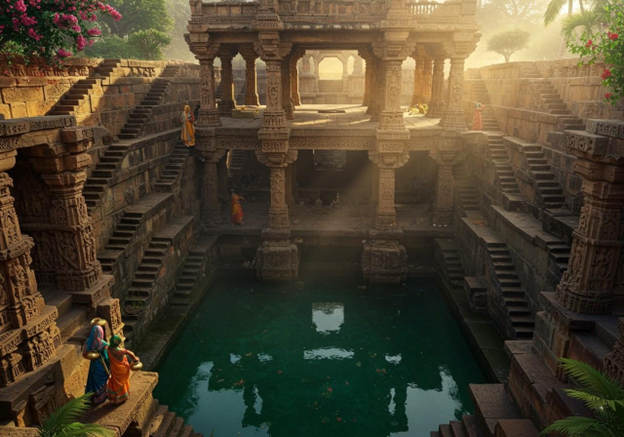
    • It is an ancient underground water-harvesting system.
    • It uses a gently sloping horizontal tunnel to bring groundwater from higher areas to the surface using gravity.
    • Key Design Features: The system includes vertical shafts at regular intervals for air and maintenance. Because the water flows underground, it highly minimizes water evaporation and contamination.
    • Historical Background: It was built in the 15th century during the Bahmani Sultanate. It is one of India’s earliest adaptations of Persian-Central Asian water technology.
    • Unique Geology: The Bidar karez is extremely rare because it is carved entirely through laterite rock, unlike most others globally that are built in limestone or soft soil.
    • Ecological Importance: It is not just a monument, but a living groundwater recharge system that can help solve Bidar’s chronic water shortage. If properly conserved, it has the potential to become a UNESCO World Heritage site.
  • Export of Karnataka’s GI-Tagged Produce to the Maldives

    Export of Karnataka’s GI-Tagged Produce to the Maldives

    News –

    • Prime Minister Narendra Modi recently highlighted the first-ever air-shipment of three Geographical Indication (GI)-tagged agricultural products from Karnataka to the Maldives during his ‘Mann Ki Baat’ radio broadcast.
    • Export Statistics: The successful trial shipment included 500 kg of Nanjangud Rasabale (bananas), 250 kg of Mysuru betel leaves, and 500 kg of Indi lemons.

    Nanjangud Rasabale (Banana):

    • GI Status: Awarded in 2006.
    • Region: Grown in Mysuru and Chamarajanagar districts of Karnataka.
    • Unique Features: Known for its unique aroma, thick pulp, and medicinal properties (believed to cure neurological ailments).
    • Soil Requirement: Thrives specifically in black clay alluvial saline soil found on the banks of the Kapila River.
    • Threat: Susceptible to Panama Wilt disease.

    Mysuru Betel Leaves (Veelyadele):

    • Region: Primarily grown in and around Mysuru.
    • Characteristics: Locally known as Chigurele, they are prized for their smooth texture, taste, and quality.

    Indi Limons (Lime):

    • Region: Cultivated in the Indi region of Vijayapura (Bijapur) district, Karnataka.
    • Export Value: Hailed as “superfoods” in international markets like the Maldives due to their high quality