Category: State Current Affairs

  • New Aerospace Common Facility Centre in Bengaluru

    New Aerospace Common Facility Centre in Bengaluru

    News – 

    • The Karnataka Budget 2026 announced the establishment of a new Aerospace Common Facility Centre (CFC) at the KIADB Aerospace Park in Bengaluru (₹30 crore) and a Flight Training School at Shivamogga and Vijaypura airports
    • The projects focus on enhancing aeronautical manufacturing, assembly, and training, with 25% of seats at the training school reserved for local and women candidates. 

    Key Details of the Aerospace Initiative:

      • Aerospace Common Facility Centre: Located in the KIADB Aerospace Park, Bengaluru, this facility will support manufacturing and assembly units with a ₹30 crore budget, backed by a ₹10 crore initial allocation.
      • Flight Training School: To be established under a PPP model, the school will be at Sogane (Shivamogga) and Vijaypura airport.
    • Focus Areas: The initiative aims to support R&D, maintenance, repair & overhaul (MRO), and aircraft manufacturing.
    • Projected Benefits: This move aims to boost Shivamogga as a key aviation training hub.
  • Karnataka Electric Bus Program (KEBP)

    Karnataka Electric Bus Program (KEBP)

    News – 

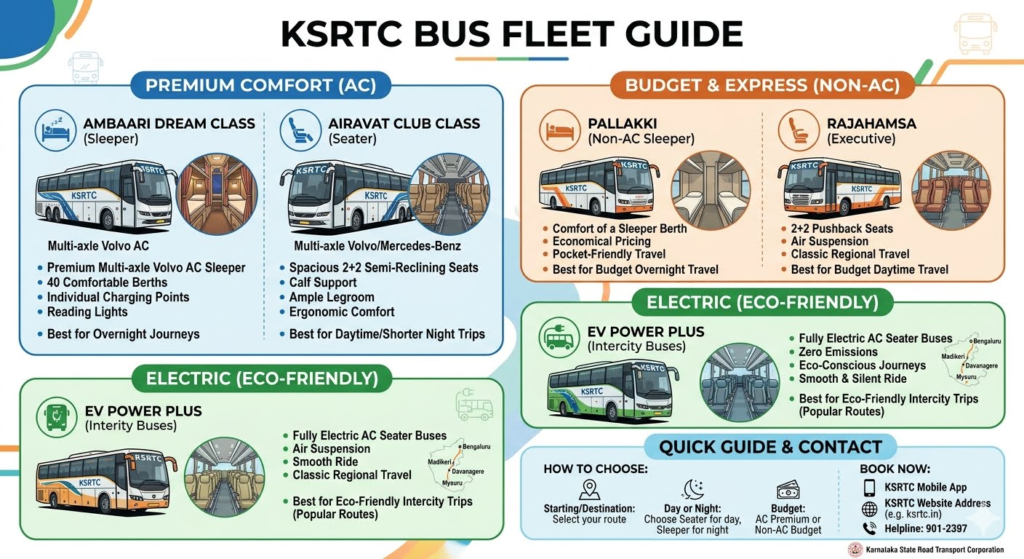
    • The Karnataka government, as part of the 2026–27 state budget, announced a ₹2,000 crore electric bus programme supported by World Bank aid to modernize public transport. 
    • This initiative, known as the Karnataka Electric Bus Program (KEBP), includes inducting 4,000 electric buses into state-run transport fleets and developing 94 charging depots. 

    Karnataka Electric Bus Program (KEBP)

      • Capacity Expansion: The initiative aims to modernize fleets for the Bengaluru Metropolitan Transport Corporation (BMTC) and other state road transport corporations.
      • Infrastructure Development: The program includes the development of 32 BMTC electric bus depots and 62 depots for other state road transport corporations.
      • Rural Focus: A significant portion, including nearly 1,950 electric buses, is expected to enhance connectivity in rural areas.
    • Objectives: The project aims to reduce pollution, lower fuel costs, and improve connectivity throughout the state.
  • Karnataka Digital Economy Mission (KDEM) annual report

    Karnataka Digital Economy Mission (KDEM) annual report

    News – 

    • The Karnataka Digital Economy Mission (KDEM) annual report for FY 2024-25 highlights a significant expansion in the state’s technology sector, specifically through the addition of 50 new Global Capability Centres (GCCs)

    Key Highlights from the KDEM Annual Report

    • GCC Distribution: Of the 50 new centres, 40 were established in Bengaluru, while 10 were set up in “Beyond Bengaluru” clusters.
    • Employment & Talent: The state’s GCC talent pool has surged to 6.5 lakh professionals in FY 2024-25, up from 3.5 lakh in 2021.
    • Startup Growth: The number of DPIIT-registered startups in Karnataka reached 16,700, with over 3,300 of these registered outside Bengaluru.
    • Infrastructure: Over 1.1 million sq. ft. of IT park infrastructure is now available in “Beyond Bengaluru” clusters to support decentralized growth.
    • Nipuna Karnataka: The report notes progress on this skilling initiative, with four corporate proposals approved to train approximately 10,000 beneficiaries in emerging tec

    Additional Information – The Karnataka Global Capability Centre (GCC) Policy 2024–2029.

    • It was launched on November 19, 2024.
    • It is India’s first dedicated framework to attract and scale Global Capability Centres (GCCs)
    • Objective –  The policy aims to double the state’s existing 500+ GCCs to 1,000 by 2029, generating $50 billion in economic output and creating 3.5 lakh new jobs.
  • Kappatagudda Wildlife Sanctuary

    Kappatagudda Wildlife Sanctuary

    News – 

    • In March 2026, the Karnataka High Court directed the state government to issue a new notification for Kappatagudda Wildlife Sanctuary in Gadag district. 
    • A Division Bench, led by Chief Justice Vibhu Bakhru and Justice C.M. Poonacha, ruled that reducing the sanctuary’s size to 244.15 sq. km in the 2019 notification was “ex facie arbitrary”.

    Kappatagudda Wildlife Sanctuary (KWS) 

    • It is located in the Gadag district of Karnataka. 
    • Often referred to as the “Western Ghats of North Karnataka,” 
    • Uniqueness – It is unique for being the only sanctuary in the state declared specifically for the conservation of wild flora. 
    • Establishment: Originally a reserve forest, it was declared a Wildlife Sanctuary in May 2019.
    • Geography: Features a dryland ecosystem with scrub jungles, grasslands, and dry deciduous forests.
    • Hydrology: It Serves as a major catchment area for the Tungabhadra River.
    • Flora: Renowned for its medicinal value, hosting over 400 species of medicinal plants. Dominant vegetation includes Teak, Butea monosperma, and Acacia scrub.
    • Fauna: Home to leopards, Indian wolves, striped hyenas, blackbucks, and the rare four-horned antelope (Chousingha).
    • Cultural Significance: Contains ancient ruins and temples from the Chalukya and Rashtrakuta dynasties, including the 12th-century Dambala Temple. 

    Recent Developments (2025–2026)

      • Eco-Sensitive Zone (ESZ): In June 2025, the Union Ministry of Environment, Forest and Climate Change (MoEFCC) notified an ESZ area of approximately 323 sq km around the sanctuary.
      • Boundary Expansion: In March 2026, the Karnataka High Court directed the state government to include an additional 55 sq km of reserve forest that had been arbitrarily omitted from the original 2019 notification, restoring the sanctuary to its intended size of roughly 300 sq km.
    • Rare Sightings: The rare White-naped Tit (Parus nuchalis) was recently recorded in the sanctuary’s scrub-thorn habitat. 

    Threats and Conservation

    • The sanctuary faces pressure from mining interests (gold and iron ore), illegal firewood collection, overgrazing, and habitat fragmentation.
  • Sharavathi Pumped Storage Hydroelectric project

    Sharavathi Pumped Storage Hydroelectric project

    News – 

    • The Karnataka High Court has issued notices to both the State and Central governments following a Public Interest Litigation (PIL) that challenges the wildlife boards’ approval for the ₹10,000 crore Sharavathi Pumped Storage Hydroelectric project. 
    • The court has also directed the State government and Karnataka Power Corporation Ltd. (KPCL) to halt all on-ground work within the forest areas of the Sharavathi Valley Lion Macaque Sanctuary and its eco-sensitive zone until further orders

    Sharavathi Pumped Storage Hydroelectric Project

      • Location – It is a pumped storage power project on the Sharavathi River in Karnataka.
    • Total power generation capacity – 2000 MW
    • Uniqueness – It stands as the largest pumped storage power generation unit in the country.

    It will be built between two existing reservoirs. 

      • The Talakalale dam, which stands at 62.48 meters tall, will be the upper reservoir.
      • This dam currently helps balance water for the existing Sharavathy hydroelectric project.
      • The Gerusoppa dam will be the lower reservoir, and it is about 64 meters tall. 
      • Water will be pumped uphill during the off-season using grid power and released downhill during peak demand to generate electricity. 
    • Modelled on the lines of Telangana’s Kaleshwaram project, it also aims to supply drinking water to Bengaluru. 
    • Concerns – This project will destroy the ancient monuments of the 16th century that are the legacy of Rani Chennabhairadevi.

    Rani Chennabhairadevi

    • She ruled from 1552 to 1606 from her capital Gerusoppa.
    • She is the longest reigning queen in Indian history. 
    • She also fought the Portuguese who gave her the title ‘Rainha de Pimenta’ that translates into ‘The Queen of Pepper’ as her kingdom 
    • She was known for exporting spices to European and Arab countries.

    Additional Information – Sharavathi River

      • It is a west flowing river of Karnataka state. 
      • A large part of the river basin lies in the Western Ghats.
      • Course – Rising in the Western Ghats, it flows in a northwesterly direction to the Arabian Sea at Honavar in Uttara Kannada District
      • Length – The length of the river is 128 km, and the river basin covers 2,985 sq km.
      • Waterfalls – On its way, the Sharavathi forms the Jog Falls, one of the highest waterfalls in India, where the river falls from a height of 253 m. 
    • Major Tributaries: Nandihole, Haridravathi, Mavinahole, Hilkunji, Yennehole, Hurlihole, and Nagodihole.
  • mVahan app

    mVahan app

    News – 

    • Karnataka’s Transport Department has launched the geo-fencing–based mVahan Fitness Mobile App across all 66 RTOs to prevent irregularities in issuing fitness certificates (FCs) to commercial vehicles registered and operating in the state. 

    mParivahan app (often referred to as the “Vahan app”)

    • It is the official mobile application from India’s Ministry of Road Transport and Highways (MoRTH) for vehicle and driver services. 
    • It provides a digital platform to access services previously requiring a visit to a Regional Transport Office (RTO). 

    Key Features

      • Digital Documents: You can create and carry legally valid virtual versions of your Registration Certificate (RC) and Driving Licence (DL) on your phone.
      • Vehicle Search: By entering a registration number, you can instantly find details like the owner’s name, vehicle age, fuel type, insurance validity, and fitness status.
    • Challan Status: Check and pay traffic violation fines (eChallans) directly through the app.
    • Safety & Verification: It is used to verify the details of second-hand vehicles before purchase or to identify vehicles in case of accidents or theft.
  • Tripartite panels for Labour Code Rules in Karnataka

    Tripartite panels for Labour Code Rules in Karnataka

    News – 

    • The Karnataka government has established four tripartite committees—one for each central labour code—to revise and finalize state-specific rules
    • These panels, comprising officials, union members, and employer representatives, will review draft rules for the codes on wages, industrial relations, social security, and safety, aiming to implement them by April 1, 2026. 

    Key details:

    • Purpose: To refine the state’s draft rules following feedback, addressing concerns from trade unions about working hours and strikes.
    • Committees: Four separate committees were formed to address the specific nuances of the four codes 
    1. Code on Wages, 
    2. Industrial Relations Code
    3. Social Security Code, 
    4. Occupational Safety, Health and Working Conditions Code
      • Context: These actions align with the Central Government’s direction to implement the new laws, which seek to streamline labor regulations and enhance technology in enforcement.
    • Significance – The initiative aims for a consensus-driven approach to implementing the new labor regime in Karnataka.
  • Rural Smart Village Center Project

    Rural Smart Village Center Project

    News – 

    • GNA India Private Limited, in collaboration with BSNL and Acer India, has launched high-speed Wi-Fi 7 in remote tourist spots of Uttara Kannada, including Yana, Sahasralinga, Sathodi Falls, and Magod falls. 
    • This initiative eliminates “blind spots” in forested areas, facilitating digital payments, safety, and connectivity for visitors. 
    • Goal: To enhance tourist experiences, bolster rural digital infrastructure, and support the “Rural Smart Village Center Project”. 

    Rural Smart Village Center Project

    • Objective – The project aims to improve safety and connectivity for tourists in the dense forest regions of the Western Ghats, supporting digital payments and real-time information access

    Additional Information – 

    Yana Rocks & Caves

    • It is famous for its two massive, pitch-black limestone monolithsBhairaveshwara Shikhara and Mohini Shikhara—rising sharply above the dense Sahyadri forest. 
    • Highlight: A cave temple dedicated to Lord Shiva is located at the base of the Bhairaveshwara rock.

    Sahasralinga

      • Located on the banks of the Shalmala River, this is a unique pilgrimage and heritage site where thousands of Shiva Lingas and Nandi statues are carved directly into the rocks of the riverbed. 
      • Highlight: During the low-water season, the intricate carvings are fully visible, while the monsoon makes the site look ethereal with water flowing over the lingas.
    • Vibe: Calming and spiritual, accessible via a short walk and stairs leading to the river. 

    Sathodi Falls

      • Often called the “Mini-Niagara of Karnataka,” this 15-metre-tall waterfall is formed by several unnamed streams that eventually join the backwaters of the Kodasalli Dam. 
    • Highlight: Unlike many falls, the pool at the bottom is generally safe for a dip, making it a popular picnic spot.

    Magod Falls

    • A dramatic, two-tiered waterfall where the Bedti River plunges from a height of nearly 200 metres (650 feet) into a deep, rocky valley. 
    • Highlight: The falls are viewed from well-maintained viewpoints across the valley
    • Nearby: Visit the Jenukallu Gudda viewpoint nearby for a panoramic sunset over the Western Ghats
  • Second official language status to Tulu

    Second official language status to Tulu

    News – 

    • In March 2026, a high-level committee officially recommended that the Karnataka government grant Tulu the status of the state’s second official language
    • This move is a major step toward fulfilling a decades-old demand from the Tulu-speaking population, primarily concentrated in the coastal districts of Dakshina Kannada and Udupi. 

    Key Developments in the Recognition Process

    • Committee Recommendation: A six-member panel led by K.M. Gayatri, former Director of the Kannada and Culture Department, submitted its report to the Secretary of the Kannada and Culture Department on March 4, 2026.
    • Adoption of the Andhra Pradesh Model: The committee specifically studied the administrative and legal framework used by Andhra Pradesh to grant Urdu second official language status to ensure a smooth implementation for Tulu.
    • Constitutional Basis: The state aims to accord this status under Article 345 of the Constitution of India, which allows state legislatures to adopt one or more languages for official purposes. 

    Significance and Impact

    • The move aims to protect the linguistic heritage of Tulu, which has a documented history of over 2,500–3,000 years and its own distinct script.

    Official status would: 

    • Improve Administrative Access: Facilitate the use of Tulu in government offices, public interfaces, and education within the coastal regions.
    • Boost Cultural Preservation: Provide more institutional support for Tulu literature, research, and development.
    • Support Federal Demands: Strengthen the long-standing push to include Tulu in the Eighth Schedule of the Indian Constitution. 

    Affected Regions

    • The recognition is most significant for the “Tulu Nadu” region, which includes:
    • Dakshina Kannada District (Karnataka)
    • Udupi District (Karnataka)
    • Kasaragod District (Northern Kerala—where Tulu is also widely spoken)
  • Two integrated solid waste management parks in Bengaluru

    Two integrated solid waste management parks in Bengaluru

    News – 

    • Bengaluru Solid Waste Management Limited (BSWML) has officially identified over 100 acres of land on the city’s outskirts to establish two integrated solid waste management (ISWM) parks. 
    • These facilities are designed to scientifically process the approximately 6,000 metric tonnes of municipal waste the city generates daily. 

    Facility Locations & Specifications

    • The two parks are strategically located in the North and South corridors to streamline waste logistics: 
    • Gollahalli (Bengaluru South): Planned on government-owned land. Earlier reports indicated a processing capacity of approximately 2,999 tonnes per day (TPD).
    • Doddabelavangala (Doddaballapur/North): Earmarked near the Terra Farm area in Gundalahalli village. This facility is expected to handle approximately 3,073 TPD. 

    Key Project Details

    • Land Acquisition: For the Doddabelavangala site, 70 acres of private land are being acquired, with farmers set to receive compensation of ₹1.57 crore per acre.
    • Operational Model: The projects are being executed under a Public-Private Partnership (PPP) model. 
    • Supporting Infrastructure: To support these mega-plants, BSWML is constructing 30 modern transfer stations across the city to replace roadside waste loading.
    • Waste-to-Resource Focus: The parks will use various technologies to convert organic waste into biogas, compost, and power, while dry waste will be processed for Refuse Derived Fuel (RDF)