
India-Oman Comprehensive Economic Partnership Agreement (CEPA)
Economy
In News
- The India–Oman Comprehensive Economic Partnership Agreement (CEPA) came into force on 1 June 2026, creating one of India’s most comprehensive trade agreements in the Gulf region.
Comprehensive Economic Partnership Agreement (CEPA)
- It goes far beyond a traditional Free Trade Agreement (FTA).
- While a standard FTA focuses mostly on cutting tariffs on physical goods, a CEPA is a holistic agreement.
It covers:
- Trade in Goods (reducing or removing customs duties).
- Trade in Services (allowing professionals and service industries to work smoothly).
- Investment Facilitation (protecting and easing foreign direct investments).
- Intellectual Property Rights (IPR) and competition policies.
- Regulatory Cooperation (standardizing certifications, customs rules, and reducing non-tariff barriers).
India’s Active CEPAs – Currently, India has active agreements with:
- South Korea (Signed in 2009, effective 2010)
- Japan (Effective 2011)
- Malaysia
- United Arab Emirates (UAE) (Effective May 2022)
- Oman (Effective June 1, 2026)
Additional Information – Comparing India’s Trade Agreements
|
Agreement Type |
Level of Integration |
Primary Focus |
|
Preferential Trade Agreement (PTA) |
Lowest |
Lowers duties on a very limited, agreed number of products. |
|
Free Trade Agreement (FTA) |
Moderate |
Focuses mostly on reducing or eliminating tariffs on a wide list of goods. |
|
Comprehensive Economic Cooperation Agreement (CECA) |
High |
Deals broadly with tariff reductions and Tariff Rate Quotas (TRQ). Considered a stepping stone to a CEPA. |
|
Comprehensive Economic Partnership Agreement (CEPA) |
Highest |
Extends a CECA to include deep targets for investments, service sectors, and strict regulatory standards. |
Lokmata Ahilyabai Holkar
Art & Culture
Context
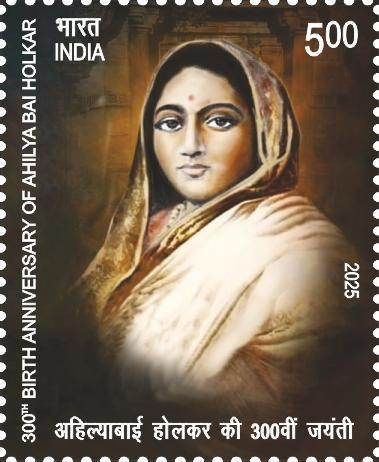
- Prime Minister Narendra Modi paid tribute to Lokmata Ahilyabai Holkar on her birth anniversary.
Ahilyabai Holkar (1725–1795)
- She was the celebrated queen of the Holkar dynasty who ruled the Malwa kingdom in the 18th century.
- Revered as the “Philosopher Queen” for her enlightened and people-centric governance.
- Born in Chondi village, Ahmednagar (Maharashtra) and married to Khanderao Holkar, son of Malhar Rao Holkar.
- After the deaths of her husband, father-in-law and son, she assumed the administration of Malwa in 1767.
Major Contributions
- She is remembered for her model of justice, welfare-oriented governance, and cultural preservation.
- Ahilyabai rebuilt important temples such as the Kashi Vishwanath Temple and Somnath Temple in the 18th century.
- She promoted women’s education, widow remarriage, and opposed practices like sati.
- She also worked for the upliftment of tribal communities and lower castes.
- Under her rule, Maheshwar and Indore became major trade centres, and the famous Maheshwari saree tradition flourished.
PM SVANidhi Scheme Completes Six Years
Government Schemes
Context
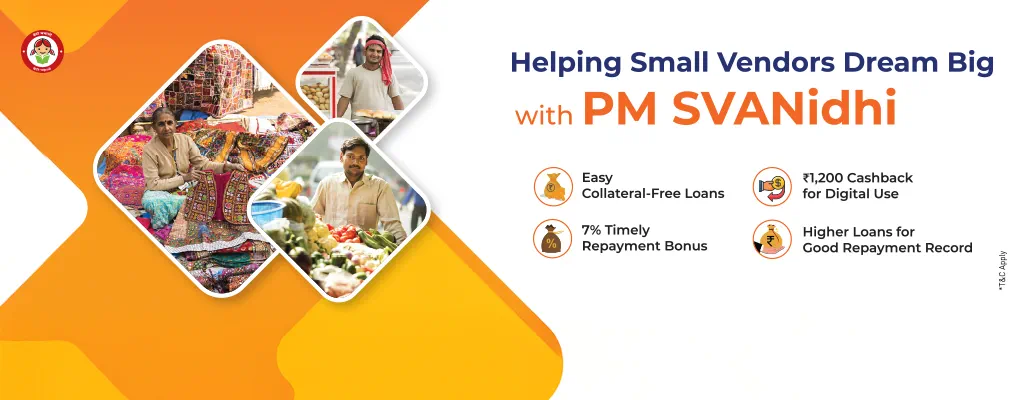
- PM Street Vendor’s AtmaNirbhar Nidhi (PM SVANidhi) Scheme, has completed six years of empowering street vendors through affordable collateral-free credit, digital inclusion and social security.
PM SVANidhi Scheme
- Financing – It is a Central Sector Scheme
- Launched on – 1 June 2020
- Objective – to provide affordable working capital loans to street vendors affected by the COVID-19 pandemic.
- Implementing Agencies: Ministry of Housing and Urban Affairs (MoHUA)
- Eligible criteria: Street vendors in possession of Certificate of Vending/Identity Card issued by Urban Local Bodies (ULBs).
Key Features
- Working Capital Loan: Collateral-free loans of ₹15,000, ₹25,000, and ₹50,000.
- UPI-linked RuPay Credit Cards: Vendors successfully repaying the second tranche are eligible for UPI-linked RuPay Credit Cards with limits up to ₹30,000.
SVANidhi se Samriddhi (SSS):
- It is an Indian government scheme that links street vendors and their families to eight welfare programs for safety and health.
- Main Purpose – It helps vendors who got a PM SVANidhi loan.
- Workers visit vendors to check what their families need.
- It connects them to benefits without complex paperwork.
The 8 Benefits Included
- Life Insurance (PM Jeevan Jyoti Bima)
- Accident Insurance (PM Suraksha Bima)
- Free Bank Accounts (PM Jan Dhan Yojana)
- Food Ration Anywhere (One Nation One Ration Card)
- Old Age Pension (PM Shram Yogi Maandhan)
- Safe Birth Cash Help (Janani Suraksha Yojana)
- Mother & Baby Support (PM Matru Vandana Yojana)
- Construction Worker Aid (BoCW Registration)
Shangri-La Dialogue
International
In News
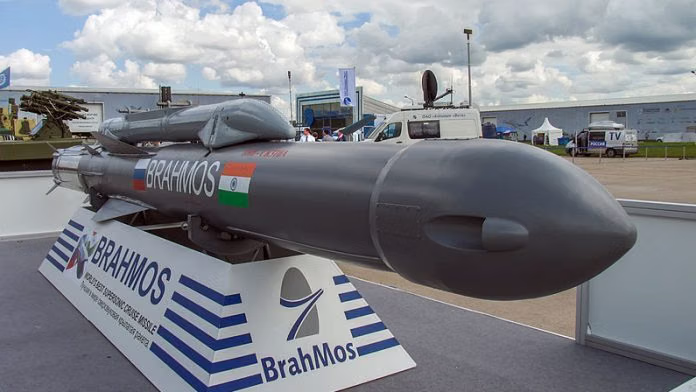
- India has officially signed a deal to supply BrahMos supersonic cruise missiles to Vietnam, as confirmed at the Shangri-La Dialogue in Singapore.
Shangri-La Dialogue
- Established in – 2002
- It is also known as the Asia Security Summit
- It is Asia’s premier defence and security forum.
- It is held annually at Singapore’s Shangri-La Hotel.
- Organised by – International Institute for Strategic Studies (IISS), London, with support from Singapore’s Ministry of Defence.
- Mandate – The dialogue focuses on both traditional security issues (territorial disputes, military cooperation) and non-traditional challenges (terrorism, cybersecurity, climate change).
- Note – India’s Raisina Dialogue is considered to be modelled on the Shangri-La Dialogue.
Additional Information – BrahMos Missile
- Type: Two-stage supersonic cruise missile (World’s fastest operational cruise missile).
- Joint Venture: India (DRDO) and Russia (NPOM).
- Named after Brahmaputra and Moskva rivers.
- Speed: Mach 2.8 to 3.0 (Nearly 3 times the speed of sound).
- Principle: “Fire and Forget” (Requires no control after launch).
- Platform: Multi-platform (Can launch from land, air, sea, and submarines).
- Warhead: 200–300 kg conventional (tactical weapon, not nuclear).
- Range Evolution & MTCROriginal Range (290 km): Restricted due to Russia being bound by MTCR (Missile Technology Control Regime) rules.
- Extended Range (400–450 km+): Upgraded after India joined MTCR in 2016, lifting the range limits.
Leave a Reply