
PM Visit to Israel
International
Context
- The Prime Minister paid an official visit to Israel.
- In a historic first, Prime Minister Modi addressed the Israeli Parliament, the Knesset, becoming the first Indian Prime Minister to do so.
Major Outcomes
- Both nations elevated their relationship to Special Strategic Partnership.
- India and Israel also discussed the implementation of the India-Middle East Europe Economic Corridor (IMEC) and cooperation under the framework of I2U2 (India-Israel-UAE-USA).
India and Israel Bilateral Relations & Evolving Ties
-
- Bilateral Relations: India announced its recognition of Israel in 1950. Regular embassies opened in 1992 when full diplomatic relations were established between the two countries.
- The bilateral relations were elevated to strategic partnership in 2017 and were upgraded to Special Strategic Partnership after this visit.
- Defense & Security: Israel has been a key supplier of advanced technology from AWACS (Airborne Warning and Control System) radars and drones to missile and surveillance systems making it one of India’s largest defense suppliers.
- Bilateral Trade: India is Israel’s 2nd trading partner in Asia and the 7th largest globally.
- Multilateral Cooperation: Both are active members of the I2U2 group (India, Israel, USA, UAE), focusing on economic and space collaboration with projects like food parks and space-based environmental tools.
Chandrashekhar Azad
History
In News
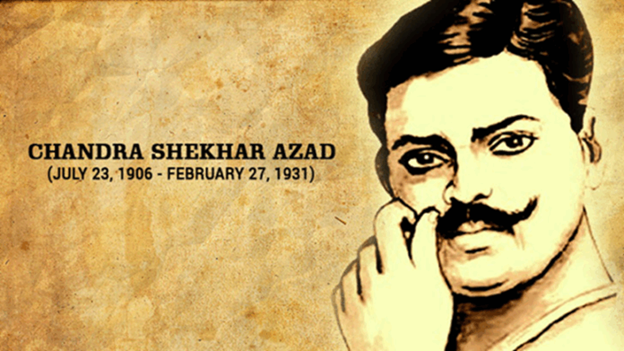
- The Prime Minister paid tribute to the revolutionary Chandrashekhar Azad marking his Martyrdom Day.
Chandrashekhar Azad
- He was a great Indian freedom fighter and he was born on July 23, 1906 in Badarka village of Unnao district in Uttar Pradesh.
- He actively participated in the Non-Cooperation Movement (1920–22) launched by Mahatma Gandhi.
- When produced before a magistrate, he declared his name as “Azad,” father’s name as “Swatantra,” and residence as “Jail.” After being publicly flogged, he adopted the title Azad, meaning “Free,” as his permanent identity.
- After the Chauri Chaura incident (1922) and the withdrawal of the Non-Cooperation Movement, he shifted towards revolutionary activities.
- On 27 February 1931, Azad was surrounded by police at Alfred Park in Allahabad (now Chandrashekhar Azad Park). After a gunfight in which he enabled his associate Sukhdev Raj to escape, he shot himself with his last bullet to avoid capture
Key Contributions
- Kakori Train Robbery (1925): As a leader in the Hindustan Republican Association (HRA) with Ram Prasad Bismil, Azad helped rob a train to fund arms for independence. He escaped capture while others were jailed.
- Lahore Assassination (1928): Aided Bhagat Singh and Rajguru in killing British officer John Saunders, avenging Lala Lajpat Rai’s death during a protest.
- HSRA Formation: He reorganised the Hindustan Republican Association under the new name of Hindustan Socialist Republican Association (HSRA) after the death of its founder Pandit Ram Prasad Bismil. He was the chief strategist of the HSRA.
Hexagon Alliance
International
Context
- A new geopolitical grouping, the Hexagon Alliance, has been proposed by Israel’s Prime Minister Benjamin Netanyahu, with India at its centre.
Hexagon Alliance
- It would include Israel, India, Mediterranean partners such as Greece and Cyprus, along with other unnamed Arab, African and Asian states.
- The framework is designed to operate across three tracks: economic cooperation, diplomatic alignment and security collaboration.
- For India, participation would reflect its expanding strategic footprint in the Mediterranean and West Asia, complementing initiatives like India–Middle East–Europe Economic Corridor (IMEC).
- However, deeper alignment in such a bloc could complicate India’s ties with Iran, a key energy and connectivity partner.
RailTech Portal and e-RCT System
Governance
Context
- The Union Minister for Railways announced the RailTech Policy and the complete digitisation of the Railway Claims Tribunal (RCT) under Indian Railways’ flagship “52 Reforms in 52 Weeks” initiative.
Rail Tech Policy Reform
- This policy aims to engage innovators, startups, industry and institutions to promote innovation in Indian Railways.
- The new policy simplifies the selection of innovators and introduces a dedicated “Rail Tech Portal” for innovation.
Key innovation areas include:
- AI-based Elephant Intrusion Detection System (EIDS),
- AI-based fire detection system in coaches,
- drone-based broken rail detection system,
- rail stress monitoring system,
- sensor-based load calculation device on parcel vans (VPUs) etc.
Railway Claims Tribunal (RCT)
- It is a quasi-judicial body in India established under the Railway Claims Tribunal Act, 1987
- Objective – to provide a faster and more specialised mechanism for settling claims against the Railway Administration
- The E-RCT system will enable end-to-end computerisation and digitisation of the Railway Claims Tribunal.
- Earlier, claimants had to physically visit tribunal benches for filing and case tracking, causing delays, travel burdens, and jurisdictional confusion.
Global Mind Health 2025 Report
Health
Context
- The Global Mind Health 2025 Report, released by Sapien Labs, highlights a significant mental health crisis among young adults in India and reveals a sharp generational divide in mind health outcomes.
About the Report
- Formerly known as the Mental State of the World Report, it is published under the Global Mind Project.
- The study assesses emotional, social, cognitive and functional capacities required to manage life, work and relationships, using the Mind Health Quotient (MHQ) as a composite indicator.
The study identifies four key drivers behind declining youth mental health:
- Weakening family bonds
- Decline in spirituality
- Early exposure to smartphones
- High consumption of ultra-processed foods.
Key Findings
Global Trends:
- Young adults in economically developed countries show poorer mind health outcomes compared to those in less developed regions.
- Notably, Finland ranks high in happiness but not proportionately in mind health, suggesting that life satisfaction and mental resilience are distinct measures.
India’s Position:
- Age 18–34: Ranked 60th globally with an MHQ score of 33.
- Age 55+: Ranked 49th globally with an MHQ score of 96.
India Bhutan Cooperation on HydroPower Projects
International Relations
Context
- India and Bhutan have reaffirmed their longstanding partnership in water resources management and hydropower development during a high level visit by an Indian delegation to Bhutan.
India-Bhutan Relations
- Geographical Connection: Bhutan shares its border with four Indian states, Assam, Arunachal Pradesh, West Bengal and Sikkim with a length of 699 km and serves as a buffer between India and China.
-
- Diplomatic relations – Established in 1968.
- Treaty of Friendship – The basic framework of India Bhutan relations is the Treaty of Friendship and Cooperation signed in 1949 and was renewed in February 2007.
- Four major bilateral projects are launched in Bhutan from India,
-
- Hydroelectric projects – Punatsangchhu and Mangdechhu Hydro Project,
- Ground Earth Station of ISRO
- RuPay Card
- National Knowledge Network of India
-
- Economy – India is Bhutan’s top trade partner both as an import source and as an export destination.
- Bhutan became the second country to launch the BHIM app.
- Cultural and Buddhist Links: A number of Bhutanese pilgrims travel to Bodh Gaya, Rajgir, Nalanda, Sikkim, Udayagiri, and other Buddhist sites in India





Leave a Reply