Author: instakas

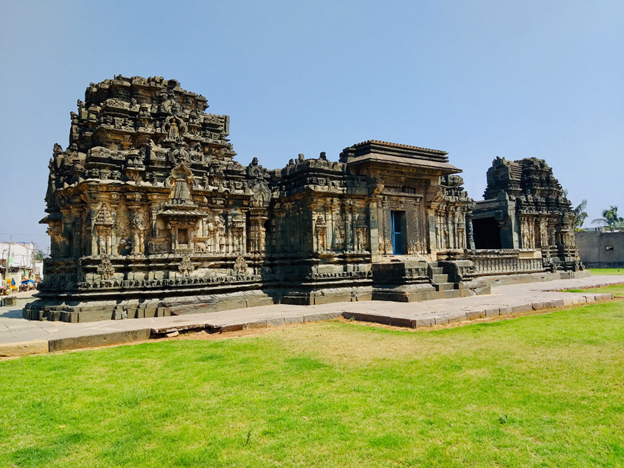
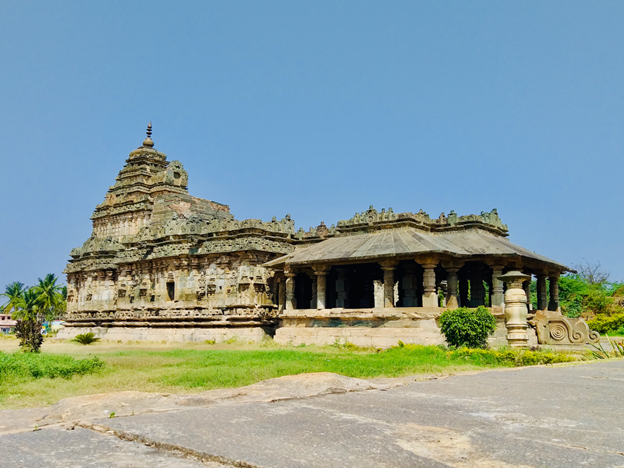
  • Lakkundi

    Lakkundi

    News-

    • The Karnataka state government is actively pushing to permanently bring back over 150 rare antiquities from the ancient heritage town of Lakkundi that are currently housed at the National Museum in New Delhi.

    Key Details of the Historic Repatriation Push

    • The 1976 Handover: On October 16, 1976, local leaders K. Hebboor and T.K. Nayak formally handed over the artifacts to then-Prime Minister Indira Gandhi to guarantee their long-term preservation.
    • The Priceless Collection: The repository reflects Karnataka’s medieval legacy and includes ancient weapons, inscriptions, manuscripts, jewelry, and gold and silver coins.
    • The Proposed Destination: The state plans to display the returned treasures locally in Lakkundi (located in the Gadag district), which is currently being developed into one of India’s largest open-air museums.
    • The UNESCO Strategy: The repatriation push strongly aligns with Karnataka’s intensified campaign to secure UNESCO World Heritage status for Lakkundi.

    Additional Information – Lakkundi

    • Location: Gadag district, Karnataka.
    • Ancient Name: Lokkigundi.
    • Dynasties: Kalyana Chalukyas (Western Chalukyas), Kalachuris, Seunas, and Hoysalas (10th–13th century).
    • Economic Role: Major commercial hub; hosted a Tankashale (royal mint).
    • Prehistoric Links: ASI excavations found Neolithic human habitation relics near Kote Veerabhadreshwar Temple.
    • Gold Discovery: Treasure trove of ancient gold ornaments found during house construction.

    Architecture Highlights

    • Style: Kalyana Chalukya style—the bridge between Badami Chalukya and Hoysala styles (Vesara school).
    • Material: Chloritic schist (soapstone), allowing intricate carving.
    • Monuments:
    1. Brahma Jinalaya: Oldest Jain shrine here, built by Queen Attimabbe (~1007 CE).
    2. Kasi Visvesvara Temple: Most ornate double-shrine temple.
    • Water Heritage: Over 101 historic stepped wells (Kalyanis), like Musukina Bavi.

    Religious Significance

    1. Pluralism: Co-existence of Shaivism, Vaishnavism, and Jainism.
    2. Bhakti Movement: Associated with 12th-century Sharana saints (Ajaganna and Muktayakka) of the Virashaiva movement.
  • Decentralized climate action plans in Karnataka

    Decentralized climate action plans in Karnataka

    News –

    • Karnataka is the Indian state moving forward with a first-of-its-kind model to formulate decentralized climate action plans at the individual Gram Panchayat (GP) level.

    About –

    • Objective – to devolve climate accountability to the grassroots level.
    • Significance – It ensures everyone from local panchayat leaders to rural farmers actively owns their role in India’s target of reaching Net-Zero emissions.

    Key Features of the Decentralized RoadmapStrategic

    • Integration: Rooted in the Karnataka State Action Plan on Climate Change (KSAPCC), aligning grassroots efforts with India’s Paris Agreement commitments.
    • Cross-Departmental Tracking: Uses 105 Key Performance Indicators (KPIs) spanning 50 government sectors like agriculture, forestry, and horticulture.
    • High-Level Accountability: The apex-level monthly progress is monitored directly by the state’s Chief Secretary.
    • Capacity Building: Active rollout of district-level training modules targeting local stakeholders to understand and act upon climate KPIs

    Additional Information – The Karnataka State Action Plan on Climate Change (KSAPCC)

    • Mandate – It is a state policy framework designed to address climate risks and align with India’s national climate goals.
    • Timeline: Active phase covering 2024–2030.
    • Budget: Projected funding requirement of ₹52,827 crore.
    • Agency: Led by the Environment Management and Policy Research Institute (EMPRI)
    • Scope: Mandates climate targets across 13 state departments.

    Key Sector Targets

    • Agriculture: Deploying drought-resistant crops and local weather warning tools.
    • Water: Scaling up rainwater harvesting and artificial aquifer recharge.
    • Forestry: Protecting the Western Ghats through target-driven afforestation.
    • Energy: Accelerating solar power grid integration and reducing transmission losses.
    • Urban: Implementing localized green master plans, such as the Bengaluru Climate Action Plan.
    • Tracking ProgressMonitoring: Progress is tracked via a dedicated, public KSAPCC Monitoring Dashboard.
    • Local Level: Targets are built directly into village-level Gram Panchayat development plans.
  • First-of-its-kind digital drug surveillance system

    First-of-its-kind digital drug surveillance system

    News –

    • Karnataka recently rolled out India’s first technology-driven drug surveillance system in Bengaluru to monitor the pharmaceutical market in real-time.

    First-of-its-kind digital drug surveillance system

    • Introduced by – Karnataka State Food Safety and Drug Administration (FDA),
    • Objective – this initiative establishes a real-time, technology-driven regulatory framework designed to enforce drug quality standards and control the tracking of critical medications.
    • The newly launched digital initiative operates through two dedicated surveillance portals:
    • Substandard Medicine Block System: Automatically locks and halts the sale of Not of Standard Quality (NSQ) batches identified in the supply chain. It tracks real-time inventory and oversees the return of recalled products to suppliers.
    • NDPS Monitoring System: Tightly regulates the dispensing of Narcotic Drugs and Psychotropic Substances (NDPS).
  • e-Khata

    e-Khata

    News-

    • The Karnataka High Court issued a set of guidelines to local authorities and executing courts, directing them to process e-Khatas without delay.
    • The court ruled that municipal bodies cannot refuse an e-Khata solely because the application was not filed by the original owner or judgment-debtor.

    e-Khata

    • It is a digital property ownership and taxation record for properties under BBMP jurisdiction in Karnataka.
    • It replaces manual registers, bringing transparency to property transactions, registrations, and building approvals.

    Key Features & How It Works

    • Where to Access: You can search, track, and download your e-Khata directly on the official BBMP e-Aasthi portal.
    • Usage: The e-Khata system is entirely faceless and contactless. It serves as your official document for buying/selling properties, paying taxes, or applying for bank loans.
    • Searching Your Property: You can look up your draft e-Khata using your SAS Property Tax ID or property ePID
  • ‘Bhu Guarantee’ scheme (Nanna Khata, Nanna Hakku)

    ‘Bhu Guarantee’ scheme (Nanna Khata, Nanna Hakku)

    News –

    • The Karnataka state government has officially launched the ‘Bhu Guarantee’ scheme (also known as Nanna Khata, Nanna Hakku), slashing the B-Khata to A-Khata property conversion fee from 5% down to 2% of the property’s guidance value.

    ‘Bhoo Guarantee’ (Nanna Khata, Nanna Hakku) scheme

    • Objective – It is Karnataka’s sixth welfare initiative, designed to provide secure, digitized property records to 23 lakh owners in Bengaluru.

    Major Financial Savings

    • 60% Fee Cut: B-Khata to A-Khata conversion fees dropped from 5% to 2% of the guidance value.
    • 100-Day Window: The discounted fee is a one-time offer valid for 100 days from mid-May 2026.

    Key Features

    • Doorstep Delivery: Officials deliver digital e-Khatas directly to homes for free.
    • Tamper-Proof: Records feature GPS mapping, Aadhaar linking, and owner photos to stop fraud.
    • Violation Regularisation: Relaxes minor building violations to allow legal water and power connections.

    Weekly Camps

    • When: Every Saturday for three months.Where: Open-house camps in all Assembly constituencies.
    • Purpose: On-the-spot help for conversions, corrections, and tax issues to eliminate middlemen.
  • Kartavya-KAAMS (Karnataka Advanced Attendance Management System

    Kartavya-KAAMS (Karnataka Advanced Attendance Management System

    News –

    • The Department of School Education and Literacy (DSEL) in Karnataka has launched the Kartavya-KAAMS (Karnataka Advanced Attendance Management System) mobile app
    • Objective – to monitor the attendance of permanent teaching and non-teaching staff.

    How the App Works

    • Technology: Integrates Artificial Intelligence, Facial Recognition, and GIS-based geo-fencing to verify attendance.
    • Usage: Staff are required to click a “selfie” to mark their “In Time” (arrival) and “Out Time” (departure) twice daily from their assigned duty location (e.g., school, training, or exam center).
    • Verification: The system uses liveness detection and geofencing to ensure employees are within a 100-meter radius of their designated workplace.

    Important Rules & Timelines

    • Mandatory Rollout: Effective from the 2026-27 academic year, it is completely mandatory for all teaching, non-teaching staff, and headmasters.
    • Salary Disbursement: The old biometric attendance systems have been replaced, and only attendance registered via the Kartavya-KAAMS app will be considered for payroll processing and salary release.
    • System Integration: The platform links directly to the state’s Human Resource Management System (HRMS) and the Students Achievement Tracking System (SATS).
  • Simultaneous Election Bill | Digital Public Infrastructure (DPI)@2047 Roadmap | Anti-Defection Law | Prevention of Insults To National Honour Act, 1971

    Simultaneous Election Bill

    Syllabus: GS2/Polity and Governance

    Context

    • The Joint Parliamentary Committee (JPC) on ‘One Nation, One Election’ has said that simultaneous elections can save nearly 7 lakh crore rupees, improve governance efficiency and increase India’s GDP growth by up to 1.6%.

    Background

    • To introduce simultaneous elections, the Constitution (One Hundred and Twenty-Ninth Amendment) Bill, 2024 and the Union Territories Laws (Amendment) Bill, 2024 were introduced in Lok Sabha in 2024.

    Key Features of the Bills

    • Bodies Responsible: The Constitution (129th Amendment) Bill, 2024 empowers the Election Commission to conduct elections for Lok Sabha and all State Assemblies together (referred to as simultaneous elections).
    • The Union Territories Laws (Amendment) Bill, 2024 extends this framework to Union Territory (UT) Assemblies.
    • Commencement of simultaneous elections: The terms of all State and Union Territory Assemblies constituted after the date of the notification will expire with the expiry of the full term of Lok Sabha.
    • Hence, elections to Lok Sabha and all State and UT Assemblies thereafter will be conducted together.
    • Premature dissolution of Lok Sabha or Assemblies: If Lok Sabha or a State/UT Assembly is dissolved sooner than its full term of five years, a fresh election will be held for a term equal to the remainder of the five-year term.
    • This will synchronise elections for Lok Sabha and all Assemblies every five years.
    • Deferring a state election: If the Election Commission is of the opinion that the election for a particular State Assembly cannot be held as part of the simultaneous elections, it may make a recommendation to the President in this regard.
    • Thereafter, the President may issue an order to conduct election for that State Assembly at a later date.
    • The UT Laws Amendment Bill does not have such provisions.

    Digital Public Infrastructure (DPI)@2047 Roadmap

    Syllabus: GS3/Economy

    In News

    • NITI Aayog has launched DPI@2047 for Viksit Bharat, a roadmap for India’s next phase of Digital Public Infrastructure (DPI) aimed at driving inclusive and productivity-led growth.

    Digital Public Infrastructure (DPI)

    • It refers to foundational digital systems that are accessible, secure, and interoperable, supporting essential public services.
    • India’s Digital Public Infrastructure began with the JAM trinity—Jan Dhan bank accounts, Aadhaar identity, and mobile connectivity—which linked citizens directly to government systems.
    • Significance – This enabled direct transfer of welfare benefits, reducing intermediaries, delays, and leakages, and laid the foundation for India’s broader digital transformation.

    Importance of DPI

    • Governance Efficiency: DPI Enables direct benefit transfers, subsidy delivery, and e-governance platforms, reducing leakages and corruption.
    • Financial Inclusion: UPI has transformed payments, now operational in 8 countries, supporting cross-border transactions.
    • Economic Growth: India is the world’s 3rd-largest digitalised economy, with digital platforms embedded in daily economic and social life.

    Key Digital Public Infrastructure (DPI) and digital solutions are as follows

    • Aadhaar – A biometric-based digital identity platform that enables unique identification and authentication of residents for efficient service delivery.
    • Unified Payments Interface (UPI) – A real-time digital payment system enabling instant, interoperable, and secure person-to-person and merchant transactions.
    • UPI is now active in 8 countries, improving cross-border payments, remittances, and financial inclusion, and strengthening India’s fintech influence globally.
    • CoWIN – A digital platform for end-to-end management of vaccination services, including registration, scheduling, and certification.
    • API Setu – A platform that enables secure and standardized sharing of government data and services through APIs.
    • DigiLocker – A digital document wallet that allows citizens to store, access, and share authenticated electronic documents.
    • Aarogya Setu – A digital health application providing risk assessment, health advisories, and access to health-related services.
    • Government e-Marketplace (GeM) – An online platform for transparent and efficient procurement of goods and services by government entities.
    • UMANG – A unified mobile and web platform providing single-window access to a wide range of government services.
    • DIKSHA – A national digital platform supporting teachers and learners with e-content, training, and academic resources.
    • e-Sanjeevani – A telemedicine platform enabling remote doctor-to-patient consultations, particularly in rural and underserved areas.
    • e-Hospital – A hospital management system providing online registration, appointments, diagnostics, a nd billing services.
    • e-Office – A digital platform for paperless governance enabling electronic file management and decision-making in government offices.
    • eCourts – A mission-mode project for digitising court processes and improving access to judicial services.
    • POSHAN Tracker – A mobile-based application for real-time monitoring of nutrition service delivery under ICDS.
    • National Non-Communicable Diseases Platform (NCD) – A digital platform for screening, diagnosis, and management of major non-communicable diseases.
    • Skill India Digital Hub (SIDH) – A unified digital platform integrating skilling, training, and employment-related services.
    • Public Financial Management System (PFMS) – A platform for end-to-end monitoring of government funds and direct benefit transfers.
    • PM GatiShakti – A GIS-based digital platform for integrated planning and coordinated implementation of infrastructure projects.

    Anti-Defection Law

    Syllabus: GS2/Polity and Governance

    Context

    • More than two-thirds of the MPs of the Aam Aadmi Party in the Rajya Sabha have decided to merge with the Bharatiya Janata Party, raising questions around the application of the anti-defection law.

    Anti-defection law

    • Aaya Ram Gaya Ram was a phrase that became popular in Indian politics after a Haryana MLA Gaya Lal changed his party thrice within the same day in 1967.
    • The anti-defection law (Tenth Schedule of the Constitution) was inserted by the 52nd Amendment in 1985 to prevent political defections.
    • Constitutional Disqualifications [Articles 102(1) & 191(1)]: A person shall be disqualified if he/she:
    1. Holds an office of profit under the Central or State Government;
    2. Is of unsound mind, as declared by a competent court;
    3. Is an undischarged insolvent;
    4. Is not a citizen of India, or has acquired citizenship of a foreign State, or shows allegiance to a foreign State;
    5. Is disqualified under any law made by Parliament.

    Features of the Anti-Defection Law

    • Disqualification on ground of defection: A legislator belonging to a political party will be disqualified if he: (i) voluntarily gives up his party membership, or (ii) votes/abstains to vote in the House contrary to the direction issued by his political party.
    • A member is not disqualified if he has taken prior permission of his party, or if the voting or abstention is condoned by the party within 15 days.
    • Independent members will be disqualified if they join a political party after getting elected to the House. Nominated members will be disqualified if they join any political party six months after getting nominated.
    • The decision to disqualify a member from the House rests with the Chairman/Speaker of the House.

    Exceptions

    • The Tenth Schedule originally provided for two exceptions that would not render the members liable for disqualification.
    • One-third members of the ‘legislature party’ split to form a separate group.
    • Merger of their ‘political party’ with another party that is approved by two-third members of its ‘legislature party’.
    • However, the first exception (one-third split) was removed in 2003 to strengthen the law.

    Supreme Court Judgments

    • Kihoto Hollohan v. Zachillhu (1992): The decisions of the Speaker regarding disqualification under the Tenth Schedule (Anti-defection Law) are subject to judicial review by the High Courts and the Supreme Court.
    • Keisham Meghachandra Singh v. Speaker, Manipur (2020): The Supreme Court set a clear outer limit of three months for the Speaker to decide on a disqualification petition.

    Prevention of Insults To National Honour Act, 1971

    Syllabus: GS2/ Polity and Governance

    Context

    • The Union Cabinet gave the go-ahead to amend The Prevention of Insults To National Honour Act, 1971.

    About

    • Aim: To make any insult or obstruction to the singing of National Song Vande Mataram a punishable offence.
    • At present, insults to the National Anthem, the National Flag and the Constitution of India is mentioned in the 1971 Act and is punishable by an imprisonment of up to three years or a fine or both.

    Vande Mataram

    • Vande Mataram was composed by Bankim Chandra Chatterjee in Sanskrit and first appeared in the novel Anandamath in 1882.
    • Anandamath is set against the backdrop of the 1769–73 Bengal famine and the Sanyasi Rebellion.
    • First sung by Rabindranath Tagore at the 1896 Indian National Congress session gave it national exposure.
    • During the Swadeshi Movement of 1905, Vande Mataram emerged as the anthem of civil resistance.
    • Vande Mataram, as a political slogan, was first used on 7 August 1905.
    • National Song: On 24 January 1950, the Vande Mataram was adopted as India’s National Song.

    Constitutional Provisions

    • Article 51A(a) Fundamental Duties: Mandates every citizen to abide by the Constitution and respect its ideals and institutions, the National Flag and the National Anthem.
    • Absence of Explicit Constitutional Protection: Unlike the national anthem, Vande Mataram is not explicitly protected by any constitutional provision.
    • Its status flows from Constituent Assembly resolutions, not from enforceable constitutional text.
  • HPV vaccination campaign

    HPV vaccination campaign

    News –

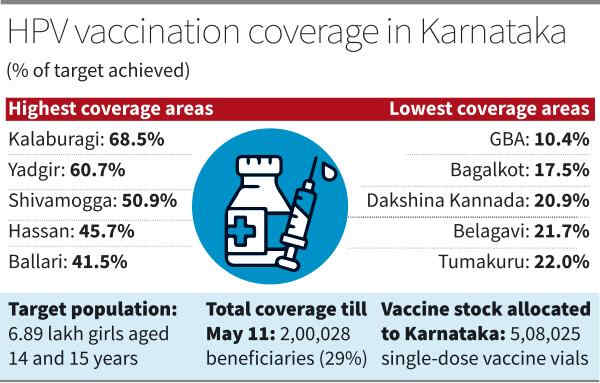
    • Karnataka’s Human Papillomavirus (HPV) vaccination campaign for adolescent girls has crossed a major milestone by securing 2,00,028 beneficiaries, accounting for 29% of its total target population of 6.89 lakh girls aged 14 to 15 years.

    Key findings –

    • Kalaburagi (Leader): Emerged as the best-performing district, vaccinating 20,511 girls to reach 68.5% of its target while utilizing 94.2% of its vaccine stock.
    • Yadgir: Ranked second by achieving 60.7% of its target population.
    • Shivamogga: Stood third with a 50.9% coverage rate.
    • Greater Bengaluru Authority (GBA) (Trail): Recorded the lowest progress in the state.

     Key Details of the Vaccination Drive

    • Target Group: The campaign primarily targets girls who have completed 14 years of age but are below 15 years.
    • Scale of the Initiative: Approximately 6 lakh girls in Karnataka have been identified as eligible beneficiaries, contributing to a national target of nearly 1.15 crore girls.
    • Vaccine Type & Dosage: The drive uses the quadrivalent Gardasil-4 vaccine, which protects against four common HPV strains (6, 11, 16, and 18). Under the current national guidelines, it is administered as a single-dose intramuscular injection.
    • Cost: The vaccine is provided free of cost at government health facilities.
    • Duration: The initial intensive campaign is set for three months (90 days) in mission mode, after which the vaccine will be integrated into routine immunization days.
  • Water Hyacinth Livelihood Initiative in Assam | PM Modi Receives Agricola Medal | PRAGATI 2026 Exercise | Zwan-Wolf Effect

    Water Hyacinth Livelihood Initiative in Assam

    Syllabus: GS3/ Environment

    Context

    • A livelihood initiative supported by the International Rhino Foundation has enabled women living near the Laokhowa-Burhachapori Wildlife Sanctuary in Assam to convert invasive water hyacinth into marketable household products.

    Water Hyacinth (Eichhornia crassipes or Pontederia crassipes)

    • It is a free-floating, perennial aquatic plant native to tropical and subtropical South America.
    • It is widely recognized as one of the world’s most aggressive Invasive Alien Species (IAS).
    • It is famously referred to as the “Terror of Bengal” in India due to its devastating ecological and economic footprint.

    Laokhowa-Burhachapori Wildlife Sanctuary (LBWLS)

    • Location – Situated on the southern bank of the Brahmaputra River in Assam
    • Ecological Connectivity: Strategically nestled between Kaziranga National Park to the east and Orang National Park to the west.
    • Vegetation – A mosaic of wet alluvial grasslands, riparian forests, moist deciduous woods, and significant wetland systems (like the Rowmari-Donduwa wetland complex).
    • Keystone Species: Great Indian one-horned rhinoceros, Royal Bengal Tiger, Asian elephant, and Asiatic water buffalo.

    PM Modi Receives Agricola Medal

    Syllabus: GS2/ International Relations

    Context

    • Prime Minister Narendra Modi was conferred the prestigious Agricola Medal by the Food and Agriculture Organization (FAO) at its headquarters in Rome, Italy.
    • The medal was presented by FAO Director-General Qu Dongyu.

    About Agricola Medal

    • The Agricola Medal is the highest honour conferred by the Director-General of the FAO.
    • The medal is named after Georgius Agricola, a German scholar widely considered the “father of mineralogy” and a pioneer in agricultural and mining sciences.
    • It is awarded to distinguished world leaders and individuals for exceptional and long-term contributions to global food security, sustainable agriculture, poverty reduction and improved nutrition.

    Food and Agriculture Organization (FAO)

    • FAO is a specialized agency of the United Nations that leads international efforts to defeat hunger and improve food security.
    • It was founded on 16 October 1945.
    • Members: The FAO comprises 195 members, including 194 countries and the European Union.
    • Headquarters: Rome, Italy.

    PRAGATI 2026 Exercise

    Syllabus: GS3/Defence

    Context

    • The multilateral military exercise PRAGATI 2026 commenced at Umroi Military Station in Meghalaya.

    PRAGATI

    • Abbreviation – Partnership of Regional Armies for Growth and Transformation in the Indian Ocean Region.
    • Participating countries – India, Bhutan, Cambodia, Indonesia, Laos, Malaysia, the Maldives, Myanmar, Nepal, the Philippines, Seychelles, Sri Lanka, and Vietnam.
    • Significance – The exercise will focus on counter-terrorism operations in semi-mountainous and jungle terrain.

    Zwan-Wolf Effect

    Syllabus: GS3/ Science and Technology

    Context

    • A recent study published in Nature Communications has provided evidence of the Zwan-Wolf effect at Mars using data from NASA’s MAVEN spacecraft.

    Zwan-Wolf Effect

    • The Zwan-Wolf effect is a space weather phenomenon where electrically charged particles (plasma) are compressed and squeezed along magnetic field lines when a planet’s magnetic boundary interacts with the solar wind.
    • First identified in 1976 by scientists B.J. Zwan and R.A. Wolf.

    Significance of Discovery

    • Mars lacks a strong global magnetic field unlike the Earth.
    • The discovery shows that even relatively “unmagnetised” planets can experience complex magnetic interactions.

    MAVEN Mission

    • MAVEN stands for Mars Atmosphere and Volatile Evolution Mission.
    • It is a NASA mission launched in 2013 to study the Martian atmosphere and its interaction with the solar wind.
    • The mission investigates how Mars lost much of its atmosphere and water over time.

    Connect with the basics – Mars

    • It is the fourth planet from the Sun
    • It is the second-smallest planet in the Solar System.
    • Mars is about half the size of Earth.
    • Rotation period – Its rotation period is 6 hours, which is very similar to that of Earth (23.9 hours).
    • Red Planet – The reason Mars looks reddish is due to oxidation or rusting of iron in the rocks, and dust of Mars. Hence it is also called the Red Planet.
    • Moon of MarsPhobos and Deimos

    Mars Orbiter Mission (MOM) or Mangalyaan

    • Launched from – Satish Dhawan Space Centre in Andhra Pradesh
    • Launched by – It was launched by Indian Space Research Organisation in November 2013.
    • Rocket used – PSLV C-25 rocket
    • Objective – To study Martian surface and mineral composition as well as scan its atmosphere for methane (an indicator of life on Mars).

  • India Backs Ethiopia’s WTO Entry | Myopia Pandemic | BHAVYA Scheme | International Booker Prize

    India Backs Ethiopia’s WTO Entry

    Syllabus: GS2/IR

    Context

    • India and Ethiopia signed a bilateral accession protocol in Geneva as part of Ethiopia’s process of joining the World Trade Organization (WTO).

    World Trade Organization (WTO)

    • Mandate – It is the only global international organization responsible for regulating and facilitating trade between nations.
    • Established on – January 1, 1995, as the successor to the General Agreement on Tariffs and Trade (GATT), which had governed global trade since 1948.
    • Member countries- 166 representing over 98% of global trade
    • Headquartered in – Geneva, Switzerland.

    Myopia Pandemic

    Syllabus: GS2/Health

    Context

    • By 2050, approximately 4.75 billion people,nearly half the world’s population, are expected to be myopic.
    • The prevalence of myopia among urban children in India has increased from 4.44% in 1999 to 21.15% in 2019 and is projected to rise to nearly 48% by 2050.

    Myopia

    • It is primarily a refractive condition caused by excessive axial elongation of the eye.
    • In a myopic eye, the axial length, which is the distance between the front and back of the eye, becomes too long.
    • As a result, incoming light rays focus in front of the retina instead of directly on it, causing distant objects to appear blurred.
    • Concerns: As the axial length of the eye increases, the tissues of the eye, including the sclera, choroid, and retina, undergo stretching and thinning. This increases the risk of retinal detachment, myopic macular degeneration, glaucoma, and early cataract formation.
    • High myopia, generally defined as a refractive error of −6 dioptres or greater, is associated with potentially irreversible visual impairment and blindness.
    • Prevention: Research suggests that more outdoor time may help reduce progression risk.
    • Regular eye exams are important, especially in school-age children.

    BHAVYA Scheme

    Syllabus: GS2/Government Schemes

    Context

    • The Department for Promotion of Industry and Internal Trade (DPIIT), under the Ministry of Commerce & Industry, has released the operational guidelines for implementation of the BHAVYA Scheme.

    Bharat Audyogik Vikas Yojna (BHAVYA)

    • Aim: To create 100 “future ready” industrial parks that will integrate with the PM GatiShakti programme so that they can avail of that programme’s multi-modal connectivity and last-mile access.
    • These parks will set new benchmarks in industrial infrastructure, ensuring reliability, reducing inefficiencies, and enhancing productivity across sectors.
    • Land Use: Industrial parks ranging from 100 to 1,000 acres will be taken up for the development.
    • Funding: While the Central government will provide funding of up to Rs 1 crore per acre, the scheme is meant to include the involvement of the respective State governments as well as the private sector.
    • Infrastructure: Core infrastructure like internal roads, underground utilities, drainage, common treatment facilities, ICT and administrative systems.
    • The National Industrial Corridor Development Corporation (NICDC), under the Department for Promotion of Industry and Internal Trade, will play a key role in implementing the initiative.
    • The scheme duration would be for six years starting in 20526-27.

    Additional Information –  PM GatiShakti

    • It was launched in – 2021
    • Objective – to enhance the country’s infrastructure and promote seamless connectivity across various sectors.
    • Significance – It is a transformative approach for economic growth and sustainable development which is driven by seven engines – railway, roads, ports, waterways, airports, mass transport and logistics infrastructure.
    • Implementation: PM Gati Shakti will incorporate the infrastructure schemes of various Ministries and State Governments like Bharatmala, Sagarmala, inland waterways, dry/land ports, UDAN etc.

    International Booker Prize

    Syllabus: Miscellaneous

    Context

    • The International Booker Prize completed a decade in its present form in 2026.

    International Booker Prize

    • Establishment: Originally set up in 2005 as the Man Booker International Prize.
    • It is a prestigious literary award presented annually for a single work of fiction translated into English and published in the United Kingdom or Ireland.
    • Prize Value: £50,000, which is split equally between the author and the translator.
    • Shortlisted authors and translators each receive £2,500.Core
    • Objective: To promote global fiction and elevate the critical, historically invisible role of translators.

    Additional Information – Comparison: Booker Prize vs. International Booker Prize


    The Booker Prize

    The International Booker Prize

    Inception Year

    1969

    2005

    Language Rule

    Originally written in English

    Translated into English from any language

    Recipient

    The Author only

    Shared equally between Author and Translator

    Latest Winner

    Flesh by David Szalay (2025)

    Taiwan Travelogue by Yáng Shuāng-zǐ (2026)