BMTC launches a centralised Commercial Asset Management Platform
News –
The Bengaluru Metropolitan Transport Corporation (BMTC) is launching a centralised Commercial Asset Management Platform (CAMP) to streamline and monitor its non-fare revenue stream.
About-
The digital system and mobile application will centrally track real-time income from rentals, advertising, stalls, and open spaces across its 52 depots to eliminate revenue gaps.
Key Features of CAMP
Unified Tracking: Integrates data from the central office down to individual depots.
Asset Monetisation: Centralizes lease and rental details for commercial stalls, ATM counters, and telecom towers.
Gap Analysis: Identifies collection deficiencies and tracks demand status organisation-wide.
Boosting Non-Fare Revenue
Beyond land and stall rentals, BMTC is significantly expanding its advertising footprint to bolster non-traffic revenue, which surpassed ₹811 crore.
New monetisation efforts include:
Ticket Advertisements: Rights granted to display artwork on the reverse side of passenger Electronic Ticketing Machine (ETM) rolls.
Digital Integration: The platform will be maintained by a selected IT service provider, complete with mobile and hosting services.
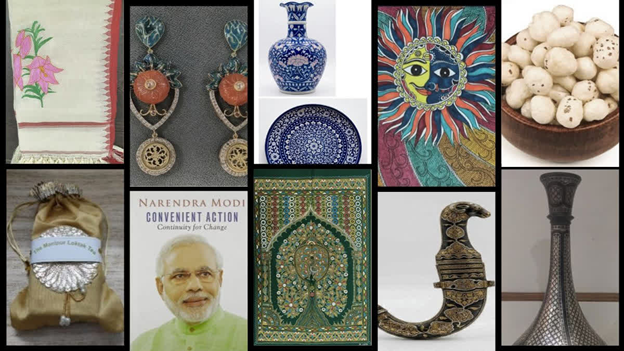
PM Modi gifted traditional Indian handicrafts, textiles, and regional artefacts to world leaders during his five-nation diplomatic tour covering the United Arab Emirates, Sweden, Norway, Netherlands, and Italy.
Gifts Presented to World Leaders
Italian PM Giorgia Meloni received a Muga silk stole from Assam and an off-white Shirui Lily silk stole from Manipur.
Muga silk, known as the “golden silk” of Assam, is a rare textile produced in the Brahmaputra Valley without artificial dyes.
The Shirui Lily silk stole derives inspiration from the Shirui Kashong Peak of Manipur and the rare Shirui Lily flower.
Queen Máxima of the Netherlands was gifted Meenakari and Kundan earrings from Rajasthan.
Norwegian Leader Jonas Gahr Støre received a pressed orchid painting and orchid paperweights made from real pressed orchids and ferns of Sikkim.
Harald V was presented with a silver sailboat model crafted using Tarakasi, the traditional silver filigree art of Cuttack, Odisha.
Swedish Prime Minister Ulf Kristersson received a Santiniketan messenger bag from West Bengal along with works of Rabindranath Tagore.
UAE President Sheikh Mohamed bin Zayed Al Nahyan received a Rogan painting featuring the “Tree of Life” motif from Gujarat.
Rogan art is a rare textile painting tradition from the Kutch region of Gujarat.
A box of Kesar mangoes from Junagadh, Gujarat, was also presented.
Arunachal Kiwi Mission
Syllabus: GS3/ Agriculture
Context
The Union Minister for Development of North Eastern Region launched a Mission on “Arunachal Kiwi: The USP of Arunachal Pradesh”.
Mission on Arunachal Kiwi
Objective – to strengthen the entire kiwi value chain – from cultivation and post-harvest management to branding, exports and agri-tourism.
Significance – The mission aims to promote kiwi orchard tourism and farm-stay experiences in areas such as Ziro Valley and Dirang, combining horticulture with experiential tourism.
Note – Arunachal Pradesh currently contributes more than 50 percent of India’s kiwi production, producing over 7,050 metric tonnes annually.
Kiwi or Chinese gooseberry (Actinidia deliciosa)
It is a nutrient-rich woody deciduous vine native to eastern Asia.
It is known for its fuzzy brown skin, green/golden flesh, and edible black seeds.
It requires 700–800 chilling hours below 7°C during winter and best suited to mid-hill regions (800–1,500 m altitude).
It begins fruiting in 4–5 years and attains full commercial production by 7–8 years.
Sperm Whales
Syllabus: GS3/Species in News
Context
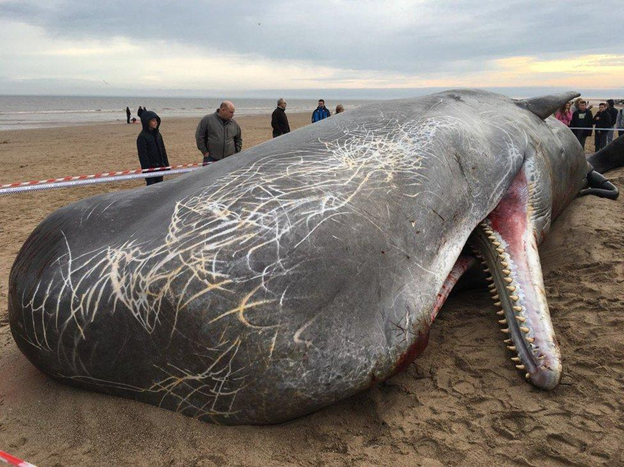
Researchers have revealed that sperm whales, which communicate using clicking sounds, also vary the sounds in ways that resemble how humans use vowels.
Sperm whale (Physeter macrocephalus).
Sperm whales got their name because the semi-liquid, waxy substance in their head was first believed to be sperm.
Distribution: They occur throughout the world’s oceans and in the Mediterranean Sea.
Appearance: It is a large, dark-colored, toothed whale with a massive, square-shaped head that can make up more than a third of its body length.
Sperm whales are the largest of the toothed whales.
Threats: Deep-sea oil and gas exploration can cause multiple issues, such as loss of hearing, water pollution from hydrocarbons, and increased risk of being hit by ocean vessels.
Conservation Status: IUCN Vulnerable.
Protected under Schedule 2 of the Wildlife Protection Act and possession or trade of any of its by-products, including Ambergris, is illegal.
They are listed in Appendix I of the CITES (Convention on International Trade in Endangered Species of Wild Fauna and Flora).
However, ambergris is not covered in CITES provisions as it is considered a naturally excreted waste product and trade of which is legal in many countries.
Ambergris
Ambergris means grey amber in French, is a waxy substance that originates from the digestive system of sperm whales.
Due to its high value in the market, ambergris is often called the ‘floating gold’ and ‘treasure of the sea’.
Sample Registration Survey 2024
Syllabus: GS2/Health
Context
The recent Sample Registration Survey 2024 was released by the Office of the Registrar General of India (ORGI).
The Sample Registration System (SRS)
It provides reliable annual estimates of Infant Mortality Rate, Birth Rate, Death Rate and other Fertility & Mortality Indicators at the National and subNational levels.
Conducted by – Registrar General of India.
Major Findings
Birth Rate:It is live births per 1,000 population, it fell from 21 in 2014 to 18.3 in 2024.
The number declined from 14.9 to 14.7 in urban areas and from 20.3 to 20.2 in rural areas.
The highest Birth Rate was observed at 26.8 in Bihar, whereas Andaman & Nicobar Islands had the lowest Birth Rate of 9.9.
Death Rate: It is deaths per 1,000 people, it is down from 6.7 to 6.4.
In 2024, Chhattisgarh recorded the highest Death Rate of 8.4, whereas the lowest Death Rate was recorded in Chandigarh at 3.9.
Infant Mortality Rate: The Infant Mortality Rate (IMR) is the number of deaths of children under one year of age per 1,000 live births in a given year.
The present level of IMR (24 infant deaths per thousand live births, for the year 2024) is less than one-fifth as compared to 1971. In the last ten years, IMR has witnessed a decline of about 38%.
In 2024, the maximum IMR was reported in Chhattisgarh (36) and the minimum in Manipur (2).
Government Initiatives to Curb Infant Mortality in India
Janani Shishu Suraksha Karyakram (JSSK) – It includes free drugs, consumables, free diet during the stay, free diagnostics, free transportation, and free blood transfusion if required.
Pradhan Mantri Surakshit Matritva Abhiyan (PMSMA) provides pregnant women a fixed day, free of cost, assured and quality antenatal checkup by a Specialist/Medical Officer on the 9th day of every month.
Mission Indradhanush: It was launched in 2014, aiming to achieve over 90% full immunisation coverage by strengthening routine immunisation services and targeting hard-to-reach populations.
Rashtriya Bal Swasthya Karyakram (RBSK): Children from 0 to 18 years of age are screened for 32 health conditions (i.e. Diseases, Deficiencies, Defects, and Developmental delays) under RBSK to improve child survival.
Nutrition Rehabilitation Centres (NRCs) are established at public health facilities where children with Severe Acute Malnutrition (SAM) and medical complications are admitted for treatment.
According to the National Crime Records Bureau (NCRB), Karnataka recorded the third-highest number of registered corruption cases (334) nationally.
The Prevention of Corruption (PC) Act, 1988
It is a federal law enforced in Karnataka primarily by the Karnataka Lokayukta.
Core Offences & Penalties
Taking Bribes (Section 7): Public servants face 3 to 7 years in prison plus a fine.
Giving Bribes (Section 8): Bribe-givers or companies face up to 7 years in prison.
Criminal Misconduct (Section 13): Misappropriation of property or illicit enrichment carries 4 to 10 years in prison.
Strict Legal Conditions
Demand & Acceptance: The Karnataka High Court rules that prosecutors must prove both a demand was made and a bribe was accepted; missing either invalidates the case.
Prior Sanction (Section 17A): Police cannot investigate a public servant’s official decisions without prior approval from the government.
Key Enforcement Authority
Karnataka Lokayukta: The state’s independent anti-corruption ombudsman handling traps, raids, and prosecutions.
The United States has approved the proposed sale of support services and related equipment for Apache helicopters to India at an estimated cost of 198.2 million US dollars.
About
Apache helicopters are among the world’s most advanced multi-role attack helicopters.
Developed by Boeing, it combines firepower, agility, and modern avionics.
It is equipped with Hellfire missiles, 70mm rockets, and a 30mm chain gun, enabling it to engage ground targets, armoured vehicles, and even low-flying aircraft.
They have advanced sensors, targeting radar, and night vision systems that make it effective for operations in all weather conditions, including high-altitude and low-visibility combat zones.
Besides India, other users include Egypt, Israel, Japan, Saudi Arabia, the UK, and more.
Chandrayaan-3: Latest Research
Syllabus: GS3/Space
In News
Scientists from the Physical Research Laboratory have used data from Chandrayaan-3 to reveal new details about the Moon’s surface.
Chandrayaan-3,
It is a follow-on mission to Chandrayaan-2, successfully achieved a soft landing on the Moon’s south pole in 2023.
Lander payloads:
Chandra’s Surface Thermophysical Experiment (ChaSTE) – to measure the thermal conductivity and temperature
Instrument for Lunar Seismic Activity (ILSA) – for measuring the seismicity around the landing site etc.
Rover payloads:
Alpha Particle X-ray Spectrometer (APXS) & Laser Induced Breakdown Spectroscope (LIBS) for deriving the elemental composition in the vicinity of landing site.
Additional Information – Chandrayaan-1
It was launched in 2008.
It was India’s first lunar mission.
It made India the fifth country to reach the Moon.
The mission’s most significant discovery was the presence of water molecules on the lunar surface, a finding confirmed by NASA.
Chandrayaan-2
It was launched in 2019 with an orbiter, a lander (Vikram), and a rover (Pragyan).
The mission aimed to achieve a soft landing on the lunar surface, but ISRO lost contact with the lander just before touchdown, resulting in a crash landing.
Despite this setback, the orbiter continued functioning and provided crucial data on the Moon’s surface and atmosphere.
India and Italy Ties Upgraded to Special Strategic Partnership
Syllabus: GS2/IR
Context
India and Italy upgraded their ties to a special strategic partnership.
India and Italy bilateral relations
Partnership: Elevated to Special Strategic Partnership, focusing on the Indo-Mediterranean corridor.
Initiatives: Enhanced cooperation on the India-Middle East-Europe Economic Corridor (IMEC).
Tech: Collaboration through the INNOVIT hub focusing on AI and space
Cultural Focus: Italian involvement in India’s National Maritime Heritage Complex.
Maharashtra Completes Documentation of Over 23,000 Wetlands
Syllabus: GS3/Biodiversity and Conservation
Context
National Centre for Sustainable Coastal Management (NCSCM) has completed the documentation and Ground-truthing of Maharashtra’s 23,415 wetlands.
Wetlands
Definition – ‘A wetland is the transitional land between terrestrial and aquatic eco-systems where the water table is usually at or near the surface or the land is covered by shallow water’.
These are ecotone between terrestrial and aquatic ecosystem
India has around 6% of its land as wetlands, 99 Wetlands of India are under the List of Wetlands of International Importance called as Ramsar Sites.
India boasts the largest Ramsar site network in Asia and the 3rd largest in the world in terms of number of sites.
Tamil Nadu holds the highest number of Ramsar sites in India in 2026 with 20 sites.
A Ramsar site is a wetland designated as one of international importance under the Ramsar Convention.
Ramsar Convention – It is one of the inter-governmental accords to preserve the wetlands of international importance.
It was signed on February 2, 1971 in Ramsar, Iran and came into force in 1975.
India became a signatory to the Ramsar Convention in 1982.
Veera Pasi
Syllabus: GS1/ Modern History
Context
Recently, a statue of Veera Pasi, often remembered as a “forgotten hero” of the Revolt of 1857, was unveiled in Raebareli.
Veera Pasi
Veera Pasi (born Shivdeen Pasi) was a valiant 19th-century warrior and army commander from Raebareli, Uttar Pradesh, who played a heroic role in the 1857 Uprising.
Born on November 11, 1835, in Lodhwari village, he was orphaned early and lived with his sister.
In the local dialect, a brother living with his sister’s family was affectionately called “Veerna,” which eventually evolved into the name Veera.
He became a trusted commander and associate of Rana Beni Madhav Baksh Singh, ruler of the Shankarpur Estate in Awadh.
When British forces captured Rana Beni Madhav Singh, Veera Pasi displayed remarkable courage by launching a rescue operation and freeing him from prison.
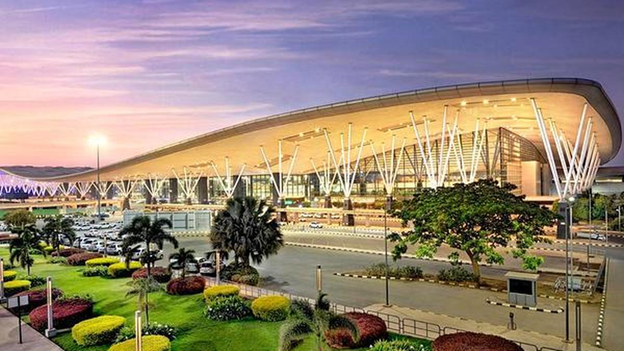
The Karnataka State Policy and Planning Commission (KSPPC) has formally proposed the creation of ‘Wisdom Valley’, a world-class Knowledge City spanning Bengaluru Airport City near Devanahalli.
Estimated project cost of ₹15,500 crore.
About
Objective – this mega-hub aims to transform North Bengaluru into a global center for education, research, and high-tech innovation, modeled after prominent global tech hubs like Silicon Valley.
Wisdom Valley
It is a proposed ₹15,500 crore global Knowledge City.
Where: Near Devanahalli, within the Bengaluru Airport City ecosystem.
Why: To create a global hub for education, R&D, and deep-tech innovation.
Core FocusSectors: Focuses on AI, aerospace, biotech, and green energy.
Education: Houses international university campuses and research centers.
Business: Features startup incubators, business parks, and a convention center.
Impact & Benefits Decongestion: Shifts economic growth northward to relieve central Bengaluru.
Logistics: Leverages direct proximity to Kempegowda International Airport.
Execution: Led by the state planning commission in partnership with BIAL.
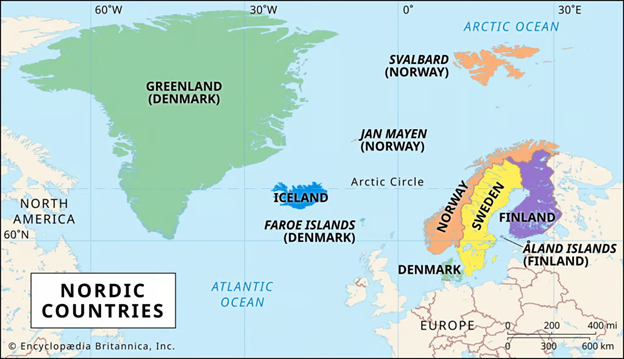
After the Third India-Nordic Summit, Prime Minister Modi said that India and the Nordic countries are committed to “democracy, rule of law and multilateralism”.
Nordic Countries
Nordic countries are a group of countries in northern Europe consisting of Denmark, Finland, Iceland, Norway, and Sweden.
The designation includes the Faroe Islands and Greenland, which are autonomous island regions of Denmark, and the Åland Islands, an autonomous island region of Finland.
Nordic countries
The term is sometimes used interchangeably with Scandinavia, a peninsular region of northern Europe that serves as the geographic core of the Nordic countries.
Scandinavia is typically defined more restrictively, however, and refers primarily to Norway, Sweden, and Denmark.
Denmark, Sweden and Finland are members of the EU while Norway and Iceland are European Economic Area (EEA) members.
Among them Sweden is the most populated country while Iceland is the least populated.
Euthanasia for Rabid and Dangerous Stray Dogs
Syllabus: GS2/ Governance
Context
The Supreme Court has allowed euthanasia for rabid, incurably ill, or demonstrably dangerous stray dogs, citing the need to protect human life and public safety.
Key Observations of the Supreme Court
The Supreme Court observed that the State has a constitutional obligation to protect citizens from repeated stray dog attacks and rabies threats.
The Court upheld its earlier order directing the removal of stray dogs from schools, hospitals, markets, and other high-footfall public spaces.
Constitutional and Legal Dimensions
Article 21 and Human Security: The judgment expanded the interpretation of Article 21 by linking public safety with the right to life and dignity.
Prevention of Cruelty to Animals Act, 1960: The Act protects animals from unnecessary cruelty while permitting humane treatment in exceptional situations.
Animal Birth Control (ABC) Rules, 2023: The Rules emphasise sterilisation, vaccination, and scientific management of stray dog populations.
Unlawful Activities (Prevention) Act (UAPA)
Syllabus: GS2/Governance
Context
Delhi Police has suggested a larger SC Bench to review the Unlawful Activities (Prevention) Act (UAPA) bail curbs.
UAPA Act
Enacted: 1967
Mandate: It is aimed at “more effective prevention of certain unlawful activities of individuals and associations for dealing with terrorist activities”.
Unlawful activity: Unlawful activity means any conduct which constitutes a crime or which contravenes any law.
Terrorist act: Section 15 of the Act defines “terrorist act” and is punishable with imprisonment for a term of at least five years and up to life.
Power to central government – The Act assigns absolute power to the central government, by way of which the Centre deems an activity as unlawful.
Applicability: The provisions of this Act apply also to—
(a) citizens of India outside India;
(b) persons in the service of the Government, wherever they may be; and
(c) persons on ships and aircrafts, registered in India, wherever they may be.
The Act empowers the government to designate individuals as terrorists.
Under the Act, the central government may designate an organisation as a terrorist organisation
Ayush Anudan Portal Under Ayush Grid Initiative
Syllabus: GS2/Governance
In News
Union Minister of State for Health and Family Welfare launched the Ayush Anudan Portal at Kartavya Bhawan, New Delhi.
Ayush Anudan Portal
It is developed by the Ministry of Ayush under the Ayush Grid initiative.
Objective – It is a paperless, centralized digital grant-management platform launched by the Ministry of Ayush to streamline the end-to-end submission, processing, appraisal, and monitoring of funding proposals
It is integrated with the NGO Darpan Portal and it ensures faster and more reliable verification of applicant organisations.
Nodal Ministry: Ministry of Ayush, Government of India.
Significance – Replacing manual, paper-heavy traditional grant workflows with an automated, transparent, and easily accessible digital workflow.
Ayush Grid Project
It is conceptualized by the Ministry of Ayush for creating a comprehensive Information Technology backbone for the entire Ayush sector.
It envisages digitization of service delivery across the six functional areas — Health Services, Education, Research, Drug Administration, Medicinal Plants, and Ministry of Ayash Oversight along with capacity building and media outreach.
It is aimed at establishing an integrated, transparent, and citizen-centric digital ecosystem for the Ayush sector through the use of modern technology.
Oslo Summit
Syllabus: GS2/ International Relations
Context
PM Modi participated in the Third India–Nordic Summit held in Oslo.
Oslo Summit
The summit brought together leaders of the five Nordic countries; Norway, Sweden, Finland, Denmark and Iceland.
Objective – The summit aims to strengthen cooperation between India and Nordic countries in trade, investment, clean energy, technology, innovation, maritime affairs and sustainable development.
The first India–Nordic Summit was held in Stockholm in 2018 and the second summit took place in Copenhagen in 2022.
Significance of Nordic Countries for India
Technological Cooperation: Nordic countries are global leaders in clean technologies, innovation and digital governance.
Green Energy Partnership: Nordic expertise in offshore wind, green hydrogen and sustainable technologies supports India’s energy transition goals.
Maritime Cooperation: Nordic countries possess advanced capabilities in shipbuilding, maritime logistics and sustainable port infrastructure.
Arctic Significance: Nordic cooperation is important for India’s climate research and Arctic engagement.
Research and Innovation: Collaboration in research, education and start-up ecosystems can strengthen India’s knowledge economy.
Persian Gulf Strait Authority (PGSA)
Syllabus: GS2/IR
Context
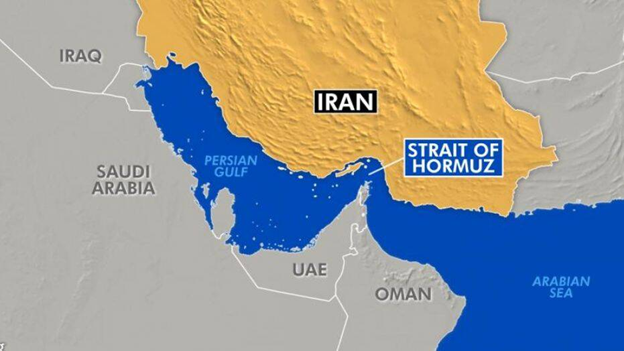
Iran has established a new regulatory body named as Persian Gulf Strait Authority (PGSA).
About
Aim: To oversee and manage operations in the strategically significant Strait of Hormuz.
Under the new system, vessels will be required to follow directives issued by the authority and secure transit permits before entering the Strait of Hormuz.
The US, Gulf states, and European nations have all rejected the legality of Iran’s fee regime.
Strait of Hormuz
Location – The Strait of Hormuz lies between Iran to the north and Oman and the United Arab Emirates to the south, linking the Persian Gulf with the Gulf of Oman and the Arabian Sea.
At its narrowest point it is about 33 kilometres wide, with shipping lanes just a few kilometres across in either direction.
Significance- Nearly half of India’s crude oil and around 60 per cent of its natural gas imports pass through the strait.
Six-member Cabinet sub-committee to review the State Education Policy (SEP)
News –
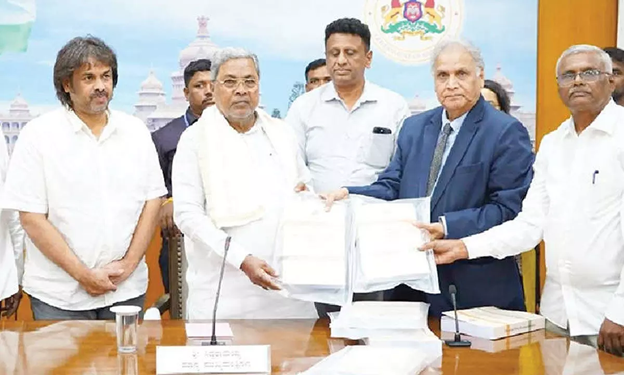
The Karnataka government formed a six-member Cabinet sub-committee to review the State Education Policy (SEP) report and plan its rollout.
Key Details
Chairman: Home Minister G. Parameshwara.
The Task: Review the 8-volume SEP report submitted by Prof. Sukhdeo Thorat.
Main Focus: Assess the ₹10,000+ crore annual budget requirement and university reforms.
Karnataka State Education Policy (SEP) Commission,
It is led by former UGC Chairman Prof. Sukhdeo Thorat,
It serves as the state’s alternative to the National Education Policy (NEP) 2020,
Key Recommendations of the SEP Report
New School Structure (2+8+4 Model) – The commission rejected the federal NEP’s 5+3+3+4 design.
Instead, it recommended a 2+8+4 structure to simplify school scaling
2 Years: Pre-primary education.
8 Years: Elementary education, standardising the Class 1 admission age to 6 years.
4 Years: Secondary education.
RTE Extension: Recommends extending the Right to Education (RTE) Act to cover children from ages 4 to 18 (pre-primary through secondary).
Two-Language Policy
The report discards the conventional three-language formula in favour of a strict two-language framework
Medium of Instruction: Mandates Kannada or the student’s mother tongue as the medium of instruction up to Class 5, and highly encourages it up to Class 12 (II PUC).
Bilingual Framework: The curriculum will balance the local language/mother tongue alongside English.
The World Health Organization (WHO) has declared an international health emergency after an Ebola outbreak in the Democratic Republic of Congo killed over 80 people.
Ebola virus disease (EVD)
It is formerly known as Ebola haemorrhagic fever. It is a rare but severe, often fatal illness in humans.
First found in – Guinea in December 2013..
Transmission – The virus is transmitted to people from wild animals and spreads in the human population(Zoonotic nature).
Host – fruit bats of the Pteropodidae family are natural Ebola virus hosts.
vomiting, diarrhoea, rash, symptoms of impaired kidney and liver function.
Treatment – The Ervebo vaccine has been shown to be effective in protecting people from the species Zaire ebolavirus. Remdesivir was also tested as an Ebola treatment
Solar Wind Magnetosphere Ionosphere Link Explorer (SMILE)
Syllabus: GS3/ Science and Technology
Context
A joint mission of the European Space Agency and the Chinese Academy of Sciences named SMILE is being developed to study how Earth’s magnetic shield responds to solar storms and space weather events.
SMILE Mission
SMILE stands for Solar wind Magnetosphere Ionosphere Link Explorer.
Launched by – is a joint ESA-China satellite mission launched on May 19, 2026.
Objective – Exploring the interface where solar winds collide with the outer boundary of Earth’s magnetosphere
Global Space Missions
Parker Solar Probe (NASA): Launched in 2018; sweeps directly inside the Sun’s coronal atmosphere (within 6.5 million km) using an advanced carbon-composite heat shield.
Solar Orbiter (ESA & NASA): Launched in 2020 to capture the first-ever close-up images of the Sun’s polar zones by shifting outside the traditional ecliptic plane.
PUNCH Mission (NASA): Targeted to track solar winds and coronal mass ejections passing from the corona directly into the broader heliosphere.
PM Modi Visit to Norway
Syllabus: GS2/IR
Context
Prime Minister Modi lands for the first bilateral visit by an Indian Prime Minister to Norway after 43 years.
Key Highlights of the Meet
Green Strategic Partnership: India and Norway formally declared the upgrade of bilateral ties to a Green Strategic Partnership to ensure increased collaboration in sectors ranging from Clean Energy to Climate Resilience, Blue economy to green shipping.
Norway Joins Indo-Pacific Oceans Initiative (IPOI): Norway formally joined India’s IPOI framework (launched 2019), which promotes a free, open, and rules-based Indo-Pacific.
Triangular Cooperation Agreement: India and Norway will jointly offer India’s Digital Public Infrastructure (DPI) (the Aadhaar-UPI-CoWIN stack) to countries of the Global South.
Diplomatic Outcomes: Norway reaffirmed support for India’s permanent seat in a reformed UN Security Council.
PM Modi awarded the Grand Cross of the Royal Norwegian Order of Merit by King Harald V, Norway’s highest civilian honour for foreign heads of government.
India – Norway Bilateral Ties
India and Norway established bilateral relations in 1947.
The India-Nordic Summit format allowed more regular and structured interactions at Prime Ministerial levels.
The first summit was held in 2018 at Stockholm.
Norway has been supporting India’s perusal to become a permanent member of a reformed UN Security Council.
Arctic/ Polar: India set up its first permanent research station ‘Himadri’ in the Arctic in 2008 at Svalbard, Norway.
The National Centre for Polar and Ocean Research (NCPOR) carries out multiple scientific expeditions to the Arctic every year.
India has also been an Observer State in the Arctic Council since 2013.
Space: ISRO uses Norway’s Svalbard ground station on commercial terms to receive data from IRS satellites.
KSAT is also setting up ISRO’s antenna in Svalbard.
India-South Korea Ties
Syllabus: GS2/IR
In News
The Indian Defence Minister’s visit to Seoul after the South Korean President’s visit to India highlights the growing strength and strategic importance of India–South Korea relations.
India-South Korea
Special Strategic Partnership: Upgraded in 2015; links India’s Act East Policy with South Korea’s Indo-Pacific strategy.
Defense Success: Shifted from buyer-seller to co-production via the K9-Vajra self-propelled artillery guns.
Supply Chain Resilience: Jointly working to de-risk supply chains and reduce economic over-reliance on China.
Climate Alignment: South Korea joined the India-led International Solar Alliance (ISA).
China Dilemma: India is structurally assertive against Beijing, while South Korea remains economically tied to China.
RTI Act Does not Apply to Cricket Board: CIC
Syllabus: GS2/Polity & Governance
Context
The Central Information Commission (CIC) held that the Board of Control for Cricket in India (BCCI) does not fall within the ambit of a “public authority” under the Right to Information (RTI) Act, 2005.
Central Information Commission (CIC)
Established – in 2005 by the Central Government under the provisions of Right to Information (RTI) Act, 2005.
Objective – It hears appeals against public authorities who have not provided information satisfactorily to the public and also addresses major issues concerning the RTI Act.
Annual report – CIC submits an annual report to the Union government on the implementation of the provisions of RTI Act.
Composition of CIC
Head – The CIC is headed by the Chief Information Commissioner and not more than ten Information Commissioners.
Tenure – The Chief Information Commissioner holds office for five years or until he attains the age of 65 years, whichever is earlier. He is not eligible for reappointment.
Appointment of the commissioner in CIC – The commissioners are appointed by the President on the recommendation of a selection committee.
Selection committee – It consists of the Prime Minister as Chairperson, the Leader of Opposition in the Lok Sabha and a Union Cabinet Minister nominated by the Prime Minister.
State Information Commission
The Right to Information Act of 2005 provides for the creation of a State Information Commission at the state level.
The State Information Commission is a high powered independent body which inter-alia looks into the complaints made to it and decides the appeals.
It entertains complaints and appeals pertaining to offices, financial institutions, public sector undertakings, etc under the concerned state government.
Composition – State Chief Information Commissioner and not more than ten State Information Commissioners appointed by the Governor.
Silver
Syllabus: GS3/Economy
Context
The government has shifted silver imports to the “restricted” category and imposed a 15% import duty to curb rising imports and protect domestic interests.
Silver
It is a relatively soft, lustrous precious metal.
It has highest electrical and thermal conductivity among all metals, critical for electronics, circuit boards, connectors, batteries, and automotive systems.
It is mainly found in ores like argentite and chlorargyrite (horn silver).
Mexico is the largest silver producer in the world.
India imports silver mainly from the United Arab Emirates, Britain and China.
Bengaluru ranks as the 2nd most congested city globally
News –
The global average traffic congestion index has risen from 20% to 25%, marking a 5 percentage point increase worldwide, according to the Comptroller and Auditor General (CAG) and data from the TomTom Traffic Index.
Global Ranking: Bengaluru ranks as the 2nd most congested city globally, trailing only Mexico City.
Bengaluru is tackling traffic through targeted infrastructure, expanded transit, and policy shifts.
Infrastructure Overhaul
Elevated Corridors: Building 11 new flyovers across major municipal zones.
Underground Tunnels: Planned 170-km network to connect core hubs.
Peripheral Ring Road: 117-km bypass corridor to divert heavy vehicles.
Public Transit Expansion
Metro Expansion: Scaling Namma Metro lines to key tech hubs.
Suburban Rail: Connecting distant towns to reduce daily city entry.Bus
Decentralisation: Shifting outstation bus terminals to the city outskirts.
Policy & Local Fixes
Corporate Shifts: Incentivising tech firms to move to Tier-2 cities.
Junction Fixes: Redesigning bottlenecks and synchronising traffic signals.
Parking Enforcement: Reviving strict towing and fine systems for blockages.
India-Sweden Upgrade Ties to Strategic Partnership
Syllabus: GS2/ International Relations
Context
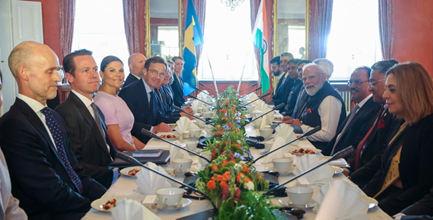
India and Sweden elevated their bilateral relationship to a Strategic Partnership, during an official visit of PM Modi to Sweden.
Key Highlights of the Visit
PM Modi received Sweden’s Royal Order of Polar Star and Commander Grand Cross, the highest recognition and honour that can be conferred upon a head of government.
India–Sweden Relations
Diplomatic Relations: India and Sweden established diplomatic relations in 1948.
Sweden hosted the first India–Nordic Summit in 2018, strengthening India’s engagement with the Nordic region.
India and Sweden jointly launched the Leadership Group for Industry Transition (LeadIT) at the UN Climate Action Summit in 2019.
LeadIT promotes low-carbon industrial transition and sustainable manufacturing practices.
Indus Waters Treaty
Syllabus: GS2/ International Relation
In Context
India has rejected the latest ruling of the Court of Arbitration (CoA), a five-member arbitral panel set up in 2023 at Pakistan’s request to settle a dispute over the design of India’s Kishenganga and Ratle hydroelectric projects in Jammu & Kashmir.
Indus Waters Treaty
Background – In 1947, the partition had cut the Indus river system into two between India and Pakistan.
Mediated by – The World Bank
Signed in – it was signed in 1960 by former PM Jawaharlal Nehru and then President of Pakistan, Ayub Khan.
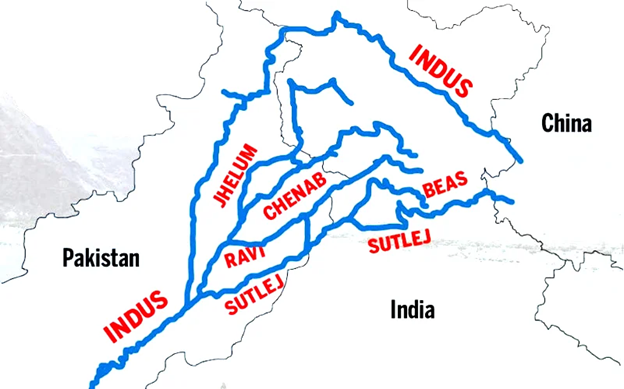
Transboundary river – The Indus River is a transboundary river that flows through Pakistan (47%), India (39%), Tibet (8%), and Afghanistan (6%). It is the longest river in Pakistan.
Note – In India, the Indus basin spreads over J&K, HP, Punjab, Rajasthan, Haryana, and Chandigarh.
Major tributaries of the Indus River are:
River
Source
Joins
Jhelum
Spring at Verinag, Kashmir Valley
Chenab at Trimmu, Pakistan
Chenab
Chandra and Bhaga streams near Bara Lacha Pass
Satluj after receiving Jhelum and Ravi
Ravi
Kullu hills near Rohtang Pass
Chenab near Rangpur, Pakistan
Beas
Near Rohtang Pass
Satluj at Harike Barrage, India
Satluj
Manasarovar-Rakas Lakes, Tibet
Indus a few kilometres above Mithankot, Pakistan
Provisions of Indus Water Treaty
It allocated the three western rivers (i.e., Indus, Chenab, and Jhelum) to Pakistan for unrestricted use, barring certain non-consumptive, agricultural and domestic uses by India.
It allocated the three eastern rivers, (i.e., Ravi, Beas and Sutlej) to India for unrestricted usage.
This meant that 80% of the share of water went to Pakistan, leaving 20% of water for use by India.
Annexure C and D
Though Pakistan has rights over waters of Jhelum, Chenab and Indus, but:
Annexure C of the IWT allows India certain agricultural uses
Annexure D allows India to build ‘run of the river’ hydropower projects (projects not requiring live storage of water).
Permanent Indus Commission
The treaty also required that both countries should establish a Permanent Indus Commission constituted by permanent commissioners of both sides.
It functions as the first stop for resolution of conflicts.
It should meet at least once a year.
Prime Minister’s Visit to Netherlands
Context
PM Modi paid an official visit to the Netherlands.
Elevation to Strategic Partnership: India and the Netherlands upgraded bilateral relations to a “Strategic Partnership”.
India- Netherlands Relations
Diplomatic relations: India and the Netherlands established diplomatic relations in 1947, with 2026 marking 79 years of bilateral diplomatic ties.
Economic Cooperation: India and the Netherlands formalized the Joint Trade & Investment Committee (JTIC) in 2025, strengthening bilateral trade, two-way investment cooperation, and collaboration in technology, MSMEs, and emerging sectors.
Cultural Cooperation: India and the Netherlands signed an MoU in 2025 for cooperation in the development of the National Maritime Heritage Complex (NMHC) at Lothal, Gujarat.
Additional Information – The National Maritime Heritage Complex (NMHC)
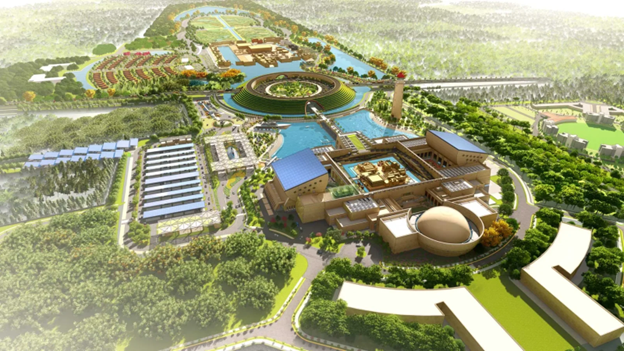
It is a world-class tourism facility under construction in Lothal, Gujarat to showcase India’s 4,500-year-old maritime history.
Location: Lothal, Gujarat (Ancient Indus Valley Civilization port city).
Nodal Ministry: Ministry of Ports, Shipping and Waterways (MoPSW) under the Sagarmala Programme.
Scale: Spread over 400 acres; set to be the world’s largest maritime museum complex.
Key Feature: Will host the world’s tallest lighthouse museum.
Executing Agency: Indian Port Rail Corporation Limited (IPRCL).
Bhojshala
Syllabus: GS1/Art and Culture
In News
The Madhya Pradesh High Court declared the Bhojshala complex in Dhar district a Hindu temple.
Bhojshala Complex
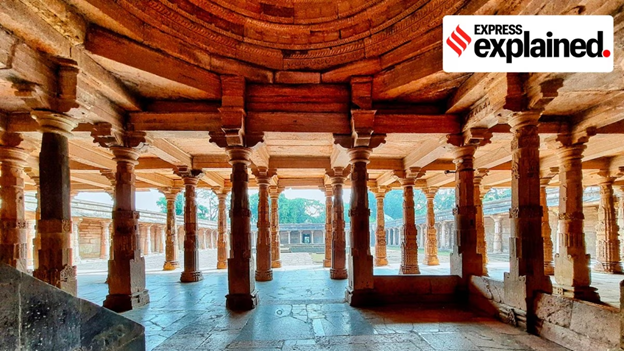
Raja Bhoja, the greatest ruler of the Paramara dynasty, founded the famous Bhojshala at Dhar around 1000–1055 A.D. as a major center of learning dedicated to Goddess Saraswati.
Later, the structure was converted into the Kamal Maula Mosque during Muslim rule.
It served as a premier college and centre of Sanskrit learning. The mosque still contains carved pillars, ceilings, and stone inscriptions from the original Bhojshala.
Important inscriptions include Sanskrit grammar tables, hymns to Vishnu, praises of Paramara kings, and the Sanskrit drama Karpuramanjari written by Madana during the reign of Arjunavarma Deva.
Jaggery Sector in India
Syllabus: GS3/Economy
In News
Jaggery production in India is a key agro-processing sector that is supporting rural livelihoods, farmer incomes, and value addition through cottage industries.
Jaggery
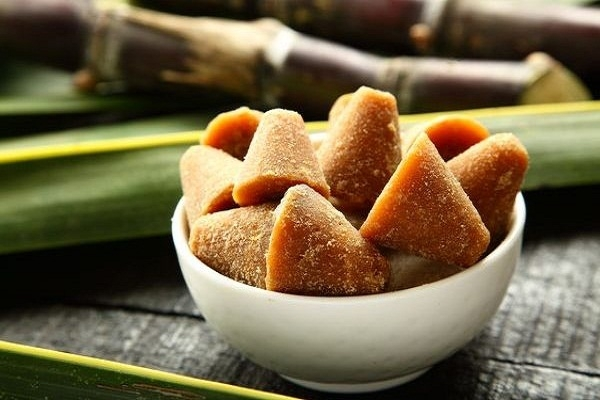
It is commonly known as gur and is a traditional, unrefined, natural sweetener.
It is produced by concentrating sugarcane juice without the use of chemicals.
It is widely consumed across Asia, Africa, Latin America, and the Caribbean under various local names.
Jaggery Production in India
India produces over 70% of the world’s jaggery, making it the largest global producer.
Uttar Pradesh contributed 48.5 percent of total production, followed by Maharashtra (24.1 percent) and Karnataka (10.5 percent).
Saranda Forest
Syllabus: GS3/Environment
In News
The Jharkhand government has filed a review petition in the Supreme Court against its earlier order directing the state to notify the Saranda elephant forests as a wildlife sanctuary within three months.
Jharkhand argues that declaring the sanctuary could affect tribal habitations, roads, and infrastructure, requiring further studies.
Saranda Forest
It is located about 122 km from Jamshedpur in Jharkhand.
It is the largest Sal forest in Asia and is known as the “land of seven hundred hills.”
It is part of the Chhotanagpur biogeographic zone and connects with forests in Odisha and Chhattisgarh, creating a continuous wildlife habitat.
Flora and fauna – It includes endangered flying lizards and large elephant populations, and forms an important migratory elephant corridor.
Major tree species – Sal, Mahua, and Kusum.
Tribes – Ho, Munda, Uraon, and Santhal peoples,
Significance – It holds deep cultural significance for local tribes, whose traditions, rituals, and sacred groves (“Sarna”) are closely tied to the forest ecosystem.