Chief of Defence Staff
Syllabus: GS3/ Defence
Context
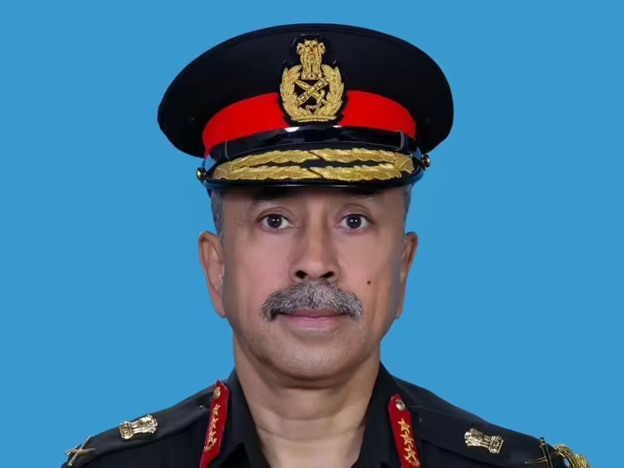
- The Government of India has appointed Lieutenant General NS Raja Subramani as the new Chief of Defence Staff (CDS).
- He will also function as the Secretary, Department of Military Affairs (DMA).
Chief of Defence Staff (CDS)
- The post of CDS was created in 2019 following recommendations of the Kargil Review Committee and subsequent defence reforms.
- The first CDS of India was General Bipin Rawat.
Role and Responsibilities of the CDS:
- Principal Adviser: Acts as the primary military adviser to the Defence Minister on all tri-services matters.
- Department of Military Affairs: Functions as the Secretary to the Government of India for the Department of Military Affairs.
- Military Reform: Focuses on enhancing synergy, jointness in operations, and modernization of the armed forces.
- Theater Commands: Drives the restructuring of military commands into integrated theater commands.
- Strategic and Nuclear Role: Serves as an important military adviser to the Nuclear Command Authority.
Sardar Vallabhai Patel
Syllabus: GS1/History
In News
- Recently, the Prime Minister paid tribute to Sardar Vallabhbhai Patel at Somnath Temple during the 75th anniversary celebrations of the temple’s reconstruction.
Sardar Vallabhbhai Patel
- Born on – October 31, 1875,
- India’s first Deputy Prime Minister and Home Minister.
- He is widely regarded as the architect of India’s national integration and a key force behind the establishment of modern civil services
- He was posthumously honoured with the Bharat Ratna, the highest civilian award in the country in 1991.
Contributions in India’s Freedom Struggle
- Kheda Satyagraha, 1917: As a prominent local leader in the Kheda district of Gujarat, Patel supported Mahatma Gandhi in organising the Satyagraha against unjust land revenue taxes imposed by the British.
- Non-Cooperation Movement, 1920-22: Patel significantly impacted the Non-Cooperation Movement, recruiting approximately 300,000 members and raising 1.5 million rupees.
- Bardoli Satyagraha, 1928: During the Bardoli Satyagraha, Patel supported the local population suffering from famine and increased land taxes.
- Civil Disobedience Movement 1930-34: He actively participated in the Salt Satyagraha, a nonviolent protest against the British salt monopoly.
- Quit India Movement, 1942: He organised protests and strikes against British rule, and delivered compelling and electrifying speeches throughout India, inspiring and mobilising people to join mass protests, engage in acts of civil disobedience, boycott tax payments, and stage civil service shutdowns.
|
Do you know? ● Since 2014, Rashtriya Ekta Diwas, also known as National Unity Day, has been celebrated every year on October 31 to commemorate the birth anniversary of Sardar Patel. ● The Statue of Unity, the world’s tallest statue, was unveiled on 31 October 2018 at Kevadia in Gujarat on the 143rd birth anniversary of Sardar Vallabhbhai Patel. ● Civil Services Day is observed on 21 April to mark Sardar Vallabhbhai Patel’s address to the first batch of civil servants of Independent India in 1947. |
Speedy Trial a ‘Human Right’
Syllabus: GS2/ Polity and Governance
Context
- The Supreme Court of India, while hearing a criminal case pending for nearly 35 years in Uttar Pradesh, declared that the right to speedy trial is not only a constitutional guarantee under Article 21 but also a human right.
Article 21 of the Constitution
- Article 21 guarantees the protection of life and personal liberty except according to procedure established by law.
- Judicial interpretation has expanded Article 21 to include fair trial, legal aid, humane prison conditions, and speedy justice.
Judicial Evolution
- Hussainara Khatoon v. State of Bihar: The Supreme Court first recognised speedy trial as a fundamental right under Article 21. The case highlighted the plight of undertrial prisoners languishing in jails for years.
- A.R. Antulay v. R.S. Nayak: The Court laid down principles to determine violation of the right to speedy trial. It clarified that delays caused by systemic inadequacies also violate constitutional rights.
PCOS Renamed as PMOS
Syllabus: GS2/ Health
Context
- A global medical consensus has renamed Polycystic Ovary Syndrome (PCOS) as Polyendocrine Metabolic Ovarian Syndrome (PMOS) after nearly 14 years of scientific consultations involving doctors, researchers, and patient advocacy groups across the world.
PMOS
- PMOS, earlier known as PCOS, is a complex hormonal and metabolic disorder affecting women of reproductive age.
- It impacts the endocrine system, metabolism, reproductive health, and mental well-being.
- The disorder affects nearly one in eight women globally and is among the leading causes of infertility and menstrual irregularities.
Symptoms of PMOS:
- Risk of Diabetes: Insulin resistance can lead to Type-2 diabetes mellitus.
- Cardiovascular Risks: Women with PMOS are more vulnerable to hypertension and heart diseases.
- Fertility Challenges: The disorder affects ovulation and reproductive health.
- Mental Health Concerns: Long-term stress, body image issues, and hormonal imbalance may contribute to psychological disorders.
Why Was PCOS Renamed?
- The earlier name Polycystic Ovary Syndrome was considered scientifically inaccurate and misleading, as many women diagnosed with the condition do not actually develop ovarian cysts.
- The earlier term primarily associated the disorder with reproductive organs, whereas the condition also significantly affects metabolism, hormones, cardiovascular health, and mental health.
Pradhan Mantri Schools for Rising India (PM SHRI)
Syllabus: GS2/Governance
Context
- The Union Ministry of Education has issued a fresh reminder regarding the pending implementation of the Pradhan Mantri Schools for Rising India (PM SHRI) scheme to West Bengal, Kerala and Tamil Nadu.
PM SHRI Schools
- Abbreviation – PM Schools for Rising India(PM SHRI)
- Nodal Ministry – Ministry of Education
- Type – Centrally Sponsored Scheme
- Aim – To upgrade and develop more than 14,500 Schools across the country by strengthening the selected existing schools from amongst schools managed by Central Government/ State/ UT Government/ local bodies.
- Features – PM-SHRI schools will have a modern, transformational and holistic method of imparting education.
- The focus of these schools will be on modern infrastructure including latest technology, smart classrooms, sports and more.
- They will also be developed as “green schools” with water conservation, waste recycling, energy-efficient infrastructure and integration of an organic lifestyle in the curriculum.
- Hence, these schools will showcase all components of the National Education Policy 2020 and act as exemplar schools and also offer mentorship to other schools in their vicinity.
Study on Malaria Vaccine
Syllabus: GS2/Health
In News
- A major study published in the Lancet found that the world’s first approved malaria vaccine, RTS,S/AS01E, reduced overall child deaths by 13% in parts of Africa.
Additional Information – Malaria
- Responsible pathogen – Malaria is an acute febrile illness caused by Plasmodium parasites.
- Vector – It spreads from people to people through the bites of infected female Anopheles mosquitoes. It is preventable and curable.
- Transmission – Malaria is not contagious and cannot spread from one person to another; the disease is transmitted through the bites of female Anopheles mosquitoes.
- Five species of parasites can cause malaria in humans and 2 of these species – Plasmodium falciparum and Plasmodium vivax – pose the greatest threat.
Symptoms
- Infants, children under 5 years, pregnant women, travelers and people with HIV or AIDS are at higher risk. Severe symptoms include:
- extreme tiredness and fatigue
- impaired consciousness
- multiple convulsions
- difficulty breathing
- dark or bloody urine
- jaundice (yellowing of the eyes and skin)
- abnormal bleeding.
Initiatives to Control Malaria by WHO
- WHO’s Global technical strategy for malaria 2016–2030 – It aims to reduce malaria case incidence and mortality rates by at least 40% by 2020, at least 75% by 2025 and at least 90% by 2030 against a 2015 baseline.
- ‘E-2025 Initiative’: The WHO has identified 25 countries with the potential to eradicate malaria by 2025 under the initiative.
- High Burden to High Impact (HBHI) initiative: WHO has initiated the initiative in 11 high malaria burden countries, including India.
Indian Government Initiatives to Control Malaria
- National target – The Government of India set a target to eliminate malaria in India by 2027.
- National Framework for Malaria Elimination (NFME) – It has been developed and launched in 2016 aligned with the Global Technical Strategy (GTS) for malaria elimination 2016-2030.
- Malaria Elimination Research Alliance-India (MERA-India): It was established by the Indian Council of Medical Research (ICMR) as a conglomeration of partners working on malaria control.
National Florence Nightingale Awards 2026
Syllabus: Miscellaneous
Context
- President Droupadi Murmu conferred the National Florence Nightingale Awards 2026 to nurses at a function held at Rashtrapati Bhavan.
National Florence Nightingale Awards
- Named after Florence Nightingale, the founder of modern nursing.
- It was instituted in 1973 by the Ministry of Health and Family Welfare, Government of India.
- It recognizes meritorious services of nurses and nursing professionals who contribute significantly to society.
- Each award consists of a Certificate of Merit, Cash Award of Rs.1,00,000/- and a medal.