
Bay of Bengal as India’s SHANTI Anchor
International
News –
- The External Affairs Minister introduced the SHANTI framework to establish a rules-based maritime order in the Bay of Bengal (BOB) and across the Indo-Pacific.
SHANTI Framework
- Full form – Securing Holistic Advancement through Norms, Trust, and Integrity
- Objective – It is India’s normative regional maritime security approach based on shared responsibility rather than a rigid military alliance.
- Significance – The strategy aims to build long-term resilience against transnational challenges, including illegal fishing, cyber threats, and marine pollution.
- The framework strengthens India’s position as a trusted security partner and first responder across the wider Indo-Pacific.
Environmental Performance Index (EPI) 2026
Environment
News –
- The Environmental Performance Index (EPI) 2026 was released by Yale and Columbia Universities, reviving debate on environmental governance and assessment methodologies.
About –
- Objective – It assesses 177 countries through 47 indicators, weighted across Ecosystem Vitality (45%), Climate Change Mitigation (30%) and Environmental Health (25%).
Key Highlights of EPI 2026
- Global Leaders: Estonia topped the index with 74.79, followed by Luxembourg and the UK, while European countries dominated the leading positions.
- India ranked 176th out of 177 countries, scoring 22.46, ahead of only Laos globally and last in South Asia.
INS Nipun
Defense

News –
- Nipun, the second Diving Support Vessel (DSV) built by Hindustan Shipyard Limited, was delivered to the Indian Navy in Visakhapatnam.
About –
- It is the sister ship of INS Nistar with nearly 75% indigenous content, supporting Aatmanirbhar Bharat.
Features –
- Role: Deep-sea rescue, submarine salvage, and underwater security.
- Key Asset: Serves as a mother ship for Deep Submergence Rescue Vehicles (DSRVs).
- Specs: 118.4 metres long, 9,350 tonnes displacement.
- Capability: Supports saturation diving up to 300 metres deep.
United to end AIDS Report
Health & Society
Context (DTE):
- The United Nations Programme on HIV/AIDS (UNAIDS) released the report, United to End AIDS, at the 26th International AIDS Conference in Rio de Janeiro, Brazil.
Political Declaration on HIV and AIDS (2026)
- It is a global roadmap adopted by UN Member States in 2026, during the UN General Assembly High-Level Meeting on HIV/AIDS in New York.
- It aims to end AIDS as a public health threat by 2030 through the 95-95-95 targets, secure US$21.9 billion annually by 2030, and protect human rights.
Additional Information – Acquired immunodeficiency syndrome (AIDS)
-
- Pathogen – It is a chronic, potentially life-threatening health condition caused by the human immunodeficiency virus (HIV) which damages the human immune system.
- Transmission: Through direct contact with certain body fluids (blood, semen, rectal fluid, vaginal fluid or breast milk) from a person infected with HIV.
- Symptoms:
-
- Stage 1: Flu-like illness (Fever, chills, rashes, night sweats)
- Stage 2: Clinical latency (No particular symptoms)
- Stage 3: AIDS (Weakening of Immune System)
- Prevention: Prevention is better than cure, using protective techniques, non-contaminated needles & preventing mother to child transmission.
- Treatment: There is no cure for HIV infection. It is treated with antiretroviral drugs, which stop the virus from replicating in the body. Untreated HIV can progress to AIDS, often after many years.
Steps taken by Government of India
- National AIDS Control Programme (NACP) (Central Sector Scheme)
-
- India has achieved the 6th MDG of halting and reversing the HIV epidemic.
- Prevention from Parent to Child Transmission (PPTCT) programme
- HIV/AIDS Act 2017 (Prohibits discrimination against HIV-infected people on any grounds)
- 90:90:90 strategy as adopted by UNAIDS (90% (diagnosed, treatment (by anti-retroviral treatment (ART)) & suppression)) by 2020. Extended by 10 years with the goal post of 95-95-95.
- Project ACCELERATE (John Hopkin & NACO initiative): To provide HIV Services through Safe Zindagi online portal.
- Mission Sampark: Its purpose was to “bring back” people living with HIV (PLHIV) who had stopped antiretroviral therapy (ART).
Dengue Virus
Health & Society
News –
- Indian Council of Medical Research’s (ICMR) Virus Research and Diagnostic Laboratory (VRDL) found all four dengue virus serotypes (DENV- 1 to DENV-4) are circulating in India
Dengue
-
- Pathogen – Dengue is a viral infection caused by the dengue virus (DENV).
- DENV is an RNA virus of the Flaviviridae family with four serotypes (DENV-1 to 4).
- Symptoms: High fever, severe headache, pain behind the eyes, muscle and joint pains, nausea, vomiting, swollen glands, rash.
- Transmission: The virus is transmitted to humans through the bites of infected female mosquitoes, primarily the Aedes Aegypti mosquito.
- There is a possibility of maternal transmission of Dengue (from a pregnant mother to her baby), transmission via blood products, organ donation and transfusions.
- Prevention: There is no specific antiviral treatment for dengue, so prevention relies on controlling mosquito populations and raising public awareness.
- The mosquitoes that spread dengue are active during the day. The best way of protection is to protect yourself from mosquito bites.
India’s first indigenous dengue vaccine
- DengiAll is an indigenous, tetravalent, single-dose dengue vaccine candidate being developed by Panacea Biotec in collaboration with the Indian Council of Medical Research (ICMR).
Shaheed Udham Singh
History & Culture
News –
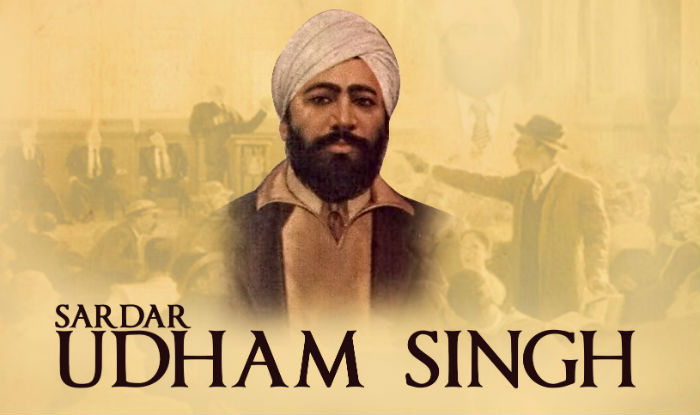
- Prime Minister Narendra Modi paid tribute to Shaheed Udham Singh on his martyrdom day, calling his life a symbol of courage and sacrifice that will inspire generations.
Shaheed Udham Singh (1899-1940)
- He was an Indian revolutionary who avenged the 1919 Jallianwala Bagh massacre by assassinating Michael O’Dwyer, former Lieutenant Governor of Punjab.
- Early Life: Born Sher Singh in Sunam, Punjab, he was raised at the Central Khalsa Orphanage in Amritsar, where he was renamed Udham Singh.
- Traumatised by the 1919 Jallianwala Bagh massacre, he dedicated his life to a struggle against colonial rule.
- Revolutionary Ties: He joined the Ghadar Party to mobilise overseas Indians. Influenced by Bhagat Singh, he returned to India in 1927 to work with the Hindustan Socialist Republican Association (HSRA).
- Assassination: Singh shot and killed Michael O’Dwyer at Caxton Hall, London, in March 1940, as a punishment for his support of the 1919 Amritsar massacre.
- Secular Identity: In custody, he adopted the name “Ram Mohammad Singh Azad,” blending India’s major religions with Azad (Freedom) to symbolise anti-colonial unity.
- Martyrdom: After a 42-day hunger strike in Brixton Prison, he was hanged at Pentonville Prison on 31 July 1940. His remains were repatriated to India in 1974.

















Leave a Reply