
Thewa Art
Art & Culture
Context
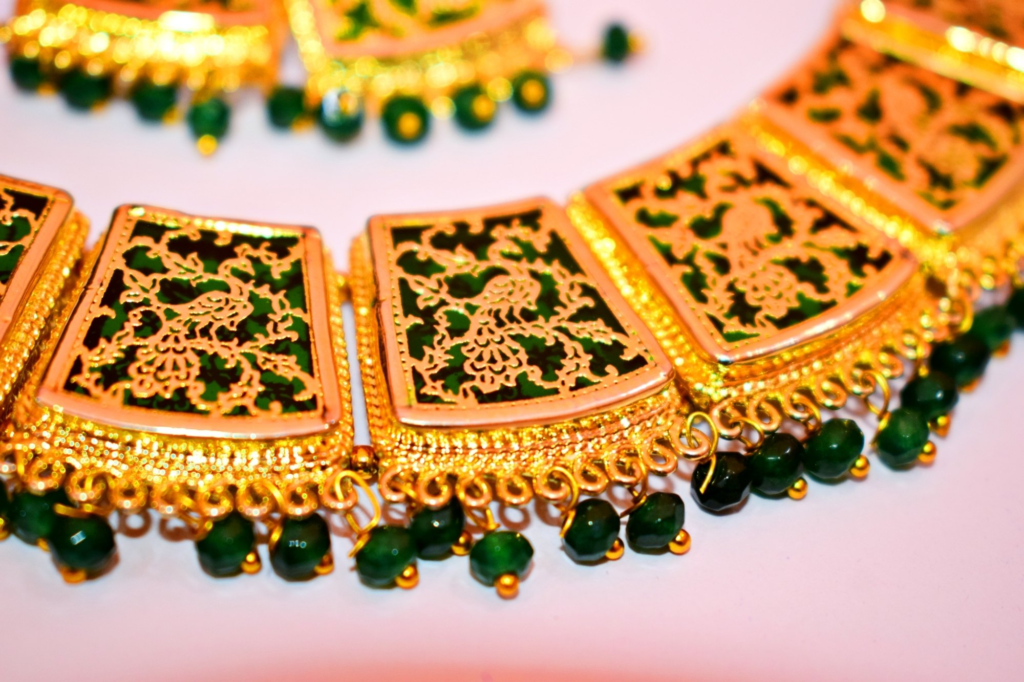
- PM Modi presented Thewa motif cufflinks to the Slovak President during his recent visit.
Thewa Art
- Thewa art is among India’s most distinctive traditional crafts of Pratapgarh, Rajasthan.
- The art form dates back nearly 400 years and traces its origins to the Mughal era.
- It is known for its intricate gold engravings on coloured glass.
- It involves creating delicate designs in 23-carat gold and embedding them on multicoloured glass surfaces.
- Thewa work requires precision and patience, it takes around three days to create a single set.
- Over the years, it has emerged as a symbol of India’s cultural heritage while also generating livelihood opportunities for artisans associated with the craft.
Sushruta
Art & Culture
In News
- The Royal College of Surgeons of Edinburgh in Scotland has unveiled a statue honouring Sushruta, the ancient Indian physician believed to have lived around 2,600 years ago.
Sushruta
- Sushruta was an ancient Indian physician and surgeon, widely regarded as the Father of Surgery and the Father of Plastic Surgery.
- He is known for advanced surgical techniques, anatomical studies and systematic medical education.
- He performed complex surgical procedures centuries before these practices became common in the Western world.
- Sushruta’s medical knowledge is compiled in the Sushruta Samhita, one of the oldest and most comprehensive medical texts.
The text is divided into:
- Purva Tantra: Surgery, anatomy, internal medicine, pediatrics, and toxicology.
- Uttara Tantra: Diseases of the eye, ear, nose, throat, psychiatry, and geriatric care.
Major Contributions
- Pioneered Rhinoplasty: Nasal reconstruction using a skin flap from the forehead or cheek (pedicle flap).
- Eight Types of Surgery (Ashtavidha Shastrakarma): Classified surgical procedures into excision, incision, scraping, puncturing, probing, extraction, drainage, and suturing.
- Burn and Trauma Management: Classified burns and other thermal injuries, including heat stroke and frostbite.
- Lifestyle Diseases: Described conditions resembling diabetes, obesity, and cardiovascular disorders, emphasizing the role of lifestyle in health.
Caspian Sea
Geography
Context
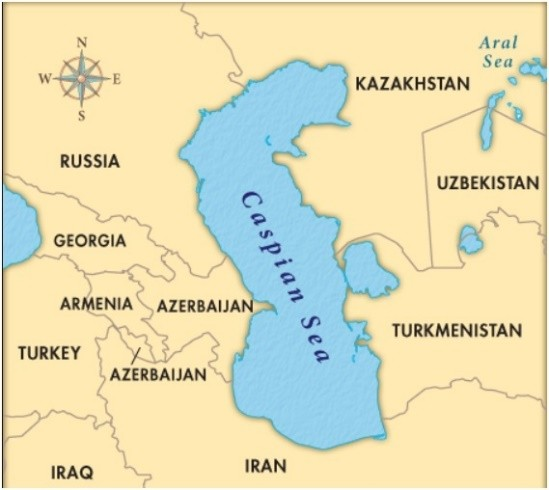
- Since the mid-1990s, the Caspian Sea has lost nearly 24,000 sq km of its surface area, roughly equivalent to the size of Sicily, the largest island in the Mediterranean Sea.
Caspian Sea
-
- The Caspian Sea is the world’s largest inland body of water, located between Europe and Asia.
- It is bordered by Russia, Kazakhstan, Turkmenistan, Iran, and Azerbaijan.
- Despite its name, it is technically a saltwater lake with no natural outlet.
- Rivers – Volga (largest), Ural, Kura, and Terek rivers.
- The region is rich in oil and natural gas reserves, making it strategically important.
BHARATI programme
Science & Technology
News
- The Agricultural and Processed Food Products Export Development Authority (APEDA), under the Ministry of Commerce & Industry, has successfully concluded the first cohort of BHARATI (Bharat’s Hub for Agritech, Resilience, Advancement and Incubation for Export Innovation).
BHARATI
- It is APEDA’s flagship export acceleration programme aimed at helping Indian agri-food startups become globally competitive exporters.
Objectives:
-
- Promote an ‘export-first’ approach among agri-food startups.
- Build a pipeline of export-ready enterprises to support India’s target of USD 50 billion in APEDA-scheduled exports by 2030.
- Address challenges related to product development, quality standards, sustainability, logistics, and export compliance.
Additional Information – Agricultural and Processed Food Products Export Development Authority (APEDA)
- Legal Status: Statutory body under the APEDA Act, 1985.
- Nodal Ministry: Ministry of Commerce and Industry.
- Predecessor: Replaced the Processed Food Export Promotion Council (PFEPC).
- Headquarters: New Delhi.
- Governance: Headed by a Chairman appointed by the Central Government.


Leave a Reply