
10 Years of Demonetisation in India
Economy
Context
- Ten years after demonetisation, RBI data indicate limited reduction in cash circulation, while digital payments have expanded significantly.
Background
- Announced on 8 November 2016.
- ₹500 and ₹1,000 notes ceased to be legal tender.
- Removed approximately 86% of the value of currency in circulation.
Objectives
- Curb black money and corruption.
- Eliminate counterfeit currency.
- Disrupt terror financing and hawala transactions.
- Promote digital payments and economic formalisation.
Supreme Court Judgement (2023)
- In Vivek Narayan Sharma v. Union of India (2023), a five-judge Constitution Bench upheld the validity of demonetisation.
- Held that the Central Government could exercise its powers under Section 26(2) of the RBI Act, 1934, based on the recommendation of the RBI Central Board.
Siddi Community
History & Culture

Context:
- Khushbu Rajakbhai Darjada won silver in girls’ 63 kg judo at the Youth Olympics in Dakar, becoming the first Siddi medallist.
About the Siddis
- An ethnic community of African origin, whose ancestors migrated from East Africa to India over several centuries.
- Also known as Siddi Badshah.
- Historical accounts associate their arrival with the Portuguese slave trade, medieval migrations and rulers of Junagadh bringing Africans to Gujarat.
- Distribution: Gujarat, Karnataka, Maharashtra, Goa and parts of Daman and Diu.
- Jambur village (Gujarat), near Gir National Park, is called Mini Africa due to its large Siddi population.
Culture and Traditions
- Have adopted regional languages and cultural practices.
- Gujarat Siddis predominantly follow Islam, with strong Sufi influences.
- Baba Gor: Revered African Muslim saint.
- Dhamal: Traditional folk dance with African roots, performed in groups and dedicated to Baba Gor.
Constitutional Status
- Recognised as a Scheduled Tribe (ST) in specified regions of Gujarat in 1956.
- Siddis in certain parts of Saurashtra retain ST status, while others are classified as SEBC.
- Included among Primitive Tribal Groups (PTGs) in 1982, later renamed Particularly Vulnerable Tribal Groups (PVTGs).
Raniwas Mound
History & Culture
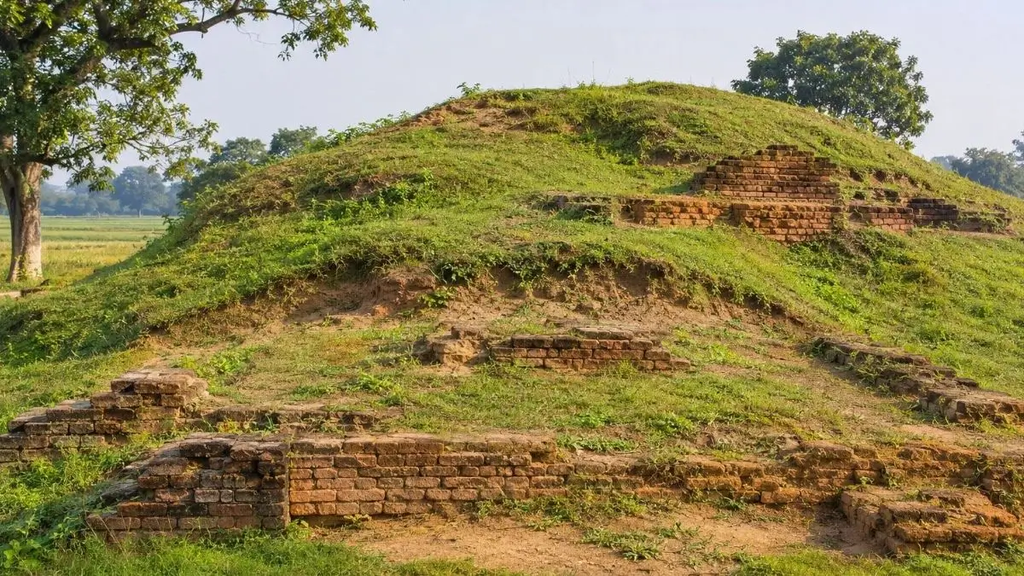
Context:
- The Archaeological Survey of India (ASI) has initiated the process of declaring Raniwas Mound in Bihar a Monument of National Importance.
About Raniwas Mound
- Location: East Champaran district, Bihar, northeast of Kesariya Buddha Stupa.
- Spread across 1.63 acres.
- Believed to be an ancient Buddhist Vihara (monastery) or temple monastery.
- Alexander Cunningham, first Director General of ASI, visited and excavated the site.
- Excavations revealed remains of a Buddhist establishment, including a small temple and a colossal Buddha image.
About ASI
- Established in 1861 by Alexander Cunningham under Lord Canning.
- India’s premier agency for archaeological research, excavation, protection and conservation of cultural heritage.
























Leave a Reply