
India’s Push Towards Debris-Free Space by 2030
Science & technology

Context
- India aims to achieve debris-free space by 2030.
- Base 1, a space robotics facility established by Cosmoserve Space, was inaugurated in Hyderabad.
About Space Debris
- Non-functional, human-made objects and fragments in Earth’s orbit or re-entering the atmosphere.
- Kessler Syndrome: A chain reaction of collisions between orbital objects, causing an exponential increase in space debris and making near-Earth space unsafe for prolonged use.
Threats from Space Debris
- High speed: Can travel up to 18,000 mph.
- Satellite collisions: Damage or destroy operational satellites.
- Human safety: Threatens astronauts and space stations, including the ISS.
- Economic losses: Increases satellite replacement and space mission costs.
International Frameworks
- Space Liability Convention, 1972: Establishes state liability for damage caused by space objects.
- Zero Debris Charter: Led by the European Space Agency (ESA), aims to achieve debris-neutral space operations by 2030.
India’s Initiatives
- Project NETRA: ISRO initiative for tracking space objects and providing early warnings against potential collisions.
- IS4OM (2022): ISRO system for monitoring space objects and ensuring safe and sustainable space operations.
- Active Debris Removal (ADR): Development of indigenous technologies to capture and remove non-functional satellites and debris.
- Mission EMBRACE (2026): Cosmoserve Space tested an in-orbit soft robotic capture mechanism aboard a Skyroot Aerospace rocket. The robotic petals reportedly failed to deploy as intended.
Significance
- Protects operational satellites and human space missions.
- Strengthens Space Situational Awareness (SSA).
- Supports sustainable and responsible use of outer space.
BAHAMAS JOINS ISA
International
Context
- The Bahamas has joined the International Solar Alliance (ISA) as its 116th member.
International Solar Alliance
- A treaty-based international organisation jointly launched by India and France at COP21 (Paris, 2015).
- Headquarters: Gurugram, Haryana.
- Aims to promote the adoption and deployment of solar energy globally.
Objectives – ‘Towards 1000’ Strategy (by 2030)
- Mobilise USD 1,000 billion in solar investments.
- Facilitate installation of 1,000 GW of solar capacity.
- Provide clean energy access to 1,000 million people.
- Reduce global CO₂ emissions by 1,000 million tonnes annually.
Membership
- Initially focused on countries located between the Tropics of Cancer and Capricorn.
- Following the 2020 amendment to its Framework Agreement, all UN member states became eligible for membership.
Supreme Court’s Remark On ‘Arrest’, ‘Detention’ And 24-Hour Deadline
Polity
Context
- In Sujit Das and Others v. Union of India (2026), the Supreme Court clarified when the 24-hour deadline for producing an arrested person before a magistrate begins.
Key Directions of the Supreme Court
- The 24-hour period begins from the actual time of detention, not the formal recording of arrest.
- No artificial distinction can be made between arrest and detention, as it would undermine Article 22(2).
- Only the time required for travel from the place of arrest to the magistrate’s court can be excluded.
- Stringent bail conditions under Section 37 of the NDPS Act, 1985, cannot override fundamental rights under Articles 21 and 22.
Constitutional and Legal Provisions
- Article 22(2): Every arrested and detained person must be produced before the nearest magistrate within 24 hours, excluding travel time.
- Article 21: Protects the right to life and personal liberty.
- Section 58, BNSS, 2023: Prohibits police detention of a person arrested without a warrant beyond 24 hours without magistrate’s authorisation, excluding journey time.
Significance
- Prevents arbitrary and prolonged police detention.
- Strengthens constitutional safeguards and personal liberty.
- Ensures procedural requirements cannot be bypassed by delaying formal arrest records.
Anubhav Platform
Polity
Context
- The Telecom Regulatory Authority of India (TRAI) launched the Network Anubhav platform to improve transparency in telecom network performance.
About Network Anubhav
- A geospatial and analytical platform providing location-specific telecom network information.
- Integrates consumer-generated data from MySpeed and MyCall apps with TRAI’s independent drive-test results.
- Enables users to:
- Check cellular and fixed broadband performance by service provider and technology.
- View download and upload speeds.
- Access Do Not Disturb (DND) services.
About TRAI
- An independent statutory body established under the TRAI Act, 1997.
- Regulates the telecommunications, broadcasting and cable TV sectors.
- Key objectives:
- Promote fair competition and transparent regulation.
- Protect consumer interests.
- Ensure orderly growth of the telecom sector.
- Note: TRAI is a regulator, not a direct consumer service provider. Individual complaints should be raised with the concerned telecom service provider.
Viability Gap Funding (VGF) Scheme
Government Scheme
Context
The Union Cabinet approved a new VGF scheme to promote grid-scale energy storage with an outlay of ₹17,500 crore (2026–27 to 2030–31).
Key Features
- Target: Develop 92 GWh of energy storage capacity:
- 30 GWh: Battery Energy Storage Systems (BESS).
- 60 GWh: Pumped Hydro Storage (PHS).
- 2 GWh: Emerging storage technologies.
- Capacity will be allocated through tariff-based competitive bidding.
- BESS projects require a minimum 40% Domestic Content Requirement (DCR).
- The scheme aims to add storage capacity equal to 170% of India’s existing grid-scale capacity.
India’s Energy Storage Targets
- Existing grid-scale storage capacity: Around 54 GWh.
- Target: 411 GWh by 2031–32.
BESS and Pumped Hydro Storage
- BESS: Stores electricity chemically and releases it when required. Lithium-ion, particularly Lithium Iron Phosphate (LFP) batteries, are widely used.
- Pumped Hydro Storage (PHS): Uses surplus electricity to pump water to an upper reservoir; releases it through turbines during peak demand to generate electricity.
Significance
- Supports integration of renewable energy into the electricity grid.
- Stores surplus solar and wind power for use during periods of low generation.
- Enhances grid stability and energy security.
- Promotes domestic manufacturing and reduces import dependence.
Pralay Missile
Science & Technology
Context
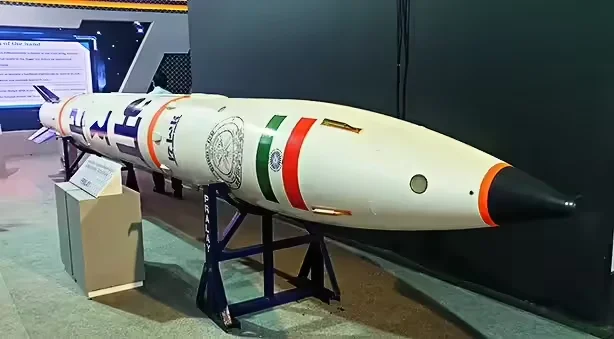
- DRDO successfully conducted a flight test of the Pralay quasi-ballistic missile from Dr APJ Abdul Kalam Island, Odisha.
Pralay Missile
- Developer: Research Centre Imarat, Hyderabad, along with other DRDO laboratories.
- Type: Indigenous, solid-propellant, quasi-ballistic, surface-to-surface missile.
- Range: Approximately 150–500 km, depending on payload.
- Payload capacity:
- 1,000 kg payload – 350 km range.
- 500 kg payload – approximately 500 km range.
- Mobility: Launched from a road-mobile launcher, enabling rapid deployment.
- Warhead: Primarily designed for conventional payloads.
Significance
- Strengthens India’s tactical strike capabilities.
- Provides operational flexibility through mobility and variable payload options.
- Complements India’s existing missile systems, including BrahMos and Prahaar.





















Leave a Reply