
Pradhan Mantri Janjatiya Vikas Mission (PMJVM)
Government Schemes

Context
- The Pradhan Mantri Janjatiya Vikas Mission (PMJVM) is unlocking India’s tribal forest economy.
About PMJVM
- Launched in 2021-22,
-
- Financing- It is a Central Sector Scheme of the Ministry of Tribal Affairs.
- Nodal agency – Tribal Co-operative Marketing Development Federation of India (TRIFED)
Objectives
- Promote tribal entrepreneurship, livelihood and income generation.
- Focuses on Minor Forest Produce (MFP), tribal products and value addition.
- Supports tribal producer enterprises, SHGs and Van Dhan Vikas Kendras.
- Aims to strengthen tribal value chains, market linkages and access to finance.
- It also provides Minimum Support Price (MSP) for identified Minor Forest Produce (MFP) through direct procurement from tribal gatherers.
- Key focus: From collection → value addition → branding → marketing of tribal products.
Citizenship Amendment Act (CAA)
Polity and Governance
Context
- The Union Ministry of Home Affairs (MHA) has transferred the processing of pending citizenship applications under the Citizenship Amendment Act (CAA) to District Collectors in eight States and Union Territories (UTs).
- District Collectors in Gujarat, Rajasthan, Punjab, West Bengal, Assam, Tripura, Jammu and Kashmir, and Ladakh have been authorised.
Citizenship Amendment Act (CAA), 2019
- Amends: Citizenship Act, 1955; received Presidential assent on 12 December 2019 and came into force on 10 January 2020.
- Eligibility: Provides a pathway to Indian citizenship for Hindus, Sikhs, Buddhists, Jains, Parsis and Christians from Afghanistan, Bangladesh and Pakistan who entered India on or before 31 December 2014.
- Exclusion: Muslims are not included in this specific category.
- Naturalisation period: Reduced from 11 years to 5 years for eligible persons.
- CAA Rules, 2024: Notified on 11 March 2024, enabling implementation of the Act.
- Exemptions: Does not apply to Sixth Schedule tribal areas of Assam, Meghalaya, Mizoram and Tripura, and areas covered by the Inner Line Permit (ILP) system.
- Key debate: Concerns relate to Article 14 (equality), secularism and the exclusion of Muslims, while the government describes it as a measure for persecuted minorities from the three specified countries.
GISAT-1A
Science and Tech
In News
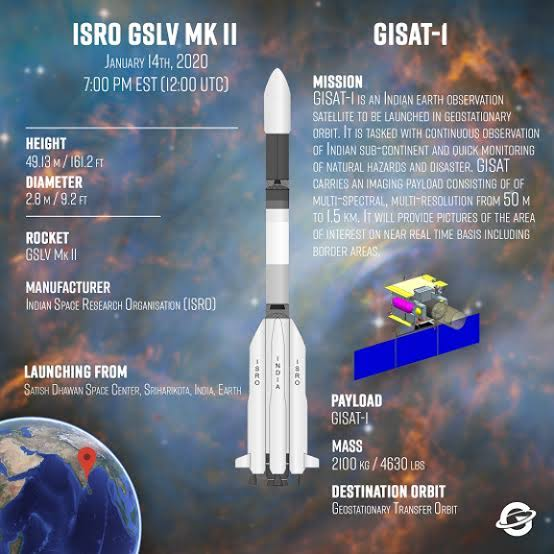
- The Indian Space Research Organisation (ISRO) is preparing to launch the GISAT-1A Satellite.
GISAT-1A (Geo Imaging Satellite )
-
- It is also referred to as EOS-05 under the new nomenclature .
- It is a replacement satellite for the 2021-launched GISAT-1 (or EOS-03), which missed the orbit after the final propulsive segment of the rocket failed to ignite.
- It is scheduled to launch aboard the Geosynchronous Satellite Launch Vehicle (GSLV).
- The mission will be Isro’s first launch since the PSLV-C62/EOS-N1 mission failed in January 2026.
- Purpose : GISAT-1A is designed for high-frequency imaging of large areas of the Indian landmass.
- Its applications include monitoring natural disasters, agriculture, forestry and other changes on the ground.
- The satellite has a planned 10-year mission life.
Satkosia Tiger Reserve
Environment
Context
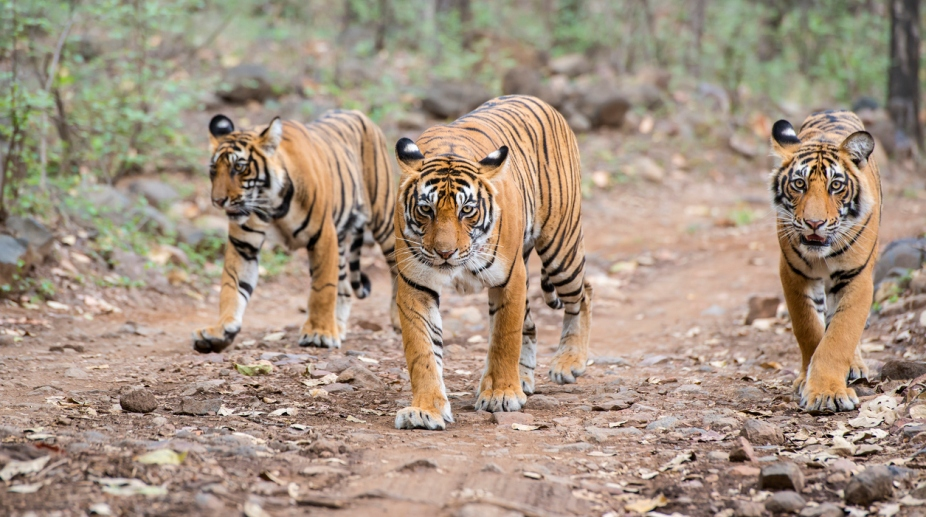
- The Odisha government has formed a high-level inquiry committee to look into the displacement of villages from the Satkosia Tiger Reserve (STR) amid allegations that the villagers were forcibly evicted.
Satkosia Tiger Reserve
-
- Location: Odisha, at the meeting point of the Deccan Peninsula and the Eastern Ghats.
- Established: In 2007 under Project Tiger.
- Area: The reserve includes the Satkosia Gorge Wildlife Sanctuary and Baisipalli Wildlife Sanctuary, which together span an area of around 1,000 sq km.
- The Mahanadi River flows through the reserve and forms the spectacular Satkosia Gorge.
- Flora: Mixture of deciduous forests including Sal (Shorea robusta) and riverine forest.
Additional Information – Tiger Reserves Facts
- Legal basis: Declared under the Wildlife (Protection) Act, 1972, through the Project Tiger framework.
- Project Tiger: Launched in 1973 with 9 tiger reserves.
- Nodal authority: National Tiger Conservation Authority (NTCA), established under the Wildlife (Protection) Act.
- Core + Buffer: Tiger Reserves have a Core/Critical Tiger Habitat and a Buffer area.
- Tiger census: Conducted every 4 years under the All India Tiger Estimation (AITE).
- Latest estimate: India had 3,682 tigers in 2022, according to the fifth AITE.
- India’s share: India supports around 75% of the world’s wild tiger population.
- Largest Tiger Reserve: Nagarjunsagar-Srisailam (Andhra Pradesh/Telangana).
- Smallest Tiger Reserve: Bohr(Maharashtra)
- First Tiger Reserve: Jim Corbett Tiger Reserve, Uttarakhand (among the original 9).
- State with most tiger reserves: Madhya Pradesh.
- Important point: A Tiger Reserve is not a separate category of protected area like a National Park or Wildlife Sanctuary; it can include one or more such protected areas.
- International initiative: Global Tiger Initiative / TX2 aims to double wild tiger numbers.




















Leave a Reply