
New Development Bank
International

News
- Iran decided to join the New Development Bank to strengthen monetary, financial and banking cooperation with BRICS countries.
New Development Bank (NDB)
- Established: 2015 by BRICS (Brazil, Russia, India, China, South Africa).
- Headquarters: Shanghai, China.
- Objective: Financing infrastructure and sustainable development projects in emerging and developing economies.
- Membership: Open to UN member countries; both borrowing and non-borrowing members are allowed.
- Members: Brazil, Russia, India, China, South Africa, Bangladesh, UAE, Egypt, Algeria and Uzbekistan.
- Uzbekistan: 10th member and first Central Asian country to join NDB.
Raichur Miyawaki Forest
Environment
In Context
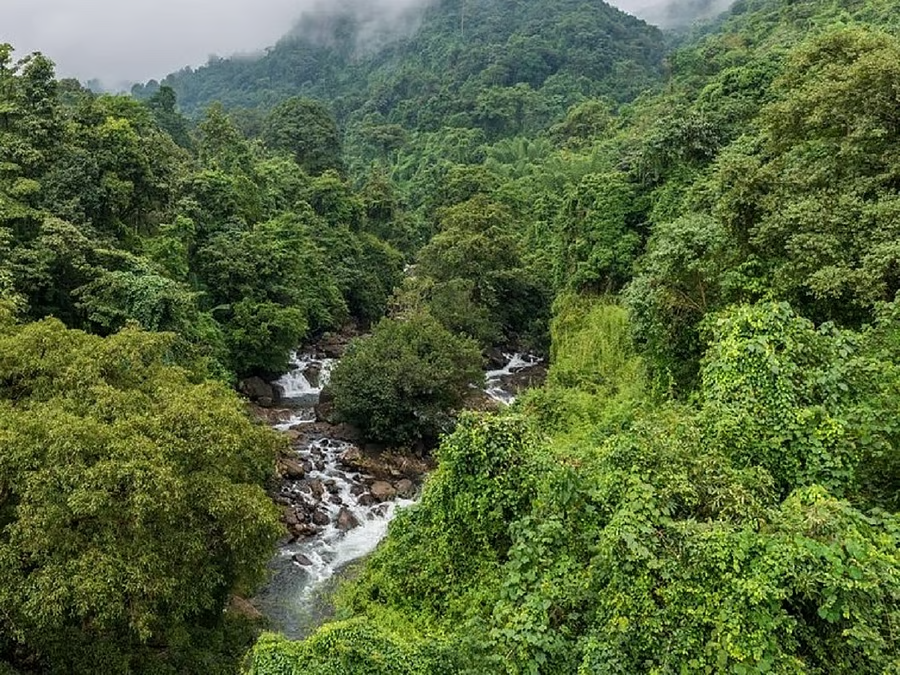
- The Miyawaki method has been in the news repeatedly over the past year from Raichur’s Yakalaspura dumpsite-turned-forest in Karnataka, to Rajkot’s Nakrawadi landfill transformation in Gujarat, to urban afforestation drives in Mumbai.
Miyawaki Method
- Afforestation technique for creating dense, native, multi-layered forests in a short time, including small urban spaces.
- Developed in the 1970s by Japanese botanist Dr. Akira Miyawaki.
- Based on “Potential Natural Vegetation” — vegetation that would naturally occur in an area if left undisturbed.
- Key principle: Plant diverse native species closely together, creating competition for sunlight and nutrients and enabling rapid forest growth.
- Benefits: High biodiversity, carbon sequestration, improved soil quality and urban cooling.
Amazon Rainforest
Environment

Context
- A recent study published in Global Change Biology has found that just 15–25 tree species play a major role in regenerating deforested areas of the Amazon rainforest.
Amazon Rain Forests
- Location: The region belongs to nine nations of the South American continent.
- Surrounded by – It is bounded by the Guiana Highlands to the north, the Andes Mountains to the west, the Brazilian central plateau to the south, and the Atlantic Ocean to the east.
- Area Covered: The majority of the forest, 60%, is in Brazil, followed by Peru with 13%, Colombia with 10%, and with minor amounts in Bolivia,Ecuador,French Guiana, Guyana, Suriname and Venezuela.
- Climate: Hot and humid climate with temperatures of 26-30°C throughout the year.There are no periodic seasons.The precipitation ranges from 2,000 mm to 10,920 mm annually.
- Tribes: Yanomamo,Kayapo,Akuntsu,Matses,Tupi etc.
- Fauna: Anaconda,Jesus lizard,howler monkey, golden lion tamarin, jaguar,sloth, spider monkey,Amazon River dolphin,toucan and the scarlet macaw,poison dart frog and the glass frog.
- Flora: Moist broadleaf tropical rainforest like myrtle,laurel,palm, acacia,rosewood,Brazil nut,rubber tree, mahogany and Amazonian cedar.
Significance of the Rainforests
- Lungs of the planet: Rainforests generate about 20% of the world’s oxygen and its trees play a key role in reducing pollutant levels.
- Fight climate change: They act as a crucial buffer in the global fight against climate change as it holds tremendous capacity to store carbon.
- Medicinal Properties: Many of these plants contain bioactive compounds capable of treatmenting diseases that are not yet curable, especially cancer.
Threat to the forests
- Climate Change: Due to climate change the forests are witnessing various challenges like changes in rainfall patterns,pollution etc.
- Deforestation: The size of the Amazon forest shrank dramatically as a result of settlers’ clearance of the land to obtain lumber and to create grazing pastures and farmland.
- Wildfires: It causes threat to the survival of ecosystems and biodiversity. The 2019 forest fires in the region have led to widespread devastation in the region.
Additional Information – Amazon River
- It is the largest river by volume of water and second longest river after the Nile river of Africa in the world.
- Source:River has its source in the Peruvian Andes, at an elevation of 5,598 m.
- Length:6400 km.
- Basin:The basin includes the greater part of Brazil and Peru,some parts of Colombia, Ecuador and Bolivia and a small area of Venezuela.
- Tributaries:Japurá , Juruá, Madeira, Negro, Purus, and Xingu rivers.
- Mouth:Atlantic Ocean on the northeastern coast of Brazil.
South Zone Council
Polity
Context
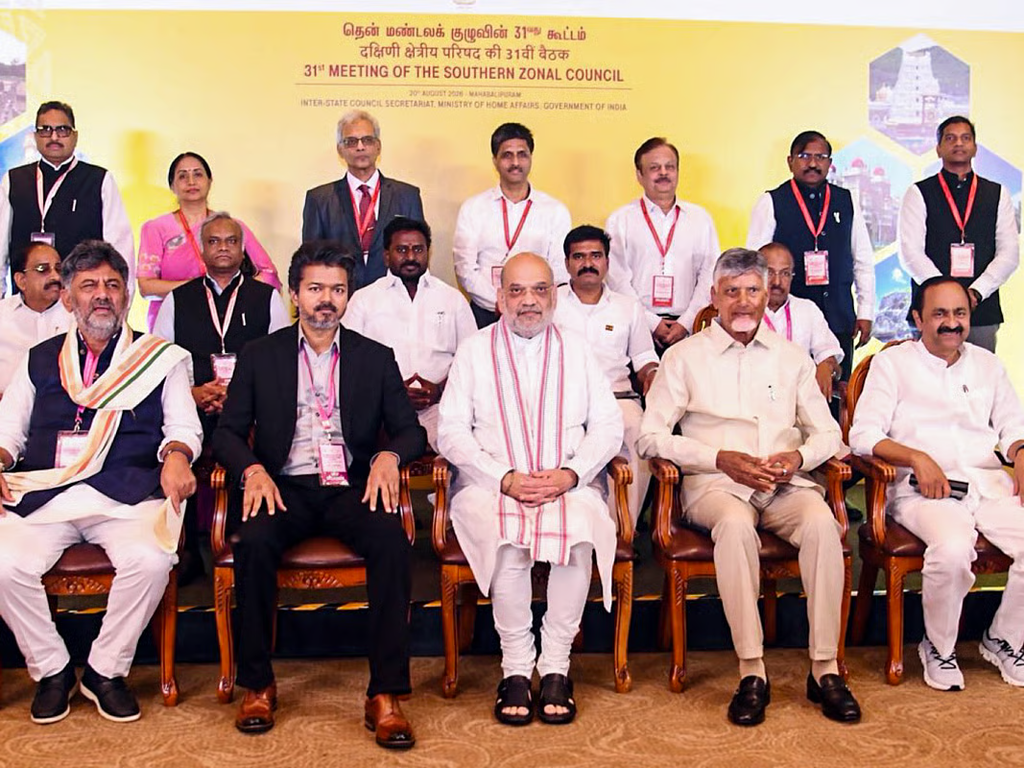
- The 31st Southern Zonal Council meeting was held in Mahabalipuram, Tamil Nadu.
Zonal Councils — UPSC
- Statutory bodies established under the States Reorganisation Act, 1956 to promote Centre–State and inter-State cooperation.
- Chairman: Union Home Minister.
- Vice-Chairman: Chief Minister of one member State, rotationally.
- Nature: Advisory bodies; Standing Committee of Chief Secretaries examines issues before the Council.
- Five Zonal Councils: Northern, Central, Eastern, Western and Southern.
- North Eastern Council (NEC): Established under the North Eastern Council Act, 1972 for the special problems of the Northeast.
- NEC States: Assam, Arunachal Pradesh, Manipur, Tripura, Mizoram, Meghalaya, Nagaland and Sikkim (added in 2002).
- Key point: Zonal Councils ≠ Constitutional bodies; they are statutory and advisory.




















Leave a Reply