
Tamirabharani River
Environment
Context
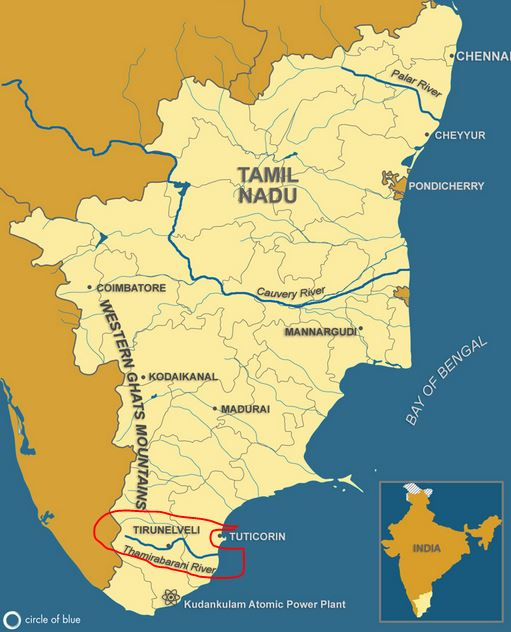
- The Madurai Bench of the Madras High Court has declared Tamil Nadu’s Tamirabharani river a deity, thereby granting it legal personhood to curb pollution from funeral rites and waste dumping.
Background-
-
- In 2017, the Uttarakhand High Court recognised the Ganga and Yamuna as legal persons. However, the Supreme Court later stayed the order, citing practical and administrative difficulties, particularly since the rivers flow across multiple states.
- Globally, New Zealand’s Whanganui River became the first river in the world to be recognised as a legal person in 2017.
Additional Information- Tamirabharani River
- Origin: Pothigai Hills (Western Ghats), Tamil Nadu.
- Course: Flows through Tirunelveli and Thoothukudi districts.
- Mouth: Drains into the Gulf of Mannar.
- Type: One of the few perennial rivers of Tamil Nadu.
- Major tributaries: Manimuthar, Gadananathi, Pachaiyar and Chittar.
- Importance: Irrigation, drinking water and hydropower.
- Key feature: Supports agriculture in the Tirunelveli–Thoothukudi region.
BRICS calls EU’s Carbon Tax Punitive
International
Context
- BRICS environment and climate ministers opposed the European Union’s (EU) Carbon Border Adjustment Mechanism (CBAM) calling it a discriminatory and protection measure that is not in line with international law.
Carbon Border Adjustment Mechanism (CBAM)
- It is a carbon tariff on carbon intensive products, such as cement and some electricity, imported by the European Union.
- Significance – As a price on carbon, it discourages emissions. As a trade-related measure, it affects production and exports.
Introduction of Blackbucks Into Banni Grassland
Environment
In News
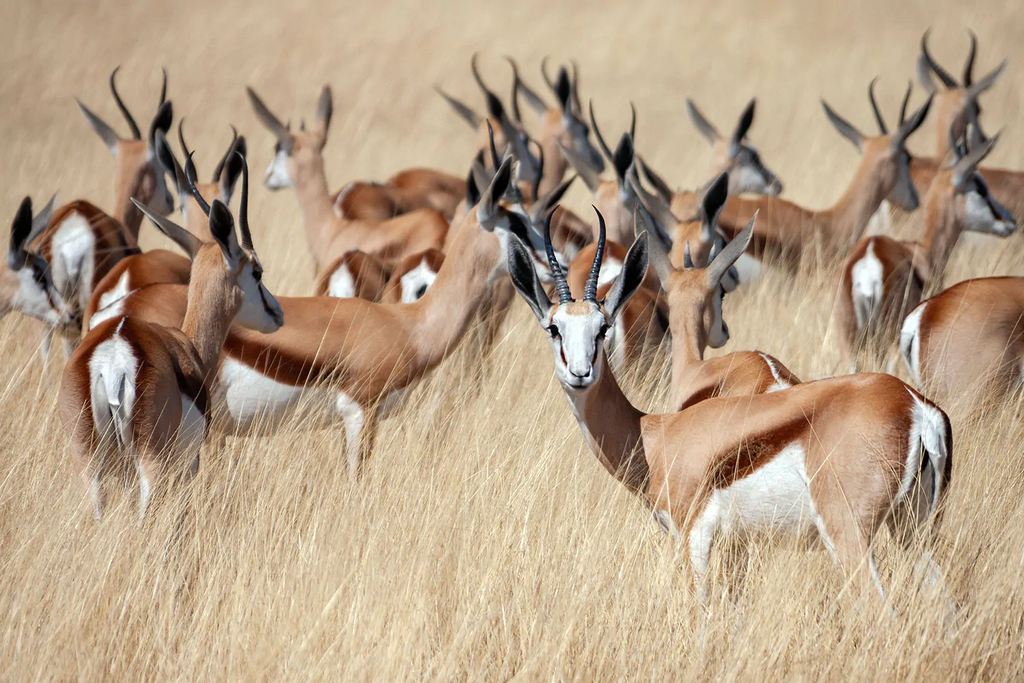
- The Gujarat Forest Department, with technical support from Greens Zoological Rescue and Rehabilitation Centre, Vantara, released 20 blackbucks (Antilope cervicapra) into the Banni Grassland of Kutch.
Blackbuck (Antilope cervicapra)
- Appearance: Males have striking spiral horns that can reach up to 75 cm (30 inches) in length and their coat is a dark brown to black color. Females are smaller and have a reddish-brown coat without horns.
-
- Habitat: They are typically found in grasslands, savannas, and open forests. They prefer areas with short grass for grazing.
- Threats: Earlier extensively hunted in the princely states of India, Habitat destruction, Illegal Hunting for economic consumption
- Conservation Status: IUCN Status: Least Concern
-
-
- CITES: Appendix III
-
- Schedule I of the Wildlife Protection Act of 1972.
- State animal – Declared as state animal of Punjab, Haryana, and Andhra Pradesh.
- Cultural Importance: In Hinduism, the Blackbuck is considered a symbol of purity, with its skin and horns revered as sacred objects. In Buddhism, it represents good luck.
Banni Grassland
- Location – The Banni grasslands in Kachchh
- Uniqueness – Asia’s largest natural grasslands
- Pastoral communities – Fakirani Jat.
- The region contains over 70 species of nutritious grasses and supports grazing of camels, buffaloes, sheep, and goats.
- Nearby – Chhari Dhand Wetland Conservation Reserve is a Ramsar site important for migratory birds and local biodiversity.
Concerns
-
- Local communities fear loss of grazing land, cultural spaces, graveyards, and traditional livelihoods.
- Conservationists warn that solar infrastructure, light pollution, and human activity may disturb bird habitats and migratory routes.
India’s Makhana Sector
Economy

In News
- Makhana has emerged as one of India’s fastest-growing agri-food sectors, driven by rising health awareness, expanding domestic demand, and strong export potential.
National Makhana Board
- Objective – to strengthen and modernize India’s Makhana sector.
- It is headquartered in Purnea, Bihar.
Makhana (Euryale ferox)
-
- It is a flowering plant classified in the water lily family (Nymphaeaceae).
- Climatic condition: Requires a temperature range of 20-35°C, and annual rainfall between 100- 250 cm.
- It is a fully organic non-cereal food found principally in India but also in Korea, Japan, as well as parts of eastern Russia.
- Bihar accounts for ~90% of India’s makhana production.
- GI Tag: In 2022, ‘Mithila Makhana’ was conferred a GI tag.




















Leave a Reply