
Biovigilance Programme of India
Polity
In News
- The Ministry of Health and Family Welfare has approved the Biovigilance Programme of India.
Biovigilance Programme of India (BvPI)
|
Aspect |
Key Points |
|
Ministry |
Ministry of Health & Family Welfare |
|
Purpose |
Monitor and prevent adverse events related to medicines & biological products used in organ/tissue transplantation |
|
Coverage |
Products given to donors and recipients |
|
Nodal agency |
Indian Pharmacopoeia Commission (IPC) |
|
IPC |
Autonomous institution under MoHFW; sets standards for drugs manufactured, sold and consumed in India |
|
Complementary programmes |
PvPI – adverse drug reactions; MvPI – adverse events from medical devices |
|
Significance |
Strengthens transplantation safety and pharmacovigilance |
Deen Dayal Upadhyaya Grameen Kaushalya Yojana 2.0
Government Schemes
In News
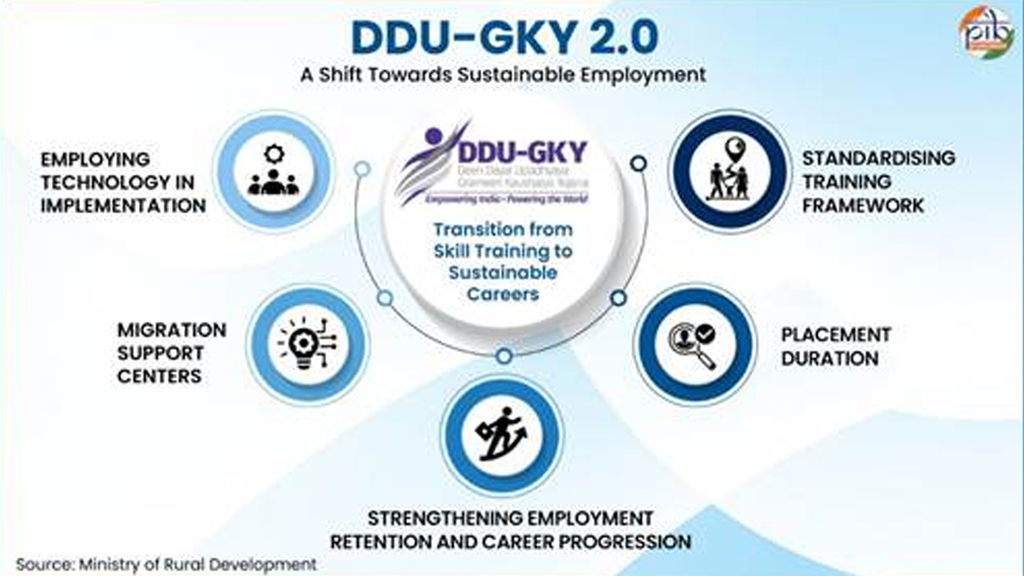
- The Government is creating a more responsive, technology-driven, and outcome-oriented skilling ecosystem through DDU-GKY 2.0.
Deen Dayal Upadhyaya Grameen Kaushalya Yojana (DDU-GKY)
- Ministry: Ministry of Rural Development (MoRD)
- Launched: 2014, under National Rural Livelihoods Mission (NRLM).
- Objective: Provide placement-linked skill training and promote sustainable employment among rural youth.
- Target: Rural youth aged 15–35 years, particularly from disadvantaged sections.
- Social inclusion targets: SC/ST – 50%; Women – 33%; PwDs – 5%.
- Sectors: Agriculture, healthcare, textiles, green jobs, aerospace & aviation, beauty & wellness, etc.
- Budget 2026–27: ₹750 crore.
DDU-GKY 2.0 – Special Programmes
|
Programe |
Key Features |
|
Roshni |
LWE-affected districts; local/home-based skills; 40% reservation for women; extended to Aspirational Districts covering infrastructure, education, health, natural resources & traditional skills. |
|
Himayat |
J&K & Ladakh; rural & urban youth; BPL & APL; promotes wage, self-employment & gig work |
Gaza Board of Peace
International Relations
Context
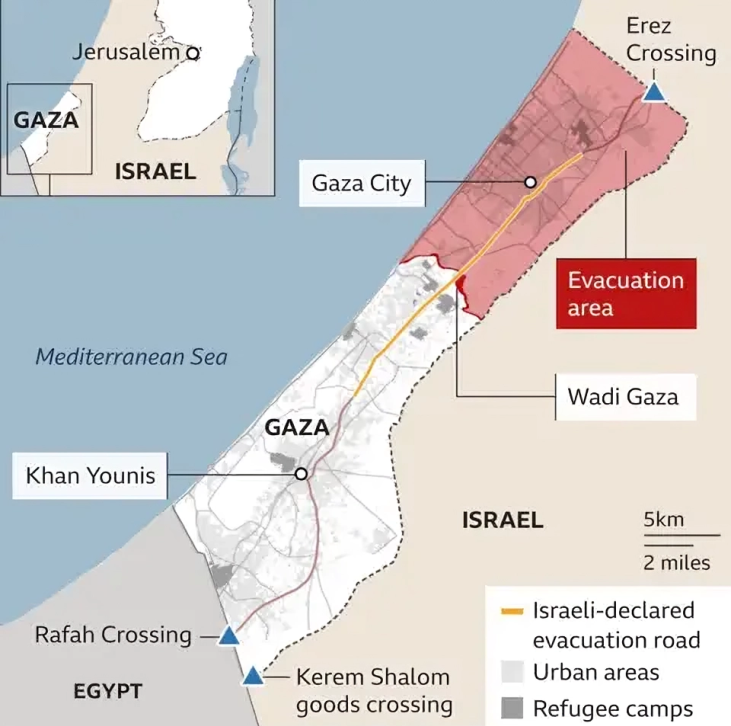
- The US-backed Board of Peace has proposed a six-month, $2.45-billion recovery programme for Gaza, covering projects related to infrastructure, housing, healthcare, economic revival, digital services and security.
Board of Peace (BoP)
- Established: 2026 as an international organisation under the Gaza transitional framework. Its Charter was formally launched at Davos on 22 January 2026.
- Chairman: Donald J. Trump, President of the United States.
- Context: Created as part of the Comprehensive Plan to End the Gaza Conflict, with focus on Gaza’s transitional governance, reconstruction, humanitarian assistance and economic recovery.
- Key functions:
- Transitional governance in Gaza
- Reconstruction and economic recovery
- Coordination of humanitarian assistance and public services
- Supporting the transition towards Palestinian governance
- Oversight of the International Stabilization Force (ISF) framework.
- Founding members: Include countries such as the US, Egypt, Israel, Jordan, Qatar, Saudi Arabia, Türkiye and UAE, among others.
Additional Information – Gaza Strip
- Location: Eastern Mediterranean; part of the Occupied Palestinian Territory (OPT).
- Borders: Israel (N/E), Egypt (S), Mediterranean Sea (W).
- Area: ~365 sq km; population ~2.1 million.
- Major cities: Gaza City, Khan Younis, Rafah.
- Governance: Hamas has exercised de facto control since 2007.
- Significance: Central to the Israel–Palestine conflict; major humanitarian crisis.
- Key issues: Displacement, food/water insecurity, healthcare and infrastructure damage.
India Rejects OIC Group’s Remarks on Kashmir
International
Context
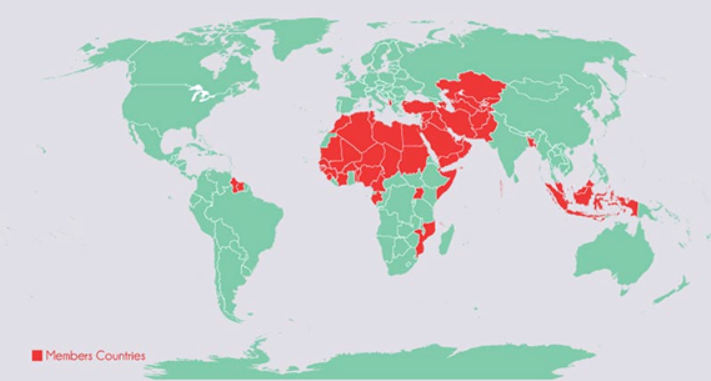
- India rejected references to Jammu & Kashmir in the OIC Contact Group’s Joint Communiqué .
Organisation of Islamic Cooperation (OIC)
- Established: 25 September 1969, at Rabat, Morocco, following the Al-Aqsa Mosque fire.
- Headquarters: Jeddah, Saudi Arabia.
- Membership: 57 states across four continents; second-largest intergovernmental organisation after the UN.
- Earlier name: Organisation of the Islamic Conference; renamed Organisation of Islamic Cooperation in 2011.
- Objective: Promote Islamic solidarity and cooperation and safeguard the interests of member states, including political, economic, social, cultural and scientific cooperation.
- India & OIC: India is not a member of the OIC. India has participated as a guest in some OIC-related meetings.
Siang Upper Multipurpose Project
Infrastructure
Context
- The Arunachal Pradesh Cabinet has approved an Empowered High-Level Committee to guide and coordinate the pre-feasibility survey for the proposed Siang Upper Multipurpose Project (SUMP).
Siang Upper Multipurpose Project
- Location: Arunachal Pradesh.
- Capacity: 11,000 MW.
- Status: Declared a National Project in 2008 by the Union Government.
- River: Siang, a major tributary of the Brahmaputra.
Additional Information- Brahmaputra River
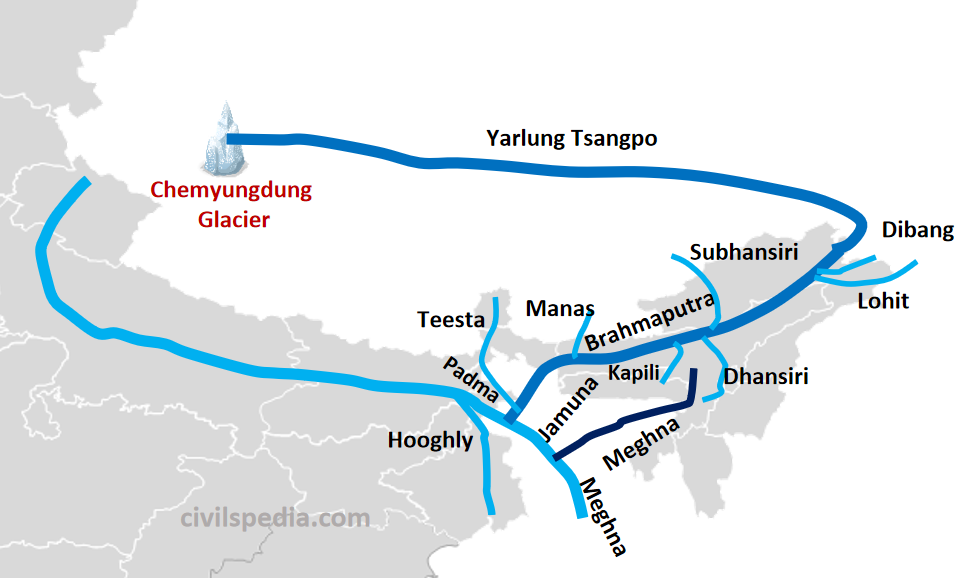
- The Brahmaputra is a major transboundary river in Asia.
- It originates from the Chemayungdung Glacier near Lake Manasarovar (Mapam Yumco) in Tibet.
- It is known variably as Yarlung Tsangpo in Tibet (its longest upper stretch), Siang or Dihang in Arunachal Pradesh, Brahmaputra in Assam & Jamuna in Bangladesh.
- It flows east through Tibet’s plateau, enters India via Arunachal Pradesh, widens in Assam’s plains, and merges with the Ganges in Bangladesh before reaching the Bay of Bengal.
Satellite Smart Anti-Airfield Weapons (SAT-SAAW)
Defence
Context
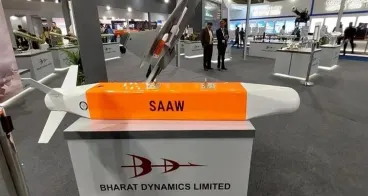
- The Defence Ministry has signed a contract of over 810 crore rupees with Bharat Dynamics Limited (BDL) for the procurement of 160 Satellite Smart Anti-Airfield Weapons (SAT-SAAW).
Smart Anti-Airfield Weapon (SAAW)
- Type: Air-to-ground precision-guided glide bomb.
- Purpose: Designed to destroy enemy airfields and related infrastructure from a stand-off range.
- Developer: DRDO.
- Indigenous content: About 60%.
- Launch platforms: SEPECAT Jaguar, Hawk and Su-30MKI aircraft.
- Project: Approved in 2013; flight-tested during 2016–2021.
- IAF induction: 2021.
- Delivery: Scheduled during 2027–28 and 2028–29.
India-New Zealand FTA
International
Context
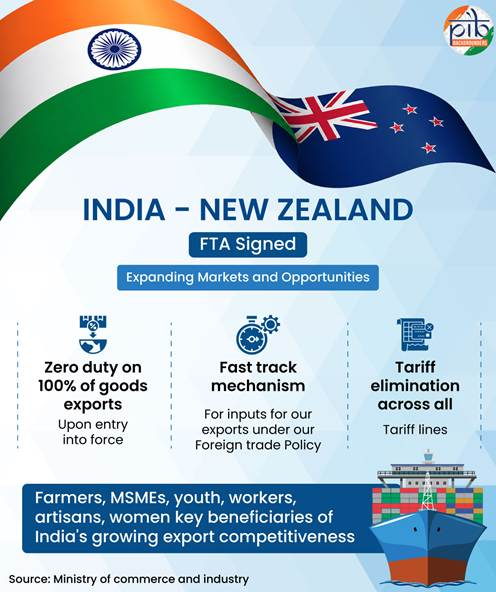
- India-New Zealand FTA will come into force on 20th October 2026.
Free Trade Agreement (FTA)
- Definition: An agreement between two or more countries to facilitate trade by reducing barriers.
Key features:
- Reduce/eliminate customs duties on goods.
- Liberalise trade in services.
- Provide investment protection.
- Establish safeguards for Intellectual Property Rights (IPR).
Objective: Promote trade, investment and economic integration among member countries.
Additional information – India–New Zealand
- Negotiations: Launched in March 2025 and concluded in December 2025.
- Key feature: New Zealand agreed to provide duty-free access to Indian exports across 100% of tariff lines.
- India’s offer: Tariff concessions on around 70% of tariff lines, covering nearly 95% of bilateral trade.
- Sensitive sectors: India has protected dairy and selected agricultural products from tariff concessions.
- Services: New Zealand offered access across 118 services sectors/sub-sectors.
- Mobility: Provision for 5,000 employment-entry visas for Indian professionals and 1,000 Working Holiday Visas annually.
- Investment: New Zealand committed to facilitate US$20 billion investment in India over 15 years.
- Significance: Boosts opportunities for Indian textiles, pharmaceuticals, engineering goods, leather, footwear, agriculture and MSMEs.
Kasturirangan Committee Report on Conservation of the Western Ghats
Environment
Context
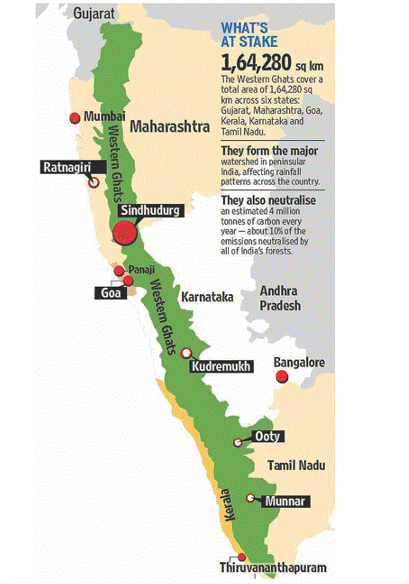
- Karnataka has convened an Assembly session to discuss the proposed implementation of the Kasturirangan Committee recommendations on the Western Ghats.
Committees related to Western Ghats
Sanjay Kumar Committee:
- Objective – It is formed to review state objections on Ecologically sensitive zones demarcations and validate proposed exclusions.
- Significance- It seeks to finalize the ESA status for villages, restricting activities harmful to biodiversity.
Madhav Gadgil Committee (2011):
-
- Objective – to propose protection measures for the Western Ghats.
- It recommended designating the entire Western Ghats as ecologically sensitive.
- It proposed the creation of a dedicated ecological authority to regulate development.
- The Report suggested rigorous conservation, but its recommendations were not fully adopted.
Kasturirangan Committee (2012):
-
- It is formed as a follow-up to the Gadgil Committee to provide a more moderate approach.
- It recommended demarcating 37% of theWestern Ghats as eco sensitive zones.
- It emphasizes a balance between conservation and developmental needs, allowing limited activity in specific areas.
Western Ghats
-
- Forests – The region of Western Ghats has moist deciduous forests and rainforests.
- Endemism – The region shows high species diversity as well as high levels of endemism.
- Nearly 77% of the amphibians and 62% of the reptile species found here are found nowhere else.
|
Facts on Western Ghats
|
Kathakali Festival
Art and Culture
News
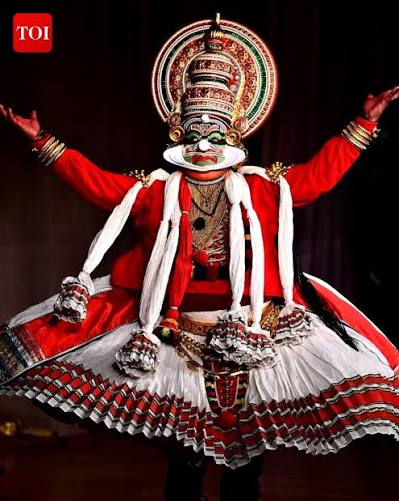
- The 17th Kathakali Festival was organised by the Kalakshetra Foundation under the aegis of the Ministry of Culture, Government of India.
Kathakali
- Origin: Kerala; evolved around the 17th century.
- Meaning: Malayalam Katha (story) + Kali (play).
- Features: Combines dance, drama, music, elaborate costumes & make-up, using facial expressions, hand gestures and eye movements.
- Literature: Based on Attakatha; themes mainly drawn from Indian epics.
- Music: Sopana/Abhinaya Sangeetham tradition.
- Instruments: Chenda, Maddalam, Chengila & Ilathalam.
- Singers: Ponnani and Shinkidi.
- Traditionally performed overnight; now often presented in shorter formats.
- Traditionally male-dominated, but women also participate.
Kalakshetra Foundation
- Founded: 1936 by Rukmini Devi Arundale.
- Promotes preservation and transmission of Indian classical arts and traditional crafts, particularly Bharatanatyam, music and dance.

Leave a Reply