
Nobel Prize in Economics Sciences
Indian Economy
Context
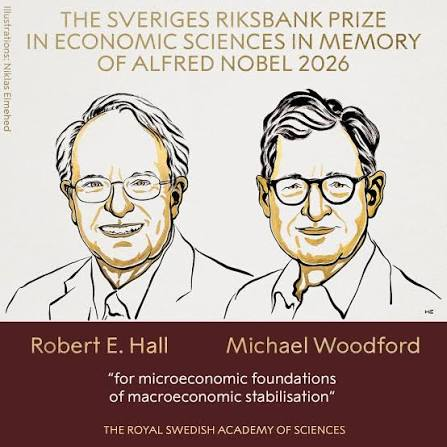
- The Royal Swedish Academy of Sciences has awarded the Sveriges Riksbank Prize in Economic Sciences in Memory of Alfred Nobel 2026.
Nobel Prize in Economics
- Official Name: Sveriges Riksbank Prize in Economic Sciences in Memory of Alfred Nobel.
- Prize Money: 12 million Swedish kronor, shared equally by the laureates.
- Recognition: Work on the microeconomic foundations of macroeconomic stabilisation.
Key Contributions
- Robert E. Hall: Studied household consumption and the role of current disposable income, particularly for hand-to-mouth households whose spending is constrained by current income.
- Michael Woodford: Explained how firms’ price-setting decisions and expectations influence inflation; highlighted the role of transparent and credible monetary policy.
Macroeconomic Stabilisation
- Meaning: Fiscal and monetary measures used to reduce fluctuations in economic growth, output, inflation and unemployment.
- During a slowdown: Lower interest rates, tax relief and increased public expenditure can stimulate demand.
- During overheating: Higher interest rates and tighter fiscal policies can help control inflation.
Five Years of PM GatiShakti
Government Scheme
Context
- PM GatiShakti National Master Plan (PMGS-NMP) has completed five years.
PM GatiShakti National Master Plan (PMGS-NMP)
- Launched: 13 October 2021.
- Nodal Department: Department for Promotion of Industry and Internal Trade (DPIIT), Ministry of Commerce and Industry.
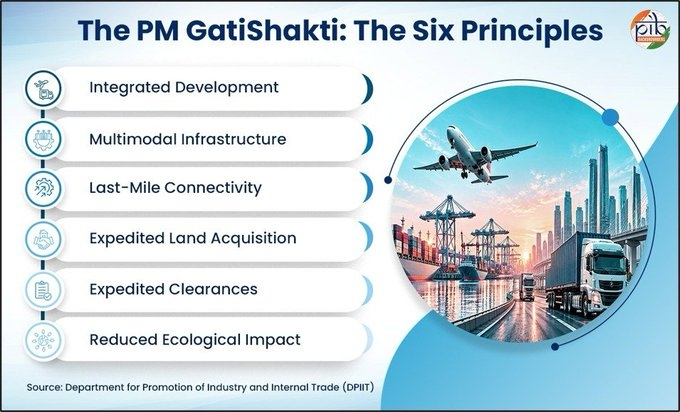
- Objective: Integrate multimodal infrastructure planning, improve last-mile connectivity and reduce logistics costs and travel time.
Key Features
- Seven Infrastructure Engines: Roads, Railways, Ports, Waterways, Airports, Mass Transport and Logistics Infrastructure.
- Integrated Planning: Integrates infrastructure schemes such as Bharatmala, Sagarmala, inland waterways and UDAN.
- Whole-of-Government Approach: Covers 58 Central Ministries/Departments and all 36 States and Union Territories.
- GIS-Based Platform: Integrates geospatial and infrastructure data for coordinated planning and decision-making.
- Public Platform: Provides access to approved datasets for connectivity mapping, site suitability and project planning.
Gati Shakti Vishwavidyalaya (GSV)
- Established: 2022; a specialised university focused on transport and logistics.
- Role: Provides education, training and research to support PM GatiShakti and the National Logistics Policy, 2022.
- Training: As of July 2026, had trained over 2.4 lakh officers through PM GatiShakti-related courses.
Aatmanirbharta in Pulses
Economy
Context
- India is the world’s largest producer of pulses, yet it remains a major importer.
Mission for Aatmanirbharta in Pulses
- The Mission was launched for 2025–26 to 2030–31 with a budgetary allocation of ₹11,440 crore.
- Objective – It aims to make India self-sufficient in pulses production, reducing dependence on imports in light of rising domestic demand.
- It aims to ensure 100 percent procurement of Tur, Urad, and Masoor at MSP for four years.
Additional Information- Pulses Production and Consumption in India
- Global Leader: India is the largest global producer (25%), consumer (27%), & importer (14%) of pulses.
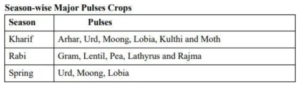
- Seasonal Production: Pulses are grown in Kharif and Rabi seasons
- Madhya Pradesh, Maharashtra and Rajasthan are the top three pulses producing states in the country.
Government Initiatives for Achieving Self-Sufficiency in Pulse Production
- National Food Security Mission (NFSM-Pulses): Boosts area, production, and productivity through HYV seeds, improved agronomy, and demonstrations.
- Minimum Support Price (MSP) for Pulses: Regularly revised MSPs (E.g., Tur ₹7000/qtl in 2023-24) ensure price security and encourage pulse cultivation.
- Seed Hub Program by ICAR-IIPR: Expands availability of certified, short-duration, and high-yielding pulse seeds at the grassroots level.
- PM-AASHA Scheme: Ensures MSP realisation via Price Deficiency Payment (PDP) and targeted procurement by private and public agencies.
- Climate-Resilient Varieties Development (ICAR): Develops varieties resistant to drought, pests, and diseases suited to changing climates.
- e-NAM Integration for Pulses: Enhances market access, reduces middlemen, and enables transparent price discovery through online pulse trading.
World’s First Nuclear Clock
Science and Technology

Context
- Scientists in Vienna and Beijing have independently developed the world’s first two operating nuclear clocks.
Nuclear Clock
- Definition: A precision timekeeping device that measures time using energy transitions within an atomic nucleus.
- Working Principle: Uses lasers to induce transitions between nuclear energy levels in thorium-229.
- Key Feature: Thorium-229 has a low-energy nuclear transition that can be stimulated using laser light.
- Materials: Thorium-229 embedded in calcium fluoride crystals has been used in experimental research.
- Clarification: It does not use nuclear fission or fusion.
Nuclear Clock vs Atomic Clock
- Nuclear Clock: Uses energy transitions within the atomic nucleus.
- Atomic Clock: Uses energy transitions involving electrons in an atom.
- Reference: The definition of the SI second is based on a specific transition in the caesium-133 atom.
- Potential Advantage: Nuclear transitions may be less sensitive to certain external disturbances, potentially enabling greater precision and stability.
Potential Applications
- Navigation: Improve GPS positioning through more precise timing.
- Communication: Enhance time synchronisation in mobile networks and fibre-optic systems.
- Financial Networks: Improve timestamp accuracy and transaction sequencing.
- Fundamental Physics: Help investigate ultralight dark matter and test whether fundamental constants vary over time.
Loknayak Jayaprakash Narayan
Personality in News
Context
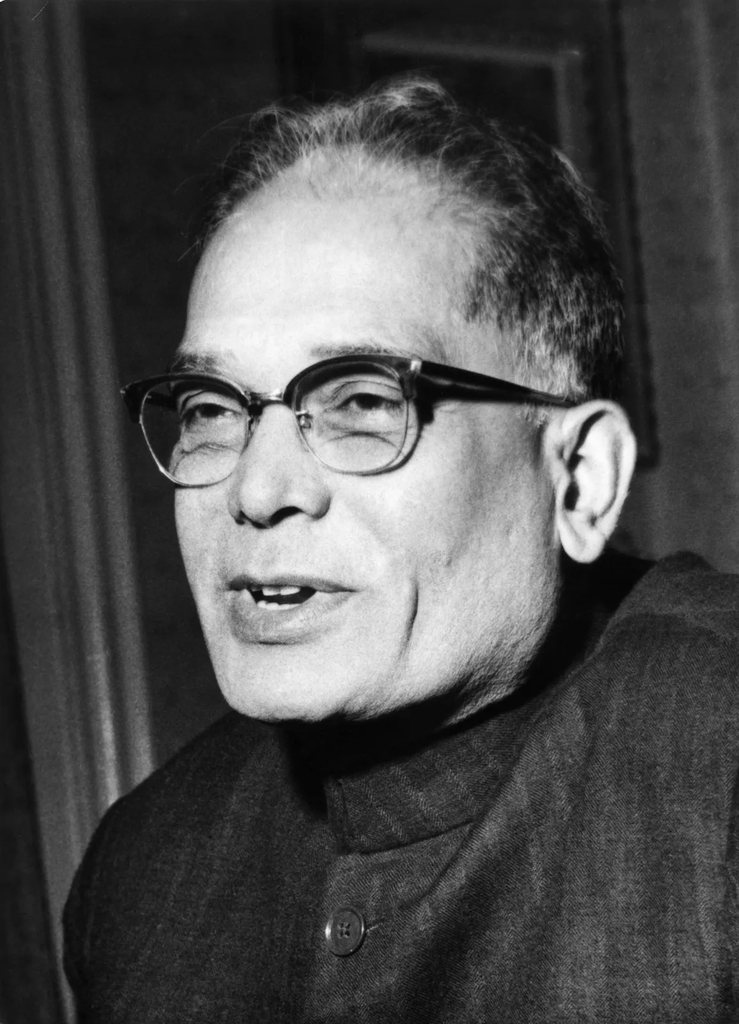
- The Prime Minister has remembered Loknayak Jayaprakash Narayan on his birth anniversary.
Jayaprakash Narayan (1902–1979)
- Popular Name: Lok Nayak (“People’s Leader”).
- Freedom Struggle: Participated in the Quit India Movement (1942) and escaped from Hazaribagh Jail.
- Congress Socialist Party: Prominent founder in 1934.
- Bhoodan Movement: Associated with Vinoba Bhave’s movement for voluntary land donation.
- Total Revolution (1974): Called for political, social and economic reforms; launched at Gandhi Maidan, Patna, on 5 June 1974.
- Key Ideas: Decentralisation, participatory democracy, anti-corruption and non-violent social change.
- Awards: Ramon Magsaysay Award (1965); Bharat Ratna posthumously (1998).
Kulsi River
Geography
Context
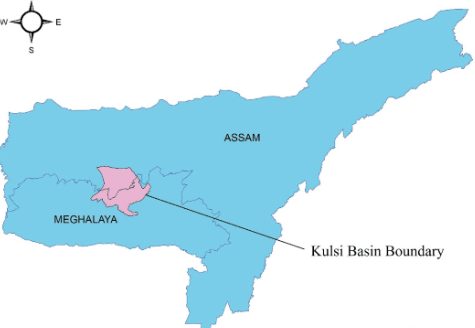
- Villagers living along the Kulsi River in Assam and Meghalaya are protesting for a proposed 55-MW hydropower-cum-irrigation project citing concerns over displacement, indigenous rights and ecological damage.
Kulsi River
- Tributary: Brahmaputra River.
- Origin: West Khasi Hills, Meghalaya; upper course is known as the Khir River.
- Course: Flows through Meghalaya and Assam’s Kamrup district.
- Confluence: Joins the Brahmaputra near Nagarbera, Assam.
- Ecological Significance: Habitat of the endangered Gangetic river dolphin (Platanista gangetica).
- Fact: The Gangetic river dolphin was declared India’s National Aquatic Animal in 2009.
WHO Prequalifies HPV vaccine CERVAVAC
Health
Context
- The Serum Institute of India’s indigenously developed quadrivalent human papillomavirus (HPV) vaccine, CERVAVAC, has received prequalification from the World Health Organization (WHO).
CERVAVAC
-
Significance: India’s first indigenously developed quadrivalent HPV vaccine; gender-neutral.
-
Targets: HPV types 6, 11, 16 and 18.
-
Eligibility: Licensed in India for girls and boys aged 9–26 years.
-
Global Significance: WHO prequalification enables procurement by UN agencies for HPV immunisation programmes.
Cervical Cancer
-
Definition: Cancer originating in the cervix, the lower part of the uterus connecting it to the vagina.
-
Cause: Nearly 99% of cases are linked to high-risk HPV infection, mainly transmitted through sexual contact.
-
Global Burden: Approximately 604,000 new cases and 342,000 deaths worldwide in 2020.
-
Prevention: HPV vaccination, screening and treatment of precancerous lesions.
-
India: Cervical cancer is the second most common cancer among women after breast cancer.
HPV Vaccination in India
-
National Programme: Launched on 28 February 2026, targeting approximately 1.2 crore girls aged 14 years.
-
Vaccines Available: Indigenous CERVAVAC; Gardasil 9 and Cervarix are also available in the private market.


Leave a Reply