
GST 2.0 Upgrade
Economy
Context
- The 57th GST Council meeting introduced major process and enforcement reforms, including easing registration, refunds and litigation, while proposing to raise the prosecution threshold from ₹1 crore to ₹5 crore.
Goods and Service Tax (GST)
- Goods and Services Tax is an indirect tax used in India on the supply of goods and services.
- It is a value-added tax levied on most goods and services sold for domestic consumption.
- It was launched in India in 2017 as a comprehensive indirect tax for the entire country.
It is of three types i.e.
- CGST to be levied by the Centre,
- SGST to be levied by the States and
- IGST a tax levied on all Inter-State supplies of goods and/or services.
GST Council
-
- Legal status – It is a Constitutional body under Article 279A, introduced by the Constitution (One Hundred and First Amendment) Act, 2016.
- Mandate – It is empowered to modify, reconcile or to procure any law or regulation based on the context of GST in India.
- Federal body – It is also considered as a federal body where both the centre and the states get due representation.
- Functions: It makes recommendations to the Union and State Government on issues related to GST.
- Composition
-
- Chairperson: Union Finance Minister.
- Members: Union State Minister of Revenue or Finance and Ministers in-charge of Finance or Taxation of all the States.
Gross Domestic Knowledge Product
Economy
Context
- The NITI Aayog member said that India is working on a “Gross Domestic Knowledge Product” (GDKP).
Gross Domestic Knowledge Product (GDKP)
- Concept: Proposed measure of knowledge generated, accumulated, shared and applied within a country.
- Objective: Complement GDP by assessing knowledge resources and their contribution to development.
- Indicators: R&D, scientific discoveries, patents, innovation and academic output.
- GDP Linkage: Expenditure on Intellectual Property Products (IPP) is recorded under Gross Fixed Capital Formation (GFCF) in national accounts.
Knowledge Economy
- Definition: Economy driven by skills, information, innovation and intellectual property.
- Types of Knowledge:
- Codified: Documented and transferable knowledge, e.g., patents, software and research.
- Tacit: Experience-based knowledge, e.g., artisanal skills and traditional practices.
- India’s Examples: IT sector, start-ups, pharmaceutical R&D and traditional knowledge systems.
- Significance: Could improve recognition of knowledge-based development beyond conventional economic output.
The National SC-ST Hub (NSSH)
Polity
Context
- The National SC-ST Hub (NSSH) is emerging as an important initiative to strengthen entrepreneurship among Scheduled Caste and Scheduled Tribe communities.
National SC-ST Hub (NSSH) — UPSC
- Launched: 2016 by the Ministry of MSME.
- Implementing Agency: National Small Industries Corporation (NSIC).
- Objective: Promote SC/ST entrepreneurship and improve participation of SC/ST-owned enterprises in public procurement.
Key Features
- Enterprise Development: Training, mentoring, networking and business support.
- Capital Subsidy: 25% subsidy, up to ₹25 lakh, for eligible plant, machinery and equipment investments financed through institutional credit.
- Single Point Registration Scheme (SPRS): Facilitates government procurement; registered MSEs receive free tender sets and EMD exemption.
- Marketing Assistance (SMAS): Supports exhibitions, trade fairs, workshops and awareness programmes.
- Loan Processing Support: Reimbursement of 80% of processing fees or ₹1 lakh, whichever is lower.
- Business Accelerator Programme (BAP): Provides structured mentorship and business development support.
- Leading States: Uttar Pradesh, Maharashtra, Karnataka, Tamil Nadu and Assam.
- Significance: Promotes inclusive entrepreneurship, improves market access and strengthens the participation of SC/ST-owned MSEs in government procurement.
BrahMos
Defence
Context
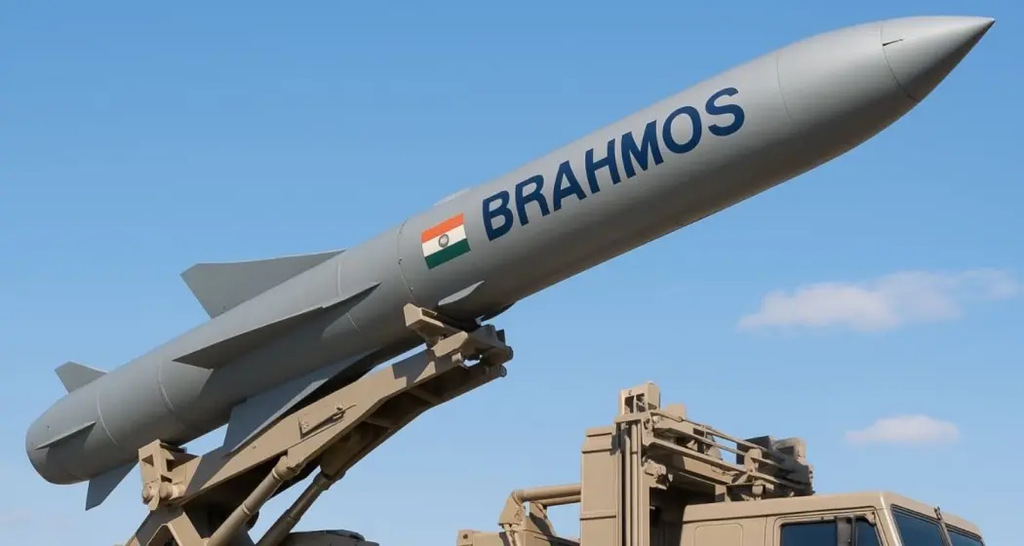
- The Ministry of Defence has signed a contract worth over 660 crore rupees with BrahMos Aerospace Private Limited for procurement of BrahMos Fire Control System and Launchers for Indian Navy ships.
BrahMos Missile
- Type: Two-stage supersonic cruise missile (World’s fastest operational cruise missile).
- Joint Venture: India (DRDO) and Russia (NPOM).
- Named after Brahmaputra and Moskva rivers.
- Speed: Mach 2.8 to 3.0 (Nearly 3 times the speed of sound).
- Principle: “Fire and Forget” (Requires no control after launch).
- Platform: Multi-platform (Can launch from land, air, sea, and submarines).
- Warhead: 200–300 kg conventional (tactical weapon, not nuclear).
- Range Evolution & MTCROriginal Range (290 km): Restricted due to Russia being bound by MTCR (Missile Technology Control Regime) rules.
- Extended Range (400–450 km+): Upgraded after India joined MTCR in 2016, lifting the range limits.
Nobel Literature Prize 2026
Miscellaneous
Context
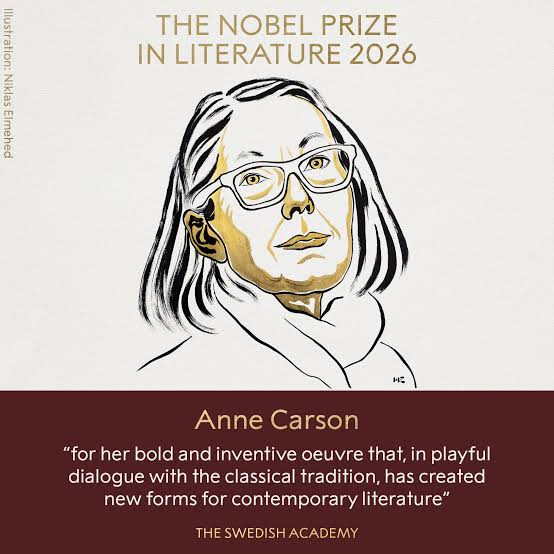
- The 2026 Nobel Prize in Literature has been awarded to Canadian author Anne Carson “for her bold and inventive oeuvre that, in playful dialogue with the classical tradition, has created new forms for contemporary literature.”
Nobel Prize in Literature 2026
- Recipient: Anne Carson (Canada).
- Recognised for: Innovative literary works blending classical traditions with contemporary literature.
- Born: 1950, Toronto, Canada.
- Profession: Poet, essayist, translator and classicist.
- Notable Works: The Glass Essay (1995), Autobiography of Red (1998) and Float (2016).
Nobel Prize in Literature
- Established: Under Alfred Nobel’s will (1895); first awarded in 1901.
- Awarded by: Swedish Academy.
- Criteria: Outstanding literary work in an idealistic direction; generally recognises an author’s body of work.
India and the Nobel Prize
- Rabindranath Tagore: Won the Nobel Prize in Literature in 1913 for Gitanjali.
- Significance: First Asian Nobel laureate and the only Indian recipient of the Nobel Prize in Literature to date.
Nobel Peace Prize 2026
Miscellaneous
Context
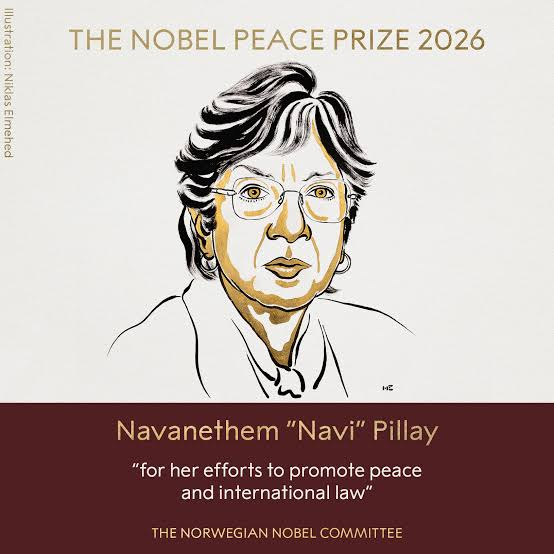
- The 2026 Nobel Peace Prize has been awarded to Navanethem “Navi” Pillay for her efforts to promote peace and international law.
Nobel Peace Prize 2026 —
- Recipient: Navanethem “Navi” Pillay (South Africa).
- Recognised for: Efforts to promote peace and international law.
- Background: Lawyer of Indian Tamil origin who challenged racial discrimination under apartheid.
- UN Role: Chaired the UN Commission of Inquiry on the Occupied Palestinian Territory.
Nobel Peace Prize
- Awarded by: Norwegian Nobel Committee; members appointed by the Norwegian Parliament.
- First Award: 1901, jointly to Frédéric Passy (France) and Henry Dunant (Switzerland), co-founder of the International Committee of the Red Cross (ICRC).
- Eligibility: Awarded to individuals and organisations; cannot be awarded posthumously.
Fact to Remember
- Mahatma Gandhi: Nominated five times for the Nobel Peace Prize but never received it.
Leave a Reply