
Maharaja Agrasen
History & culture
Context
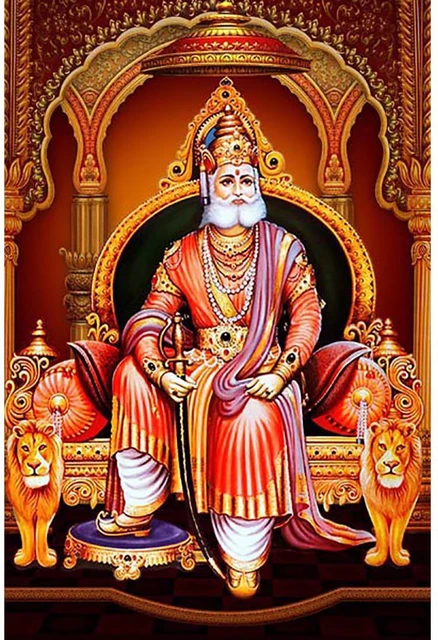
- Prime Minister Narendra Modi paid tribute to Maharaja Agrasen on his birth anniversary.
About
- Association: Ancient Indian king traditionally associated with Agroha, present-day Haryana.
- Lineage: Traditionally linked to the Suryavansha (Solar dynasty).
- Founder: Regarded in community traditions as the founder of Agroha, associated with the Agrawal community.
- Beliefs: Associated with Goddess Lakshmi and ideals of ethical trade, prosperity and social responsibility.
- Jayanti: Observed according to the Hindu lunar calendar, generally in September or October.
- Historical Evidence: His life and chronology are based largely on traditional accounts; contemporary evidence establishing his exact historical period is limited.
- Important Site: Agroha Dham, Haryana, a religious and cultural centre associated with Maharaja Agrasen and Goddess Mahalakshmi.
India’s Anti-Dumping Probe into Penicillin G Imports
Economy
Context
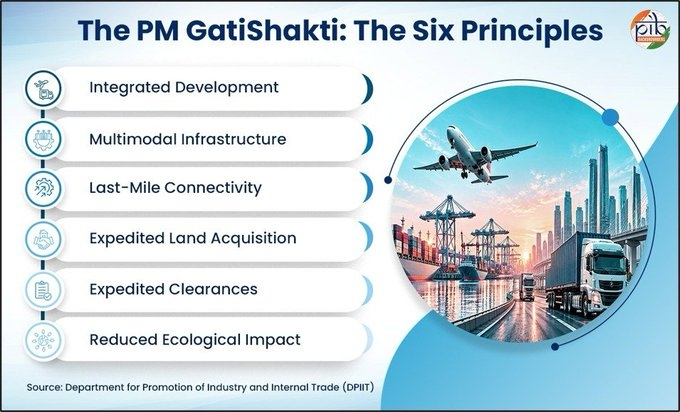
- India has initiated an anti-dumping investigation into imports of Penicillin G.
Penicillin G
-
Type: Beta-lactam antibiotic used to treat bacterial infections.
-
Significance: Used as an Active Pharmaceutical Ingredient (API) and Key Starting Material (KSM) in medicine manufacturing.
-
Uses: Treatment of infections such as pneumonia, meningitis, diphtheria and certain dental infections.
Anti-Dumping Duty — UPSC
-
Meaning: Additional customs duty imposed on imports sold below their normal value when dumping causes or threatens material injury to domestic industry.
-
Objective: Protect domestic industries against unfair price competition, not to prohibit imports.
-
DGTR: Directorate General of Trade Remedies, under the Ministry of Commerce and Industry, investigates dumping and recommends duties.
-
Imposition:
The Department of Revenue, Ministry of Finance, decides whether to impose the duty.
Garba Dance
History & Culture
Context
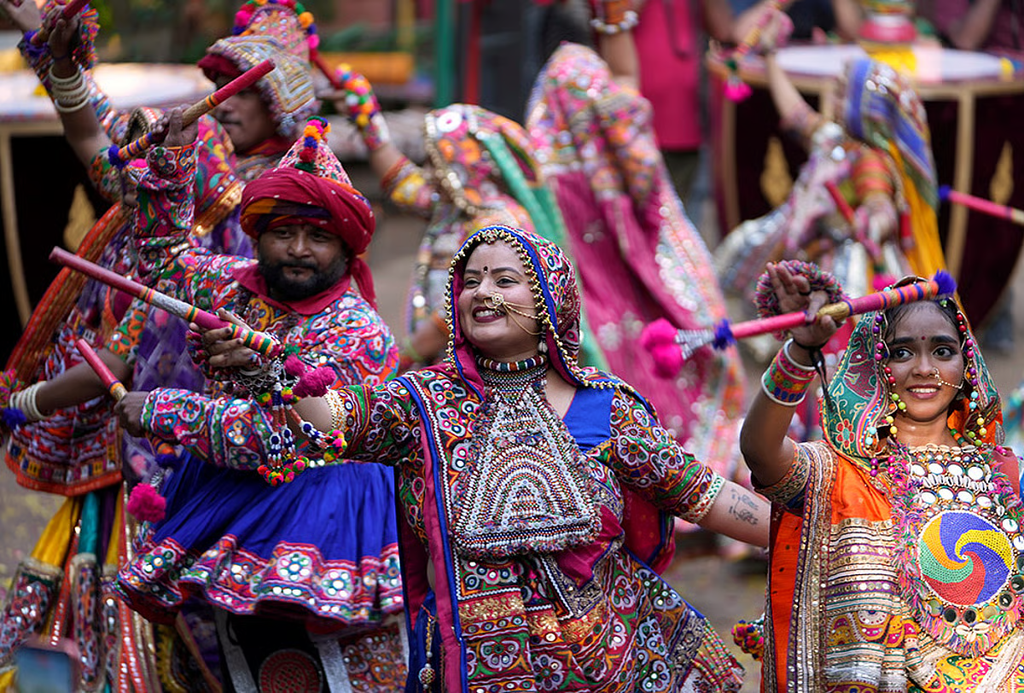
- The Navratri festival features traditional outdoor Garba dances dedicated to Goddess Ambe Maa.
About Garba
- Origin: Traditional folk dance of Gujarat, performed during the nine-day Navratri festival.
- Religious Significance: Dedicated to Goddess Ambe Maa/ Shakti; symbolises devotion, fertility, womanhood and the cycle of life.
- Performance: Dancers move in circles around a lamp or an image of the Goddess, accompanied by rhythmic music, singing and clapping.
- Etymology: Derived from the Sanskrit word Garbha (womb), symbolising life and creation.
- Cultural Influence: Modern Garba has been influenced by Dandiya Raas.
- UNESCO Recognition: Inscribed on UNESCO’s Representative List of the Intangible Cultural Heritage of Humanity in December 2023.
- Forms: Mataji Garba, Krishna Garba and Lok Garba.
Lakshadweep Becomes a Fully Literate Union Territory
Polity
Context
- Lakshadweep has achieved full literacy status under the ULLAS – Nav Bharat Saaksharta Karyakram.
ULLAS Scheme
-
Full Name: Understanding of Lifelong Learning for All in Society (ULLAS) – Nav Bharat Saaksharta Karyakram.
-
Type: Centrally Sponsored Scheme (2022–2027), aligned with NEP 2020.
-
Target Group: Non-literate adults aged 15 years and above.
-
Five Components:
-
Foundational Literacy and Numeracy
-
Critical Life Skills
-
Basic Education
-
Vocational Skills
-
Continuing Education
-
-
Objective: Build a Jan-Jan Saakshar India through volunteerism and Kartavya Bodh (sense of duty).
Literacy in India
-
Census Definition: A person aged 7 years or above who can read and write with understanding in any language.
-
Expanded Definition: Includes reading, writing and numeracy with comprehension, along with digital and financial literacy and other critical life skills.
-
Full Literacy:
A State/UT is considered fully literate upon achieving a literacy rate of 95% or above.
INS Mangrol
Defence
Context
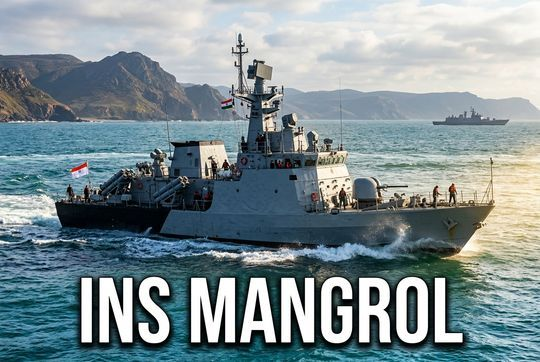
- The Indian Navy commissioned the ‘Mangrol’, the third Anti-Submarine Warfare Shallow Water Craft.
INS Mangrol — UPSC
-
Type: Third Anti-Submarine Warfare Shallow Water Craft (ASW-SWC) commissioned into the Indian Navy.
-
Name: Named after Mangrol, a coastal town and fishing harbour in Gujarat; also honours the erstwhile INS Mangrol, a minesweeper decommissioned in 2004.
-
Indigenous Content: Over 80%, supporting Aatmanirbhar Bharat.
-
Capabilities:
-
Anti-Submarine Warfare in coastal waters.
-
Underwater surveillance and mine warfare.
-
Low-Intensity Maritime Operations (LIMO).
-
-
Equipment: Torpedoes, anti-submarine rockets, advanced radars and sonars.
-
Propulsion: Waterjets.
-
Significance:
Strengthens coastal defence and indigenous naval shipbuilding.
Sarus Cranes
Environment
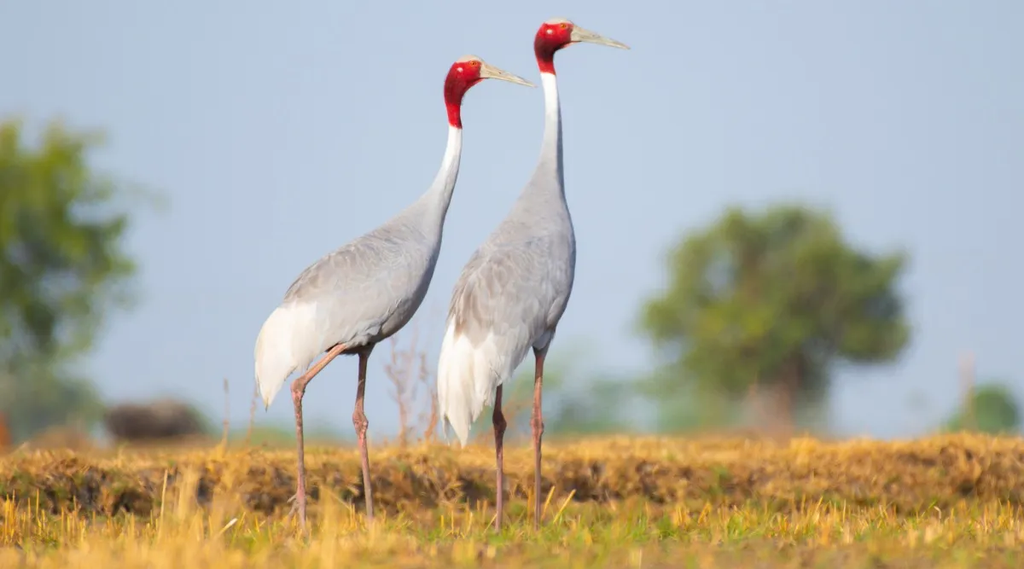
News –
- The Bombay Natural History Society (BNHS) has announced a nationwide survey to estimate the population of Sarus Cranes.
Sarus crane
-
- It is the tallest flying bird in the world standing 152-156 cm tall with a wingspan of 240cm.
- Nature: It is a social creature, found mostly in pairs or small groups of three or four.
- It is Known to mate for life with a single partner, its breeding season coincides with heavy rainfall in monsoon.
- Habitat and Distribution: The Sarus habitat is outside protected areas, in natural wetlands with low water depth, marshy and fallow areas and agricultural fields.
- The Sarus crane has three disjunct populations in the Indian sub-continent, south-east Asia and northern Australia.
- In the Indian subcontinent, it is found in northern and central India, Terai Nepal and Pakistan.
- It was once a common site in the paddy fields of Uttar Pradesh, Bihar, Rajasthan, West Bengal, Gujarat, Madhya Pradesh and Assam.
- But now it is mainly concentrated in Uttar Pradesh.
- Ecological Role : They play a vital role in ecological balance by controlling the population of harmful insects. Sarus is omnivorous, feeding on fish and insects, as well as roots and plants.
- Protection status : Listed in Schedule IV of the Wildlife (Protection) Act 1972 and as Vulnerable on IUCN Red List


Leave a Reply