
UNCTAD Trade and Development Report 2026
International
News –
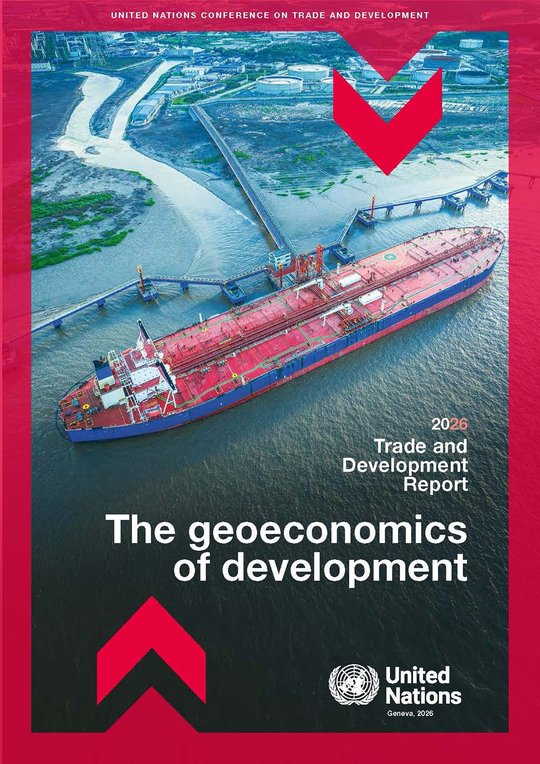
- The United Nations Conference on Trade and Development (UNCTAD), released its ‘Trade and Development Report 2026: The Geoeconomics of Development’.
Key Findings
- Global Growth: Projected at 2.6% in 2026, down from 2.9% in 2025.
- Global Trade: Expected to grow by around 4% in real terms in 2026; global trade reached a record $35 trillion in 2025.
- Developing Economies: Growth projected to slow to 4% in 2026, from 4.7% in 2025.
- Asia: Expected to contribute 59% of global growth in 2026; India’s growth is projected at 7.3%.
Additional Information – United Nations Conference on Trade and Development (UNCTAD)
- Established: 1964.
- Headquarters: Geneva, Switzerland.
- Parent Body: United Nations General Assembly (UNGA).
- Objective: Promote trade, investment and development, particularly in developing countries.
- Key Functions:
- Supports developing countries in integrating into the global economy.
- Analyses international trade, investment, finance and technology.
- Provides research, policy advice and technical assistance.
- Major Reports: Trade and Development Report, World Investment Report and Technology and Innovation Report.
- Membership: 195 member States.
JOSH (Joint Squad for Health) Initiative
Government Scheme
News –
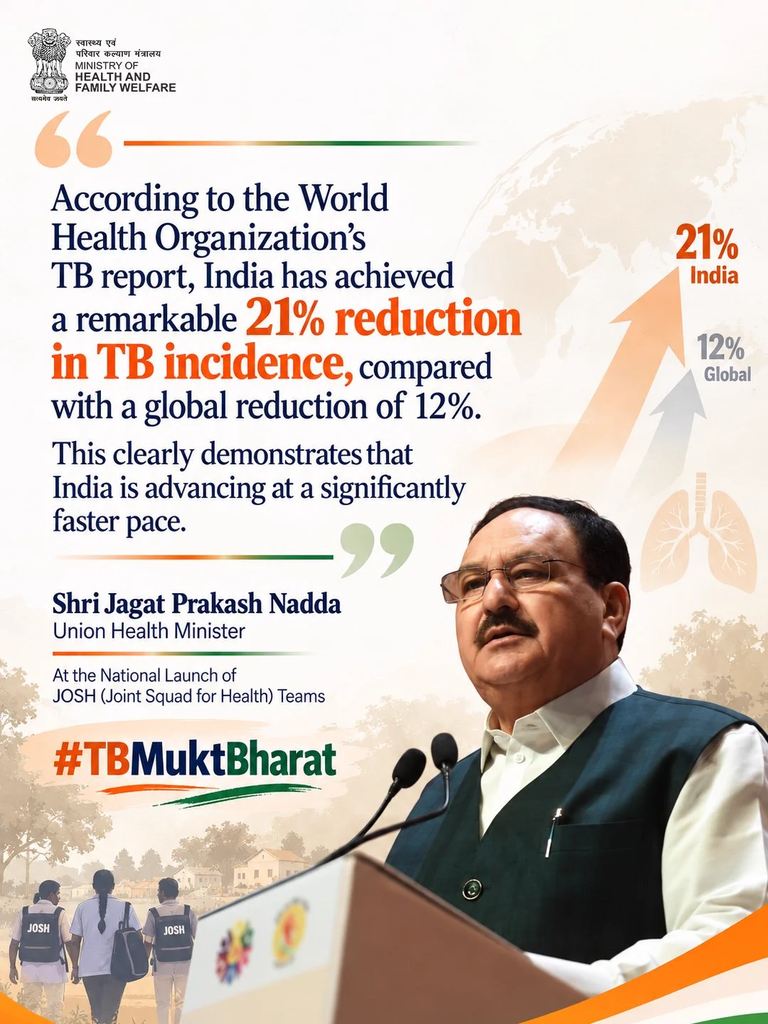
- Union Minister for Health and Family Welfare launched JOSH (Joint Squad for Health) Initiative under Tuberculosis (TB) Mukt Bharat Abhiyaan.
JOSH Initiative
- Implementation: Ministry of Health and Family Welfare, in collaboration with the Ministry of Youth Affairs & Sports, Ministry of Defence and Government of NCT of Delhi.
- Objective: Strengthen community-level outreach and public participation in India’s TB elimination programme.
- Team Composition: Five MY Bharat Volunteers and five NCC Cadets, led by a designated Class-I officer at the block/ward level.
- Key Stakeholders: Government functionaries, health workers, Panchayati Raj Institutions and local communities.
- Coverage: First phase launched across 55 districts in 11 States/Union Territories.
- Significance: Promotes Jan Bhagidari (people’s participation) through regular outreach and field-level activities to support TB elimination.
Additional Information – World Tuberculosis Day
- The day is observed to commemorate the anniversary of Dr. Robert Koch’s discovery of the TB bacteria in 1882.
- 2026 Theme – Yes! We can end TB
Tuberculosis
- Caused by – It is caused by bacteria called Mycobacterium tuberculosis.
- Transmission – It spreads from person to person through the air when people cough, sneeze or spit.
- Symptoms – Cough, chest pain, weakness, weight loss, fever, and night sweats.
- Treatment – TB is a treatable and curable disease by antimicrobial drugs.
- Multidrug-resistant tuberculosis (MDR-TB) is a form of TB caused by bacteria that do not respond to isoniazid and rifampicin, the two most powerful, first-line anti-TB drugs. MDR-TB is treatable and curable by using second-line drugs.
Global Innovation Index (GII) 2026
International
News –
- The World Intellectual Property Organization (WIPO) released the 19th Global Innovation Index 2026.
Global Innovation Index (GII) 2026 — UPSC
-
Published by: World Intellectual Property Organization (WIPO).
-
First Published: 2007.
-
Objective: Measures the innovation capabilities and performance of economies, including research capacity, technological development and innovation ecosystems.
-
Coverage: Evaluates 139 economies and identifies the world’s top 100 innovation clusters.
Key Highlights of GII 2026
-
Global Leader: Switzerland retained the top position for the 16th consecutive year, followed by Sweden and the United States.
-
European Performance: Europe accounted for 14 of the world’s top 25 innovation economies.
-
India’s Rank:
38th among 139 economies.
Diamondback Terrapin (Malaclemys terrapin)
Environment
News –
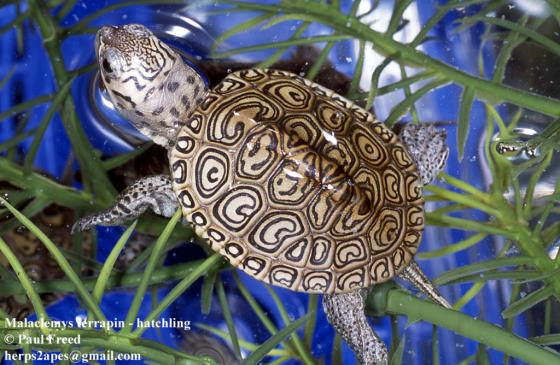
- A rare hatchling discovered at a protected nesting site on Cape Cod, Massachusetts, USA, exhibited bicephaly—a developmental abnormality often caused by incomplete separation of identical twins, resulting in two heads with separate brains but shared internal organs.
Diamondback Terrapin
- Identification: Coastal turtle named after the diamond-shaped concentric growth rings on its upper shell (carapace); has pale, grey-spotted skin.
- Adaptation: Possesses specialised salt glands near the eyes that excrete excess salt, enabling it to tolerate varying salinity levels.
- Habitat: Salt marshes, estuaries, tidal creeks and shallow bays.
- Distribution: Native to the United States; found along the Atlantic coast from Massachusetts to Florida and the Gulf Coast to southern Texas.
- Ecological Role: Controls snail populations in salt marshes, helping protect coastal cordgrass habitats.
- IUCN Status: Vulnerable.
- CITES: Appendix II.
Nanaji Deshmukh
History & Culture
News –
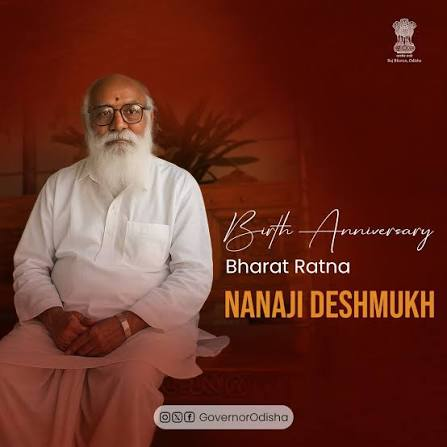
- PM paid homage to Nanaji Deshmukh on his 110th birth anniversary (11 October).
Nanaji Deshmukh (1916–2010)
-
Known For: Social reformer and Bharatiya Jana Sangh leader; champion of rural development and self-reliance.
-
Mass Movements: Participated in Vinoba Bhave’s Bhoodan Movement and supported Jayaprakash Narayan’s Total Revolution.
-
Saraswati Shishu Mandir: Established the first school at Gorakhpur in 1950.
-
Deendayal Research Institute (DRI): Promotes rural development and self-reliance based on Integral Humanism.
-
Chitrakoot Gramodaya Vishwavidyalaya: Associated with establishing India’s first rural university.
-
Honours:
Padma Vibhushan (1999); Bharat Ratna posthumously (2019).
India’s Stakes in the Global Pandemic Agreement
International
News –
- At the United Nations High Level Meeting (UN HLM), in New York, India made official remarks on the Political Declaration on Pandemic Prevention Preparedness and Response (PPPR), part of the emerging global legal regime on pandemics led by WHO-Pandemic agreement (PA).
WHO Pandemic Agreement
- It was adopted by the World Health Assembly in 2025.
- Objective – The aim is to negotiate a WHO convention on pandemic prevention, preparedness and response, that would culminate in a legally binding international instrument.
- Following its adoption, the next crucial step is for an Intergovernmental Working Group (IGWG) on the Pandemic Agreement to negotiate the details of the Pathogen Access and Benefit-Sharing (PABS) system.
- The Agreement will officially enter into force 30 days after 60 countries have ratified it.
- The PA was adopted by 124 member-states in 2025, including India.
- The PA is not yet open for ratification because negotiations are still ongoing for an annex concerning the Pathogen Access and Benefit-Sharing (PABS) system.
Pathogen Access and Benefit-Sharing (PABS)
- It is a crucial, legally binding component of the WHO Pandemic Agreement.
- It establishes a multilateral system designed to ensure the rapid, transparent sharing of pathogens with pandemic potential alongside the fair and equitable distribution of medical countermeasures like vaccines, diagnostics, and treatments.
World Hydrogen and Fuel Cell Day 2026
Science & Technology
News –
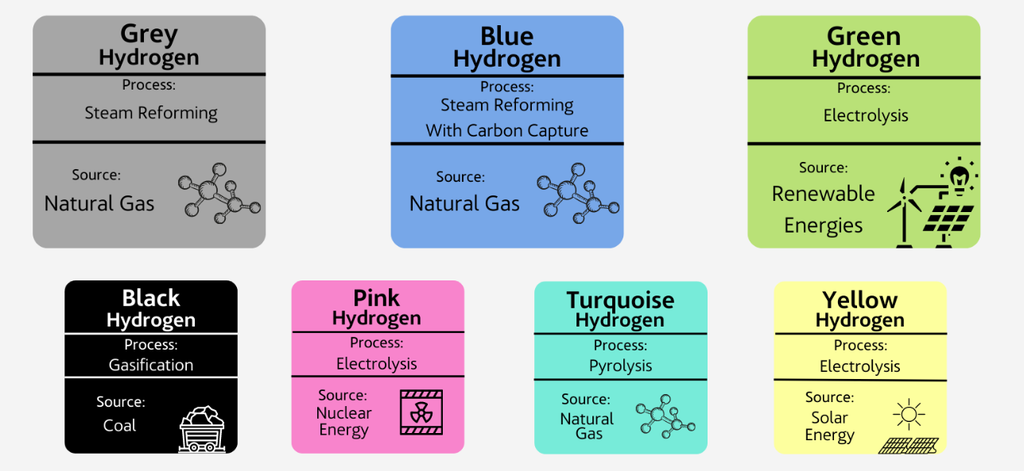
- The Ministry of New and Renewable Energy celebrated the World Hydrogen and Fuel Cell Day 2026. The day, October 8, is chosen as it corresponds to the atomic weight of hydrogen (1.008).
Hydrogen
- Symbol and Atomic number – Hydrogen is the chemical element with the symbol H and atomic number 1.
- Hydrogen is the lightest element and the most abundant chemical substance in the universe, constituting roughly 75% of all normal matter.
- It is colorless, odorless, tasteless, non-toxic, and highly combustible gas.
Additional Information – Green Hydrogen
- Green Hydrogen: It is produced using electrolysis of water with electricity generated by renewable energy.
- Benefit: It is a clean burning element that can decarbonise a range of sectors including iron and steel, chemicals, and transportation.
- Hydrogen can be stored for long periods of time which can be used to produce electricity using fuel cells.
National Green Hydrogen Mission
- Aim: To make India a global hub for the production of green hydrogen.
- Implementing Ministry: Ministry of New and Renewable Energy(MNRE)
Calibrated Tightening of Monetary Policy
Economy
Context (IE):
- The Monetary Policy Committee (MPC) of the RBI raised the policy repo rate by 25 basis points to 5.5% and shifted its stance from neutral to calibrated tightening.
Monetary Policy Committee (MPC)
- Established under – The Monetary Policy Committee (MPC) constituted by the Central Government under Section 45ZB of the Reserve Bank of India (RBI) Act, 1934.
- Meeting – The MPC is required to meet at least four times in a year.
- Composition: The committee comprises six members.
Out of the six members, three are internal -including the RBI governor who chairs the committee.
- RBI’s deputy governor is the second internal member.
- The third member is one RBI official who is nominated by the central board of RBI. Usually, it is the executive director in-charge of monetary policy.
- The other three are external members who are appointed for four years.
- Voting: Each member of the MPC has one vote, and in the event of an equality of votes, the Governor has a second or casting vote.
- Significance of constituting the MPC: MPC was set up consequent to the agreement reached between Government and RBI to task RBI with the responsibility for price stability and inflation targeting.
- The Reserve Bank of India and Government of India signed the Monetary Policy Framework Agreement.
- Functions: The MPC determines the policy repo rate required to achieve the inflation target. It acts as a benchmark for all other interest rates in the economy.
Monetary Policy Tools in India
- Repo Rate: Rate at which RBI lends short-term funds to banks against collateral.
- Reverse Repo Rate: Rate at which RBI absorbs liquidity from banks.
- Cash Reserve Ratio (CRR): Portion of deposits banks must keep with RBI in cash.
- Statutory Liquidity Ratio (SLR): Portion of deposits kept in liquid assets (gold, cash, securities).
- Open Market Operations (OMO): Buying/selling of government securities to control liquidity.
- Marginal Standing Facility (MSF): Emergency borrowing by banks at a penal rate.
- Liquidity Adjustment Facility (LAF): Framework for repo/reverse repo operations.
- Market Stabilisation Scheme (MSS): Bonds issued to absorb excess liquidity.
India Mobile Congress 2026
Polity
Context (AIR):
- Prime Minister Narendra Modi inaugurated the 10th edition of the India Mobile Congress (IMC) at Yashobhoomi in New Delhi.
About:
- A digital technology forum comprising an international conference and technology exhibition.
- Organisers: Cellular Operators Association of India (COAI) and Department of Telecommunications (DoT).
- Objective: Provides a platform for industry, businesses, regulators and policymakers to discuss issues concerning the telecom and technology sectors.
- Started: 2017; held annually.
- Theme 2026: “Scale Without Boundaries”.
- Significance: Highlights India’s growing capabilities in digital innovation, next-generation connectivity and technology-led growth.
New Extinct Relative of Gharial (Herugavialis cairensis)
Environment
News-
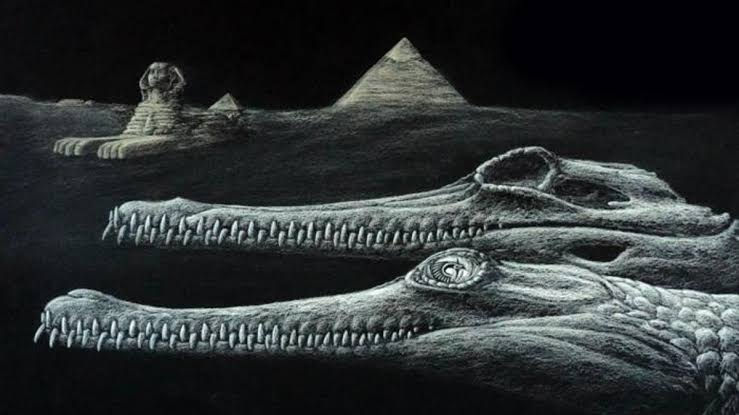
- Researchers identified a new extinct relative of India’s gharial, named Herugavialis cairensis, from fossils found in the limestone used to carve the Great Sphinx of Giza.
Additional Information – Gharials
Characteristics:
- They show Sexual Dimorphism means males and females differ significantly in size and appearance.
- Unlike crocodiles, gharials feed exclusively on warm-blooded species and are not man-eaters.
Habitat Distribution:
- Gharials are strictly riverine species, requiring deep, clear, fast-flowing waters with steep, sandy riverbanks.
- Mainly found in Chambal River, Girwa River, Ken River, Yamuna River, Brahmaputra River, Ghaghara River, Bhagirathi-Hooghly River.
Conservation Status:
- IUCN Status: Critically Endangered
- It is listed under Schedule 1 of the Wild Life (Protection) Act, 1972.
Conservation programmes
- Project Crocodile (1975): Initiative of United Nations Development Programme (UNDP) and the Food and Agriculture Organization (FAO) and focused on captive breeding.
2,000th HAL Aero-Engine
Science & technology
News –
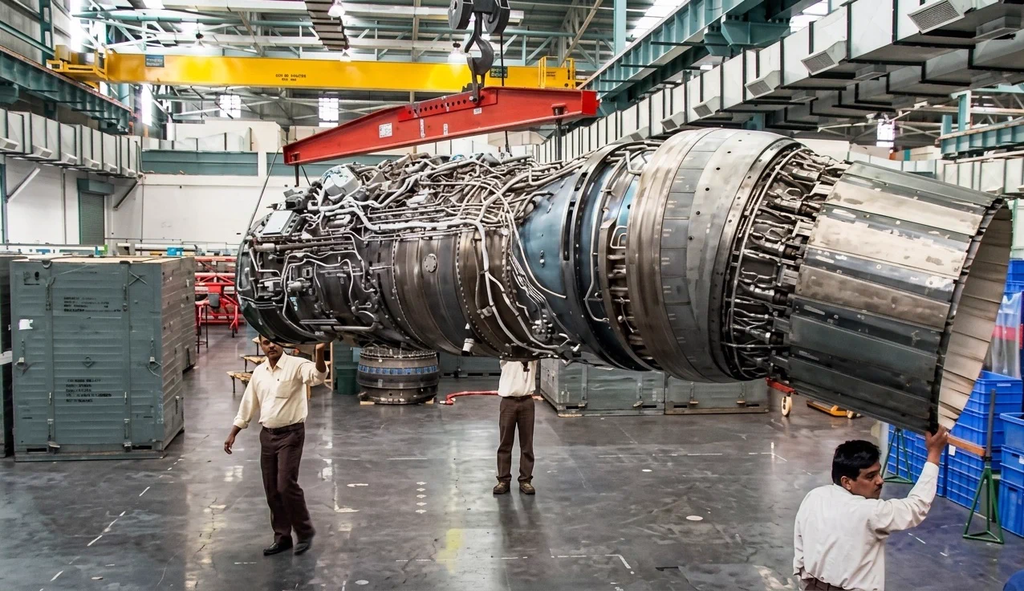
- Hindustan Aeronautics Limited’s (HAL) Koraput Division delivered its 2,000th aero-engine and announced the establishment of a second production line for Shakti engines.
About
- AL-31FP Engine: HAL plans to expand production for the Su-30MKI fleet, targeting 63% indigenous content.
- Shakti Engine: Co-developed by HAL and France’s Safran for the Dhruv Advanced Light Helicopter (ALH) and Prachand Light Combat Helicopter (LCH).
- Production Expansion: The second Shakti engine production line is expected to add capacity for 100 engines annually by 2028–29.
- Significance: Strengthens domestic aero-engine manufacturing, defence indigenisation and self-reliance in aerospace technology.
Common But Differentiated Responsibilities and Respective Capabilities (CBDR-RC)
Environment
News-
- Ahead of COP31 in Antalya, Türkiye, India emphasised that the principles of Equity and CBDR-RC must be upheld in letter and spirit.
About CBDR-RC
- Meaning: A principle of international environmental law recognising that all countries share responsibility for addressing climate change, but their obligations differ according to historical emissions and capabilities.
- Common Responsibility: All countries must cooperate to protect the global environment.
- Differentiated Responsibilities: Developed countries have greater responsibility due to their historical contribution to greenhouse gas emissions.
- Respective Capabilities: Countries’ financial, economic and technological capacities determine their ability to address climate change.
Evolution and International Framework
- Rio Earth Summit, 1992: Recognised in Principle 7 of the Rio Declaration and Article 3(1) of the UN Framework Convention on Climate Change (UNFCCC).
- Kyoto Protocol, 1997: Assigned binding emission-reduction targets to developed countries under the protocol’s framework.
- Paris Agreement, 2015: Requires all countries to submit Nationally Determined Contributions (NDCs), while recognising equity, CBDR-RC and different national circumstances.
Significance for India
- Advocates climate justice and equitable burden-sharing.
- Emphasises climate finance and technology transfer from developed to developing countries.
- Seeks to balance climate action with developing countries’ needs for economic growth and poverty reduction.
Black Sea
International
Context (AIR):
- India has condemned the string of attacks that have taken place in the black sea region.
About –
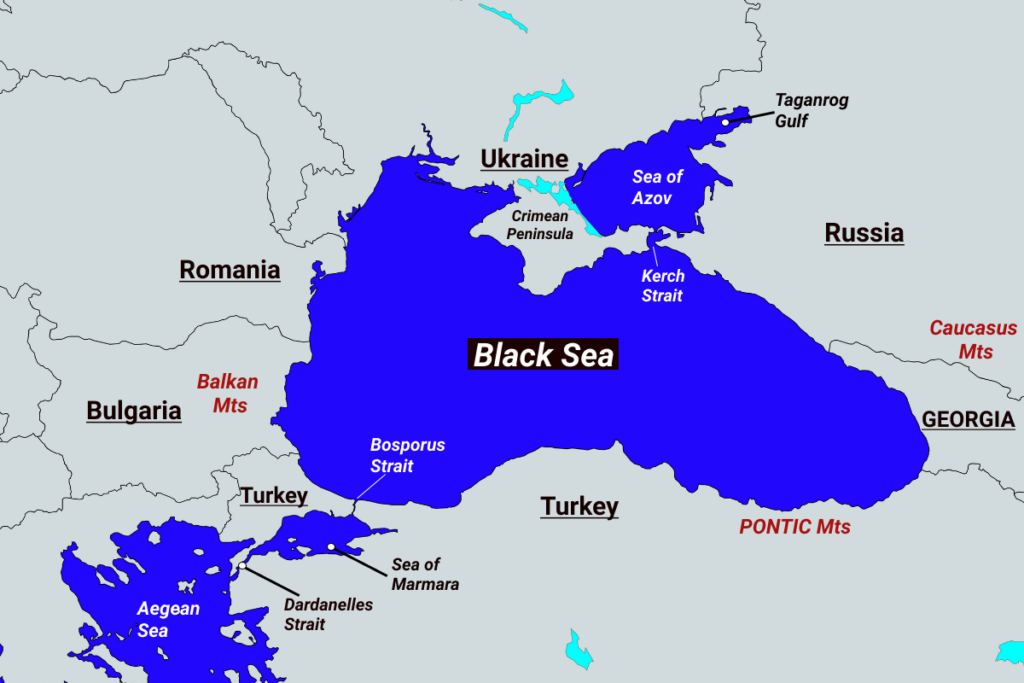
- Location: Inland sea situated between Eastern Europe and Western Asia; strategically important for maritime trade connecting Europe, the Caucasus and the Middle East.
- Bordering Countries: Ukraine (north), Russia (northeast), Georgia (east), Türkiye (south), Bulgaria (southwest) and Romania (west).
- Major Rivers: Danube, Dnieper, Dniester and Don. Note: The Don drains into the Sea of Azov, which connects to the Black Sea through the Kerch Strait.
- Connection to Mediterranean Sea: Black Sea → Bosporus Strait → Sea of Marmara → Dardanelles Strait → Aegean Sea → Mediterranean Sea.
- Unique Feature — Anoxic Waters: Deep waters, generally below about 150–200 metres, contain very little or no dissolved oxygen and are rich in hydrogen sulphide.
- Ecological Significance: Most marine life is concentrated in the upper, oxygenated layers of the sea.








Leave a Reply