
Protected Area Permit Rules
Polity
Context:
- Nagaland government has urged the Centre to completely withdraw the Protected Area Permit (PAP) regime from the state ahead of the Hornbill Festival.
Protected Area Permit (PAP)
-
Meaning: Official permit issued by the Central Government that foreign nationals must obtain to visit designated protected or restricted areas along India’s international borders.
-
Legal Basis: Foreigners (Protected Areas) Order, 1958.
-
Coverage: Arunachal Pradesh, Manipur, Mizoram, Nagaland, Sikkim, Andaman and Nicobar Islands and certain areas of Himachal Pradesh, Jammu and Kashmir, Rajasthan and Uttarakhand.
-
Relaxation (2011): PAP restrictions were relaxed for Manipur, Mizoram and Nagaland.
-
Reimposition (December 2024):
PAP was reimposed in these three states citing security concerns.
Saffron Cultivation in Ladakh
Economy
Context
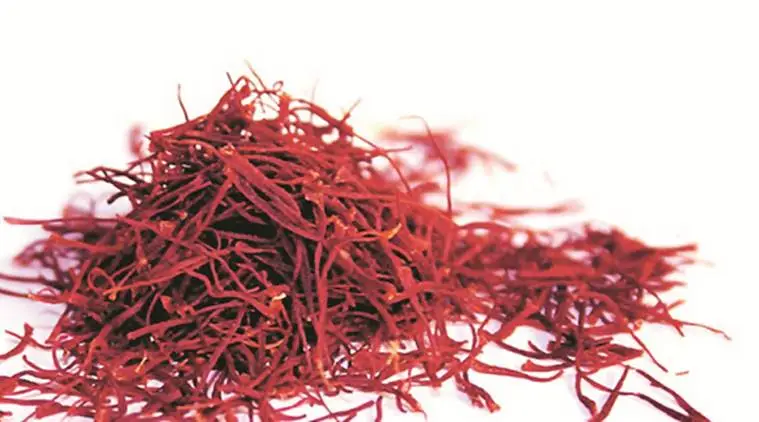
- A pilot project in Ladakh has recorded its first saffron flowering within 30 days of plantation, earlier than the usual flowering period of around two months.
About Saffron
- Scientific Name: Crocus sativus.
- Obtained from the dried red stigmas of the saffron flower.
- Known as the world’s most expensive spice due to labour-intensive harvesting and limited production.
- Uses: Spice, natural colouring agent, traditional medicine and cosmetics.
- Growing Conditions:
- Cold winters and warm, dry summers.
- Well-drained, fertile soil.
- Adequate sunlight and relatively dry conditions.
- Propagation: Through underground corms, not conventional seeds.
Saffron Cultivation in India
- Major Producer: Jammu and Kashmir.
- Pampore (Pulwama): Known as the Saffron Bowl of Kashmir.
- Other regions: Budgam, Srinagar and Kishtwar.
- GI Tag: Kashmiri Saffron received GI status in 2020.
- Global Position: Iran is the world’s largest saffron producer; India is a relatively small producer.
1st International Maize Conference 2026
Economy
Context
- The 1st International Maize Conference 2026 was held in Hyderabad.
Key Highlights
-
Theme: Maize Revolution for Food, Feed, Fodder, Fuel and Sustainability in the Changing World (M4FS).
-
India’s Target: Increase maize production from approximately 55 million tonnes to 75 million tonnes over the next decade.
-
Focus areas: Improved productivity, innovative breeding technologies, stronger seed systems and farmer-centric research.
Maize
-
Scientific Classification: Cereal crop belonging to the grass family Poaceae.
-
Origin: Central America, particularly Mexico.
-
Commonly known as Corn.
-
Largest Producer: USA.
-
India’s Position: 5th largest producer (approximately 55.09 million tonnes).
Geographical Conditions
-
Soil: Fertile, well-drained sandy loam to silty loam; alluvial soil is suitable.
-
Ideal pH: 5.5–7.5.
-
Temperature: 21°C–32°C.
-
Rainfall: 50–100 cm.
-
Drainage: Sensitive to waterlogging.
-
Season: Primarily Kharif (June–September), though also cultivated in other seasons.
Major Producing States
-
Karnataka
-
Madhya Pradesh
-
Maharashtra
-
Bihar
-
Telangana



















Leave a Reply