
Arab League
Syllabus: GS2/Regional Groupings
Context
- The Council of the League of Arab States has issued a strong condemnation of Iran’s attacks on several Arab countries.
About
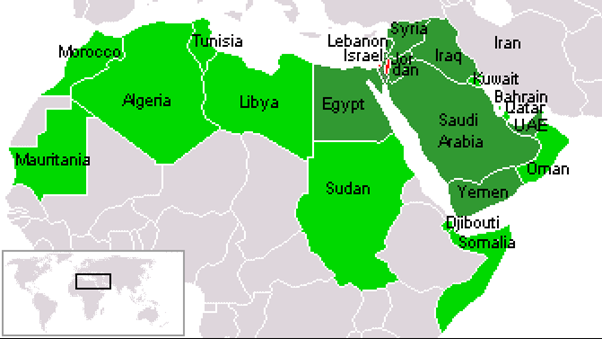
- The Arab League, officially known as the League of Arab States was established in Cairo in 1945 initially with seven members.
- Seven founding member states: Egypt, Iraq, Jordan, Lebanon, Saudi Arabia, Syria, and Yemen.
- Currently it has 22 member states.
- The member nations are located in the Middle East and North Africa.
- It has pledged to cooperate on economic and military affairs.
- The League Council is the highest body and is composed of representatives of member states.
- The league makes decisions on a majority basis, but there is no mechanism to compel members to comply with resolutions.
- There are four nations that were conferred observer status: Brazil, Eritrea, India, and Venezuela.
- Source: AIR
“Bhavasagara” Referral Centre
Syllabus: GS3/ Environment
In News
- The Ministry of Environment, Forest and Climate Change (MoEFCC) has officially designated the “Bhavasagara” Referral Centre of the Centre for Marine Living Resources & Ecology (CMLRE), Kochi, Kerala, as India’s National Repository for Deep-Sea Fauna.
- The recognition has been granted under the Biological Diversity Act, 2002.
About
- The designation establishes “Bhavasagara” Referral Centre as a critical national facility for the preservation, study, and documentation of India’s deep-sea biological heritage.
- The Centre currently houses an extensive collection of more than 3,500 taxonomically identified and geo-referenced voucher specimens.
- Under the Biological Diversity Act, 2002, the Repository is authorised to:
- Preserve representative biological samples (such as DNA sequences)
- Act as the official custodian for any new deep-sea species
- Capacity Building: Aligning with the goals of the UN Decade of Ocean Science for Sustainable Development (2021–2030).
- Centre for Marine Living Resources & Ecology (CMLRE)
- Established in 1998, Centre for Marine Living Resources & Ecology (CMLRE) is a premier institute under the Ministry of Earth Sciences (MoES), Government of India.
- It is dedicated to the exploration, management, and conservation of marine living resources.
- CMLRE works in India’s Exclusive Economic Zone (EEZ), and the adjacent deep seas.
GRSE Delivers 3 Frontline Naval Platforms to Indian Navy
Syllabus: GS3/ Defence
Context
- Garden Reach Shipbuilders and Engineers Ltd (GRSE) delivered three frontline naval platforms, INS Dunagiri, INS Sanshodhak, and INS Agray, to the Indian Navy.
- With this GRSE has reached the milestone of building 118 warships, including 80 delivered to the Indian Navy, strengthening India’s indigenous defence ecosystem.
INS Dunagiri (Advanced Stealth Frigate)
- It is the second ship under Project 17A built by GRSE. The 149-metre, 6,670-tonne frigate is equipped with:
- BrahMos for precision strikes.
- Advanced AESA radar and integrated combat management systems.
- It operates on a Combined Diesel and Gas (CODAG) propulsion system.
- It is capable of multi-dimensional warfare across air, surface, and sub-surface domains.
- INS Sanshodhak (Survey Vessel – Large)
- It is the fourth and final vessel in its class. It is designed for
- Hydrographic surveys in coastal and deep waters.
- Collection of oceanographic data.
- It also supports Helicopter operations, Humanitarian Assistance and Disaster Relief (HADR) missions and Limited combat roles.
- INS Agray (ASW Shallow Watercraft)
- It is designed specifically for anti-submarine warfare (ASW) in littoral waters. It features:
- ~88% indigenous content
- Lightweight torpedoes and ASW rockets
- 30 mm naval gun
- Its shallow draught and waterjet propulsion enhance manoeuvrability in coastal areas.
- Source: AIR














Leave a Reply