
Survey records 143 Odonata species across Western Ghats
Environment

In News
- A recent study in the Western Ghats highlights a significant biodiversity gap in dragonflies and damselflies, documenting only about 65% of historically recorded species, suggesting a possible 35% decline.
- The Western Ghats is a 1,600-km mountain chain along India’s west coast and a globally recognised biodiversity hotspot.
Odonata
- Odonata is an insect order that includes dragonflies (suborder Anisoptera) and damselflies (suborder Zygoptera).
- They are characterized by transparent wings, long slender bodies, and a sloping thorax.
- Usually found near water, odonates are active daytime predators, and both adults and aquatic larvae feed on other
Western Ghats
- Forests – The region of Western Ghats has moist deciduous forests and rainforests.
- Endemism – The region shows high species diversity as well as high levels of endemism.
- Nearly 77% of the amphibians and 62% of the reptile species found here are found nowhere else.
|
Facts on Western Ghats ● Location – Western Ghats of Sahyadri run parallel to the west coast of the Indian peninsula through six states(Gujarat, Maharashtra, Goa, Karnataka, Tamil Nadu and Kerala). ● Also known as – It is also known as ‘The Great Escarpment of India’. ● Designated as – It is designated as UNESCO World Heritage Site as well as a Biodiversity Hotspot due to the presence of a large number of endemic flora and fauna species along with several undiscovered species. ● Tribes – It is home to a large number of tribes such as Adars, Kotas, Badagas, Todas, Kurumbas, and Paniyas etc. ● Biodiversity conservation – The Government of India has established many protected areas including 2 biosphere reserves, 13 National parks to restrict human access to protect specific endangered species. |
Additional Information – Committees related to Western Ghats
Sanjay Kumar Committee:
- Objective – It is formed to review state objections on Ecologically sensitive zones demarcations and validate proposed exclusions.
- Significance- It seeks to finalize the ESA status for villages, restricting activities harmful to biodiversity.
Madhav Gadgil Committee (2011):
- Objective – to propose protection measures for the Western Ghats.
- It recommended designating the entire Western Ghats as ecologically sensitive.
- It proposed the creation of a dedicated ecological authority to regulate development.
- The Report suggested rigorous conservation, but its recommendations were not fully adopted.
Kasturirangan Committee (2012):
- It is formed as a follow-up to the Gadgil Committee to provide a more moderate approach.
- It recommended demarcating 37% of theWestern Ghats as eco sensitive zones.
- It emphasizes a balance between conservation and developmental needs, allowing limited activity in specific areas.
546 Die Every Day in Traffic Accidents: NCRB Data
Polity
Context
- According to the latest report by the National Crime Records Bureau (NCRB), 1.99 lakh people died in traffic accidents in 2024, an increase of 0.79% compared to 2023.
Major Findings
- Traffic accidents include road accidents, railway accidents, incidents on railway tracks or railway premises, and accidents at railway crossings.
- Road Accidents: Out of 1.99 lakh traffic-related deaths recorded in 2024, 1.75 lakh (88%) were due to road accidents.
Government Initiatives
- National Road Safety Policy India, 2010: It emphasized the need for better road infrastructure, stricter enforcement of traffic rules, enhanced emergency medical services, public awareness campaigns, and improved post-crash care.
- Motor Vehicles Amendment Act, 2019: The act brought about higher penalties for traffic violations, including speeding, drunk driving, and not wearing helmets or seat belts.
Additional Information – National Crime Records Bureau
- Set-up in – 1986
- Functions under – Ministry of Home Affairs
- Objective – It acts as a repository of information on crime and criminals so as to assist the investigators in linking crime to the perpetrators.
- Headquarter – New Delhi
Projects being implemented by NCRB
- Inter-Operable Criminal Justice System (ICJS) project
- Crime and Criminal Tracking Network & Systems (CCTNS)
- Reports – NCRB brings out three annual reports i.e. These reports are principal reference points for police officers, researchers, media & policymakers.
- Crime in India
- Accidental Deaths & Suicides in India
- Prison Statistics India.
Kerala’s Oil Spill Contingency Plan
Environment
In News
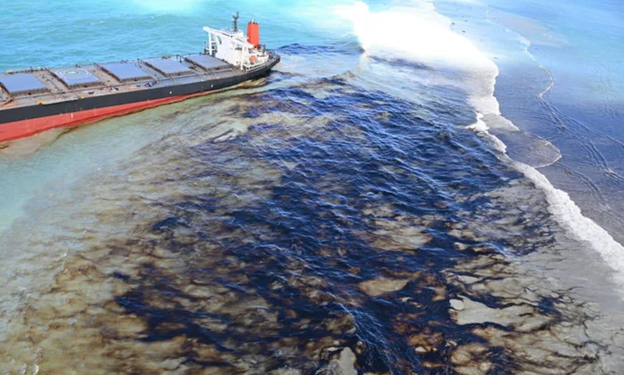
- Kerala began preparing an Oil Spill Contingency Plan following the 2025 shipwrecks incidents off Kerala coast to address marine pollution and coastal environmental risks.
Oil Spill
- Definition – It is the release of petroleum substances into the environment, especially oceans and coastal waters, due to human activities such as tanker accidents, offshore drilling, or fuel leaks, causing serious pollution.
Consequences of oil spills
- Marine Life: Oil coats the feathers of birds and fur of mammals, destroying their natural insulation and buoyancy, leading to hypothermia or drowning.
- Ecosystem Disruption: Thick oil slicks block sunlight and oxygen, killing phytoplankton and smothering sensitive habitats like mangroves, coral reefs, and salt marshes.
- Economic Loss: Spills cause immediate and long-term damage to fisheries, tourism, and coastal livelihoods.
- Human Health: Contaminated seafood and toxic vapors pose serious health risks to coastal communities and cleanup workers.
Methods used to clean up Oil Spills
- Booms & Skimmers: Floating barriers (booms) contain the oil, while skimmers (vacuum-like machines) remove it from the surface.
- Dispersants: Chemicals that break oil into smaller droplets, allowing them to mix with water and biodegrade faster.
- Bioremediation: Utilizing oil-degrading bacteria (e.g., Cycloclasticus or TERI’s Oil Zapper) to break down hydrocarbons into less harmful substances.
- In-situ Burning: Setting freshly spilled oil on fire to remove up to 98% of it, though this creates air pollution
Efforts to combat Marine pollution-
- National Oil Spill Disaster Contingency Plan (NOS-DCP): The Indian Coast Guard (ICG) is the central coordinating authority for reporting and responding to spills.
- Bunker Oil Convention (2001): Ensures prompt compensation for damage caused by fuel oil spills from ships.
- MARPOL 73/78 (Annex I): An international treaty aimed at preventing marine pollution from ships.
- Environment Protection Act (EPA), 1986: While no dedicated oil spill law exists, incidents are often prosecuted as “accidental discharge” under this act.



















Leave a Reply