
Foreign Exchange Reserves
Syllabus: GS3/ Economy
Context
- The appeal of Prime Minister Modi to reduce the consumption of imported goods has reignited the debate on whether India should reduce consumption to save forex or strengthen production and productivity to sustain long-term economic growth.
Foreign Exchange Reserves
- Foreign exchange reserves refer to foreign currency assets held by the Reserve Bank of India (RBI).
- These reserves mainly consist of foreign currencies such as the US dollar, gold reserves, Special Drawing Rights (SDRs), and reserve positions in the International Monetary Fund (IMF).
- Significance: Foreign exchange reserves are essential because they help India finance imports, stabilise the rupee, maintain investor confidence, and meet external payment obligations during periods of economic stress.
Why Does India Need Strong Forex Reserves?
- Dependence on Imports: India depends heavily on imports for crude oil, fertilisers, edible oils, gold, electronics, and industrial machinery.
- Hence India requires adequate forex reserves to ensure uninterrupted trade and economic stability.
- Protection from External Shocks: Strong forex reserves help protect the economy during periods of global financial instability, rising oil prices, currency volatility and sudden capital outflows.
- Countries with weak forex reserves often face balance of payments crises and severe currency depreciation.
Additional Information – Balance of Payments (BoP)
- The Balance of Payments (BoP) is a record of all economic transactions between India and the rest of the world during a particular period.
Components of BoP:
- Current Account: It includes trade in goods and services, remittances, and income transfers. India generally imports more goods than it exports, which results in a Current Account Deficit (CAD).
- Capital Account: It includes foreign investments such as Foreign Direct Investment (FDI), Foreign Portfolio Investment (FPI), and external borrowings.
- India has traditionally financed its current account deficit through capital inflows from foreign investors.
National Jute Board
Syllabus: GS3/Economy and Agriculture

Context
- The National Jute Board has been implementing the Jute Crop Information System project since 2023 in collaboration with the Indian Space Research Organization (ISRO) and the Jute Corporation of India.
Jute Crop Information System project
- Aim: To monitor jute cultivation using remote sensing and field data.
- As part of this initiative, two key tools have been developed:
- BHUVAN JUMP – A mo bile app for on-field jute monitoring, and
- PATSAN (Prospective Assessment of Jute Using Mobile App-Based Field Observations) – a web-based platform that provides near-real-time jute surveillance and analytics to support informed decision-making by officials and stakeholders.
Jute Production In India
- It is also called the golden fibre, in view of being a natural, renewable, biodegradable and eco-friendly product.
- India is the largest producer of jute followed by Bangladesh and China.
- West Bengal, Bihar and Assam account for almost 99% of India’s total production.
Conditions Required for Jute Production
- Temperature: A mean maximum and minimum temperature of 34°C and 15°C and a mean relative humidity of 65% are required.
- Rainfall: Around 150-250 cm.
- Soil: Jute can be raised on all kinds of soils from clay to sandy loam, but loamy alluvial soils are best suited.
Baiga Tribe
Syllabus: GS1/Tribal Groups
Context
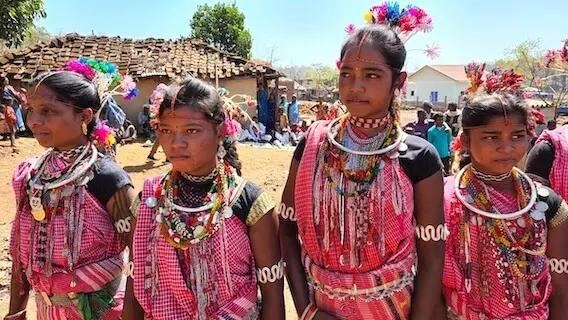
- Children belonging to the Baiga tribe rescued from bonded labour in Chhattisgarh.
Baiga Tribe
- Found in – The Baiga are an ethnic group found in central India primarily in the state of Madhya Pradesh, and in smaller numbers in the surrounding states of Uttar Pradesh, Chhattisgarh and Jharkhand.
- The name Baiga means “sorcerer- medicine man”.
- The Baigas in Chhattisgarh are classified as Particularly vulnerable tribal group(PVTG) by the Government due to their declining population and low level of literacy.
- They traditionally practiced shifting cultivation, locally called “Bewar” cultivation.
Particularly Vulnerable Tribal Groups (PVTGs)
- PVTGs are the most marginalized and extreme backward sections among Scheduled Tribes (STs).
- The criteria for identifying Particularly Vulnerable Tribal Groups are:
- Pre-agricultural level of technology,
- Low level of literacy,
- Economic backwardness,
- A declining or stagnant population.
- History of PVTGs: Dhebar commission (1960-61) identified that there is inequality among tribal communities in terms of socio-economic development.
- In 1975, acting on the Dhebar Commission report, the government identified Primitive Tribal Groups (PTGs) as a separate category and listed 52 tribal groups as PTGs.
- As per 2001 census, there are 75 Particularly Vulnerable Tribal Groups (PVTGs) with a total population of 27,68,322, living in 18 States and Union Territory.
- In 2006, PTGs were renamed as Particularly Vulnerable Tribal Groups (PVTGs).
Recent Government Initiatives
- The PM-PVTG Development Mission program – The programme envisions connecting all 22,544 PVTG villages to basic government services like communications, electricity, public education, healthcare, water supply, and connectivity.
- Pradhan Mantri-Janjati Adivasi Nyaya Maha Abhiyan – It will focus on 11 critical interventions like Provision of pucca houses, Connecting roads, Piped Water Supply, Community water supply, Mobile Medical Units with medicine cost, etc.
National Technology Day
Syllabus: GS3/ Science and Technology
Context
- National Technology Day is observed annually on 11 May.
National Technology Day
- The day commemorates the successful nuclear tests conducted by India at Pokhran in Rajasthan in 1998 under Operation Shakti.
- The day recognizes the contribution of Indian scientists, engineers, and technological institutions to national development and strategic capability.
‘One Case One Data’ and ‘Su Sahay initiative
Syllabus: GS2/Governance
In News
- Recently, the Supreme Court launched ‘One Case One Data’ and ‘Su Sahay initiative.
One Case One Data initiative
- It is a major digital initiative to connect all levels of courts — from taluka and district courts to High Courts and the Supreme Court through a unified database system.
- It aims to improve case management by creating a comprehensive and interconnected digital judicial information system.
‘Su Sahay’ Chatbot
- It is an Artificial Intelligence (AI)-powered assistance chatbot .
- It is integrated with the Supreme Court website to facilitate easier access to justice and court-related services for litigants.
- It has been developed by the National Informatics Centre in collaboration with the Supreme Court Registry
National Panchayat Awards 2025
Syllabus: GS2/Governance
In News
- Kawrthah North Village Council in Mizoram has secured the top rank at the national level under the “Clean and Green Panchayat” category of the Deen Dayal Upadhyay Panchayat Satat Vikas Puraskar 2025, for its work in sustainable rural development and environmental conservation.
National Panchayat Awards
- Conferred by – Ministry of Panchayati Raj
- It is annually conferred to recognize and incentivise best-performing Panchayats and promote inclusive, participatory, and sustainable development in rural India.
- Winning Panchayats receive financial incentives ranging from Rs. 50 lakh to Rs. 5 crore per awardee, depending on tier and category.
Categories
- Deen Dayal Upadhyay Panchayat Satat Vikas Puraskar awards – It recognises outstanding Gram Panchayats for their performance across themes linked to Sustainable Development Goals, including poverty-free livelihoods, health, water sufficiency, sanitation, women-friendly governance and social justice.
- Nanaji Deshmukh Sarvottam Panchayat Satat Vikas Puraskar, awards – It will be given to the best-performing Panchayats at the district, block and gram levels.
Latest winners
- Karnataka has secured the highest number of awards with six Panchayats being selected, followed by Andhra Pradesh and Odisha with five awards each.
SEHAT Mission
Syllabus: GS2/Governance; GS3/Economy
In News
- Union Minister for Health and Family Welfare, and Chemicals and Fertilisers launched the ‘SEHAT Mission’ in Delhi,
SEHAT (Science Excellence for Health through Agricultural Transformation)
- It is a national mission aimed at linking agriculture, nutrition, and public health by converting agricultural innovations into better health outcomes for people in India.
- It is a joint initiative of the Indian Council of Medical Research (ICMR) and the Indian Council of Agricultural Research (ICAR).
- Objective – It aims to improve nutrition and public health through biofortified foods, integrated farming, better occupational health for farm workers, and support for the One Health Mission.
- Significance – to address nutrition, preventive healthcare, non-communicable diseases, farmer welfare, and public health challenges.


















Leave a Reply