
Ecocide
Syllabus: GS3/ Environment
Context
- The term “ecocide” has gained renewed attention amid allegations of large-scale environmental destruction during recent conflicts, including the wars in Gaza, Lebanon, and Iran.
Ecocide
- Ecocide refers to severe, widespread, or long-term destruction of the environment caused by human actions.
- The term was coined in 1970 by Arthur W. Galston.
- Note – Vietnam became the first country to criminalise ecocide domestically in 1990.
Connect with the basics – International Laws on Environment
Climate Change & Ozone
- UNFCCC (1992): The foundational framework aiming to stabilize greenhouse gas emissions.
- Kyoto Protocol (1997): Set legally binding emission reduction targets for developed countries and established flexible market mechanisms (CDM, Emissions Trading).
- Paris Agreement (2015): A legally binding treaty adopted at COP21 aiming to limit global warming to well below 2°C (striving for 1.5°C) using Nationally Determined Contributions (NDCs).
- Montreal Protocol (1987): A highly successful, legally binding treaty phased out ozone-depleting substances (ODSs). [Recent] Its Kigali Amendment (2016) mandates the phased reduction of hydrofluorocarbons (HFCs).
Biodiversity & Wildlife
- Convention on Biological Diversity (CBD): Targets the conservation of biological diversity, sustainable use of its components, and fair sharing of benefits. Includes the Cartagena Protocol (biosafety) and the Nagoya Protocol (access and benefit-sharing).
- CITES (1973): Controls international trade of endangered flora and fauna to ensure survival.
- Ramsar Convention (1971): Focuses on the conservation and wise use of internationally significant wetlands.
Hazardous Wastes & Chemicals
- Basel Convention (1989): Controls the transboundary movement of hazardous wastes and their disposal.
- Rotterdam Convention (1998): Promotes shared responsibility and cooperative efforts in the international trade of certain hazardous chemicals.
- Stockholm Convention (2001): Aims to eliminate or restrict the production and use of Persistent Organic Pollutants (POPs).
World Migration Report 2026
Syllabus: GS2/ Indian Diaspora
Context
- The International Organization for Migration released the World Migration Report 2026.
Key Findings of the Report
- International migrants accounted for 7% of the global population in 2024, compared to 2.9% in 1990.
- The largest migration corridor globally remains Mexico–United States Corridor with nearly 11 million migrants.
- Other major corridors include: Afghanistan–Iran Corridor, Syria–Türkiye Corridor and Russia–Ukraine Corridor.
Additional Information – The International Organization for Migration (IOM)
- It is the principal UN agency for migration.
- Established in – 1951
- Headquarter – Geneva, Switzerland.
- Objective – It promotes humane, orderly migration and provides humanitarian assistance to migrants, refugees, and internally displaced persons.
- India has been an official member state of the IOM since 2008
India to host 1st IBCA Summit
Syllabus: GS3/Environment

In News
- The Union Minister for Environment, Forest and Climate Change launched the website and logo for the 1st International Big Cat Alliance (IBCA) Summit 2026, in New Delhi.
International Big Cat Alliance (IBCA)
- Headquarters – India,
- Objective – It is a multi-country, multi-agency coalition of 95 big cat range countries with an interest in big cat conservation.
- Genesis: IBCA was launched by the Prime Minister of India in 2023 during the event ‘Commemorating 50 years of Project Tiger’.
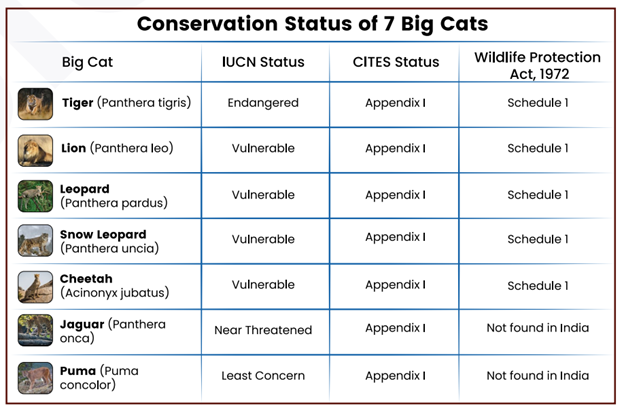
- Aim: Conserving seven big cats – Tiger, Lion, Leopard, Snow Leopard, Cheetah, Jaguar, and Puma.
- Members: Nicaragua, Eswatini, India, Somalia and Liberia have signed the Framework Agreement to formally become members of the IBCA.
Samagra Shiksha Teachers
Syllabus: GS2/Government Initiatives
Context
- Delhi Government has approved a substantial increase in the salaries of vocational teachers and those working under the Samagra Shiksha Abhiyan.
Samagra Shiksha Scheme
- Launched in – 2018-19
- Financing – Centrally Sponsored Scheme
Subsumed erstwhile Centrally Sponsored Schemes:
- Sarva Shiksha Abhiyan (SSA)
- Rashtriya Madhyamik Shiksha Abhiyan (RMSA) and
- Teacher Education (TE)
Objectives:
- To implement SDG 4, Right to Education and New Education Policy.
- to treat school education holistically from pre-school to Class 12
Coverage: 1.16 million schools, over 156 million students and 5.7 million Teachers of Govt. and Aided schools.
Mizoram Ginger Mission
Syllabus: GS3/Economy
In News
- The Union Minister for Development of North Eastern Region (MDoNER) launched the Mizoram Ginger Mission.
Mizoram Ginger Mission
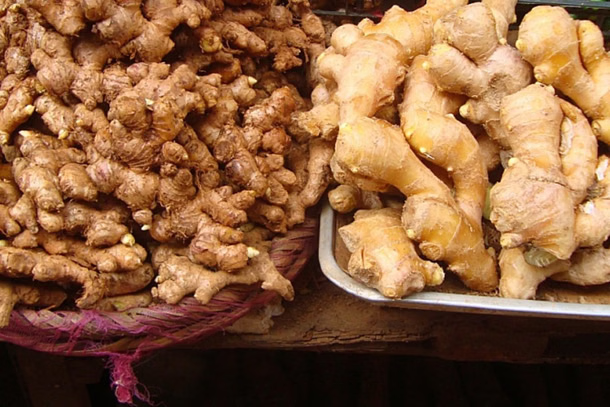
- It is a Ginger Cultivation & Value Chain Development for the State of Mizoram.
- This mission is a key component of the broader “Brand North East” vision, which assigns specific USPs to states, such as Sikkim (Organic State), Arunachal Pradesh (Kiwi), Tripura (Queen Pineapple), Nagaland (Coffee), and Meghalaya (Lakadong Turmeric).
- Objective – to improve farmer incomes by reducing price gaps, minimising post-harvest losses, and promoting better use of GI-certified ginger through coordinated efforts among multiple ministries.
- Mizoram is known for its Geographical Indication (GI)- certified ginger varieties.
Additional Information – Ginger
- It is one of the oldest known spices, and is esteemed for its aroma and pungency. It originated in South – East Asia
Climatic & Soil Requirements
- Climate: Warm and humid tropical climate.
- Temperature: Performs best in temperatures ranging between 19 – 28 degree celsius.
- Rainfall: Requires moderate to high rainfall of about 150 to 250cm every year. It does not tolerate frost or prolonged waterlogging.
- Soil: Loose, fertile, well-drained sandy loam or clay loam rich in organic matter.
- Global Standing: India is the largest producer of ginger in the world. Major producing states include Kerala, Odisha, Meghalaya, West Bengal, and Arunachal Pradesh.


















Leave a Reply