
India’s Cultural Diplomacy Through Gifts
Syllabus: GS2/ International Relations
Context
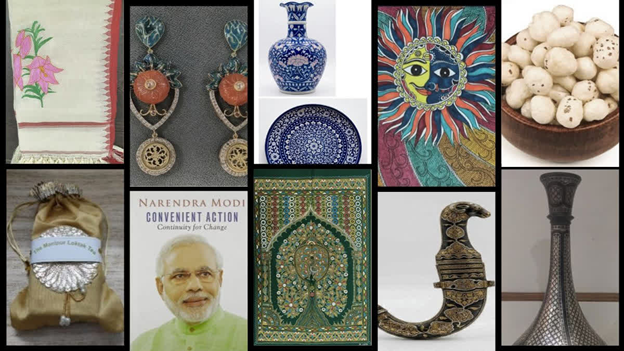
- PM Modi gifted traditional Indian handicrafts, textiles, and regional artefacts to world leaders during his five-nation diplomatic tour covering the United Arab Emirates, Sweden, Norway, Netherlands, and Italy.
Gifts Presented to World Leaders
- Italian PM Giorgia Meloni received a Muga silk stole from Assam and an off-white Shirui Lily silk stole from Manipur.
- Muga silk, known as the “golden silk” of Assam, is a rare textile produced in the Brahmaputra Valley without artificial dyes.
- The Shirui Lily silk stole derives inspiration from the Shirui Kashong Peak of Manipur and the rare Shirui Lily flower.
- Queen Máxima of the Netherlands was gifted Meenakari and Kundan earrings from Rajasthan.
- Norwegian Leader Jonas Gahr Støre received a pressed orchid painting and orchid paperweights made from real pressed orchids and ferns of Sikkim.
- Harald V was presented with a silver sailboat model crafted using Tarakasi, the traditional silver filigree art of Cuttack, Odisha.
- Swedish Prime Minister Ulf Kristersson received a Santiniketan messenger bag from West Bengal along with works of Rabindranath Tagore.
- UAE President Sheikh Mohamed bin Zayed Al Nahyan received a Rogan painting featuring the “Tree of Life” motif from Gujarat.
- Rogan art is a rare textile painting tradition from the Kutch region of Gujarat.
- A box of Kesar mangoes from Junagadh, Gujarat, was also presented.
Arunachal Kiwi Mission
Syllabus: GS3/ Agriculture
Context
- The Union Minister for Development of North Eastern Region launched a Mission on “Arunachal Kiwi: The USP of Arunachal Pradesh”.
Mission on Arunachal Kiwi
- Objective – to strengthen the entire kiwi value chain – from cultivation and post-harvest management to branding, exports and agri-tourism.
- Significance – The mission aims to promote kiwi orchard tourism and farm-stay experiences in areas such as Ziro Valley and Dirang, combining horticulture with experiential tourism.
- Note – Arunachal Pradesh currently contributes more than 50 percent of India’s kiwi production, producing over 7,050 metric tonnes annually.
Kiwi or Chinese gooseberry (Actinidia deliciosa)
- It is a nutrient-rich woody deciduous vine native to eastern Asia.
- It is known for its fuzzy brown skin, green/golden flesh, and edible black seeds.
- It requires 700–800 chilling hours below 7°C during winter and best suited to mid-hill regions (800–1,500 m altitude).
- It begins fruiting in 4–5 years and attains full commercial production by 7–8 years.
Sperm Whales
Syllabus: GS3/Species in News
Context
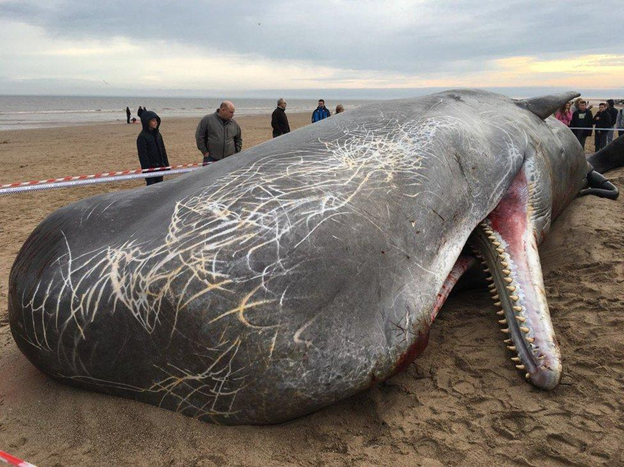
- Researchers have revealed that sperm whales, which communicate using clicking sounds, also vary the sounds in ways that resemble how humans use vowels.
Sperm whale (Physeter macrocephalus).
- Sperm whales got their name because the semi-liquid, waxy substance in their head was first believed to be sperm.
- Distribution: They occur throughout the world’s oceans and in the Mediterranean Sea.
- Appearance: It is a large, dark-colored, toothed whale with a massive, square-shaped head that can make up more than a third of its body length.
- Sperm whales are the largest of the toothed whales.
- Threats: Deep-sea oil and gas exploration can cause multiple issues, such as loss of hearing, water pollution from hydrocarbons, and increased risk of being hit by ocean vessels.
- Conservation Status: IUCN Vulnerable.
- Protected under Schedule 2 of the Wildlife Protection Act and possession or trade of any of its by-products, including Ambergris, is illegal.
- They are listed in Appendix I of the CITES (Convention on International Trade in Endangered Species of Wild Fauna and Flora).
- However, ambergris is not covered in CITES provisions as it is considered a naturally excreted waste product and trade of which is legal in many countries.
Ambergris
- Ambergris means grey amber in French, is a waxy substance that originates from the digestive system of sperm whales.
- Due to its high value in the market, ambergris is often called the ‘floating gold’ and ‘treasure of the sea’.
Sample Registration Survey 2024
Syllabus: GS2/Health
Context
- The recent Sample Registration Survey 2024 was released by the Office of the Registrar General of India (ORGI).
The Sample Registration System (SRS)
- It provides reliable annual estimates of Infant Mortality Rate, Birth Rate, Death Rate and other Fertility & Mortality Indicators at the National and subNational levels.
- Conducted by – Registrar General of India.
Major Findings
- Birth Rate: It is live births per 1,000 population, it fell from 21 in 2014 to 18.3 in 2024.
- The number declined from 14.9 to 14.7 in urban areas and from 20.3 to 20.2 in rural areas.
- The highest Birth Rate was observed at 26.8 in Bihar, whereas Andaman & Nicobar Islands had the lowest Birth Rate of 9.9.
- Death Rate: It is deaths per 1,000 people, it is down from 6.7 to 6.4.
- In 2024, Chhattisgarh recorded the highest Death Rate of 8.4, whereas the lowest Death Rate was recorded in Chandigarh at 3.9.
- Infant Mortality Rate: The Infant Mortality Rate (IMR) is the number of deaths of children under one year of age per 1,000 live births in a given year.
- The present level of IMR (24 infant deaths per thousand live births, for the year 2024) is less than one-fifth as compared to 1971. In the last ten years, IMR has witnessed a decline of about 38%.
- In 2024, the maximum IMR was reported in Chhattisgarh (36) and the minimum in Manipur (2).
Government Initiatives to Curb Infant Mortality in India
- Janani Shishu Suraksha Karyakram (JSSK) – It includes free drugs, consumables, free diet during the stay, free diagnostics, free transportation, and free blood transfusion if required.
- Pradhan Mantri Surakshit Matritva Abhiyan (PMSMA) provides pregnant women a fixed day, free of cost, assured and quality antenatal checkup by a Specialist/Medical Officer on the 9th day of every month.
- Mission Indradhanush: It was launched in 2014, aiming to achieve over 90% full immunisation coverage by strengthening routine immunisation services and targeting hard-to-reach populations.
- Rashtriya Bal Swasthya Karyakram (RBSK): Children from 0 to 18 years of age are screened for 32 health conditions (i.e. Diseases, Deficiencies, Defects, and Developmental delays) under RBSK to improve child survival.
- Nutrition Rehabilitation Centres (NRCs) are established at public health facilities where children with Severe Acute Malnutrition (SAM) and medical complications are admitted for treatment.

Leave a Reply