
Birsa Munda
Art & Culture
Context
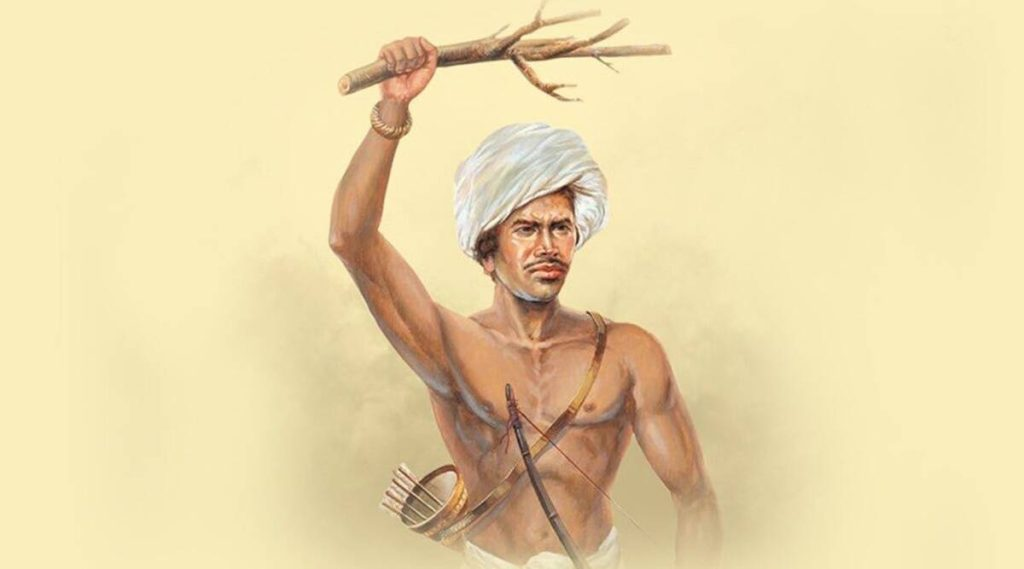
- PM Modi paid tributes to Dharti Aaba Bhagwan Birsa Munda Ji on his martyrdom day.
Birsa Munda
- He was born in 1874 in Ulihatu village, Jharkhand and was a spiritual reformer and freedom fighter.
- He is Known as Dharti Aaba (“Father of the Earth”).
- He led the Ulgulan or “Great Tumult” (1899–1900) (also called Munda Rebellion (1895–1900)) which was a fierce movement for tribal self-rule and the restoration of Khuntkatti (community land rights).
- He united the Munda tribes against British land laws and feudal exploitation.
- He envisioned a moral, self-governed society free from colonial influence.
- He was captured and martyred in Ranchi Jail at the age of 25.
Janjatiya Gaurav Divas
- Janjatiya Gaurav Divas is dedicated to remembering the contributions of tribal freedom fighters for the country.
- This day will now be celebrated every year.
- It would recognize the efforts of the tribals for the preservation of cultural heritage and would help the coming generations know about the sacrifices made by the tribals for the country.
- November 15th chosen for Janjatiya Gaurav Divas – The date is the birth anniversary of Sri Birsa Munda who is revered as Bhagwan by tribal communities across the country.
PM Janjati Adivasi Nyaya Maha Abhiyan
- Objective – To ensure last-mile welfare scheme delivery and protection for Particularly Vulnerable Tribal Groups (PVTGs).
- Viksit Bharat Sankalp Yatra – It is a nationwide programme to reach out to all villages and include those eligible for various central schemes.
Hindu Kush Himalaya
Geography
Context
- The HKH Monsoon Outlook 2026, projects below-normal rainfall and above-normal temperatures across the Hindu Kush Himalaya (HKH) region during the 2026 monsoon season.
Hindu Kush Himalaya (HKH)
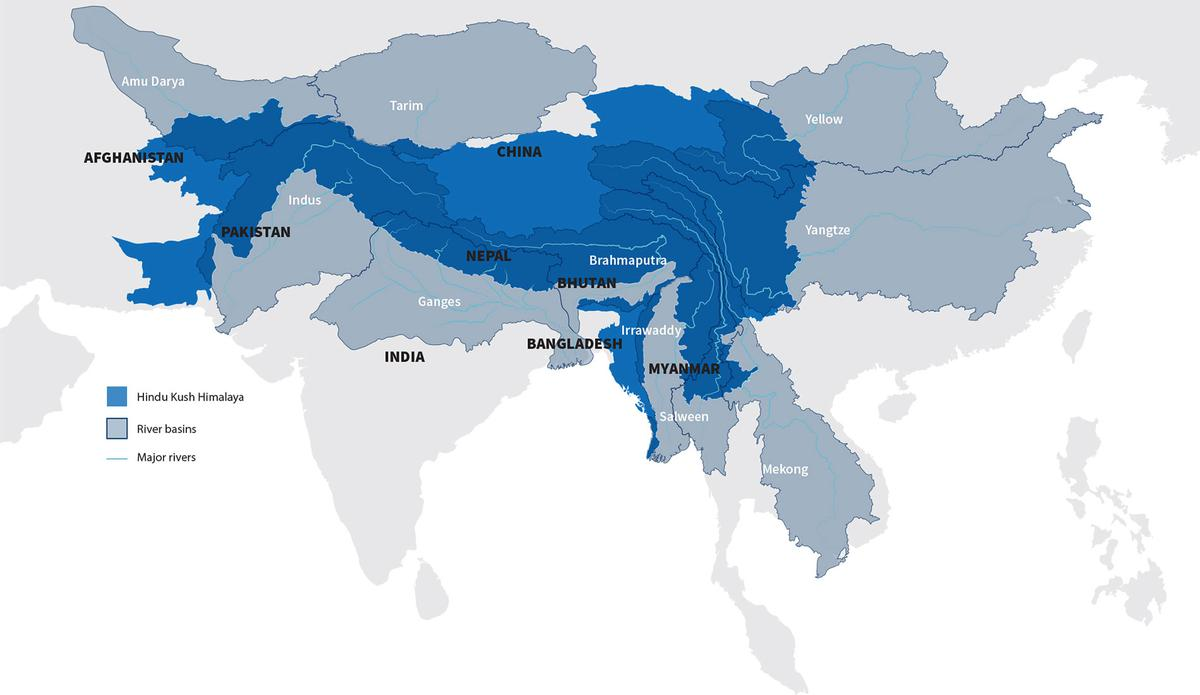
- The HKH mountains extend around 3,500 km over eight countries — Afghanistan, Bangladesh, Bhutan, China, India, Nepal, Myanmar, and Pakistan.
- These mountains are also called the “water towers of Asia” because they are the origins of 10 crucial river systems on the continent — Amu Darya, Indus, Ganga, Brahmaputra, Irrawaddy, Salween, Mekong, Yangtse, Yellow river, and Tarim.
- These river basins provide water to almost one-fourth of the world’s population and are a significant freshwater source for 240 million people in the HKH region.
Coal Exchange Rules, 2026
Economy
Context
- The Ministry of Coal has notified the Coal Exchange Rules, 2026, paving the way for the establishment of Coal Exchanges in the country to enable transparent and market-driven coal trading.
Coal Exchange
- A Coal Exchange is an electronic marketplace where coal producers, consumers, traders, and other participants can buy and sell coal through transparent trading mechanisms.
- Significance – It facilitates efficient price discovery based on market demand and supply conditions.
Coal Sector in India
- India is the world’s second-largest producer and consumer of coal.
- India has the fifth-largest coal reserves globally.
- Coal accounts for around 55% of India’s primary commercial energy requirement and about 70% of electricity generation.
- Major coal-producing regions are concentrated in states such as Odisha, Jharkhand, Chhattisgarh, Madhya Pradesh, and West Bengal
Dark Patterns
Science and Technology
Context
- According to a report, Indian consumers are losing an estimated ₹25,000 crore to ₹28,000 crore annually due to dark patterns, across online marketplaces.
About
- Definition – Dark patterns are user interface or user experience designs that manipulate, pressure, or mislead people into making choices they might not otherwise make.
- The term ‘dark patterns’ was coined by Harry Brignull in 2010.
- It encompasses a wide range of manipulative practices such as drip pricing, disguised advertising, bait and click, choice manipulation, false urgency and privacy concerns.
Dark patterns can:
- Undermine informed consent.
- Reduce user autonomy.
- Lead to unintended purchases or data sharing.
- Erode trust in products and companies.
India’s Laws Related to Dark Patterns
- Consumer Protection Act, 2019 & CCPA Guidelines, 2023: The Consumer Protection Act empowers the Central Consumer Protection Authority (CCPA) to curb unfair trade practices.
- The CCPA’s Guidelines for Prevention and Regulation of Dark Patterns, 2023 explicitly prohibit deceptive practices such as false urgency, basket sneaking, confirm shaming, and subscription traps.
- Consumer Protection (E-Commerce) Rules, 2020: Require transparency in pricing, advertisements, and terms of sale, and prohibit misleading practices on e-commerce platforms.
- Digital Personal Data Protection Act, 2023: Mandates free, informed, and unambiguous user consent for data processing, thereby discouraging dark patterns that manipulate users into sharing personal data.
Summer Air Pollution and Ground-Level Ozone
Environment
Context
- Several Indian cities witnessed severe summer air pollution in 2026, leading to the reimposition of Stage-I restrictions under GRAP in Delhi.
Summer Causes Ground-Level Ozone
- Ground-level ozone is a secondary pollutant and is not released directly into the air.
- Formation – It forms when Nitrogen Oxides (NOx) from vehicles and Volatile Organic Compounds (VOCs) from industries, paints, solvents, and fuel emissions react under strong sunligh
- Hot summer conditions and heatwaves accelerate this reaction, causing high ozone levels during daytime.
- Ozone and particulate matter can cause serious respiratory illnesses, especially among children, the elderly, and people with lung diseases.
Graded Response Action Plan (GRAP)
- Objective – It is a set of emergency measures implemented in Delhi-NCR to control air pollution based on the Air Quality Index (AQI) levels.
- Implementation – It was formulated by the Environment Pollution (Prevention & Control) Authority (EPCA) and enforced by CAQM from 2021.
GRAP is divided into four stages corresponding to AQI levels:
- Stage I – Poor (AQI 201–300)
- Stage II – Very Poor (AQI 301–400)
- Stage III – Severe (AQI 401–450)
- Stage IV – Severe+ (AQI >450)
Additional Information – Commission for Air Quality Management
- Constituted under: The Commission for Air Quality Management in NCR and Adjoining Areas Act, 2021.
- Jurisdiction: Delhi, Haryana, Punjab, Rajasthan, and Uttar Pradesh.
- Purpose: To coordinate and implement region-wide measures for air quality improvement, replacing the earlier EPCA.
Southwest Monsoon
Geography
Context
- The India Meteorological Department (IMD) confirmed the arrival of the southwest monsoon in Kerala (June 4, 2026).
- This marks the official start of the rainy season in India.
Southwest Monsoon
- Onset and Retreat: The monsoon season in India generally starts in early June and lasts until September.
- The onset of the monsoon is marked by the arrival of the southwest monsoon winds, which bring moisture-laden air from the Indian Ocean.
- The withdrawal or retreat of the monsoon typically begins in October.
- The northeast monsoon, occurring from October to December, brings rainfall to parts of southern India.
- Monsoon Dynamics: Factors such as the El Niño and La Niña phenomena can influence the strength and distribution of the monsoon.
- Agricultural Impact: The success of the monsoon directly influences crop yields and, consequently, the overall economy of the country.
Connect with the basics- Difference between El Niño and La Niña
|
Feature |
El Niño (Warm Phase) |
La Niña (Cold Phase) |
|
Meaning |
Spanish for “Little Boy” |
Spanish for “Little Girl” |
|
Ocean Temp. |
Abnormal warming of eastern Pacific |
Abnormal cooling of eastern Pacific |
|
Trade Winds |
Weaken or reverse direction |
Become unusually strong |
|
Indian Monsoon |
Weakens monsoon; often leads to droughts |
Strengthens monsoon; brings heavy rainfall |
|
Winter in India |
Generally warmer/milder winters |
Severely cold winters in North India |
|
Frequency |
Occurs every 2–7 years; lasts 9–12 months |
Occurs every 2–7 years; can last 1–3 years |
Connect with the basics- Difference between El Niño and La Niña
Navachar Mantra Initiative
Economy
News
- Navachar Mantra is a national initiative launched by the Union Minister at IIT Delhi.
Navachar Mantra Initiative
- Launched by – Ministry of Skill Development and Entrepreneurship (MSDE)
- Objective – to identify, mentor, and scale grassroots innovations originating from Tier-2, Tier-3, and rural India
Key Features
- Target Demographic: Open to Indian citizens aged 18 to 55 residing in aspirational districts and underserved rural or semi-urban geographies.
- Eligibility: Flexible criteria allow individuals with ideas in the validation or early prototype stages to apply; a registered corporate entity or finished market product is not required.
- Focus Sectors: Prioritizes high-impact verticals including Agritech, HealthTech & Wellness, EdTech, Climate Action, Rural Commerce, and MSME Enablement.
Price Stabilisation Fund
Economy
Context
- The Union Cabinet has approved a one-time budgetary support of up to ₹10,000 crore for Oil Marketing Companies (OMCs) to provide Aviation Turbine Fuel (ATF) price stabilisation support to Scheduled Indian Airlines.
Aviation Turbine Fuel (ATF) Price Stabilisation Fund
- Financial outlay – ₹10,000 crore
- Objective – It protects Indian airlines from sudden jumps in fuel prices.
How It Works
- Fixed Price: The fund pays oil companies to keep jet fuel prices steady for local airlines.
- The Buffer: When global oil prices go up, the fund covers the extra cost. When prices go down, the money goes back into the fund.
- Rules: Airlines must sign a 36-month deal to buy fuel only from participating oil companies. Foreign airlines cannot use this fund
E85 Fuel Adoption in India
Environment
Context
- The Union Government is considering a policy framework to support the affordable adoption of E85 fuel in India.
E85 Fuel
- E85 is a fuel blend containing 85% ethanol and 15% petrol.
- It can be used in specially designed flex-fuel vehicles (FFVs) that can operate on varying ethanol-petrol blends.
- These vehicles are equipped with modified engines and fuel systems that can automatically adjust to different fuel compositions.
Why is India Promoting E85?
- Enhancing Energy Security: Greater ethanol use can reduce India’s dependence on imported crude oil.
- Reducing Import Bill: If just 1% of annual petrol vehicle sales shift to E85 during the 2026–27 ethanol supply year, India could save around ₹195 crore in foreign exchange.
- Supporting Farmers and Rural Economy: Increased adoption of E85 could generate demand for more than 4 crore litres of ethanol.
- Environmental Benefits: E85 adoption at the projected level could result in a net reduction of nearly 0.86 LMT of CO₂ emissions.
Ethanol
- Ethanol is9% pure alcohol that can be blended with petrol. It can be produced from sugarcane, maize, wheat, etc which are having high starch content.
Ethanol Blending
- Ethanol blending refers to the practice of mixing ethanol with gasoline to create a fuel mixture that can be used in internal combustion engines.
There are a few common blends:
- E10: This is a mixture of 10% ethanol and 90% gasoline. It is the most common blend and is used widely in many countries.
- E15: This blend contains 15% ethanol and 85% gasoline.
- E85: This is a high-ethanol blend, consisting of 85% ethanol and 15% gasoline. It’s used in flex-fuel vehicles designed to run on higher ethanol content.
















Leave a Reply