
Pre-Conception and Pre-Natal Diagnostic Techniques (PCPNDT) Act
Polity
Context
- The Supreme Court underscored the need for strict enforcement of the Pre-Conception and Pre-Natal Diagnostic Techniques (PCPNDT) Act.
About –
- Objective – It is an Indian law meant to stop female foeticide and improve the child sex ratio.
Important points –
- Bans Sex Selection: It is illegal to choose or test for the sex of a baby before or after conception.
- Regulates Ultrasounds: Scans can only check for genetic disorders. Doctors cannot tell anyone the sex of the fetus.
- Mandatory Rules: All clinics must register with the government, keep strict records (Form F), and never advertise sex selection.
- Strict Punishment: Violations are non-bailable. First-time offenders face up to 3 years in jail and a ₹10,000 fine. Doctors can also lose their license
Government Initiatives to Improve Sex Ratio
- Beti Bachao Beti Padhao (BBBP): Launched in 2015, this campaign aims to address gender-based discrimination, promote the value of the girl child, and improve access to education for girls.
- It also focuses on raising awareness about the importance of girls’ welfare and preventing female foeticide.
- Sukanya Samriddhi Yojana: This is a savings scheme for the girl child, which encourages families to save for the future education and marriage of their daughters. It promotes a positive perception of girls.
- Maternity Benefits: The government has introduced maternity benefits through schemes like the Pradhan Mantri Matru Vandana Yojana (PMMVY), which provides financial assistance to pregnant women and lactating mothers, aiming to reduce the economic burden on families and support maternal and child health.
- National Health Mission (NHM): This program focuses on improving healthcare services for women, including maternal health, to reduce the mortality rate among women and girls.
Armed Forces (Special Powers) Act, 1958
Polity
Context
- Union Home Minister Amit Shah announced that the Armed Forces (Special Powers) Act (AFSPA) is likely to be withdrawn from almost the entire Northeast by 2027, except for one or two States.
Armed Forces Special Powers Act (AFSPA)
- AFSPA was originally promulgated by the British in response to the Quit India movement in 1942.
- After Independence, India decided to retain the Act, which was first brought in as an ordinance and then notified as an Act in 1958.
Where is AFSPA currently invoked?
- Imposed by – AFSPA can be imposed by the Center or the Governor of a state on the state or parts of it after it is declared “disturbed’’ under Section 3 of AFSPA Act.
- Definition of Disturbed areas – The Act defines Disturbed as areas that are “disturbed or dangerous condition that the use of armed forces in aid of the civil power is necessary’.
Powers granted by the AFSPA Act to armed forces
- The Act gives sweeping powers to the armed forces.
- It allows them to ‘open fire’, even causing death, against any person in contravention to the law or carrying arms and ammunition.
- It gives them powers to arrest individuals without warrants, on the basis of reasonable suspicion and also search premises without warrants.
- It also provides blanket immunity to security personnel involved in such operations. There can be no prosecution or legal proceedings against them without the prior approval of the Center.
- Note – The Armed Forces (Special Powers) Act (AFSPA) is currently in effect in parts of Nagaland, Manipur, Arunachal Pradesh, Assam, and Jammu & Kashmir.
SC Invokes Article 142 to Set Aside POCSO Conviction
Polity
Context
- The Supreme Court invoked its extraordinary powers under Article 142 of the Constitution to set aside the conviction of a man under the Protection of Children from Sexual Offences Act, 2012 (POCSO Act).
Article 142 of Indian Constitution
- Article 142 of the Indian Constitution grants the Supreme Court extraordinary power to pass any decree or order necessary to do “complete justice” in any pending matter.
- Significance – It is designed to bridge statutory gaps and provide equitable relief where strict adherence to existing laws might lead to unfair outcomes.
Protection of Children from Sexual Offences (POCSO) Act, 2012
- It was introduced by the Ministry of Women and Child Development to protect children from sexual abuse and exploitation.
- The Act criminalises both penetrative and non-penetrative sexual assault, sexual harassment, and child pornography, and applies to all children below 18 years of age.
- POCSO is a gender-neutral law and states that minors cannot give valid consent for sexual activity.
- It ensures child-friendly legal procedures, including special courts, private hearings (in-camera trials), and video-recorded testimonies.
- The Act also punishes those involved in child trafficking for sexual purposes and allows strict penalties based on the seriousness of the crime.
- Source: TH
Shigellosis Outbreak in Kerala
Health
Context
- Kerala has reported 85 confirmed cases and over 70 probable cases of shigellosis (bacillary dysentery) till June 2026.
Shigellosis
- Shigellosis is a highly contagious bacterial infection caused by bacteria of the genus Shigella.
- It primarily affects the intestines and causes bacillary dysentery, characterized by severe diarrhoea.
- Symptoms: Fever, diarrhoea (often with blood or mucus), vomiting and nausea, abdominal cramps etc.
- Transmission: Consumption of contaminated food and water, person-to-person contact through the fecal-oral route.
HIMARS
Science & Technology
Context
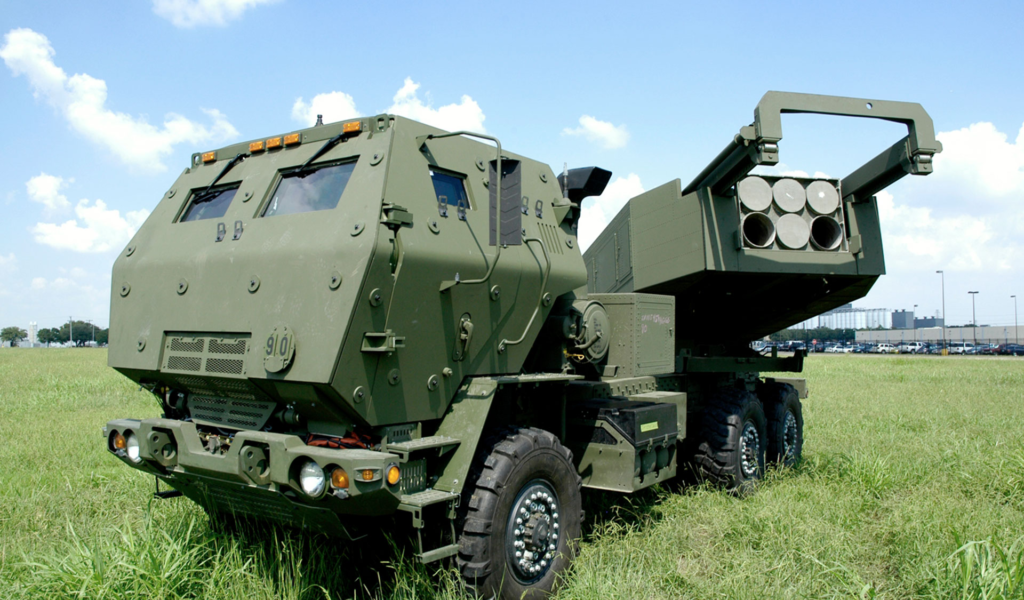
- Taiwan recently conducted its first-ever live-fire exercise using the High Mobility Artillery Rocket System (HIMARS) in the Taiwan Strait, simulating a defence scenario against a potential Chinese military threat.
HIMARS
- It is a US-supplied mobile rocket artillery system manufactured by Lockheed Martin.
- It is mounted on a six-wheeled truck, enabling rapid movement across roads and rough terrain.
- The system is known for its “shoot-and-scoot” capability, allowing it to fire rockets and quickly relocate to avoid enemy counterattacks.
- With a range of around 300 km, HIMARS can strike targets across the Taiwan Strait, including coastal areas in China’s Fujian Province.
- Note – HIMARS has been extensively used by Ukraine during its conflict with Russia and has emerged as one of its key long-range strike systems.
Foreign Contribution (Regulation) Amendment (FCRA)
Polity
Context
- The introduction of the Foreign Contribution (Regulation) Amendment (FCRA) Bill, 2026, in the Lok Sabha has posed significant disruption risks to civil society.
Foreign Contribution (Regulation) Act
- Enacted in – It is an act of Parliament enacted in 1976 and amended in 2010.
- Objective – To regulate foreign donations and to ensure that such contributions do not adversely affect the internal security of the country.
- Applicability – The Act is applicable to all associations, groups and non-governmental organizations (NGOs) who intend to receive foreign donations.
- Restrictions – The members of legislatures, political parties, government officials, judges and media persons are prohibited from receiving any foreign contributions.
Key Provisions of the 2026 Amendment Bill
- Asset Seizure: The government can take over and sell physical assets (like hospitals or schools) built with foreign funds if an NGO’s license is cancelled or expires.
- Automatic Expiry: If an NGO does not renew its registration in time, it lapses automatically. The state can step in to control its property right away.
- Personal Liability: Key heads, directors, and trustees are held personally liable for any rules broken by the NGO.
- Central Approval: Local police or agencies cannot investigate an NGO under this law without prior approval from the Central Government.
- Lower Jail Time: The maximum jail term for breaking the law drops from 5 years to 1 year, shifting the focus to financial penalties.















Leave a Reply