
GI Recognition for Jharkhand’s Traditional Heritage
Economy
Context
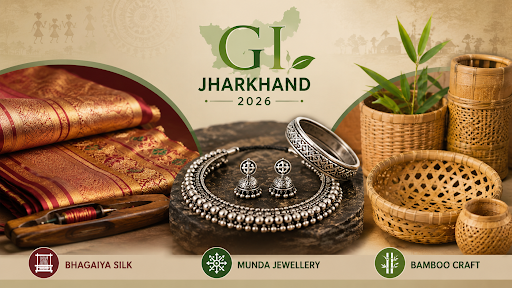
- Eleven traditional products of Jharkhand have recently been granted the Geographical Indication (GI) Tag.
GI-Tagged Products of Jharkhand
- Bhagaiya Silk: Bhagaiya Silk is produced in the Bhagaiya region of Godda district. It is known for its traditional handloom weaving techniques and high-quality silk fabric.
- Kuchai Silk: It is cultivated naturally on Asan and Arjun trees in the village of Seraikela-Kharsawan (historically known as Kuchai).
- Kesaria Kalakand: It is a traditional sweet that forms an important part of the region’s culinary heritage.
- Dokra Craft: It is one of the oldest surviving metal-casting traditions in India. It employs the traditional lost-wax casting technique to produce decorative and utility items.
- Tumka Chadar: It is a uniquely crafted shawl or bedspread sheet (chadar) woven by local tribal and artisan communities in Jharkhand.
- Baroni Paintings: It is traditional folk paintings of Jharkhand depicting local customs, nature, and tribal cultural traditions.
- Pancho Saree and Fabric: The traditional handwoven textiles of Jharkhand known for their distinctive patterns and cultural significance among local communities.
- Jadopatia Painting: It is a traditional scroll-painting art practiced by the Santhal community, depicting folklore, mythology, social customs, and cultural narratives.
- Bhoya Saree and Fabric: It is a traditional handwoven textiles of Jharkhand.
- Munda Jewellery: It is a traditional ornament crafted by the Munda tribal community. It reflects the artistic traditions and social customs of Jharkhand’s tribal population.
- Jharkhand Bamboo Craft: Bamboo Craft utilizes locally available bamboo to create utility and decorative products.
Connect with the basics – Geographical Indication or GI Tag
- It is a name or a sign given to certain products related to a specific geographical location or origins like a region, town, or country.
- A certification for unique products – GI Tag may be regarded as a certification for a particular product with certain specific qualities or has a specific reputation because of its geographical origin.
- GI Tags can be issued for wine and spirit drinks, foodstuffs, agricultural products, handicrafts, and industrial products.
- Trade-Related Aspects of Intellectual Property Rights (TRIPS) – At the International level, GI is governed by the World Trade Organisation’s (WTO’s) Agreement on Trade-Related Aspects of Intellectual Property Rights (TRIPS).
- Geographical Indications of Goods (Registration and Protection) Act – In India, Geographical Indications registration is administered by the Geographical Indications of Goods (Registration and Protection) Act, 1999, which came into force in September 2003.
- Darjeeling tea – The first product in India to be accorded with the GI tag was Darjeeling tea in 2004-05.
India and Slovakia Elevate Ties to Comprehensive Partnership
International
Context
- India and Slovakia elevated their ties to a comprehensive partnership and inked 11 agreements to expand bilateral cooperation.
About
- The visit was the first by an Indian Prime Minister to Slovakia since its independence in 1993.
- The two leaders also agreed to work towards the earliest implementation of the India-European Union free trade agreement.
- The Slovak President presented The Order of the White Double Cross (1st Class), the highest state honour of Slovakia, to Prime Minister Narendra Modi.
Slovakia
-
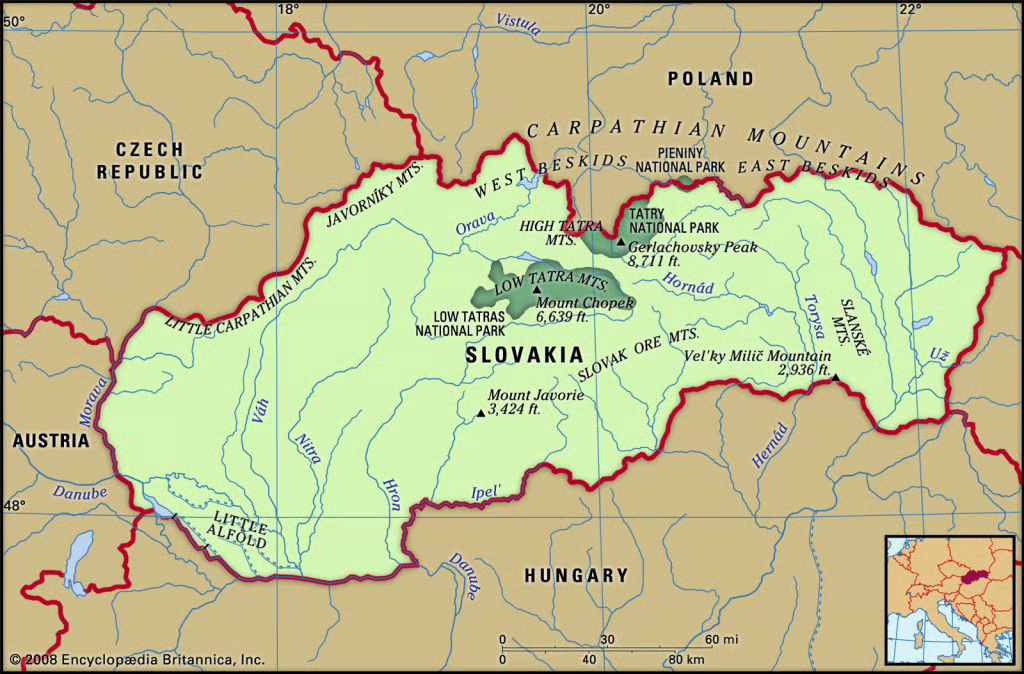
- Slovakia is a landlocked country in Central Europe.
- It became an independent state on January 1, 1993, after the peaceful dissolution of Czechoslovakia.
- Neighbouring countries – Slovakia is bordered by Poland to the north, Ukraine to the east, Hungary to the south, Austria to the southwest and the Czech Republic, lies to the west.
- Capital city – Bratislava is the only national capital in the world that directly borders two separate countries i.e. Austria and Hungary.
- Official Language: Slovak.
- Currency: Euro (€).
- It is a member of both the European Union and NATO (the North Atlantic Treaty Organization).
BRICS Indore Declaration
International
Context
- The BRICS Agriculture Ministers and officials-level meetings were held in Indore in which the ‘BRICS Indore Declaration’ was unanimously adopted.
BRICS Indore Declaration – Main Focus Areas
- Helping Small Farmers: Focuses on helping small farmers, women, and youth.
- Food Security: Working together to feed the world.
- New Technology: Using smart tools like AI and digital maps in farming.
- Safe Farming: Protecting nature with organic and natural farming.
Key Initiatives
- Digital Agriculture Network: Led by IIT Delhi to bring digital tools to farms.
- Natural Farming Centres: Led by ICAR-IIFSR to study safe farming methods.
- Farmers’ Seed Rights: A forum to protect traditional seeds and farmers’ rights.
BRICS
-
- Founded in – 2009
- HeadQuarters – Shanghai
- It is an acronym for the grouping of the world’s leading emerging economies, namely Brazil, Russia, India, China, and South Africa (included in 2010)
- Origin – The term “BRIC” was coined by the British Economist Jim O’Neill in 2001 to describe the four emerging economies of Brazil, Russia, India, and China.
- Recent Expansion (BRICS+): In 2024–2025, the bloc expanded to include Egypt, Ethiopia, Iran, the UAE, and Indonesia. Saudi Arabia has received an invitation but has not yet formalized its membership.
- Share of BRICS – BRICS brings together five of the largest developing countries, representing 41% of the global population, 24% of the global GDP, and 16% of the global trade (By 2028, BRICS is expected to make up 35 percent of the global economy)
- Chairmanship – The chairmanship of the forum is rotated annually among the members.
Initiatives of BRICS
- New Development Bank (NDB)
- Contingent Reserve Arrangement (CRA)
- BRICS Payment System
- Customs Agreements
- Constellation of Remote Sensing Satellites
New Initiative
- BRICS is planning to launch its own “new currency” system, a major step towards de-dollarization (reducing dependence on the US dollar for trade).
U.S. and Iran reach Agreement to end war, re-open Hormuz Strait
International
Context
- The U.S. and Iran have reached a preliminary agreement to end the war.
About
- The pact includes an immediate halt to military action, including in Lebanon, and a 60-day negotiation period.
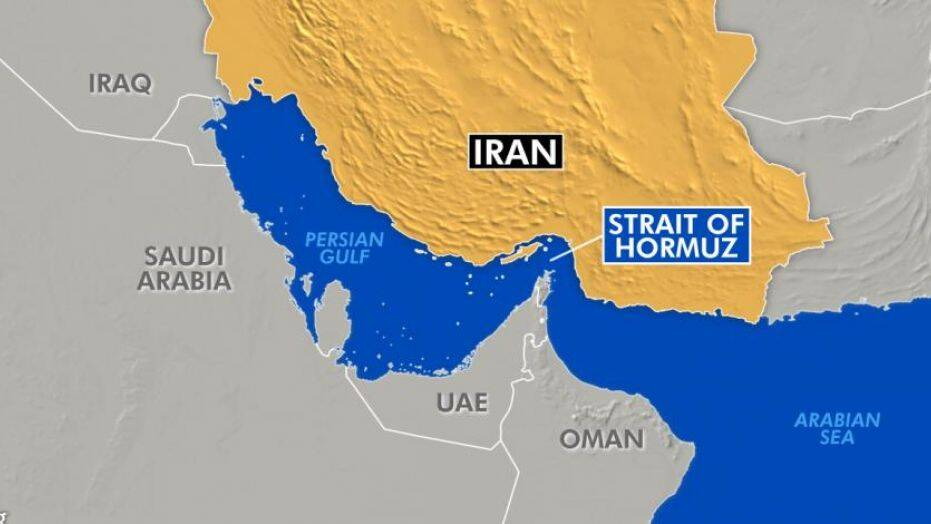
- The US has announced the removal of the US naval blockade, authorizing the reopening of the Strait of Hormuz for global shipping.
- The move would allow international maritime traffic to resume.
Strait of Hormuz
- Location – The Strait of Hormuz lies between Iran to the north and Oman and the United Arab Emirates to the south, linking the Persian Gulf with the Gulf of Oman and the Arabian Sea.
- At its narrowest point it is about 33 kilometres wide, with shipping lanes just a few kilometres across in either direction.
- Significance- Nearly half of India’s crude oil and around 60 per cent of its natural gas imports pass through the strait.
Adding Cervavac to National Immunisation Programme After 2027
GS2/ Health
In News
- The HPV vaccine developed by the Serum Institute of India (SII), with support from the Department of Biotechnology (DBT), is likely to be included in the national vaccination programme after 2027.
More about the news
- Cervavac, India’s first indigenously developed HPV vaccine, is currently administered in a two-dose schedule, which limited its inclusion in the national HPV vaccination programme.
- Earlier this year, the Ministry of Health and Family Welfare launched a nationwide HPV vaccination campaign targeting 14-year-old girls using MSD’s Gardasil vaccine.
Human papillomavirus (HPV)
-
- HPV is a common sexually transmitted infection.
- Most infections are asymptomatic and self-limiting.
- Nature: HPV is a DNA virus from the Papillomaviridae family.
Additional Information – Cervical Cancer
- Cervical cancer develops in a woman’s cervix (the entrance to the uterus from the vagina).
- Spread: Almost all cervical cancer cases (99%) are linked to infection with high-risk human papillomaviruses (HPV), an extremely common virus transmitted through sexual contact.
- Prevalence: Cervical cancer is the fourth most common cancer in women.
- It is the second most common type of cancer in India for women.
- Treatment: When diagnosed, cervical cancer is one of the most successfully treatable forms of cancer, as long as it is detected early and managed effectively.
- Vaccination: There are, at present, two vaccines available in the country against the human papillomavirus (HPV) which causes cervical cancer, namely Merck’s Gardasil and Serum Institute of India’s Cervavac.



Leave a Reply