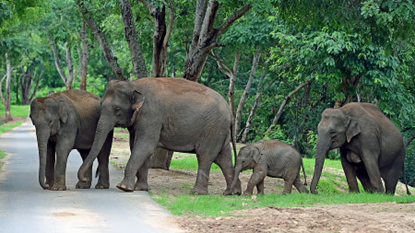
Restore ecozone around Bannerghatta: SC panel report
Why in news :
The Central Empowered Committee has recommended to restore a 2016 draft notification and cancel a 2020 notification which warrants reconsideration and shall be withdrawn by MoEFCC
Recommendations of the Central Empowered Committee (CEC)
Mandate: The committee has recommended the immediate withdrawal of the MoEFCC’s March 11, 2020 notification and the full restoration of the June 15, 2016 draft notification regarding the Eco-Sensitive Zone (ESZ) around Bannerghatta National Park (BNP).
Ecological Rationale: The recommendation aims to protect scientifically identified elephant corridors and ecologically important patches that were excluded in the 2020 notification. It argues that the adoption of a generic “one-km ESZ norm” ignores site-specific ecological requirements.
The report highlights that the ESZ was drastically reduced without scientific justification from 96 sq. km (in the 2016 draft) to 168.84 sq. km (in the 2020 final notification).
Procedural Violation: The CEC noted that the decision to reduce the ESZ was made by a Cabinet Sub-Committee in 2017, which violates Para 6.2 of the 2011 Guidelines. These guidelines require a specialized committee (Chief Wildlife Warden, Ecologist, Local Govt, and Revenue Officer) to assess ESZ extents.
Timeline: The CEC has stipulated that the entire exercise to re-notify the ESZ to its original extent must be completed within the next six months.
The Union government is considering amendments to the SARFAESI Act, 2002 to remove legal ambiguities and strengthen regulatory oversight.
SARFAESI Act, 2002
Abbreviation – Securitisation and Reconstruction of Financial Assets and Enforcement of Security Interest (SARFAESI) Act
Mandate – It provides a legal mechanism for banks and financial institutions to recover non-performing assets.
It allows lenders to enforce security interests without court or tribunal intervention.
The Act applies when the outstanding loan amount exceeds ₹1 lakh.
Recovery can be carried out by taking possession of secured assets of borrowers or guarantors.
Antarctic Penguins
Geography & Environment
In News
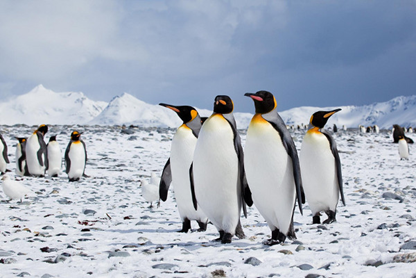
A decade-long study in Antarctica has found that penguins are shifting their breeding seasons earlier, likely due to climate change.
Penguins
Penguins are flightless birds that are highly adapted for the marine environment.
They are excellent swimmers and can dive to great depths.
They play a key role in Antarctic food chains, including bringing nutrients from deep water up to the surface, which is vital to algae being able to complete their photosynthesis.
They live primarily in the Southern Hemisphere.
Major species and IUCN Red List status
Emperor Penguin(Aptenodytes forsteri) is listed as Near Threatened
Royal Penguin(Eudyptes schlegeli )is listed as Least Concern
Adelie Penguin(Pygoscelis adeliae) listed as Least Concern
Humboldt Penguin(Spheniscus humboldti) is listed as Vulnerable
Magellanic Penguin(Spheniscus magellanicus) is listed as Least Concern
Fiordland Penguin(Eudyptes pachyrhynchus) is listed as Near Threatened
Gentoo Penguin(Pygoscelis papua)is listed as Least Concern.
Board of Peace for Gaza
International
In News
The government is considering its response to US President Donald Trump’s invitation to join the proposed Gaza Peace Board
Board of Peace
It is an international body chaired by US President Donald Trump, created to oversee the October 2025 ceasefire in the Israel-Hamas war and manage Gaza’s post-war transition.
The initiative was proposed in October 2025 and was endorsed the following month by the United Nations Security Council.
Members
Around 35 global leaders have agreed to join the proposed Board of Peace, out of about 50 invited.
Participants include key Middle Eastern allies such as Israel, Saudi Arabia, the UAE, Bahrain, Jordan, Qatar and Egypt, along with NATO members Turkey and Hungary. Several other countries across Asia, Africa, Europe and Latin America—including Pakistan, Indonesia, Vietnam, Morocco, Armenia and Azerbaijan—have also joined.
Membership terms would run for three years, with the option of renewal.
Countries seeking to extend their participation beyond the initial term may be required to contribute $1 billion, while short-term participation would not involve any financial commitment.
Mandate of Board
The Board will supervise a transitional Palestinian technocratic administration in the Gaza Strip, known as the National Committee for the Administration of Gaza (NCAG).
The Board’s mandate also includes efforts to disarm Hamas and oversee the deployment of an International Stabilization Force (ISF), a multinational peacekeeping mission tasked with maintaining security and training a new Palestinian police force.
Atal Pension Yojana (APY)
Government schemes
Context
The Union Cabinet chaired by the Prime Minister approved the continuation of Atal Pension Yojana (APY) up to FY 2030-31 along with extension of funding support for promotional and developmental activities and gap funding.
Atal Pension Yojana (APY)
It was launched in 2015
Objective – to provide old-age income security to workers in the unorganised sector.
Target Group: Initially available to all citizens of India between 18 and 40 years of age.
Scheme Features: APY offers a guaranteed minimum pension of Rs.1,000 to Rs.5,000 per month starting at age 60, based on contributions.
Administering Body: Administered by Pension Fund Regulatory and Development Authority (PFRDA).
Managed under the National Pension System (NPS)
Progress: As of January, 2026, over 8.66 crore subscribers have been enrolled, making APY a cornerstone of India’s inclusive social security framework.
C-295 aircraft
Security
In News
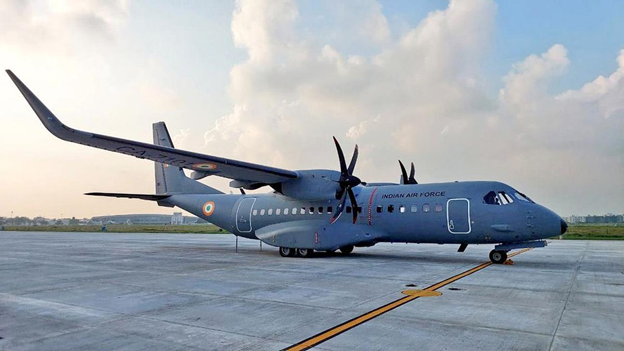
The first ‘Made in India’ C-295 aircraft from the Airbus–Tata Vadodara assembly line is set to roll out before September 2026, highlighting deepening India-Spain defence collaboration.
C295
It is a versatile, reliable tactical transport aircraft capable of troop/cargo transport, maritime patrol, surveillance, medical evacuation, and firefighting.
It carries up to 8 tonnes or 70 troops, cruises at 260 knots, and operates from short, unpaved runways.
It offers 13-hour endurance, excellent maneuverability, and fuel efficiency.
The Airbus C295 (previously CASA C-295) is a medium-range twin-engine turboprop tactical transport aircraft that was designed and initially manufactured by the Spanish aerospace company CASA, which is now part of the European multinational Airbus Defence and Space division.
Graca Machel to get Indira Gandhi Peace Prize
Syllabus: Miscellaneous
Context
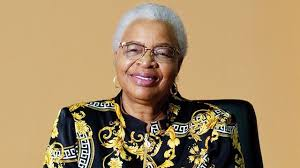
Mozambican rights activist and humanitarian Graca Machel has been selected for the Indira Gandhi Prize for Peace, Disarmament and Development for 2025, announced by the Indira Gandhi Memorial Trust.
Machel was chosen for her “path-breaking work” in the fields of education, health and nutrition, economic empowerment and humanitarian action.
Indira Gandhi Peace Prize
It is an annual award established by the Indira Gandhi Memorial Trust in India.
The prize is named in honor of the late Prime Minister of India, Indira Gandhi
It was instituted in 1986.
Prize money: Recently, the prize money has been increased from rupees 25 lakhs to rupees 1 crore.
Objective – The award is presented to individuals or organizations that have made significant contributions to peace, the development of new international economic order, and the strengthening of democracy.
Generally, the award is presented on the occasion of the birth anniversary of Indira Gandhi on November, 19th.
Categories: The award is presented in three categories:
Peace: Recognizes efforts to promote and maintain international peace and security.
Disarmament: Acknowledges contributions to the reduction and elimination of weapons of mass destruction.
Development: Honors work in promoting economic and social development.
Israel fully Legalises West Bank Outpost as New Settlement
International
Context
Israel has fully legalized the West Bank outpost as a new settlement called Yatziv.
About
The newly legalized Jewish settlement called Yatziv sits adjacent to the Palestinian town of Beit Sahour in the West Bank.
West Bank
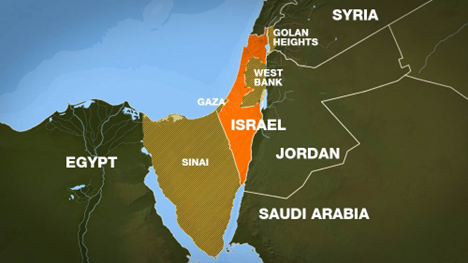
The West Bank lies to the west of the Jordan River, bordered by Israel to the west, Jordan to the east, and Jerusalem to the south-west.
Major cities include Ramallah (administrative capital of the Palestinian Authority), Hebron, Nablus, Jenin, and Bethlehem.
West Bank
1948: After the Arab-Israeli War, the West Bank was occupied and later annexed by Jordan (1949–1967).
1967: During the Six-Day War, Israel captured the West Bank from Jordan, and it has remained under varying degrees of Israeli control since.
1993–1995 Oslo Accords: These agreements created the Palestinian Authority (PA) and divided the West Bank into three areas:
Area A: Full Palestinian civil and security control.
Area B: Palestinian civil control and joint Israeli–Palestinian security.
Area C: Full Israeli control (about 60% of the West Bank).
The Palestinians seek the West Bank, captured by Israel in 1967, as part of a future state.
The Prime Minister visited Assam and attended the Bagurumba Dwhou 2026.
Bagurumba Dance
It is often referred to as the “butterfly dance”,
It is one of the most significant and graceful folk dances of Assam.
It is a mass folk dance of the Bodo community.
It was traditionally performed by young women, the dance symbolises harmony with nature, celebrating themes of fertility, peace and joy.
The dance is closely associated with the Bwisagu festival, which marks the Bodo New Year and the advent of spring.
Responsible Nations Index (RNI)
Polity and Governance
In News
India has recently introduced the Responsible Nations Index (RNI)
Responsible Nations Index (RNI)
It is a global benchmarking framework that shifts the focus from mere economic power to ethical governance, sustainability, and global responsibility in assessing national performance.
The index evaluates countries across four core dimensions ethical governance, social well-being, environmental stewardship & global responsibility
It is developed by World Intellectual Foundation (WIF) in collaboration with Jawaharlal Nehru University (JNU) & Indian Institute of Management Mumbai.
Singapore, Switzerland & Denmark topped the list & India ranks 16th globally.
Environmental Protection Fund
Geography & Environment
In News
The Union Government has formally notified comprehensive rules governing the administration and utilisation of the Environmental (Protection) Fund.
Environmental (Protection) Fund
The Environmental (Protection) Fund is a statutory, dedicated fund under the Environment (Protection) Act, 1986.
Objective – to channel monetary penalties from environmental violations into pollution control, restoration, monitoring, research, and capacity building.
Is is administered by the Ministry of Environment, Forest and Climate Change (MoEFCC) or any body notified by the Central Government
75% of penalty proceeds transferred to the Consolidated Fund of the State/UT, 25% retained by the Centre.
The Comptroller and Auditor General of India (CAG) to audit the Fund.
Chagos Islands
International
In News
The UK government defended its deal to transfer the Chagos Islands to Mauritius while retaining a lease for a strategic military base, amid criticism from US President Donald Trump.
In 2025 The United Kingdom signed an agreement handing sovereignty over the contested and strategically located Chagos Islands to Mauritius.
Chagos Archipelago
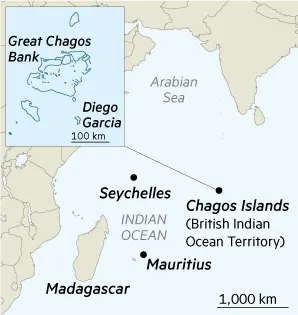
It comprises more than 60 low-lying islands in the Indian Ocean roughly 1,600 km to the northeast of the main island of Mauritius.
It was separated from Mauritius in 1965, when Mauritius was still a British colony.
Britain purchased the islands for three million pounds but Mauritius has argued that it was illegally forced to give them away as part of a deal to gain independence from Britain.
In the late 1960s, Britain invited the US to build a military base on Diego Garcia, the largest of the Chagos Islands, removing thousands of people from their homes.
Chagos archipelago
Since the 1980s, Mauritius has claimed sovereignty over the Chagos Islands.
In 2019, the UN’s International Court of Justice ruled that Mauritius’ decolonisation was incomplete at independence in 1968 and advised that the UK must end its administration of the islands as soon as possible.
Statehood Day of Manipur, Meghalaya and Tripura
Polity and Governance
Context
The President of India has extended greetings to the people of Meghalaya, Tripura and Manipur on their Statehood Day.
Manipur, Meghalaya and Tripura were granted statehood on January 21, 1972, following the enactment of the North-Eastern Areas (Reorganisation) Act, 1971.
About
Manipur: Formerly a princely state, it merged with India in 1949. It functioned as a Union Territory from 1956 until it was granted statehood.
Tripura: Also a princely state, it joined the Indian Union in 1949. Like Manipur, it was a Union Territory from 1956 before becoming a full state in 1972.
Meghalaya: Originally part of Assam, it was first made an autonomous state within Assam in 1970 before being carved out as a separate state in 1972 to recognize its unique tribal and cultural identity.
One Station One Product (OSOP)
Government schemes
In News
Indian Railways’ One Station One Product (OSOP) scheme has expanded to over 2,000 Railway Stations, empowering 1.32 Lakh Artisans.
One Station One Product (OSOP) scheme
It was launched in 2022
Objective – to promote local, indigenous, and specialised products by leveraging India’s vast railway network.
Uniqueness – The Ministry of Railways has designed the OSOP stalls to be aesthetically uniform yet locally distinct.
These stalls are often designed by the National Institute of Design (NID) to ensure they are functional and attractive to travelers.
The OSOP scheme is a key component of the PM Gati Shakti National Master Plan, which aims to provide seamless multi-modal connectivity and improve the logistics of local goods.
EU’s Anti-coercion Instrument
International
Context
The French President mentioned activating the EU’s anti-coercion instrument, after US President’s tariffs threats regarding Greenland.
European Union’s Anti-coercion instrument
It is a trade tool that the bloc adopted in 2023 but has never used.
Aim: To respond to any country using trade weapons to pressure an EU member state.
Measures:
The armoury allows the EU to take measures such as import and export restrictions on goods and services in its single market.
It also limits American companies’ access to public procurement contracts in Europe.
State-run KMIO gets ISO certification for solid waste management
Why in news
The State-run Kidwai Memorial Institute of Oncology (KMIO) has been awarded the ISO 14001:2015 Environmental Management System certification for its Solid Waste Management (SWM) facility.
Certification Details
Achieved by: The State-run Kidwai Memorial Institute of Oncology (KMIO).
Certification: The institute was awarded the ISO 14001:2015 Environmental Management System certification for its Solid Waste Management (SWM) facility in December 2025.
Significance: This recognition makes Kidwai one of the few hospitals in the country to comply with international environmental standards, marking a major milestone in adopting environmentally responsible practices in public-sector healthcare.
Operational Mechanism
Purpose: The initiative aims to scientifically reorganize the handling of waste generated within the tertiary care facility, a process that began in March 2020.
Mechanism: The modern SWM facility was established under a 10-year Build–Own–Operate–Transfer (BOOT) model.
Process: The facility was developed following a transparent tender process balancing cost and environmental standards, and the certification followed an independent audit conducted in 2025.
Tariff Threat Over Greenland May Imperil EU Trade Deal
International
In News
EU lawmakers are moving to delay or block approval of the EU–US trade deal after US President Donald Trump threatened tariffs on countries supporting Greenland’s sovereignty.
Greenland
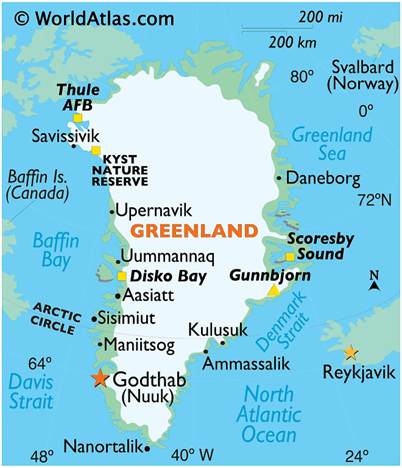
It is located in the Northern Hemisphere and is surrounded by the Arctic Ocean in the north, the North Atlantic Ocean in the south, Baffin Bay in the west and the Greenland Sea in the east.
It lies closer to North America, but culturally and politically it is tied to Denmark.
Resources: It is mineral-rich with large deposits of gold, nickel, and cobalt.
It also has some of the biggest reserves of rare earth minerals such as dysprosium, praseodymium, neodymium, and terbium.
Governance : Greenland gained home rule in 1979 and expanded self-government in 2009, giving it authority over domestic affairs like healthcare and education.
Denmark retains control over defense, foreign policy and monetary policy.
Major powers are eyeing Greenland
Greenland, part of North Atlantic Treaty Organization (NATO) through the membership of Denmark, has strategic significance for the US military and for its ballistic missile early-warning system since the shortest route from Europe to North America runs via the Arctic island.
China has shown strong interest in Greenland’s rare mineral resources, and infrastructural projects.
Green Aluminium
Geography & Environment
In News
NALCO CMD said India’s aluminium sector is not yet ready for green aluminium under the EU’s CBAM due to high power costs and dependence on thermal energy.
Do you know?
India is the 2nd largest Aluminium producer after China, and top-10 producer in refined copper.
Applications of Aluminium – It is widely used across power, transport, construction, packaging, machinery, aerospace and consumer goods, and demand is rising, especially in automobiles, housing, solar energy and power transmission.
Green Aluminium
It refers to aluminium produced using methods that minimize greenhouse gas emissions and environmental impact.
Traditional aluminium production is energy-intensive and relies heavily on fossil fuels, contributing to carbon emissions.
Green aluminium is manufactured using renewable energy sources, recycled materials, and innovative technologies to reduce its environmental footprint.
Importance
Green aluminium significantly cuts carbon emissions, saves energy through recycling, and supports a circular economy by reducing waste.
It enhances corporate sustainability credentials while retaining aluminium’s key qualities—lightweight, durable, corrosion-resistant, and versatile—without compromising performance.
IMEC’s Relevance to India and its Chokepoints
International
Context
The current reciprocal tariff policies and protectionism by the US is a bad sign for the development of a multi-state, multimodal transport and trade corridor like the India–Middle East–Europe Economic Corridor (IMEC).
India-Middle East EU Economic Corridor (IMEC)
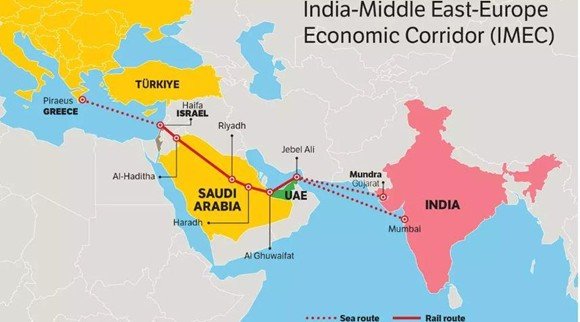
Background: The IMEC is a proposed 4,800 km long route that was announced in 2023 on the sidelines of the G20 Summit.
Members: India, European Union, France, Germany, Italy, Saudi Arabia, UAE and US.
Aim: Integration of Asia, Europe and the Middle East.
The IMEC will comprise of two separate corridors:
The east corridor connecting India to the West Asia/Middle East and
The northern corridor connecting West Asia/Middle East to Europe.
IMEC’s Relevance To India and Its Chokepoints
Suez Canal Blockage (2021): It was blocked by the massive container ship, leaving several vessels stranded.
This disruption impacted nearly 12 percent of global trade until a major salvage operation successfully freed it.
Red Sea Crisis (2023-24): It was caused by the Houthis’ attacks on commercial shipping, exposing the fragility of over-concentrated trade routes.
Nearly a quarter of India’s cargo transiting the Red Sea faced delays.
Significance of IMEC for India
Economic Development: By linking Asia, West Asia, the Middle East and Europe through enhanced connectivity and economic integration, the corridor aims to give a boost to economic development in the regions.
Enhances India’s Connectivity and Trade Access: IMEC provides India with a direct, faster, and safer trade route connecting Indian ports to Europe via the Arabian Peninsula and the Mediterranean.
Reduces dependence on the Suez Canal route, cutting shipping time by up to 40% and costs by 20–30%.
Child Trafficking in India
Polity and Governance
Context
Child trafficking continues to be a grave human rights challenge in India, despite a robust constitutional framework and multiple statutory protections.
Child Trafficking
Section 143 of Bhartiya Nyaya Sanhita (BNS) 2023 defines trafficking as; recruitment, transportation, harbouring, transfer or receipt of persons for exploitation.
The means include threats, force, coercion, abduction, fraud, deception, abuse of power, or inducement.
Scope of exploitation includes, physical and sexual exploitation, slavery, servitude and forced labour, forced removal of organs.
Constitutional Safeguards in India
Article 21: Ensures the right to life and personal liberty, which has been interpreted to include the right to live with dignity.
Article 23: Prohibits trafficking in human beings and forced labor.
Article 24: Prohibits employment of children below 14 years in hazardous industries.
Article 39(e): The state should ensure that the health and strength of workers and children are not abused, and that citizens are not forced to take jobs that are not suitable for their age or strength.
Article 39(f): Mandates opportunities for children to develop in conditions of freedom, dignity, and protection from moral and material abandonment.
Judicial Intervention against child trafficking
In Vishal Jeet versus Union of India, 1990 the court held that trafficking and child prostitution are serious socio-economic problems and hence a preventive and humanistic approach is essential to deal with them.
In C. Mehta versus State of Tamil Nadu, 1996, the Court issued guidelines with a view to prohibiting employment of children in hazardous industries.
In Bachpan Bachao Andolan versus Union of India, 2011, the Supreme court issued directions to address widespread exploitation and trafficking of children.
The Supreme Court in P. Kiran Kumar versus State has given strict guidelines to prevent such offences, and held that trafficking grossly violates children’s fundamental right to life as guaranteed by the Constitution.
Laws governing anti-trafficking crimes
The Immoral Traffic (Prevention) Act, 1956 is targeted at stopping immoral trafficking and sex work. It went through two amendments, in 1978 and 1986.
The Child Labour (Prohibition and Regulation) Act, 1986, prevents children from partaking in certain employments and regulates the conditions of work for children in other fields.
The Bonded Labour System (Abolition) Act, 1976, prohibits systems of labour where people, including children, work under conditions of servitude to pay off debt, and also provides a framework for rehabilitating released labourers.
The Juvenile Justice (Care and Protection of Children) Act 2015, which governs laws relating to children alleged and found to be in conflict with law.
Protection of Children from Sexual Offences (POCSO) Act, 2012, which seeks to prevent commercial sexual exploitation of children.
Minister for Revenue Krishna Byre Gowda launched the Bhu Suraksha Project to expand the digitisation of land records to the offices of Assistant Commissioners (ACs) and Deputy Commissioners (DCs)
About the Bhu Suraksha project
Aim : To curb malpractice, prevent the creation of fake entries or forged documents, and improve transparency by expanding the digitization of land records to higher administrative levels.
Launched by: The Revenue Department, Government of Karnataka.
Scope: The project expands the digitization drive from taluk offices to the offices of Assistant Commissioners (ACs) and Deputy Commissioners (DCs) across the State.
Mechanism: The initiative involves the systematic scanning and permanent digital preservation of original revenue records to ensure data integrity.
Timeline: The project aims to complete the scanning of all remaining pages within the next three to four months.
Current status : Karnataka holds an estimated 100 crore pages of land records, of which 62 crore pages have already been scanned. Computerization has been fully completed in 70 of the State’s 240 taluks.
India’s power distribution utilities have recorded a collective Profit After Tax (PAT) of ₹2,701 crore in FY 2024–25.
India’s Power Sector
India is the third-largest producer and consumer of electricity in the world, with an installed capacity of 476 GW as of June 2025.
India ranks fourth globally in renewable energy installed capacity, fourth in wind power, and third in solar power as of 2025.
Electricity consumption remains led by industry at 41.8%, followed by households at 24.3%, agriculture at 17%, and commercial use at 8.3%.
India achieved 100% village electrification by 2018 and has since connected more than 2.8 crore households to the grid.
Government Initiatives
National Solar Mission (NSM): It was launched in 2010, it has set ambitious targets for solar capacity installation, including grid-connected and off-grid solar power projects.
National Clean Energy Fund (NCEF): It was established to support research and innovation in clean energy technologies and projects that help in reducing greenhouse gas emissions.
National Wind Energy Mission: Focuses on the development and expansion of wind energy in India. The target for wind energy capacity is set at 140 GW by 2030.
PM-KUSUM Scheme for solarizing agricultural pumps.
Revamped Distribution Sector Scheme (RDSS) to strengthen DISCOMs.
BRICS Plus Naval Exercise
International
In News
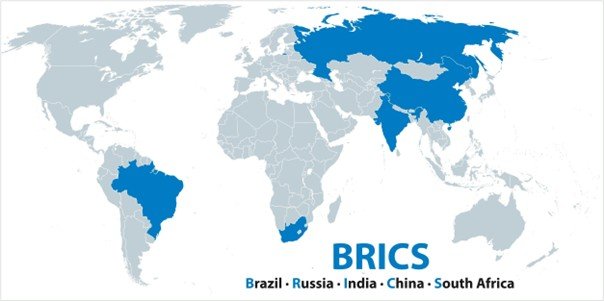
India skipped the BRICS Plus naval exercise “Will for Peace 2026” hosted by South Africa, opting out entirely despite holding the BRICS chair this year.
India clarified that such naval drills are not institutionalised activities of BRICS, but ad-hoc initiatives, and therefore participation is not automatic or obligatory.
BRICS Plus Naval Exercises
BRICS Plus naval exercises are ad-hoc maritime drills involving BRICS members and selected non-BRICS partner countries.
They are not mandated under the BRICS framework and do not form part of official BRICS mechanisms.
Led by China, the exercise features active naval participation from Russia, Iran, the United Arab Emirates (UAE), and South Africa.
BRICS
Founded in – 2009
HeadQuarters – Shanghai
It is an acronym for the grouping of the world’s leading emerging economies, namely Brazil, Russia, India, China, and South Africa (included in 2010)
Origin – The term “BRIC” was coined by the British Economist Jim O’Neill in 2001 to describe the four emerging economies of Brazil, Russia, India, and China.
Member Countries: The group includes the five original members (Brazil, Russia, India, China, and South Africa) and six members admitted during the 2024-25 expansion (Egypt, Ethiopia, Indonesia, Iran, Saudi Arabia, and the United Arab Emirates).
Share of BRICS – BRICS brings together five of the largest developing countries, representing 41% of the global population, 24% of the global GDP, and 16% of the global trade (By 2028, BRICS is expected to make up 35 percent of the global economy)
Financial Arm: The New Development Bank (NDB) acts as the group’s primary international financial organization to support infrastructure and sustainable projects.
India’s First-ever Open-sea Marine Fish Farming Project
Economy
Context
The government launched India’s first-ever open-sea Marine Fish Farming project from the Andaman Sea.
About
Implementation – The project is a collaboration between the Ministry of Earth Sciences, the National Institute of Ocean Technology (NIOT), and Andaman and Nicobar Islands.
The pilot initiative focuses on open-sea cultivation of marine finfish and seaweed in natural ocean conditions, integrating scientific innovation with livelihood generation.
The project aims to boost seafood production and reduce pressure on coastal fishing.
Open-sea Fish Farming
Open-sea marine fish farming refers to the cultivation of marine fish species in offshore waters, away from the coastline.
It is done using cages, or submersible systems designed to withstand high waves, currents, and wind conditions.
Open-sea marine fish farming holds significant potential for sustainable fisheries, livelihood security, and blue economy expansion.
80 Years of Economic and Social Council (ECOSOC)
International
In News
The United Nations Economic and Social Council (ECOSOC) completed 80 years of its functioning.
United Nations Economic and Social Council (ECOSOC)
It is one of the six principal organs of the United Nations, acting as the central forum for international economic, social and environmental policy coordination.
Command centre launched to address man-animal conflict
Why in news
Karnataka Forest Department launches tech-driven command centre to address human-animal conflict.
Launch & Objective
Launched by: The Karnataka Forest Department (KFD).
Aim: To enhance the monitoring and management of human-animal conflict incidents through the deployment of advanced technological tools.
Infrastructure & Technology
Central Hub: The initiative centers on a new Integrated Command and Control Centre (ICCC) in Bengaluru.
Network: The ICCC serves as a central hub connecting 11 Divisional Command and Control Centres (DCCC) across the State.
Mechanism: The system employs GPS-based applications to oversee ground-level patrolling and tracks problem elephants fitted with radio collars.
Key Functions: The centre enables real-time surveillance of sensitive and conflict-vulnerable areas while ensuring effective oversight of field operations.
Regions Covered
The network covers critical wildlife zones, including:
Divisions:M. Hills, Madikeri, Hassan, Chikkamagaluru, Mangaluru, and Bannerghatta National Park.
Tiger Reserves: Nagarahole, Bandipur, Bhadra, BRT, and Kali.
Karnataka has recorded its highest-ever number of organ donations in a single year, with 198 donations in 2025, surpassing its previous record.
Key Statistics
Record Achievement: The State recorded 198 organ donations in 2025, surpassing the previous peak of 178 donations in 2023.
National Standing: Karnataka ranked third in the country for organ donations in 2025, trailing only:
Tamil Nadu: 267 donations
Telangana: 205 donations
Nodal Agency: The State Organ and Tissue Transplant Organisation (SOTTO), Karnataka, serves as the nodal agency facilitating these cadaver organ donations.
Drivers of Success
Network Expansion: The increase is primarily attributed to the empowerment of more hospitals as Non-Transplant Organ Retrieval Centres (NTORCs).
Tier-Two Cities: The expansion includes facilities in tier-two cities, broadening the donation network beyond major metropolitan hubs.
India has reaffirmed that it remains engaged with both the U.S. and Iran to continue operations at the strategic Chabahar port, countering reports that it plans to exit due to renewed U.S. sanctions.
Chabahar Port
Location: It is a seaport in Chabahar located in southeastern Iran, on the Gulf of Oman.
It consists of two separate ports namedShahid Kalantari and Shahid Beheshti.
It is only about 170 kilometers west of the Pakistani port of Gwadar.
Strategic location: India needs access to iron from Afghanistan’s Hajigak mine and other natural resources from the Central Asian countries of Kazakhstan, Turkmenistan, and Uzbekistan, which is made possible by the Chabahar port.
INSTC: The port is also part of International North-South Transport Corridor (INSTC), a multimodal transport project to connect the Indian Ocean to Northern Europe.
Central Vigilance Commission
Polity and Governance
In News
Praveen Vashista was appointed as Vigilance Commissioner in the Central Vigilance Commission by the President of India.
Central Vigilance Commission (CVC)
It is India’s apex statutory body entrusted with ensuring integrity, transparency, and accountability in public administration.
It was established in 1964 following the recommendations of the Santhanam Committee on Prevention of Corruption.
The Central Vigilance Commission Act, 2003, provides for the appointment of a Central Vigilance Commissioner and two Vigilance Commissioners. The tenure of the Vigilance Commissioner is of four years or till the incumbent attains the age of 65 years.
The Central Vigilance Commissioner and the Vigilance Commissioners are appointed by the President of India on the recommendations of a High-Powered Committee (HPC) consisting of the Prime Minister, the Minister of Home Affairs and the Leader of the Opposition in the House of the People (Lok Sabha).
Power and Functions
The Central Vigilance Commission (CVC) mandated under the CVC Act, 2003 to combat corruption and ensure integrity, transparency, and accountability in public administration.
The Commission exercises superintendence over vigilance administrations of Central Government ministries, departments, and organizations.
The Central Vigilance Commission acts as the apex vigilance institution by supervising and guiding anti-corruption inquiries, including cases referred by the Lokpal and whistleblower complaints under the PIDPI framework.
It supervises the functioning of the Central Bureau of Investigation (CBI) in cases related to offences under the Prevention of Corruption Act, 1988
It plays a key role in senior appointments by chairing committees that recommend appointments of senior officers in the Directorate of Enforcement and the CBI (SP level and above, excluding the CBI Director).
Root Wilt Disease
Economy
In News
Coconut cultivation in peninsular India is facing a serious threat due to phytoplasma-induced Root Wilt Disease (RWD).
Root Wilt Disease (RWD)
Root Wilt Disease of coconut is caused by phytoplasma, a cell wall–less bacterial pathogen, and is classified as a non-fatal but debilitating disease.
It was first reported more than 150 years ago in Erattupetta, Kerala, and despite long-term research efforts, no definitive curative treatment has been developed so far.
The disease is characterised by gradual yellowing and wilting of leaves, followed by a sharp decline in nut yield and eventual shedding of all nuts.
Root Wilt Disease spreads through insect vectors, mainly sucking pests, and its transmission is further facilitated by wind movement and large, uninterrupted coconut plantations.
Additional Information – Coconut (Cocos nucifera)
It is a major perennial horticultural plantation crop of India, predominantly grown in the humid tropics and coastal regions.
It thrives in well-drained sandy loam soils, high humidity, and temperatures between 27–32°C. It requires plenty of sunlight.
India is one of the leading producers of coconut globally. Kerala, Tamil Nadu, and Karnataka together contribute about 82–83% of India’s coconut production.
Elevated Wildlife Corridor in Kaziranga
Geography & Environment
Context
Prime Minister Narendra Modi is set to inaugurate a 34.5-km elevated wildlife corridor in Assam’s Kaziranga.
Elevated Wildlife Corridor in Kaziranga
Objective- This aims to enable safe animal movement, especially during annual floods.
Also, this would improve connectivity between Guwahati, Kaziranga National Park, and Numaligarh.
Kaziranga National Park
It is the largest undivided representative area of Brahmaputra valley floodplain grassland, where various stages of biotic succession in the grassland ecosystem are explicit.
The Park is the abode of more than 70% of One Horned Rhinoceros in the world.
It was declared a Wildlife Sanctuary in 1950, and notified as Kaziranga National Park in 1974 under the Wildlife (Protection) Act, of 1972.
It was declared a World Heritage Site back in 1985. It is recognized as an Important Bird Area by BirdLife International.