Karnataka Platform-Based Gig Workers’ Social Security and Welfare Bill, 2025
News
Karnataka government passed the Karnataka Platform-Based Gig Workers’ Social Security and Welfare Bill, 2025,
Karnataka Platform-Based Gig Workers (Social Security and Welfare) Act, 2025
Mandate – to provide legal recognition and social protection to approximately 400,000 gig workers.
It replaces the earlier ordinance promulgated in May 2025 and was formally notified on September 12, 2025.
Key Features
Welfare Board & Fund: Establishes a tripartite Gig Workers Welfare Board headquartered in Bengaluru to oversee registrations and schemes.
It also creates a dedicated Welfare Fund financed by a “welfare fee” of 1% to 5% of the payout per transaction, levied on aggregator platforms.
Registration: All gig workers must be registered and assigned a Unique ID applicable across all platforms to access benefits.
Algorithmic Transparency: Platforms are required to disclose details about their automated monitoring and decision-making systems (algorithms) in simple language to ensure fairness in task allocation and earnings.
Grievance Redressal: A two-tier mechanism is mandated: first through an Internal Dispute Resolution Committee (IDRC) at the platform level, followed by an appeal to the Welfare Board.
Termination Protections: Platforms cannot deactivate or terminate a worker without providing a valid written reason and a 14-day prior notice (except in cases of bodily harm).
Karnataka tops National Energy Conservation Awards 2025
Karnataka Renewable Energy Development Limited (KREDL) has won the National Energy Conservation Awards 2025.
Organised by : The award ceremony, organised by the Bureau of Energy Efficiency (BEE) under the Union Ministry of Power
Category : under the State Energy Efficiency Performance Award (SDA Group-1) category,
President Droupadi Murmu presented the award in New Delhi on December 14 during the National Energy Conservation Day celebrations.
Karnataka Social Boycott (Prevention, Prohibition and Redressal Bill) 2025.
News –
Recently the Karnataka assembly passed The Karnataka Social Boycott (Prevention, Prohibition and Redressal Bill) 2025.
Karnataka Social Boycott (Prevention, Prohibition and Redressal) Bill, 2025.
Objective – The legislation aims to criminalize social exclusion and “unconstitutional practices” enforced by informal bodies like caste or community panchayats.
Uniqueness – Karnataka is the second state in India to enact such a law, following Maharashtra’s 2016 Act.
Key Provisions & Features
Target Entities: Specifically targets caste panchayats, community groups, or influential individuals who enforce social boycotts.
Definition of Social Boycott: Defines it as any oral or written act/gesture resulting in social discrimination. It recognizes 20 forms of boycott, including:
Denial of professional, social, or economic interactions.
Obstruction from religious or community functions, marriages, and funeral rites.
Restricting access to public spaces, services, educational institutions, or water sources.
Forcing individuals to follow specific cultural norms (e.g., dress or language).
Criminal Liability: Liability extends to those who directly impose the boycott, those who encourage it, and members of any body who vote in favor of such a decision.
Penalties: Offenders face imprisonment for up to three years, a fine of up to ₹1 lakh, or both.
Enforcement Mechanism:
Social Boycott Prohibition Officer: A Group ‘A’ officer will be appointed to detect offenses and assist victims during trials.
Police Powers: The police are empowered to file suo motu (on their own initiative) complaints.
Victim Support: Recovered fines may be awarded to victims as compensation.
The Supreme Court, in a recent order, settled on a uniform definition of the Aravalli hills and ranges, and paused the grant of fresh mining leases across Delhi, Haryana, Rajasthan, and Gujarat.
Aravalli Range
Location – The Aravalli Range, stretching over approximately 692 kilometers (430 miles) in a northeastern direction, traverses the Indian states of Gujarat, Rajasthan, and Haryana before culminating in Delhi
Uniqueness – It is the oldest mountain range in India.
Significance – The Aravallis serve as a natural barrier against desertification, and helps regulate the climate, supports diverse ecosystems, and acts as a watershed for several rivers, including the Sabarmati, Luni, and Banas.
Aravalli Green Wall Project (AGWP)
It is a major initiative aimed at restoring 1.15 million hectares of degraded land across four states in northwestern India (Haryana, Rajasthan, Gujarat, and Delhi).
National Goals: The project is part of India’s effort to achieve the national goal of creating an additional 2.5 billion tonnes of carbon sink by 2030.
Broader Impact: The project contributes to India’s commitments under international conventions such as:
UNCCD (United Nations Convention to Combat Desertification),
CBD (Convention on Biological Diversity),
UNFCCC (United Nations Framework Convention on Climate Change).
Objectives and Features of AGWP: The project focuses on combating desertification, land degradation, and drought.
India Tops Global Doping Violations: WADA Report 2024
Health
In News
The World Anti-Doping Agency (WADA) Report 2024 has ranked India as the worst doping offender globally for the third consecutive year.
Doping and its Concerns
Doping refers to the practice of using banned chemical substances, known as performance enhancing drugs (PEDs), by athletes.
Global efforts to tackle Doping
Copenhagen Declaration
Held in – Copenhagen Declaration on Anti-Doping in Sport was agreed upon by governments at the Second World Conference on Doping in Sport held in Copenhagen, Denmark in 2003.
Purpose – The declaration was the political document through which governments signalled their intention to formally recognise and implement the World Anti-Doping Code.
Significance – This declaration was the first step toward the preparation of the UNESCO International Convention against doping in sports.
India agreed to this declaration in the year 2003.
International Convention Against Doping in Sport
It is also known as the ‘UNESCO Anti-Doping Convention’.
It was adopted at the General Conference of UNESCO in Paris in 2005. It entered into force in 2007.
Objective –To promote the prevention of and the fight against doping in sports, with a view to its elimination.
India ratified this convention in 2007.
Note – National Anti-Doping Agency, an autonomous body under the Ministry of Youth Affairs, is responsible for adopting, implementing and enforcing anti-doping programmes in India.
World Anti-Doping Agency (WADA)
Founded in 1999 following the Lausanne Declaration
It is headquartered in Montreal, Canada, with regional offices in Lausanne (Europe), Cape Town (Africa), and Montevideo (Latin America).
The agency publishes the World Anti-Doping Code and the annual prohibited list.
India’s Efforts to Tackle Doping
National Anti-Doping Act, 2022: This landmark legislation gave the National Anti-Doping Agency (NADA) and the National Dope Testing Laboratory (NDTL) statutory status.
National Anti-Doping (Amendment) Bill, 2025 recently introduced to strengthen institutional autonomy.
India is a signatory to the UNESCO International Convention Against Doping in Sport.
Athlete Passport Management Unit (APMU): A dedicated unit at NDTL was inaugurated in 2025 to monitor the Biological Passport of athletes.
NIDAMS Portal: The NADA India Data Administration and Management System was launched in 2025. It digitalizes the entire process—from planning tests and generating mission orders for Doping Control Officers (DCOs).
“Know Your Medicine” (KYM) App: A mobile tool that allows athletes to scan or search medicines to check if they contain substances prohibited by WADA.
Pamir Mountains/ Pamir-Karakoram Anomaly
Geography
Context
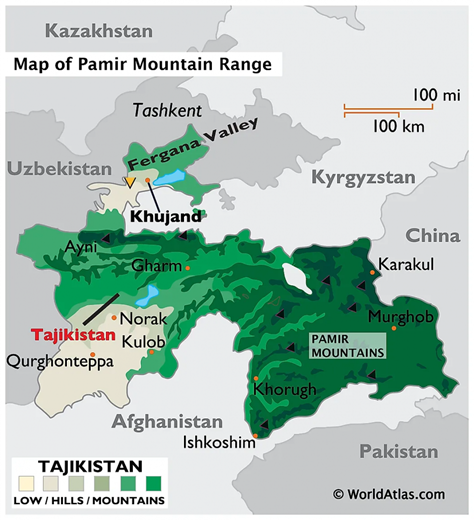
Ice cores from the Pamir Mountains are being studied to understand why its glaciers have resisted melting despite global warming.
Pamir–Karakoram Anomaly
It refers to the unusual behaviour of glaciers in parts of the Pamir and Karakoram ranges.
Unlike most glaciers worldwide, these glaciers have:
Shown resistance to melting, and
Experienced slight mass gain in recent decades.
This makes the region scientifically significant for understanding glacier–climate interactions.
Pamir Mountains
Geology:Formed by the collision of the Indian and Eurasian tectonic plates, making it a seismically active zone.
Location: Spans parts of Tajikistan, Afghanistan, China, and Kyrgyzstan.
The Pamir Mountains, also known as the “Roof of the World,” form a massive convergence zone (Pamir Knot) with the Himalayas, Karakoram, Hindu Kush, Kunlun, and Tian Shan ranges.
Ancient Routes: Historically part of the Silk Road, with Marco Polo referencing the area.
Major Peaks & Features: Ismoil Somoni Peak (Tajikistan), Kongur Tagh (China), Muztagh Ata (China) etc.
Tajik National Park: A large protected area encompassing much of the Pamirs, a UNESCO World Heritage site.
Drainage System: The Pamirs are heavily glaciated, with the Fedchenko Glacier being the largest glacier in Central Asia.
Meltwater from glaciers feeds major rivers such as, Panj River and Vakhsh River. These rivers are part of the Amu Darya river system, crucial for Central Asia.
Exercise Desert Cyclone 2025
Defence
Context
India-UAE Joint Military Exercise Desert Cyclone is going to begin in UAE.
About the exercise
The first edition of Exercise Desert Cyclone was held in 2024 in Rajasthan, India.
The aim of the exercise is to enhance interoperability and foster defence cooperation between the Indian Army and the UAE Land Forces
Navy Inducts Second Seahawks Squadron
Defence
Context
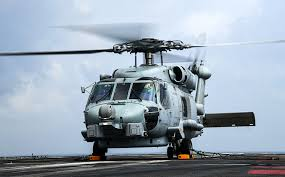
The Indian Navy commissioned its second MH 60R helicopter squadron, INAS 335, at INS Hansa in Goa.
Seahawks Squadron
Twenty-four of these submarine-hunting helicopters have been acquired by India from the US.
These are US-origin Seahawks, maritime versions of the Black Hawk.
The helicopter is designed for a wide range of operations: anti-submarine warfare (ASW), anti-surface warfare (ASuW), search and rescue (SAR) missions.
These helicopters are replacing the ageing British-origin Sea King helicopters, which have been in service for long.
Param Vir Chakra (PVC)
Miscellaneous
Context
Portraits of all 21 Param Vir Chakra (PVC) awardees have been installed at Rashtrapati Bhavan, replacing the portraits of 96 British Aide-de-Camps (ADCs).
This move is part of the government’s broader effort to dismantle colonial legacies.
Param Vir Chakra
It was instituted on 26 January 1950 (Republic Day) by Dr. Rajendra Prasad, the first President of India.
The name Param Vir Chakra translates to “Wheel of the Ultimate Brave.”
The medal was designed by Savitri Khanolkar, who drew inspiration from Sage Dadhichi, the Vedic rishi who sacrificed his body so that the gods could forge the Vajra (thunderbolt) from his spine.
The medal is cast in bronze. In the centre, on a raised circle, is the state emblem, surrounded by four replicas of Indra’s Vajra, flanked by the sword of Shivaji. It is suspended from a swivelling bar and worn with a 32 mm purple ribbon.
Additional Information – Gallantry Awards
Honoured by – Government of India
It is given to honour acts of bravery, sacrifice, and exceptional courage by members of the armed forces, paramilitary forces, and civilians.
They are classified as wartime (gallantry in the face of enemy) and peacetime awards.
Administered by:Ministry of Defence (for armed forces) and Ministry of Home Affairs (for police and civilians).
Awarded by: President of India.
These gallantry awards are announced twice in a year – first on the occasion of the Republic Day and then on the occasion of the Independence Day.
Wartime Gallantry Awards: Param Vir Chakra (PVC), Mahavir Chakra (MVC) and Vir Chakra.
State forms technical team to expedite Mekedatu project
News
The Karnataka government has issued a notification to form a team led by the Karnataka Engineering Research Station (KERS) directorG.MAHESH to expedite the Mekedatu project “in view of the favourable Supreme Court order”.
Composition : The team under the KERS director will comprise an executive engineer, three technical assistants, six assistant engineers, one accountant, a superintendent and other staff.
Deputy Chief Minister D.K. Shivakumar announced that the project office for the mekedatu project would be set up in Ramanagara.
The Cauveri Neeravari Nigam Ltd. (CNNL) will take steps to set up the Mekedatu project office.
Connect with the basics – Cauvery River System
Origin – Talakaveri
Total length of the River – 805 km
Flowing– Eastern
Flows through – Karnataka, Kerala, Tamilnadu & Pondicherry.
The President of India administered the oath of office to Raj Kumar Goyal as the Chief Information Commissioner of the Central Information Commission.
Central Information Commission (CIC)
Established – in 2005 by the Central Government under the provisions of Right to Information (RTI) Act, 2005.
Objective – It hears appeals against public authorities who have not provided information satisfactorily to the public and also addresses major issues concerning the RTI Act.
Annual report – CIC submits an annual report to the Union government on the implementation of the provisions of RTI Act.
Composition of CIC
Head – The CIC is headed by the Chief Information Commissioner and not more than ten Information Commissioners.
Tenure – The Chief Information Commissioner holds office for five years or until he attains the age of 65 years, whichever is earlier. He is not eligible for reappointment.
Appointment of the commissioner in CIC – The commissioners are appointed by the President on the recommendation of a selection committee.
Selection committee – It consists of the Prime Minister as Chairperson, the Leader of Opposition in the Lok Sabha and a Union Cabinet Minister nominated by the Prime Minister.
State Information Commission
The Right to Information Act of 2005 provides for the creation of a State Information Commission at the state level.
The State Information Commission is a high powered independent body which inter-alia looks into the complaints made to it and decides the appeals.
It entertains complaints and appeals pertaining to offices, financial institutions, public sector undertakings, etc under the concerned state government.
Composition – State Chief Information Commissioner and not more than ten State Information Commissioners appointed by the Governor.
Siliserh Lake and Kopra Jalashay Designated as New Ramsar Sites
Environment
Context
India designated Siliserh Lake and Kopra Jalashay as its 95th and 96th Ramsar Sites, increasing the country’s total to 96, up from 26 in 2014.
Newly Designated Ramsar Sites:
Siliserh Lake:
It is a man-made freshwater lake, constructed in 1845 by Maharaja Vinay Singh of Alwar.
It was originally built to meet the drinking water needs of Alwar city.
The lake is situated close to the Sariska Tiger Reserve, enhancing its ecological significance.
Kopra Jalashay:
Located near Bilaspur, this is the first-ever Ramsar site in Chhattisgarh.
It is a reservoir situated in the upper catchment of the Mahanadi River and serves as a freshwater source and biodiversity habitat.
Perumbidugu Mutharaiyar
Ancient History
Context
A commemorative postage stamp in honour of the king Perumbidugu Mutharaiyar II (Suvaran Maran) was released by Vice President C P Radhakrishnan.
Perumbidugu Mutharaiyar (705 AD-745 AD),
He was also known as Suvaran Maran, was a ruler of the Mutharaiyar lineage, feudatories of the Pallavas.
He belonged to the illustrious Mutharaiyar dynasty, which ruled the central regions of Tamil Nadu between the 7th and 9th centuries CE.
He ruled from Tiruchirappalli for nearly four decades and that his reign was marked by administrative stability, territorial expansion, cultural patronage, and military prowess.
Perumbidugu Mutharaiyar is believed to have fought bravely in several battles alongside the Pallava king Nandivarman, and is remembered as a great administrator.
Religious Policies: The Pallava reign saw a religious revivalism of Hinduism amid the dominance of Jainism and Buddhism.
As their feudatories, the Mutharaiyars were great temple builders.
PM Visit to Jordan
International Relation
Context
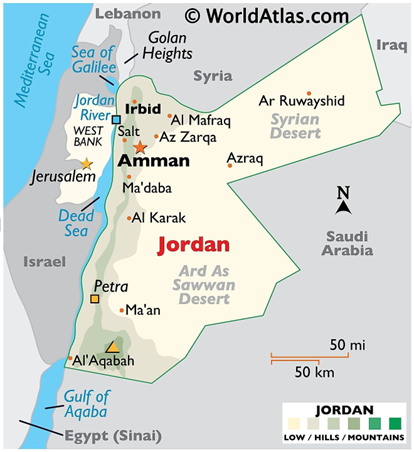
Prime Minister Narendra Modi concluded his two-day visit to Jordan.
The visit marks India’s first full bilateral engagement with Jordan and comes as the two countries prepare to celebrate 75 years of diplomatic relations.
Five memoranda of understanding were finalized covering culture, renewable energy, water management, digital public infrastructure and a twinning arrangement between the historic sites of Petra and Ellora.
India is Jordan’s third-largest trading partner, Prime Minister Modi proposed enhancing bilateral trade to $5 billion over the next five years.
He also encouraged collaboration between Jordan’s digital payment system and India’s Unified Payments Interface.
Note – Jordan is a leading supplier of phosphates and potash fertilizers for India.
Additional Information – Jordan
West Asian country in the Middle East.
Borders: Israel & Palestine (West), Saudi Arabia (South & East), Iraq (East), Syria (North).
Dead Sea is a landlocked salt lake between Israel and Jordan in southwestern Asia.
Landlocked except for a short coastline at Aqaba (Red Sea).
UN Alliance of Civilizations (UNAOC)
International Relation
In News
The United Nations Alliance of Civilizations (UNAOC) has completed two decades of efforts aimed at bridging divides, reducing polarization, and promoting intercultural dialogue.
UN Alliance of Civilizations (UNAOC)
Secretariat: New York
Launched: 2005
Initiated by: Republic of Türkiye & Spain, under the auspices of the United Nations.
Objectives:
Improve cross-cultural and inter-religious relations between nations and communities.
To counter polarisation, extremism, xenophobia and hate speech.
Promote mutual understanding, inclusion, and peaceful coexistence.
Relevance for India- Aligns with India’s civilisational ethos of pluralism and “Vasudhaiva Kutumbakam”.
National Blood Transfusion Bill 2025
Polity & Governance
Context
The National Blood Transfusion Bill, 2025 was introduced in Parliament to establish a dedicated legal and institutional framework for blood transfusion services in India.
National Blood Transfusion Bill 2025
Background – Blood transfusion services are regulated under the Drugs and Cosmetics Act, 1940, which is considered inadequate for managing blood as a life-saving public resource.
Key Provisions of the National Blood Transfusion Bill, 2025
Establishment of a National Blood Transfusion Authority (NBTA) as a statutory body.
NBTA to prescribe uniform national standards for:
Collection, testing and processing of blood
Storage, distribution, issuance and transfusion of blood and blood components.
Mandatory registration of all blood centres across the country.
Introduction of strict penalties for unsafe, unethical or non-compliant practices.
Promotion of voluntary blood donation through coordinated national programmes.
Creation of a national haemovigilance system to monitor transfusion-related adverse events.
DHRUV64
Science & Technology
In News
India has launched the DHRUV64 microprocessor.
DHRUV64
Type: General-purpose microprocessor
Developed By: Centre for Development of Advanced Computing (C-DAC) under the Microprocessor Development Programme (MDP) of the Government of India.
Architecture: 64-bit, dual-core
Clock Speed: 1.0 GHz
Status: Fully indigenous (design and development in India)
Function: Acts as the “brain” of electronic devices such as computers, mobiles, embedded systems and control units.
Significance
Suitable for 5G infrastructure, automotive, consumer electronics, industrial automation, IoT, and strategic uses
It reduces import dependence amid India’s 20% global microprocessor consumption.
National Energy Conservation Award
Environment
In News
Karnataka Renewable Energy Development Limited (KREDL) has won the National Energy Conservation Awards 2025 under the State Energy Efficiency Performance Award (SDA Group-1) category.
National Energy Conservation Awards (NECA)
Instituted by: Bureau of Energy Efficiency (BEE)
Ministry: Ministry of Power, Government of India
Objective: Recognise exemplary performance in energy efficiency and conservation
Encourage States, industries and institutions to reduce energy intensity
First instituted: 1991 (as National Energy Conservation Award scheme)
Iran seizes foreign oil tanker carrying 6 million litres of smuggled Diesel in the Gulf of Oman.
Gulf of Oman
The Gulf of Oman is the north-western arm of the Arabian Sea.
Connectivity – It forms a vital maritime corridor connecting the Indian Ocean with the Persian Gulf through the Strait of Hormuz.
Through the Strait of Hormuz, it provides access to the Persian Gulf, making it vital for global oil and LNG trade.
Source: TH
ASPIRE Scheme
Government Schemes
In News
The Ministry of Micro, Small and Medium Enterprises (MSME) is implementing the ASPIRE scheme to promote entrepreneurship and livelihood opportunities in rural areas.
ASPIRE scheme
Launch: In 2015 by the Ministry of Micro, Small and Medium Enterprises.
Aim: To create an enabling ecosystem for job creation through skill development, incubation and support to micro-enterprises.
Key Components:
Livelihood Business Incubators (LBIs): Support agro-based ventures with grants up to ₹75 lakh (private) or ₹1 crore (government institutions) for training in food processing, handicrafts, and rural trades.
Technology Business Incubators (TBIs): Focus on tech-driven rural innovation with similar funding.
Fund of Funds: Managed by SIDBI with ₹200 crore corpus to back startups in agro-rural sectors.
Do you Know?
● Vendor Development Programmes for SC/ST and women entrepreneurs are being organised under the Public Procurement Policy for MSMEs.
● The ‘Yashasvini Campaign’ was launched in June 2024 to empower women entrepreneurs through awareness on formalisation, access to credit, capacity building and mentorship.
● The ministry is also implementing the Prime Minister’s Employment Generation Programme (PMEGP), a credit-linked subsidy scheme to generate self-employment opportunities through micro-enterprises.
Trade Deficit
Economy
Context
India’s trade deficit dropped by more than 61% in November 2025 to $6.6 billion, due to strong growth in merchandise exports and a fall in merchandise imports.
Trade Deficit
Definition: A trade deficit occurs when the value of a country’s imports exceeds the value of its exports during a given period, leading to a negative Balance of Trade (BoT).
Balance of Trade (BoT) = Total Exports − Total Imports
Types of Trade Deficit:
Merchandise (Goods) Trade Deficit: Difference between exports and imports of physical goods.
Services Trade Deficit / Surplus: Difference between services exports (IT, tourism, finance) and services imports. India typically runs a services surplus.
Bilateral Trade Deficit: Trade deficit with a specific country (e.g., India–China trade deficit)
Indicator of net external demand: Shows whether a country is a net importer or exporter in global trade.
Jumping Genes
Science & Technology
In News
Polar bears in Southern Greenland show rapid genetic changes linked to jumping genes that may help them survive warming Arctic conditions.
Jumping Genes
Jumping genes, scientifically called Transposable Elements (TEs), are DNA sequences that can move (transpose) from one location to another within the genome.
They were discovered by Barbara McClintock in maize (corn), for which she received the Nobel Prize (1983).
In humans, they constitute 45% of the genome.
AH-64E Apache Attack Helicopters
Defence
Context
The Indian Army received the final batch of three AH-64E Apache attack helicopters.
AH-64E Apache Attack Helicopters
The Apaches were contracted in 2020 under a $600 million deal with the United States.
The AH-64E Apache is regarded as the world’s most advanced multi-role combat helicopter.
It is equipped with cutting-edge avionics, sensors and weapon systems, and capable of operating in all weather and terrain conditions.
Viksit Bharat – Guarantee for Rozgar and Ajeevika Mission (Gramin) Bill, 2025
Polity & Governance
Context
The Union Minister of Rural Development and Agriculture & Farmers’ Welfare introduced the Viksit Bharat – Guarantee for Rozgar and Ajeevika Mission (Gramin): Bill, 2025 in Lok Sabha.
Viksit Bharat – Guarantee for Rozgar and Ajeevika Mission (Gramin) Bill, 2025
It will replace the Mahatma Gandhi National Rural Employment Guarantee Act, 2005 (MGNREGA).
The move will mark a shift from a “demand-driven framework” to a “supply-driven scheme”.
Key Statutory Provisions
Enhanced Livelihood Guarantee: It will enhance the statutory wage employment guarantee to 125 from 100 days per rural household in every financial year, for adults who volunteer to undertake unskilled manual work.
Centrally Sponsored Scheme: The scheme will be implemented as a Centrally Sponsored Scheme with shared responsibilities between the Centre and States.
The fund sharing pattern will be 90:10 for North-Eastern and Himalayan States/UT and 60:40 for all other States.
Normative Allocation to States based: States will ensure transparent and need-based intra-State distribution of funds across Districts and Gram Panchayats, taking into account the category of the Panchayats and local developmental needs.
Wage rate specification: Wage rates for unskilled manual work will be specified by the Central Government; until separate rates are notified, existing MGNREGA wage rates will apply.
Securing peak agricultural seasons: States will be empowered to notify in advance, a period aggregating to 60 days in a financial year covering peak sowing and harvesting during which works under the Bill will not be undertaken, facilitating sufficient farm labour at critical times.
Unemployment allowance: If eligible applicants are not provided work within the stipulated period, State Governments will be obliged to pay unemployment allowance.
State schemes within six months: Every State Government must notify its Scheme to operationalise the guarantee within six months of the Bill’s commencement.
VGPP based planning: Planning will be undertaken through Viksit Gram Panchayat Plans, prepared by Gram Panchayats and integrated with national spatial planning systems.
Institutional Oversight: The Central Gramin Rozgar Guarantee Council and the State Gramin Rozgar Guarantee Councils shall be constituted for review, monitoring and effective implementation of the provisions of the legislation in their respective areas.
Scheduled Castes Sub Plan (SCSP) and Tribal Sub Plan (TSP) funds
News
The State government has used a significant share of the amount earmarked for the Scheduled Castes Sub Plan (SCSP) and Tribal Sub Plan (TSP) towards implementing the five guarantee schemes of the Congress government since 2023.
Additional information
The Government of Karnataka enacted the Karnataka Scheduled Castes Sub-Allocation & Tribal-Sub Allocation (Planning, Allocation and Utilisation of Financial Resources) Act, 2013. And Rules 2017
Its aim is to ensure allocation of a budget in proportion to the population of SC/STs in the States.
Karnataka became only the second state to have such an Act.
Supriya Sahu, a Tamil Nadu IAS officer honoured with the UN Environment Programme’s 2025 Champions of the Earth Award.
Do you know?
In 2000, Supriya Sahu launched a campaign called Operation Blue Mountain to eliminate single-use plastic in the Nilgiris.
She introduced low-cost climate solutions, from painting school roofs white under the Cool Roof Projectto restoring mangroves, wetlands, and creating 65 new reserve forests.
Her nature-first approach has created 2.5 million green jobs and contributed significantly to India’s national emissions-reduction goals.
Champions of the Earth Award
Launched in 2005
It is the UN’s highest environmental honor.
It recognizes outstanding figures from the public and private sectors as well as civil society, whose actions have brought about a positive impact and a transformation on the environment.
It is awarded across five categories:
Policy Leadership
Entrepreneurial Vision
Science and Innovation
Lifetime Achievement
Inspiration and Action (Supriya Sahu has been honored in this category).
Past Indian recipients include: Madhav Gadgil (2024), Narendra Modi (2018), Cochin International Airport (2018) and Afroz Shah (2016).
Deepavali Added to UNESCO Intangible Cultural Heritage List
Syllabus: GS1/ Culture
Context
Deepavali has been inscribed on UNESCO’s Representative List of the Intangible Cultural Heritage of Humanity during the 20th Session of the Intergovernmental Committee, held in New Delhi.
India is hosting the 20th session of the UNESCO Intergovernmental Committee for Safeguarding of the Intangible Cultural Heritage, 2025 in Red Fort complex, New Delhi.
Deepavali
Deepavali, also known as Diwali, is celebrated on Kartik Amaavasya, which typically falls in October or Novem
It is followed by Naraka Chaturdashi.
The third day is the highlight of Deepavali- the sacred Lakshmi-Ganesha Puja.
Popular Legends of Deepavali
In the Ramayana, it signifies the return of Lord Rama, Sita, and Lakshmana to Ayodhya after 14 years of exile and their victory over Ravana, celebrated with lamps lighting their path.
In the Mahabharata, it marks the return of the Pandavas after their exile.
Naraka Chaturdashi recalls Lord Krishna’s victory over Narakasura, symbolising the end of evil.
Lord Mahavira, the 24th Tirthankar, attained Nirvana on Deepavali at Pavapuri. Jain devotees celebrate this festival with enthusiasm as Nirvana Day.
King Bali’s Return: In Maharashtra, Deepavali marks the visit of King Bali, symbolising justice and generosity.
Kali Puja: In Bengal, Odisha and Assam, Deepavali coincides with the worship of Goddess Kali for protection and inner strength.
Connect with the basics – Intangible Cultural Heritage
UNESCO defines “intangible” as “expressions that have:
Passed from one generation to another.
Evolved in response to their environments.
Contributed to giving us a sense of identity and continuity.
According to an official document by UNESCO, ‘intangible cultural heritage’ includes “oral traditions, performing arts, social practices, rituals, festive events, knowledge and practices concerning nature and the universe or the knowledge and skills to produce traditional crafts.”
To date, 16 Indian elements have been inscribed on the UNESCO Representative List (including Deepavali)
Garba of Gujarat (2023)
Durga Puja in Kolkata (2021)
Kumbh Mela (2017)
Navroz (2016)
Yoga (2016)
Traditional brass and copper craft of utensil making among the Thatheras of Jandiala Guru, Punjab (2014)
Sankirtana, ritual singing, drumming and dancing of Manipur (2013)
Buddhist chanting of Ladakh: recitation of sacred Buddhist texts in the trans-Himalayan Ladakh region, Jammu and Kashmir (2012)
Chhau dance (2010)
Kalbelia folk songs and dances of Rajasthan (2010)
Mudiyettu, ritual theatre and dance drama of Kerala (2010)
Ramman, religious festival and ritual theatre of the Garhwal Himalayas (2009)
Kutiyattam, Sanskrit theatre (2008)
Tradition of Vedic chanting (2008)
Ramlila, the traditional performance of the Ramayana (2008)
Deepavali (2025) – Recently added
World Inequality Report 2026 Released
Syllabus: GS2/Social Issues; GS3/Inclusive Growth
Context
The 3rd edition of the World Inequality Report was released by the World Inequality Lab.
Key Findings of Report
Wealth Concentration: The richest 10% of the global population own approximately 75% of the total wealth
Focus on India
India is identified as one of the most unequal large economies globally.
Income: The top 10% of earners capture 58% of the national income, while the bottom 50% receive only 15%.
Wealth: The richest 10% hold around 65% of India’s total wealth, and the top 1% alone hold about 40%.
Gender: Female labor force participation remains very low and stagnant at 15.7%
Aditya-L1 Joins Global Effort To Study the Solar Storm
Syllabus: GS3/ Science and Technology
Context
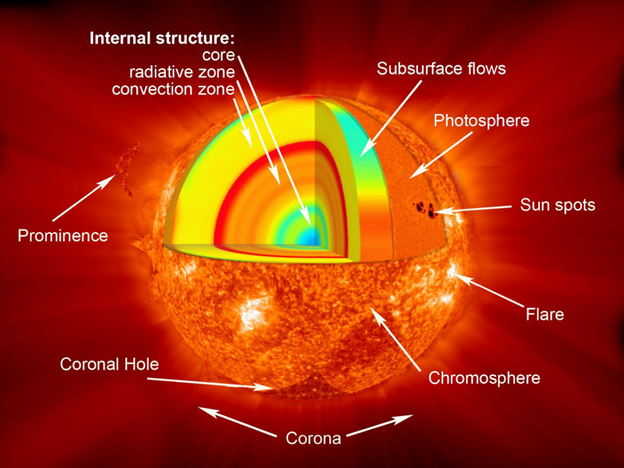
India’s solar observatory Aditya-L1 has revealed unusual behaviour of the May 2024 solar storm called “Gannon’s storm”. It was triggered by a series of giant explosions on the Sun known as Coronal Mass Ejections (CMEs).
Solar Storm
The solar storm is composed of a series of giant explosions on the Sun, known as coronal mass ejections (CMEs).
A CME is like a massive bubble of hot gas and magnetic energy thrown out from the Sun into space.
Impact on earth – When these bubbles hit Earth, they can shake earth’s magnetic shield and cause serious trouble for satellites, communication systems, GPS, and even power grids.
Additional information – Aditya-L1 mission
Uniqueness – Aditya-L1 is the first space-based Indian observatory to study the Sun. It will be launched by the PSLV-C57.
Note – The solar mission will not see the spacecraft actually go to the sun, it will instead create a space observatory at a point from which the sun can be observed even during an eclipse.
The spacecraft is planned to be placed in a halo orbit around the Lagrange point 1 (L1), around 1.5 million km from the Earth, of the Sun-Earth system.
Major objectives of the mission
The mission will focus on study of the Solar upper atmospheric (chromosphere and corona) dynamics.
It will also identify what drives space weather, along with the origin, composition and dynamics of the solar wind.
Other missions to Sun
NASA’s Parker Solar Probe, launched in 2018, has already gone far closer — but it will be looking away from the Sun.
Helios 2 solar probe, a joint venture between NASA and the space agency of erstwhile West Germany,was launched to investigate solar processes of the Sun’s surface in 1976.
Global Environment Outlook
Syllabus: GS3/Environment
Context
The Global Environment Outlook, Seventh Edition: A Future We Choose (GEO-7), was released during the seventh session of the United Nations Environment Assembly in Nairobi.
Global Environment Outlook (GEO)
Published by – United Nations Environment Programme (UNEP)
Mandate – to provide a comprehensive assessment of the planet’s environmental health
Significance – To bridge the gap between science and policy by providing data-driven insights and policy options to guide global action towards sustainable development
Latest Edition: The 7th edition, GEO-7, titled “A Future We Choose”, was released in December 2025.
Key Findings of the GEO-7 Report (2025)
Climate Change & Tipping Points: Global warming is accelerating, with the world already having warmed by approximately 1.3°C.
Pollution & Health: Approximately 9 million deaths globally are attributed annually to air, water, and soil pollution. Air pollution alone causes millions of premature deaths each year.
Biodiversity Loss & Land Degradation: One million species are at risk of extinction, and 20-40% of land is degraded, affecting over 3 billion people.
Swahid Diwas
Syllabus: GS1/History; GS2/Governance
In News
Prime Minister Narendra Modi honoured the courage of those who participated in the historic Assam Movement on Swahid Diwas.
Swahid Diwas
It is observed annually on December 10
Objective – to honour those who sacrificed their lives during the Assam Movement
Assam Movement
It was a mass agitation launched in 1979 by the Assam Students’ Union (ASU) and the All Assam Gana Sangram Parishad (AAGSP) against large-scale infiltration from Bangladesh.
The movement culminated in 1985 with the signing of the historic Assam Accord.
The accord ensures detection and deportation of illegal foreigners and guarantees constitutional, legislative, and administrative safeguards to protect Assamese identity, culture, and heritage.
Asian Development Bank (ADB)
Syllabus: GS3/ Economy
In News
The Asian Development Bank (ADB) has raised India’s growth forecast for FY26 to 7.2%, from 6.5%.
About ADB
ADB was established in 1966 as a regional development bank to promote social and economic development in Asia and the Pacific.
Its headquarters is in Mandaluyong, Manila, Philippines.
Its membership includes both regional (Asia-Pacific) and non-regional countries, with around two-thirds of UNESCAP members plus developed donor countries participating.
India joined ADB in 1966 as a founding member.
Major shareholders include Japan and the United States (15.6% each), followed by China (6.4%), India (6.3%) and Australia (5.8%), reflecting both regional and non‑regional stake.
GlowCas9
Syllabus: GS3/ Science & Technology
In News
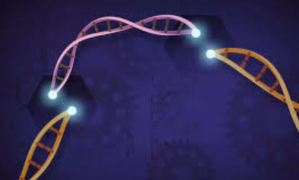
GlowCas9 is a newly engineered variant of the CRISPR Cas9 enzyme that emits light while editing DNA.
GlowCas9
It is a bioluminescent Cas9 created at the Bose Institute, Kolkata, by fusing Cas9 with a split nano‑luciferase enzyme derived from deep‑sea shrimp proteins.
Connect with the basics – Gene Editing Technology
It refers to technology that permits the change of an organism’s DNA by allowing genetic material to be added, removed, or altered at particular locations in the genome.
CRISPR Cas9 Technology
Acronym – Clustered Regularly Interspaced Short Palindromic Repeats.
Significance – With the use of the gene editing technique CRISPR, researchers can modify the DNA of living things.
An enzyme called Cas9 functions as molecular scissors, guided by RNA molecules created to precisely match a certain DNA sequence.
GE (Genome Editing): Involves precise modification of specific genes within an organism’s genome without introducing foreign genes, resulting in targeted genetic changes.
GM (Genetically Modified): Involves the insertion of foreign genes from unrelated organisms into an organism’s genome to confer specific traits or characteristics.
Regulatory Bodies
GEAC (Genetic Engineering Appraisal Committee): It is a regulatory body under the Ministry of Environment, Forest and Climate Change (MoEFCC).GEAC is responsible for evaluating and approving genetically modified organisms (GMOs)
Cartagena Protocol on Biosafety (CPB): Ensures safe handling of GMOs that may impact biodiversity under the Convention on Biological Diversity. Nagoya-Kuala Lumpur.
CITES Conference of the Parties (CoP20)
Syllabus: GS3/ Environment
Context
The 20th meeting of the Conference of the Parties (CoP20) to the Convention on International Trade in Endangered Species of Wild Flora and Fauna (CITES) has concluded in Samarkand, Uzbekistan, marking the 50th anniversary of the Convention.
CITES
Abbreviation – Convention on International Trade in Endangered Species of Wild Flora & Fauna
CITES was conceptualized in 1963 at a meeting of the (IUCN) International Union For Conservation of Nature.
Establishment – It came into force in 1975 and consists of 183 member-countries
Headquarter – Geneva, Switzerland,
Administered by – United Nations under its UNEP (United Nations Environment Programme) Wing.
CITES is legally binding on the Parties; it does not take the place of national laws.
Appendices
Appendix 1 – It lists species that are threatened with extinction and are or may be affected by trade.
Appendix 2 – This list includes species not necessarily threatened with extinction, but in which trade must be controlled in order to avoid utilization incompatible with their survival.
Appendix 3 – It contains species that are protected in at least one country, which has asked other CITES Parties for assistance in controlling the trade.
Great Barrier Reef
Syllabus: GS3/ Environment
In News
A combination of extreme heat stress and a rare coral disease has wiped out 75 per cent of Goniopora colonies at a site on the Great Barrier Reef.
CORAL REEFS
Coral reefs are the most biologically diverse ecosystems of the planet.
They are formed when Coral polyps, the animals primarily responsible for building reefs, develop a symbiotic relationship with photosynthetic algae called zooxanthellae, which live in its tissues.
Formation – Coral reefs begin to form when free-swimming coral larvae attach to submerged rocks or other hard surfaces along the edges of islands or continents.
The coral provides a protected environment and the compounds zooxanthellae need for photosynthesis.
In return, the algae produce carbohydrates that the coral uses for food, as well as oxygen. The algae also helps the coral remove waste.
FAVOURABLE CONDITIONS FOR FORMATION
Warm tropical oceans with minimum temperature of 20 degree (30 degree north and 25 degree south latitudes)
Oceanic water free of sedimentation
Transparent parts of ocean bodies
Relatively low salinity ocean bodies
TYPES OF REEF FORMATIONS
Fringing reefs – They are the most common, projecting seaward directly from the shore, forming borders along the shoreline and surrounding islands.
Barrier reefs – Grow at border shorelines, but at a greater distance. They are separated from their adjacent land mass by a lagoon of open, often deep water.
Atoll – If a fringing reef forms around a volcanic island that subsides completely below sea level while the coral continues to grow upward, an atoll forms. Atolls are usually circular or oval, with a central lagoon.
When corals face stress by changes in conditions such as temperature, light, or nutrients, they expel the symbiotic algae zooxanthellae living in their tissues, causing them to turn completely white. This phenomenon is called coral bleaching.
Causes of Coral Bleaching
● Rise in Sea Temperature
● Ocean Acidification
● Solar radiation & ultraviolet
radiation
● Infectious Diseases
● Chemical Pollution
● Increased Sedimentation
● Reducing light availability
(Turbidity)
● Human Induced Threats
Western Tragopan
Syllabus: GS3/Species
In News
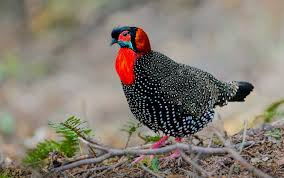
Recent studies show that suitable habitats of western tragopan exist in Jammu & Kashmir but human disturbance and fragmentation still threaten the bird’s survival.
Western Tragopan
It is one of India’s rarest pheasants and Himachal Pradesh’s state bird.
It now survives only in small fragmented pockets across the western Himalayas.
The IUCN estimates only 3,000–9,500 mature individuals remain
Threats: It faces threats due to habitat loss, hunting, and other anthropogenic factors.
The IUCN Red List of Threatened species classified it as
Conservation efforts – The Sarahan pheasantry in Shimla has over the years seen successful captive breeding of western tragopan.
State-appointed probe finds lapses in KKHRAC Society
News
The report, prepared by retired IAS officer Sudhir Kumar, was recently submitted to Chief Minister Siddaramaiah.
Findings
A State-appointed inquiry has uncovered extensive financial and administrative irregularities in the Kalyana Karnataka Human Resource, Agriculture and Cultural (KKHRAC) Society.
The investigator described the alleged mismanagement as one of the biggest misuse of funds in Karnataka in the three-year period from 2020–21 to 2022–23.
Additional information – Kalyana Karnataka Human Resource, Agriculture and Cultural Society (KKHRACS).
Nature: It is a registered society established by the Government of Karnataka, not a constitutional or statutory commission.
Headquarters: Kalaburagi (Gulbarga).
Mandate: To promote the culture, literature, and heritage of the Kalyana Karnataka region (Bidar, Kalaburagi, Yadgir, Raichur, Koppal, Ballari, and Vijayanagara).
AI Centre of Excellence for Healthcare established at IISc
News –
The Translational AI for Networked Universal Healthcare (TANUH) Foundation has been established at the Indian Institute of Science (IISc) in Bengaluru
AI Centre of Excellence for Healthcare established at IISc
Aim : as a dedicated AI Centre of Excellence in Healthcare to advance AI-driven healthcare innovation at scale in the country.
This has been established in line with the government of India’s vision of ‘Make AI in India and Make AI Work for India’,
It will be a not-for-profit company that focuses on developing and deploying scalable AI solutions for the effective management of non-communicable diseases (NCDs) at the point of care.
The centre operates as a multidisciplinary hub, bringing together clinicians, data scientists, and AI researchers.