Minister Priyank Kharge announced crucial upgrades to the e-Swathu 2.0 platform to resolve technical glitches and improve user experience
E-Swathu 2.0
It is an upgraded digital platform launched by the Karnataka government in late 2025 to manage rural property records.
Mandate – It aims to eliminate land fraud by mandating geo-tagging (GPS mapping) for every property before issuing essential documents like Form 9 and Form 11.
Key Features of E-Swathu 2.0
Mandatory Geo-Tagging: Properties must be physically mapped with GPS coordinates to link digital records to their exact spatial location.
Unique PID Number: Every verified property receives a unique Property Identification (PID) number, creating a “digital fortress” against fake claims.
Simplified Applications: Supports Aadhaar-based verification and online tracking for property ownership and tax data.
Anthropic has launched Project Glasswing, a global cybersecurity initiative linked to its advanced AI model Claude Mythos.
What is Project Glasswing?
Project Glasswing is a global cybersecurity initiative led by Anthropic.
It is a consortium of around 40 global technology firms and open-source contributors aimed at securing critical digital infrastructure, using advanced Artificial Intelligence.
The project provides early access to the Claude Mythos model to selected partners. It is backed by;
$100 million in AI usage credits,
$4 million support for open-source security.
Major participating firms include: Amazon Web Services, Apple, Google, Microsoft, NVIDIA etc.
Role of Claude Mythos
Claude Mythos is an advanced Large Language Model (LLM) with exceptional coding and vulnerability detection capabilities. It can;
Combine vulnerabilities to gain system-level control.
Source: TH
Indus River Dolphin
Syllabus: GS3/Species in News
Context
The dolphin is one of the world’s most endangered freshwater cetaceans and a flagship species of the Indus river system.
Indus River Dolphin
Cetaceans are aquatic mammals which include whales, dolphins and porpoises.
Indus River Dolphin was once distributed across the Indus and its tributaries in Pakistan and northwestern India.
But its range has drastically contracted due to flow regulation, loss of connectivity, pollution, climate change and entanglement in fishing gears.
The Indus river dolphin is functionally blind, it relies entirely on echolocation to navigate, hunt and avoid obstacles.
indus river dolphin
Source: DTE
Light Pollution: Rising Threat from Artificial Light at Night (ALAN)
Syllabus: GS3/Environment
Context
A study published in the journal Nature has found that artificial light at night increased by 16% globally between 2014 and 2022.
The sharpest rise has been observed in Sub-Saharan Africa and Southeast Asia, with India and China emerging as major contributors in Asia.
What Is Light Pollution?
Light pollution is the human-made alteration of outdoor light levels from those occurring naturally. In practical terms, it refers to unwanted, inappropriate, or excessive artificial lighting, primarily caused by Artificial Light at Night (ALAN).
It is increasingly recognised as an anthropogenic environmental pollutant. It is estimated that:
Over 80% of the world’s population lives under light-polluted skies;
Around 23% of Earth’s land area is affected by skyglow.
Causes
Rapid urbanisation: Today, about 55% of the global population lives in urban areas, and this is projected to rise to 68% by 2050, significantly increasing the demand for outdoor lighting.
Unregulated outdoor lighting: In poorly regulated systems (unshielded streetlights, billboards, façade lighting), 30–50% of emitted light is wasted upward or sideways, directly contributing to skyglow.
Vehicle-induced light pollution: Rapid growth in vehicle numbers increases headlight glare and roadway illumination.
India has over 30 crore registered vehicles, contributing significantly to urban night brightness.
Shift-based work: Expansion of 24×7 services (IT, healthcare, transport, manufacturing) leads to continuous lighting demand.
Impacts
Human Health: Exposure to artificial light at night suppresses melatonin production, leading to insomnia and other health issues.
Chronic exposure to light pollution has been linked to increased stress and reduced cognitive performance.
Environmental and Ecological: Nocturnal animals, migratory birds, and insects rely on natural light cycles.
Birds living in brightly lit areas tend to sing earlier at dawn and later at dusk, disrupting their natural rhythms and negatively impacting migration, feeding, and breeding patterns.
Similar effects occur in species like fireflies, whose communication suffers. Artificial lighting confuses navigation and feeding patterns.
Astronomy and Scientific Research: Brightening of the night sky hampers astronomical observations, especially near urban centers.
Energy Waste: Billions of units of electricity are wasted annually due to poorly directed lighting, increasing carbon emissions.
Government Initiatives to Curb Light Pollution
Energy Conservation Building Code (2017): The ECBC is a set of standards established by India’s Bureau of Energy Efficiency (BEE) to promote sustainable design and reduce energy consumption by 25–50% in new commercial buildings.
Street Lighting National Programme (SLNP): Launched in 2015, to replace conventional street lights with smart and energy-efficient LED streetlights across the country.
Smart Cities Mission: Adaptive lighting is a core component of India’s Smart Cities Mission, designed to optimize energy consumption and reduce light pollution by dynamically adjusting street lamp intensity based on real-time traffic and time conditions.
Environmental Protection Act 1986: Provides umbrella power to the Central Government to regulate environmental pollution of all kinds.
Light pollution is not explicitly defined, but can be regulated as a form of environmental disturbance.
Karnataka Power Corporation Limited (KPCL) achieved its highest-ever hydropower generation, producing 15,509 million units (MU) in the 2025–26 financial year.
Karnataka Power Corporation Limited (KPCL)
It is a premier power generation company owned by the Government of Karnataka.
Established in July 1970, it is responsible for the investigation, design, construction, and operation of major power projects across the state.
Power Generation Portfolio
KPCL operates a diversified fleet with a total installed capacity of approximately 8,846.305 MW
Power Type
Major Stations / Projects
Installed Capacity (MW)
Thermal
Raichur (RTPS), Bellary (BTPS), Yeramarus (YTPS)
~5,020 MW
Hydel
Sharavathi, Nagjhari, Varahi, Almatti, Kadra
~3,600+ MW
Renewable
Wind (Kappatagudda), Solar (Yelesandra, Itnal, etc.)
~24+ MW
Other
Gas (Yelahanka CCCP), Waste-to-Energy (Bidadi)
~381.5 MW (Ongoing)
Major Ongoing & Proposed Projects
Sharavathy Pumped Storage: A massive 2,000 MW project aimed at grid stabilization and energy storage.
Yelahanka Combined Cycle Plant: A 370 MW gas-based project in its final stages of commissioning.
Bidadi Waste-to-Energy: An 11.5 MW project converting municipal waste into power.
India has withdrawn its candidature to host COP33 (2028) under the United Nations Framework Convention on Climate Change process.
Possible Reasons for Withdrawal
Administrative Burden: Hosting a COP event requires substantial infrastructure, security, and financial expenditure.
Preparations for other large-scale international events, such as the proposed 2030 Commonwealth Games in Ahmedabad, will require similar administrative and financial resources.
Political Timing: The year 2028 falls close to the 2029 Lok Sabha elections, which is a period marked by intense administrative, political, and logistical engagements.
Impact of India withdrawal
India’s withdrawal from hosting COP33 results in the loss of an important global platform to project itself as a leader of the Global South in climate negotiations.
India loses an opportunity to highlight its progress in renewable energy, energy transition, and sustainable development initiatives before the global community.
The decision may limit global attention on the climate vulnerabilities of South Asia, which is one of the most climate-sensitive regions.
Hosting such global events helps in mobilising climate finance, technology transfer, and international collaborations, which may now be relatively constrained.
What is COP (Conference of Parties)?
The Conference of Parties (COP) is the annual supreme decision-making body of the United Nations Framework Convention on Climate Change (UNFCCC).
It brings together nearly 200 countries to negotiate global climate action, climate finance, and emission reduction commitments.
The first COP session was held in Berlin, Germany, in March 1995.
Meeting: The COP meets every year, unless the Parties decide otherwise.
The COP Presidency rotates among the five recognized UN regions: Africa, Asia-Pacific, Latin America and the Caribbean, Central and Eastern Europe and Western Europe and Others.
The COP meets in Bonn, unless a Party offers to host the session.
United Nations Framework Convention on Climate Change
UNFCCC is one of the three Rio Conventions, which were adopted at the Earth Summit 1992 alongside the Convention on Biological Diversity (CBD) and the Convention to Combat Desertification (UNCCD).
The convention entered into force in 1994.
The primary objective of the UNFCCC is to stabilize greenhouse gas concentrations in the atmosphere at a level that prevents dangerous anthropogenic interference with the climate system.
Secretariat: The UNFCCC secretariat is headquartered in Bonn, Germany.
Major Instruments: It is the parent treaty to two major legal agreements:
Kyoto Protocol (1997): Set the emission targets for developed countries.
Paris Agreement (2015): A landmark universal agreement aiming to limit global warming to well below 2°C, preferably 1.5°C, above pre-industrial levels.
Financial Mechanisms: Manages and coordinates funds such as the Green Climate Fund (GCF), the Global Environment Facility (GEF), and the Adaptation Fund to assist developing nations.
Recent COP Meetings
COP27: Held in Sharm El Sheikh, Egypt (2022).
COP28: Held in Dubai, UAE (2023), resulting in the “UAE Consensus” focused on transitioning away from fossil fuels.
COP 29: held in Baku, Azerbaijan (2024)
COP 30: Held in Belém, Brazil (2025)
COP 31: Scheduled for Antalya, Türkiye (2026)
Source: DTE
Plan for Great Nicobar Island Projects
Syllabus: GS3/ Infrastructure/ Environment
Context
The draft master plan for developing the Great Nicobar Island (GNI) has proposed to focus on tourism as the “primary economic driver” of growth.
Great Nicobar Island project
The project received Stage-I clearance in 2022.
Implementing authority: The project is being implemented by the Port Blair-based Andaman and Nicobar Islands Integrated Development Corporation Ltd (ANIIDCO).
The Project involves developing an International Container Transshipment Terminal (ICTT), an international airport, township development, and a 450 MVA gas and solar-based power plant on the island.
The site for the ICTT and power plant is Galathea Bay on the southeastern corner of Great Nicobar Island, where there is no human habitation.
The Andaman and Nicobar Islands Integrated Development Corporation (ANIIDCO)
ANIIDCO is a quasi-government agency, incorporated in 1988 under the Companies Act.
Its objective is to develop and commercially exploit natural resources for the balanced and environment friendly development of the territory.
Its main activities include trading of petroleum products, Indian made foreign liquor and milk, managing tourism resorts and infrastructure development for tourism and fisheries.
Highlights of the Draft Plan
The plan has been drafted for a projected population of 3.36 lakh by 2055.
By that time, the master plan is expected to achieve an annual inflow of more than a million tourists.
It proposes a township divided into several clusters: an administrative and institutional cluster, a multi-modal logistic cluster (to include airport, port, freight and passenger terminals, defence area, and green development), and tourism clusters.
The development will start with “anchor projects” such as the International Container Transhipment Port (ICTP), the Great Nicobar International Airport, and the GNI gas and solar power plants from 2025 to 2029.
The second part of Phase 1 (2030-2035) is expected to see growth in tourism activity and upgraded infrastructure.
Phase 2 (2036-2041) envisages a phase of consolidation and enhanced growth of tourist traffic and the opening of opportunities for other potential economic drivers.
The last phase (2042-2047) has been earmarked for “future development”.
Concerns over the project
Ecological Fragility: Large-scale diversion of pristine tropical forests threatens a highly fragile island ecosystem with low carrying capacity.
Biodiversity Loss: Destruction of habitats may endanger endemic species.
Economic Viability Concerns: Experts questioned the economic feasibility of the project, given the high costs and ecological sensitivity of the region.
Indigenous Rights Violation: The project allegedly violates the rights of the Shompen, a Particularly Vulnerable Tribal Group (PVTG) of hunter-gatherers. The disruption of their traditional lands and lifestyle raises human rights concerns.
Volatile Zone: The proposed port is situated in a seismically active zone that experienced a significant geological event during the 2004 tsunami, leading to concerns about the safety and long-term stability of the infrastructure in such a location.
Significance of the Project
Strategic Maritime Location: Its proximity to the Strait of Malacca enhances India’s ability to monitor one of the world’s busiest sea lanes.
Strengthening National Security: Development of dual-use infrastructure (port and airport) improves India’s defence logistics, surveillance, and naval reach in the Indo-Pacific.
Global Trade Hub Potential: The transshipment port can reduce India’s dependence on foreign ports (like Singapore/Colombo) and position India as a major logistics hub.
Economic Development of Island Region: Infrastructure, connectivity, and urban development can boost investment, employment, and tourism in the Andaman & Nicobar region.
Blue Economy Promotion: It supports sustainable use of ocean resources such as shipping, fisheries, and marine-based industries, aligned with India’s blue economy goals.
Regional Connectivity and Act East Policy: Enhances connectivity with Southeast Asia, reinforcing India’s engagement under its Act East Policy and Indo-Pacific vision.
Andaman and Nicobar Islands
Location: The islands are located 1,300 km southeast of the Indian mainland in the Bay of Bengal.
It extends from 6° 45′ N to 13° 41′ N and from 92° 12′ E to 93° 57′ E.
This archipelago is composed of more than 500 big and small islands, which are divided into two distinct groups of islands – The Andaman Islands and the Nicobar Islands.
‘Ten Degree Channel’ separates the Andaman Islands in the north from the Nicobar Islands in the south.
Facts Related to Andaman and Nicobar Islands
The Southernmost Island is Great Nicobar whose southernmost tip is only 150 km away from Sumatra, Indonesia.
The highest point is Saddle Peak in North Andaman (732 metre), Mount Thullier in Great Nicobar (642 metre).
Pandunus or Nicobar Breadfruit is a rare fruit found in the Andaman and Nicobar islands.
Barren Island of the Andaman & Nicobar Island group is the only confirmed active volcano not just in India but the whole of South Asia.
Indira Point in Great Nicobar is the Southern-most point of India.
Mahatma Jyotirao Phule
Syllabus: GS1/History and Personality in News
Context
Prime Minister Narendra Modi paid tributes to Mahatma Jyotirao Phule on his birth anniversary.
About Jyotirao Phule
Birth: On 11th April, 1827 in Khatgun village which is today in the Satara district of Maharashtra.
Title: His family belonged to the ‘mali’ caste and their original title was ‘Gorhay’. On May 11, 1888, he was bestowed with the title of Mahatma by a Maharashtrian social activist Vithalrao Krishnaji Vandekar.
Ideology and influence: His ideology centered around liberty, egalitarianism, and socialism. He drew inspiration from Thomas Paine’s book The Rights of Man.
Marriage: He was married off when he was only 13 with Savitribai. The couple went on to establish the country’s first school for girls in Bhidewada, Pune, in 1848.
Balhatya Pratibandhak Griha: In 1863, Jyotirao and Savitribai began Balhatya Pratibandhak Griha, India’s first home dedicated to prohibiting infanticide and supporting pregnant Brahmin widows and rape victims.
Satyashodhak Samaj: Phule along with his followers formed Satyashodhak Samajin 1873 which meant ‘Seekers of Truth’ and was dedicated towards the removal of the socio-economic backwardness of Dalits.
It is believed that it was Phule who first used the term ‘Dalit’ for the depiction of oppressed masses often placed outside the ‘varna system’.
Karnataka second-largest hub in India for public charging infrastructure
News –
Karnataka has emerged as the second-largest hub in India for public charging infrastructure, often surpassing Maharashtra and Tamil Nadu in deployment.
Karnataka Clean Mobility Policy 2025–2030
Launched in –February 2025
Objective – to position Karnataka as Asia’s premier hub for clean mobility innovation and manufacturing.
It targets ₹50,000 crore in investments and the creation of 1,00,000 new jobs by 2030.
Key Objectives and Targets
Infrastructure Expansion: Aims to install 2,600 additional charging stations through public-private partnerships (PPP), bringing the state’s total to over 8,000.
Sectoral Transition: Encourages 100% conversion of e-commerce delivery fleets to electric or hydrogen-powered vehicles by 2030.
Manufacturing Clusters: Development of world-class mobility clusters in Gauribidanur, Dharwad, and Harohalli to integrate OEMs, suppliers, and R&D centers.
Sustainable Public Transport: Promotion of e-rickshaws for last-mile connectivity and expansion of shared bus services outside major urban centers.
The Ministry of Skill Development and Entrepreneurship (MSDE) has launched a campaign to establish the Skills Outcomes Fund.
Skills Outcomes Fund
Objective – This initiative is designed to create better career opportunities for young people from economically disadvantaged backgrounds.
Implementing Body: It is managed by the National Skill Development Corporation (NSDC).
Financing Model: Uses a blended finance approach, combining government funding with capital from private sector CSR, philanthropic organizations (like the Gates Foundation), and development agencies.
Target Beneficiaries: Aims to support over 2 lakh youth from low-income backgrounds over four years, with a significant focus on low-income women.
High-Growth Sectors: Training is demand-driven and employer-led, focusing on sectors like BFSI, IT-ITeS, Green Jobs, Healthcare, Logistics, and Electronics.
Decline of Lakes in Jammu & Kashmir
Syllabus: GS3/Environment
Context
Comptroller and Auditor General of India (CAG) finds nearly half of Jammu and Kashmir’s lakes have vanished since 1967, warns of ecological crisis.
Major Causes
Unchecked human activities and encroachment;
Weak institutional coordination;
Absence of a unified regulatory framework, leading to land-use changes.
Major Lakes of J&K, Ladakh UT
Dal Lake: Famous freshwater lake known for houseboats, shikaras, and floating gardens (Raad).
Wular Lake: Wular Lake is the largest freshwater lake in India and has been formed due to tectonic activity. It is fed by the Jhelum River and is recognized as a Ramsar site.
Pangong Tso: It is a high-altitude brackish water lake extending into Tibet, known for its changing colors and strategic importance.
Tso Moriri: It is another high-altitude brackish lake and a Ramsar site.
Manasbal Lake: It is considered one of the deepest freshwater lakes in the region and the Mughal garden Jaroka Bagh, built by Nur Jahan, overlooks the lake.
Hokersar Wetland: Often referred to as the “Queen of Wetlands”.
Surinsar Lake and Mansar Lake: They are twin lakes and are Ramsar sites.
RBI Holds Repo Rate at 5.25 per cent
Syllabus: GS3/ Economy
Context
The Monetary Policy Committee of the Reserve Bank of India decided to keep the repo rate unchanged at 5.25%.
Monetary Policy Committee (MPC)
Established under – The Monetary Policy Committee (MPC) constituted by the Central Government under Section 45ZB of the Reserve Bank of India (RBI) Act, 1934.
Meeting – The MPC is required to meet at least four times in a year.
Composition: The committee comprises six members.
Out of the six members, three are internal -including the RBI governor who chairs the committee.
RBI’s deputy governor is the second internal member.
The third member is one RBI official who is nominated by the central board of RBI. Usually, it is the executive director in-charge of monetary policy.
The other three are external members who are appointed for four years.
Voting: Each member of the MPC has one vote, and in the event of an equality of votes, the Governor has a second or casting vote.
Significance of constituting the MPC: MPC was set up consequent to the agreement reached between Government and RBI to task RBI with the responsibility for price stability and inflation targeting.
The Reserve Bank of India and Government of India signed the Monetary Policy Framework Agreement.
Functions: The MPC determines the policy repo rate required to achieve the inflation target. It acts as a benchmark for all other interest rates in the economy.
Monetary Policy Tools in India
Repo Rate: Rate at which RBI lends short-term funds to banks against collateral.
Reverse Repo Rate: Rate at which RBI absorbs liquidity from banks.
Cash Reserve Ratio (CRR): Portion of deposits banks must keep with RBI in cash.
Statutory Liquidity Ratio (SLR): Portion of deposits kept in liquid assets (gold, cash, securities).
Open Market Operations (OMO): Buying/selling of government securities to control liquidity.
Marginal Standing Facility (MSF): Emergency borrowing by banks at a penal rate.
Liquidity Adjustment Facility (LAF): Framework for repo/reverse repo operations.
Market Stabilisation Scheme (MSS): Bonds issued to absorb excess liquidity.
Phasing Down Hydrofluorocarbons (HFCs) in India
Syllabus: GS3/ Environment
Context
The Government of India has directed that no new environmental clearances will be granted for hydrofluorocarbon (HFC) production projects beyond December 31, 2027.
It is aligned with India’s commitments under the Montreal Protocol and the Kigali Amendment.
Montreal Protocol
Enforcement – It was agreed upon in 1987 in Montreal, Canada and entered into force in 1989.
Objective – To protect the Ozone layer by reducing the production of substances that are supposed to be responsible for Ozone layer depletion.
Kigali Agreement – The protocol was further strengthened with the ratification of the legally binding Kigali Agreement in 2016 in Kigali, Rwanda.
Significance – It seeks to phase out the production of hydrofluorocarbons (HFCs) that are potent greenhouse gases by the late 2040s.
Kigali Amendment
The Kigali agreement is an amendment to the Montreal Protocol.
Objective – To phase down hydrofluorocarbons (HFCs) by curbing both their production and consumption.
Target – To achieve over 80% reduction in HFC consumption by 2047 which will curb a global increase of temperature by up to 0.5 degrees Celsius by the end of the century.
Connect with the basics – Basics – Ozone Layer (O3)
It is a highly reactive molecule containing three oxygen atoms.
Found in – It is present between 10 and 50 km above the earth’s surface, called the stratosphere, and is present in a thin layer of ozone.
Function – This ozone layer serves as a natural filter for blocking deadly incoming UV radiation from the sun.
Significance – This ozone shield is necessary for the survival of human life on the earth.
OZONE LAYER DEPLETION
Definition – The decrease in ozone concentration in the middle layers of the atmosphere – mainly in the stratosphere is referred to as the depletion of the ozone layer.
Caused by – It is caused by emissions of anthropogenic halogenated hydrocarbons such as CFCs, HCFCs, Halons, Carbon tetrachloride and Methyl bromide.
Ozone hole – Since the early 19705, the levels of stratospheric ozone have thinned markedly over certain regions of the earth, particularly over the Antarctic region.
Vinayak Damodar Savarkar
Syllabus: GS1/ Modern History
Context
A criminal defamation case involving remarks on Vinayak Damodar Savarkar has brought attention to the origin of the title Swatantryaveer, before a Pune court.
Vinayak Damodar Savarkar (1883–1966),
He was popularly known as Veer Savarkar, was a prominent freedom fighter, political thinker, and writer.
He is associated with the development of the Hindutva ideology and played a significant role in revolutionary nationalism during the freedom struggle.
Education: Savarkar studied at Fergusson College in Pune and later travelled to London to study law.
Role in freedom struggle: He founded the Abhinav Bharat Society in 1904, a secret organisation dedicated to armed revolution against British rule.
While in London, he led the India House and the Free India Society, training Indian students in methods of sabotage and assassination.
Hindu Mahasabha: He served as the president of the Hindu Mahasabha from 1937 to 1943, advocating for a “Hindu Rashtra” (Hindu Nation).
Social Reform: Savarkar was a staunch opponent of the caste system and untouchability.
Literary Work: He authored The Indian War of Independence, 1857, which was the first work to describe the 1857 rebellion as India’s first struggle for independence.
Central Armed Police Forces
Syllabus: GS3/ Internal Security
In News
The Centre has notified the Central Armed Police Forces (General Administration) Act, 2026, which creates a unified legal framework to regulate the recruitment, deputation, promotion, and conditions of service for officers.
Central Armed Police Forces (CAPF)
Functions under – Ministry of Home Affairs.
Mandate – They are responsible for border guarding, internal security, counter-insurgency, and infrastructure protection.
Significance – The forces include CRPF, BSF, CISF, ITBP, SSB, NSG, and Assam Rifles, designed to assist state police and maintain law and order.
Key Components and Roles:
Border Guarding: Border Security Force (BSF), Indo-Tibetan Border Police (ITBP), Sashastra Seema Bal (SSB), and Assam Rifles (AR) patrol borders.
Internal Security: Central Reserve Police Force (CRPF) acts as the primary force for counter-naxal and counter-insurgency operations.
Industrial Security: Central Industrial Security Force (CISF) secures critical infrastructure and airports.
Special Operations: National Security Guard (NSG) serves as a specialized commando unit.
The MoEFCC has granted approval to divert 111.02 hectares of forest land in Hassan and Tumakuru districts for the Yettinahole Drinking Water Project.
Yettinahole Integrated Drinking Water Supply Project
Project Purpose: The project aims to supply drinking water to over 75 lakh people in Kolar, Chickballapur, Ramanagara, Tumakuru, Bengaluru Rural, and Chikkamagaluru
Capacity: Originally intended to divert 24.01 TMC of water, though concerns exist over actual yields.
Components: Involves constructing weirs, pump houses (including at Sakleshapur), and a 260 km gravity main canal.
The Luna Ring Project, proposed by the Japan-based Shimizu Corporation.
It is a futuristic, conceptual infrastructure project designed to address Earth’s energy needs by creating a massive solar power ring around the Moon.
Luna Ring Project
Concept: The project involves constructing 11,000 km (approx. 6,800 miles) long belt of solar panels along the Moon’s equator.
Mechanism: These solar panels will capture solar energy, which will be converted into microwaves or laser beams and transmitted back to Earth.
Construction: The project proposes using automated construction robots to process lunar soil (regolith) into concrete, bricks, and glass fibers, enabling In Situ Resource Utilization (ISRU).
Constant Power: Unlike Earth, the Moon has no atmosphere to block sunlight, allowing for uninterrupted power generation 24 hours a day
Government Notifies Two Institutions as Repositories
Governance
Context
National Biodiversity Authority (NBA) officially notified two premier scientific institutions as designated repositories under Section 39 of the Biological Diversity Act, 2002
Referral Centres
‘Bhavasagara’ (at the Centre for Marine Living Resources and Ecology (CMLRE), Kochi) – A specialized national facility dedicated to deep-sea biodiversity.
MACS Collection of Microorganisms (at the Agharkar Research Institute (ARI), Pune) – An expert hub for microbial and fungal diversity, which also includes the National Fungal Culture Collection of India.
Key Significance of the Notification
Expansion of National Network: This addition brings the total number of designated national repositories in India to 20.
Scientific Support: The notification facilitates innovation by making biological materials accessible for research under transparent and accountable scientific conditions.
Connect with the basics – Biological Diversity Act, 2002
Enacted – The act was enacted in 2002
Objective – It aims at the conservation of biological resources, managing its sustainable use and enabling fair and equitable sharing benefits arising out of the use and knowledge of biological resources with the local communities.
The act envisaged a three-tier structure to regulate the access to biological resources:
The National Biodiversity Authority (NBA)
The State Biodiversity Boards (SBBs)
The Biodiversity Management Committees (BMCs) (at local level)
National Biodiversity Authority
Established in – The National Biodiversity Authority (NBA) was established in 2003 by the Central Government to implement India’s Biological Diversity Act (2002).
Statutory body – It is a Statutory body that performs facilitative, regulatory and advisory functions for the Government of India on the issue of Conservation and sustainable use of biological resources.
Headquarter – The NBA has its Headquarters in Chennai, Tamil Nadu, India.
Functions
Monitoring and prevention of actions prohibited under the Act.
Providing advice to the government on how best to conserve biodiversity in India.
Prepare a report on how the government can select biological heritage sites.
Make concrete steps to prevent the grant of intellectual property rights regarding locally used biological resources or allied traditional knowledge
Elephanta Caves
Syllabus: GS1/ History and Culture
Context
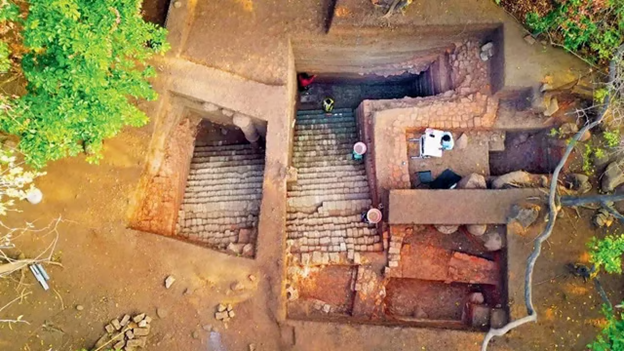
A major excavation by the Archaeological Survey of India (ASI) on Elephanta Island has revealed a 1,500-year-old stepped reservoir.
The excavated structure is a T-shaped stepped reservoir, indicating a planned architectural design.
Additional Information – Elephanta Caves
The Elephanta Caves, located on Elephanta Island (historically known as Gharapuri, meaning “city of caves”), are a UNESCO World Heritage Site situated in Mumbai Harbour.
The name “Elephanta” was given by the Portuguese in the 16th century after they discovered a large stone elephant near the island, while the original name Gharapuri was used by local inhabitants.
Historically, the island was associated with multiple dynasties.
The Kalachuris of Mahishmati are considered the main patrons of the caves during the 6th century CE, as supported by recent coin discoveries of King Krishnaraja. Before them, the Konkan Mauryas ruled the region, followed by the Chalukyas and Rashtrakutas who maintained its importance.
There are seven caves, of which Cave 1 (Great Cave) is the most prominent. It houses the iconic 20-feet Trimurti sculpture.
A three-headed figure representing Shiva as Creator, Preserver, and Destroyer.
Soil Sakhis
Syllabus: GS3/Agriculture
Context
The “Soil Sakhis” initiative in drought-prone districts of western Maharashtrais empowering women while improving soil health and agricultural productivity.
Soil Sakhis
Launched in 2023 under the Mann Deshi Foundation’s Agriculture and Climate Action Programme.
Trains rural women as “Soil Sakhis” to promote soil testing and scientific farming practices.
Implemented in Satara, Sangli, Solapur, Kolhapur, and Pune districts.
Key Features
Soil Sakhis collect samples and facilitate soil testing through laboratories.
Farmers receive actionable reports for improved crop and nutrient management.
Soil Sakhis earn about ₹8,000–₹10,000 per month (excluding petrol allowance).
FSSAI Cannot Regulate Animal Feed
Syllabus: GS2/Health/Governance
Context
The Delhi High Court struck down a Food Safety and Standards Authority of India (FSSAI) regulation that prohibited the sale of animal feed containing meat or bone meal of bovine or porcine origin for milk-producing animals.
About
FSSAI banned the use of meat or bone meal in feed meant for milk- and meat-producing animals, except poultry, pigs and fish.
The Delhi High Court held that FSSAI is not empowered to prescribe standards for food meant for animal consumption and its mandate is limited to food for humans.
Food Safety and Standards Authority of India (FSSAI)
It is an autonomous statutory body established under the Ministry of Health and Family Welfare.
It was created by the Food Safety and Standards Act, 2006.
Composition: Led by a Chairperson (rank of Secretary to the Government of India) and 22 members, of whom one-third must be women.
Structure: Headquartered in New Delhi with 6–8 regional offices (Delhi, Mumbai, Kolkata, Chennai, Guwahati, Kochi).
Functions:
Laying down science-based standards for food.
Licensing and registration of Food Business Operators (FBOs).
Monitoring manufacture, storage, distribution, sale, and import of food.
Accrediting food testing laboratories across India.
Cabinet Clears 12% Hike in P&K Fertiliser Subsidy
Syllabus: GS3/ Agriculture
In News
The Union Cabinet has approved a 12% increase in Nutrient-Based Subsidy (NBS) rates for Phosphatic and Potassic (P&K) fertilizers for the Kharif Season 2026.
Nutrient-Based Subsidy (NBS) Scheme
Launch: Introduced in 2010 by the Ministry of Chemicals and Fertilizers.
Objectives
Encourage balanced fertilizer application across nutrients.
Rationalise and contain the government’s subsidy burden.
Promote efficient nutrient management in agriculture.
Key Features:
Subsidy is nutrient-centric, i.e., calculated based on the content of:
Nitrogen (N)
Phosphorus (P)
Potassium (K)
Sulphur (S)
Covers 28 notified grades of P&K fertilisers, including commonly used products such as DAP and SSP (Urea is not under NBS and remains under a separate subsidy regime).
11 Years of Pradhan Mantri MUDRA Yojana (PMMY)
Syllabus: GS3/Economy; GS2/Government Initiatives
Context
The Pradhan Mantri MUDRA Yojana (PMMY) has completed 11 years.
About
Launched: In 2015.
Aim: To support small-scale business ventures.
Target Group: New entrepreneurs, small shopkeepers, women entrepreneurs, street vendors, artisans, fruit/vegetable vendors, and small manufacturing units.
These loans are given by Commercial Banks, RRBs, Small Finance Banks, MFIs and NBFCs.
MUDRA has created four products namely:
Shishu: Covering loans upto Rs. 50,000/-.
Kishor: Covering loans above Rs. 50,000/- and up to Rs. 5 lakhs.
Tarun: Covering loans above Rs.5 lakh and upto Rs.10 lakhs.
TarunPlus: Covering loans above Rs.10lakh and upto Rs.20 lakhs.
A trial court in Madurai sentenced 9 Tamil Nadu policemen to death for the brutal 2020 custodial killing of a father and son, P. Jayaraj and J. Benicks.
Custodial Death
Custodial death refers to the death of an individual while in police or judicial custody.
This may occur before trial, during police interrogation, or after convictio
The death may be caused by torture, negligence, denial of medical aid, or even under suspicious circumstances.
It violates the Constitutional Rights
Article 20(1):No person shall be punished beyond what is prescribed in law.
Article 20(3):Right against Self-Incrimination, stating that “No person accused of any offence shall be compelled to be a witness against himself.
Article 21: Ensures protection of life and personal liberty, including in police/judicial custody.
Issue of Custodial Death in India: According to parliamentary data, 11,656 custodial deaths were recorded between 2016-17 and 2021-22, across India.
Uttar Pradesh topped the list with 2,630 deaths, while Tamil Nadu (490) reported the highest number among the southern States.
International Legal Frameworks for Protection
United Nations Charter (1945): It sets out the purposes and principles of the UN, including the promotion of human rights.
Universal Declaration of Human Rights (1948): It prohibits torture and ensures the presumption of innocence.
International Covenant on Civil and Political Rights (1966): It protects right to life and prohibits torture.
The Nelson Mandela Rules, officially known as the UN Standard Minimum Rules for the Treatment of Prisoners 2015, establish minimum standards for the humane treatment of all individuals deprived of their liberty.
European Convention on Human Rights (1950): It recognises individual dignity and access to justice mechanisms.
India Achieves Highest-ever Annual Wind Energy Addition
Environment
Context
India has achieved the highest-ever annual wind energy capacity addition of 6.05 GW in 2025-26, taking cumulative installed capacity to over 56 GW.
India’s Energy Share
As of 2025, the country’s total installed electricity capacity has crossed 500 GW, reaching 509.6 GW.
The total non-fossil power installed capacity has reached 74 GW in 2025 which is 51.5% of the total installed electricity capacity in the country.
The solar energy installed capacity has reached85 GW in 2025.
Fossil-fuel-based sources:80 GW, about 49 % of the total.
Globally, India stands 3rd in Solar Power installed capacity, 4th in Wind Power capacity and 4th in total Renewable Energy capacity.
India’s Energy Targets
Emissions Intensity Reduction: India has committed to reducing the emissions intensity (CO₂ per unit of GDP) of its GDP by 47% by 2035 from 2005 levels.
Expansion of Non-Fossil Fuel Capacity: India has committed to achieving 60% of its installed electric power capacity from non-fossil fuel sources by 2035.
Creation of Carbon Sink: India has committed to creating a carbon sink of 3.5 to 4 billion tonnes of CO₂ equivalent through forest and tree cover by 2035.
Government Initiatives
National Solar Mission (NSM): It was launched in 2010, it has set ambitious targets for solar capacity installation, including grid-connected and off-grid solar power projects.
National Clean Energy Fund (NCEF): It was established to support research and innovation in clean energy technologies and projects that help in reducing greenhouse gas emissions.
National Wind Energy Mission: Focuses on the development and expansion of wind energy in India. The target for wind energy capacity is set at 140 GW by 2030.
Tar Balls Management Rules
Environment
Context
The Centre has, for the first time, proposed dedicated rules to manage tar balls that cause on-shore and off-shore marine pollution.
Connect with the basics- Marine Tar balls
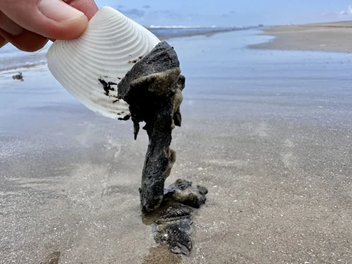
They are sticky, dark-colored lumps of weathered oil that form after oil spills, leaks, or natural seepage in the marine environment.
Formation
Weathering Process: They form through weathering, where lighter oil components evaporate, leaving behind heavier hydrocarbons that mix with sand and marine debris.
Size & Texture: Their size varies from pea-sized globules to basketball-sized lumps.
Composition: They contain toxic contaminants like heavy metals, persistent organic pollutants (POPs), and Polycyclic Aromatic Hydrocarbons (PAHs).
Impact of Tar Ball Pollution
Marine Life: Marine animals like sea turtles and seabirds may ingest them, leading to death. They also clog the pores of mangroves and coral reefs.
Human Health: Direct contact can cause skin irritation, and toxic chemicals can enter the human food chain through contaminated seafood.
Economy: Significant negative impact on tourism (due to oily beaches and odor) and fisheries (fouling of fishing nets).
Tar-balls Management Rules, 2026
Framed under the Environment (Protection) Act, 1986, these rules establish India’s first dedicated regulatory framework for tar balls.
Feature
Description
Polluter Pays Principle
Facility owners are liable to pay compensation for environmental damage caused by leaks or improper handling.
Disaster Classification
Coastal states are required to declare tar ball pollution as a “State Disaster”.
Institutional Roles
The Indian Coast Guard (ICG) implements the National Oil Spill Disaster Contingency Plan (NOSDCP); district administrations manage local cleanup.
Circular Economy
Tar balls with high calorific value (>1,500 kcal) can be repurposed as fuel in the cement industry.
Sundarbans Losing Ability to Recover
Environment
Context
A recent study shows that around 10–15 percent of the Sundarbans is undergoing a “critical slowing down” process from environmental stress.
Sundarbans in West Bengal
Geographical location
It is a vast contiguous mangrove forest ecosystem present in the coastal region of Bay of Bengal
It spread over India and Bangladesh on the Ganges, Brahmaputra and Meghna delta.
Conservation efforts
UNESCO World Heritage site – Sundarbans National Park was designated a UNESCO World Heritage site in 1987.
Biosphere Reserve – Sunderbans was designated as a Biosphere Reserve by UNESCO in 2001.
Wetland of International Importance – Sundarban Wetland, India was recognised as the ‘Wetland of International Importance’ under the Ramsar Convention in January 2019.
Flora and Fauna – Sunderban National Park is known for its wide range of fauna, including 260 bird species and is home to the Royal Bengal tiger, Gangetic dolphins and Estuarine crocodile
Supreme Court Hearing on Sabarimala Case
Polity and Governance
Context
A nine-judge bench of the Supreme Court of India has begun hearings on petitions concerning women’s entry into religious places, including the Sabarimala Temple.
Background
In 2018, a Constitution Bench (4:1 majority) allowed entry of women of menstruating age into the temple,declaring the restriction unconstitutional.
Due to widespread protests, in 2019, the matter was referred to a larger bench.
Significance: The issue reflects tension between Fundamental Rights on equality/non-discrimination (Articles 14, 15, 17) and Religious Freedom (Articles 25, 26).
It also raises questions on Judicial activism vs restraint and Secularism in India (principled distance model).
Additional Information – Sabarimala Temple
Location and Deity: The Sabarimala Temple is located in the Pathanamthitta district of Kerala on the banks of the sacred Pamba River (also known as Pampa), within the Periyar Tiger Reserve in the Western Ghats.
It is dedicated to Lord Ayyappa, also known as Dharmashasta.
The temple is situated on a hilltop at an elevation of about 1,260 metres.
Religious Significance: It is one of the largest annual pilgrimage centres in the world. Devotees undertake a rigorous 41-day ‘Vratham’ (penance) before visiting.
The temple symbolises celibacy (Naishtika Brahmacharya) of Lord Ayyappa.
Credit Guarantee Scheme
Economy
Context
The government is considering a ₹2.5 lakh crore credit guarantee scheme to support businesses, especially MSMEs impacted by the West Asia crisis.
About
The scheme will be an expansion of the Emergency Credit Line Guarantee Scheme (ECGLS)
Emergency Credit Line Guarantee Scheme (ECLGS)
It was launched in 2020 as part of the Aatmanirbhar Bharat Abhiyaan
Objective – to support eligible MSMEs and other eligible business enterprises due to the disruption caused by the COVID-19 pandemic.
ECLGS covered almost all the sectors of the economy.
The structure of the scheme permitted
Easy access to credit
Interest rate was also capped to lowest.
Credit and loans were sanctioned without any processing charges.
United Nations Security Council (UNSC)
International
In News
Russia and China vetoed a UN Security Council resolution aimed at reopening the Strait of Hormuz.
United Nations Security Council (UNSC)
It is one of the six principal organs of the United Nations
Objective – to maintain international peace and security.
It is the only UN body empowered to issue legally binding resolutions that all UN member states are obligated to comply with under international law.
Structure and Composition: The Council has 15 members divided into two categories:
Permanent Members (P5) with Veto Power: China, France, Russia, the United Kingdom, and the United States.
A single veto from any P5 member is sufficient to block any substantive resolution, regardless of how many other members support it.
Non-Permanent Members (10 seats): Elected by the UN General Assembly for two-year terms, distributed geographically.
Headquarters: New York, USA
Mission MITRA
Science & Technology
In News
The Indian Space Research Organisation (ISRO), in collaboration with the IAF-Institute of Aerospace Medicine, has launched Mission MITRA in Leh, Ladakh.
Mission MITRA
Full Form: Mapping of Interoperable Traits and Response Assessment.
Agencies Involved: Designed jointly by ISRO and the Indian Air Force’s Institute of Aerospace Medicine (IAM).
Location: Leh, Ladakh (~3,500 meters altitude).
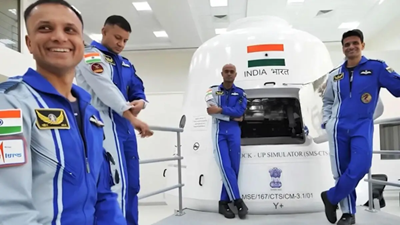
Participants: Includes the four designated Gaganyatris (astronauts) for the Gaganyaan mission: Prasanth Nair, Ajit Krishnan, Angad Pratap, and Shubhanshu Shukla.
Objectives and Significance
The mission is an “analogue mission,” meaning it uses Earth-based environments that mimic the physical and psychological stressors of space.
Human Factors Engineering: Studies how hypoxia (low oxygen), extreme cold, and isolation affect crew decision-making and teamwork.
Interoperability: Evaluates coordination between the crew and Ground Control Teams under operational stress and simulated communication delays.
Gaganyaan Preparation: The data directly informs training protocols for the upcoming crewed Gaganyaan mission (expected in late 2026 or early 2027) and future long-duration stays at the Bharatiya Antariksha Station (BAS).