Blog

  • Neeriddare Nale scheme

    Neeriddare Nale scheme

    News –

    • The State government will implement the Neeriddare Nale (water is future) initiative across 525 gram panchayats in 27 taluks of 15 districts.

    Neeriddare Nale scheme (meaning “Water is Future”)

    • Launched on – October 9, 2025
    • Goal: To conserve water and increase groundwater levels in areas where it has been overexploited.
    • Focus areas: The first phase targets 525 gram panchayats across 27 taluks in 15 districts where groundwater is critically low.
    • Strategies: The program will implement several measures including:
    1. Constructing new groundwater recharge structures.
    2. Installing rain water harvesting systems.
    3. Regulating water extraction in critical areas.
    4. Developing region-specific crop and water management strategies.
    5. Public awareness: The scheme also involves public awareness campaigns. Actor Vasista Simha was appointed as the brand ambassador for the Department of Minor Irrigation and Groundwater Development to help engage the younger generation on water conservation issues.
  • Water Resilience Project

    Water Resilience Project

    News-

    • IISc, IIT-M join forces with Greater Bengaluru authority for the World Bank-funded water security and resilience project.
    • The project will receive over ₹3,500 crore in funding from the World Bank, with key stakeholders including the GBA, BWSSB, Minor Irrigation, and the Karnataka State Natural Disaster Monitoring Centre (KSNDMC).

    Karnataka Water Security and Resilience Program (Bengaluru)

    • Objective – It is a World Bank-supported initiative to address water scarcity and urban flooding in Bengaluru through improved water management
    • It includes reviving 183 lakes, upgrading stormwater drains, building sewage treatment plants, reducing water leakage through new technology like smart meters, and enhancing disaster response systems.
    • Duration: The program is set to be initiated in April 2025.
    • Implementing Agency: The Revenue Department (Disaster Management) is the primary implementing agency.
  • Draft Shram Shakti Niti, 2025 Unveiled | Invasive Alien Species | Biometric, Wearable Glass Authentication for UPI Payments | Central, State co-op Banks Brought under Ambit of RBI’s Ombudsman scheme | PM-KUSUM Programme | 93rd Air Force Day

    Draft Shram Shakti Niti, 2025 Unveiled

    Syllabus: GS2/Government Policy & Intervention

    Context

    • Recently, the Union Ministry of Labour & Employment has unveiled the Draft National Labour and Employment Policy, titled as Shram Shakti Niti 2025, aimed at reshaping India’s labour landscape.

    Shram Shakti Niti 2025 or National Labour and Employment Policy

    ಶ್ರಮ ಶಕ್ತಿ ನೀತಿ 2025 ಅಥವಾ ರಾಷ್ಟ್ರೀಯ ಕಾರ್ಮಿಕ ಮತ್ತು ಉದ್ಯೋಗ ನೀತಿ

    • Objective – It aims to build a labour ecosystem that is inclusive, equitable, and resilient, ensuring dignity, protection, and opportunity for every worker.

    Key Features of the Policy

    • Universal and Portable Social Security: Policy aims to establish universal and portable social security for all workers.
    • It envisions the creation of a Universal Social Security Account (USSA) by integrating key welfare and insurance systems such as:
    1. Employees Provident Fund Organisation (EPFO);
    2. Employees State Insurance Corporation (ESIC);
    3. Pradhan Mantri Jan Arogya Yojana (PM-JAY);
    4. e-SHRAM portal
    5. State welfare boards.
    • Skilling & Employment: The policy envisions a skill-employment creation with the help of programs like Skill India, the National Apprenticeship Promotion Scheme, and Pradhan Mantri Kaushal Vikas Yojana.
    • These will be supported by a digitally enhanced National Career Service–Digital Public Infrastructure (NCS-DPI), designed to connect talent with opportunity across India’s towns, cities, and MSME cluster
    • Nodal ministry – The Ministry of Labour & Employment aims to act as National Employment Facilitator and regulator enabling convergence among workers, employers, and training institutions.

    Invasive Alien Species

    Syllabus: GS3/Environment

    In News

    • Conservation scientists warn that invasive alien species are destroying local biodiversity and habitats in India.

    Invasive alien species

    • Definition: They are non-native organisms introduced accidentally or intentionally (e.g., ornamental fish, decorative plants, or for land restoration).
    • They often spread rapidly, outcompeting native species, harming biodiversity and damaging habitats.

    Common Examples in India

    • Lantana camara: Invades forests, outcompetes native plants, and hinders regeneration.
    • Parthenium hysterophorus (Congress grass): Spreads over farmland and causes allergic reactions.
    • Eichhornia crassipes (Water hyacinth): Chokes lakes and rivers, depleting oxygen and affecting fisheries.
    • African Catfish (Clarias gariepinus): Outcompetes native fish species, threatening aquatic biodiversity.

    Control and Management Measures

    • Stricter quarantine checks on imports, trade, and shipping.
    • Ballast water management in ships to prevent marine invasions.
    • Mechanical Control: Manual removal, cutting, dredging, or uprooting.
    • Chemical Control: Use of herbicides or pesticides — applied cautiously to avoid ecological harm.

    Biometric, Wearable Glass Authentication for UPI Payments

    Syllabus: GS3/Economy

    Context

    • The National Payments Corporation of India (NPCI) and the Reserve Bank of India launched biometric and wearable glass recognition-based authentication for UPI transactions at the Global Fintech Fest 2025.

    About

    • Face & Biometric Authentication: Users can authenticate UPI payments using face recognition or biometrics stored in Aadhaar.
    • Authentication occurs entirely on the user’s device, ensuring data privacy and security.

    Hands-Free Payments via Smart Glasses:

    • Wearable smart glasses enable small-value transactions using voice commands.
    • Users can scan a QR code and complete payments without using a phone, PIN, or touch.
    • Multi-Signatory UPI Accounts: Allows joint account holders to authorize payments collectively.
    • Enhances convenience, transparency, and control for family or business accounts.

    Additional Information – National Payments Corporation of India (NPCI)

    • Established in – It serves as an umbrella body for the operation of retail payments in India.
    • Established by – Reserve Bank of India along with the Indian Bank’s Association.
    • Established under – It was set up under the provisions of the Payment and Settlement Systems Act, 2007.

    Products of NPCI

    1. RuPay
    2. National Common Mobility Card
    3. Bharat Interface for Money (BHIM)
    4. Unified Payments Interface (UPI)
    5. Bharat Bill Payment System

    Central, State co-op Banks Brought under Ambit of RBI’s Ombudsman scheme

    Syllabus: GS3/Economy

    Context

    • State co-operative banks and central co-operative banks will come under the ambit of the Reserve Bank Integrated Ombudsman Scheme, 2021.

    Reserve Bank Integrated Ombudsman Scheme (RB-IOS)

    • It was launched in 2021,
    • Objectiveto provide customers a speedy, cost-effective, and expeditious grievance redress mechanism.
    • Coverage: All commercial banks, regional rural banks (RRBs), state co-operative banks, central co-operative banks, and scheduled/non-scheduled primary (urban) co-operative banks with a deposit size of ₹50 crore or more.
    • All Non-Banking Financial Companies (excluding housing finance companies) with asset size of ₹100 crore or more that accept deposits or have a customer interface.

    Significance:

    • Strengthens consumer protection in the financial sector.
    • Enhances trust and accountability in banks and NBFCs

    PM-KUSUM Programme

    Syllabus:GS3/Environment

    In News

    • The Union government is planning to promote the PM-KUSUM in African and island nations through the International Solar Alliance.

    PM-KUSUM Scheme

    • Launched in – 2019
    • Implementation – Ministry of New and Renewable Energy.
    • Aim: To provide financial support to farmers for installing solar-powered irrigation systems like solar pumps and grid-connected solar plants.
    • Significance- To deliver affordable and reliable solar energy to the agricultural sector, reducing irrigation costs and cutting pollution caused by diesel use.
    • Target: The scheme aims to add about 34,800 MW of solar capacity by March 2026.

    93rd Air Force Day

    Syllabus: GS3/Defence

    Context

    • The Indian Air Force (IAF) celebrated its 93rd anniversary with a ceremonial parade at Air Force Station Hindon.

    Indian Air Force (IAF)

    • Establishment – It is the air arm of the Indian Armed Forces, officially established on October 8, 1932.
    • Mission – to safeguard Indian airspace and conduct aerial warfare.
    • Uniqueness – it is the fourth largest air force in the world,
    • Motto – “Touch the sky with glory,” is inspired by the Bhagavad Gita.
    • Theme: The 2025 theme is focused on the IAF’s contribution to Operation Sindoor.
  • VLGC Shivalik | Paramparagat Krishi Vikas Yojana (PKVY) | 150th anniversary of Vande Matram | Leprosy in India | Namchik Namphuk Coal Block | Falling Camel Counts | Exercise KONKAN-25

    VLGC Shivalik

    Syllabus: GS3/Economy

    Context

    • The Union Minister of Ports, Shipping and Waterways (MoPSW) received India’s third Very Large Gas Carrier (VLGC), Shivalik,

    Very Large Gas Carrier (VLGC), Shivalik

    • It is built in South Korea and named after the Himalayan range.
    • It is an 82,000 cubic metre LPG carrier equipped with advanced safety, temperature control, and operational systems.
    • The vessel joins the Shipping Corporation of India Limited’s (SCI) two existing VLGCs — Sahyadri and Anandamayi.
    • Significance – The arrival of Shivalik symbolizes India’s march toward maritime self-reliance.

    Paramparagat Krishi Vikas Yojana (PKVY)

    Syllabus: GS3/ Agriculture, GS3/ Environment

    Context

    • The Paramparagat Krishi Vikas Yojana (PKVY), launched in 2015 under the National Mission for Sustainable Agriculture, has emerged as a flagship initiative to promote organic farming in India.

    Basics – Organic farming

    • Organic farming is a sustainable agriculture system that excludes synthetic inputs like chemical fertilizers and pesticides.
    • It relies on natural resources like crop residues, farmyard manure, and compost to maintain soil health and manage pests and diseases.

    Organic farming in India

    • India ranks at 4th place in organic farming globally in terms of area.
    • Madhya Pradesh has the largest area under organic certification followed by Maharashtra, Rajasthan, Gujarat and Karnataka.
    • Sikkim is India’s first fully organic state.
    • India ranks first globally in terms of number of farmers practicing organic farming.

    Paramparagat Krishi Vikas Yojana (PKVY)

    • It was launched in 2015 under the National Mission for Sustainable Agriculture
    • Aim – The schemes stress on end-to-end support to farmers engaged in organic farminge. from production to processing, certification and marketing and post-harvest management.
    • Objective – to advance a scalable model of eco-agriculture that integrates low-cost, chemical-free techniques.
    • Significance – to enhance food safety, income generation, and environmental sustainability.

    150th anniversary of Vande Matram

    Syllabus: GS1/ Culture

    In Context

    • The Union Cabinet announced nationwide celebration of the 150th anniversary of the national song ‘Vande Mataram’.

    Vande Matram

    • Vande Mataram was composed by Bankim Chandra Chatterjee in Sanskrit and first appeared in the novel Anandamath(1882).
    • Its first public recital by Rabindranath Tagore at the 1896 INC session gave it national exposure.
    • The national song has equal status with Jana Gana Mana, as declared by a 1950 Presidential order.
    • Article 51A(a) mandates respect for the anthem but not for a national song, indicating a sensitive balance.
    • The song was a rallying cry for anti-colonial revolutionaries and a symbol of collective resolve during the independence movement.

    Leprosy in India

    Syllabus: GS2/ Health

    Context

    • India’s leprosy prevalence rate has fallen from 57.2 per 10,000 population in 1981 to just 0.57 in 2025.

    Leprosy

    • Leprosy, also known as Hansen’s disease.
    • It is a chronic neuromuscular disorder. It is caused by several strains of Mycobacterium leprae.
    • Leprosy can be cured with Multi-Drug Therapy (MDT).

    National Leprosy Eradication Programme (NLEP)

    • It is a Centrally Sponsored Scheme under the National Health Mission (NHM).
    • Objective – It aims at eliminating leprosy in each of the districts by 2030.
    • NIKUSTH- A real-time leprosy reporting software implemented across India..

    Namchik Namphuk Coal Block

    Syllabus: GS3/ Environment

    In News

    • Arunachal Pradesh has launched its first commercial coal mining project at the Namchik-Namphuk coal block in Changlang district.

    Namchik-Namphuk Coal Block

    • Location: Changlang district, southeastern Arunachal Pradesh, part of the Upper Assam coal belt region.
    • Reserves: Estimated 5 crore tonnes of coal, enabling long-term production viability.
    • Economic Impact: Expected to generate ₹100 crore annual revenue for the state.
    • Environmental Features: Operates under Mission Green Coal Regions, focusing on land reclamation, afforestation, and eco-responsible mining.
    • Social Impact: Creation of local employment; reduction of illegal mining activities.
    • Strategic Alignment: Supports the PM EAST vision – balanced Northeast development.

    Falling Camel Counts

    Syllabus: GS3/Species in News

    Context

    • The Ministry of Fisheries, Animal Husbandry and Dairying is planning to launch the National Camel Sustainability Initiative (NCSI) — a national mission aimed at reversing the steady decline in India’s camel population.

    Key findings –

    • India is witnessing a rapid and alarming decline in its camel population, especially in the traditionally camel-rearing states of Rajasthan and Gujarat.
    • According to the 20th Livestock Census, India’s camel population stood at 2.52 lakh in 2019, down from about 11 lakh in 1977 and 4 lakh in 2013.
    • Nearly 90% of these camels are concentrated in Rajasthan and Gujarat.

    Camels in India – Dromedary Camel (Camelus dromedarius) 

    • India mainly has one species of camel. It is a one-humped camel, adapted to desert conditions.
    • Chinkara and Camel are the two State Animals of Rajasthan.

    Economic & Cultural Importance:

    • Transport & Labor: Traditionally used for carrying goods, plowing, and transport in desert regions.
    • Milk Production: Camel milk is nutritious and in demand.
    • Tourism: Camel safaris are popular in Rajasthan.
    • Cultural Festivals: Camel fairs, especially the Bikaner Camel Festival, celebrate the animal.
    • Defense Use: Camels are used by the Border Security Force (BSF) in desert patrols.

    Exercise KONKAN-25

    Syllabus: GS3/Defence

    Context

    • India and the United Kingdom conducted the 2025 edition of Exercise KONKAN, an annual bilateral maritime exercise that began in 2004.

    Exercise KONKAN-25

    • Participating countries – India and the United Kingdom
    • Type – It is an annual bilateral maritime exercise

    Other India-UK Bilateral Exercises

    • AJEYA WARRIOR (Army)
    • Exercise Indradhanush (Air Force)
    • Exercise Cobra Warrior (multinational air exercise hosted by the UK).
  • State Film Awards

    State Film Awards

    News-

    • The Karnataka government has announced the State Film Awards for 2021, celebrating the best of Kannada cinema released in that year.

    State Film Awards

    1. Best Film: “Doddahatti Boregowda” (Directed by Raghu KM)
    2. Second Best Film: “777 Charlie” (Directed by Kiranraj K)
    3. Third Best Film: “Bisilu Kudure” (Directed by Hridaya Shiva)
    4. Best Actor: Rakshit Shetty for “777 Charlie”
    5. Best Actress: Archana Jois for “Mute”
    6. Best Supporting Actor: Pramod for “Ratnan Prapancha”
    7. Best Supporting Actress: Umashree for “Ratnan Prapancha”
    8. Best Popular Entertaining Film: “Yuvarathnaa” (Produced by Vijay Kiragandur, Directed by Santhosh Ananddram)
    9. Best Children’s Film: “Cake” (Directed by Kishore Moodbidri)
    10. Best Debut Director: Shankar Guru for “Badava Rascal”
    11. Best Regional Language Film: “Nada Peda Asha” (Kodava language, Directed by Prakash Kariappa)
  • WHO Global Report on Trends in Prevalence of Tobacco Use | Reforming Passive Euthanasia in India | MY Bharat-National Service Scheme (NSS) Awards | PM-SETU Yojana | All Jal Jeevan mission Pipelines to be mapped | Securities Transaction Tax

    WHO Global Report on Trends in Prevalence of Tobacco Use

    Syllabus: GS2/ Health

    In News

    • The WHO Global Report on Trends in Prevalence of Tobacco Use 2000–2024 and projections 2025–2030 has been released.

    Key Highlights

    Global Trends:

    • Decline in Use: Global adult tobacco use dropped from 26.2% (2010) to 19.5% (2024).
    • Still Prevalent: Despite progress, 1 in 5 adults globally still consumes tobacco.
    • E-Cigarettes Rise: Over 100 million people worldwide now use e-cigarettes, posing new regulatory and health challenges.

    India’s Progress & Status:

    • Tobacco Users (2024): Around 48 million Indians aged 15+ use tobacco.
    • Global Standing: India is the 2nd largest producer (after China) and 2nd largest exporter (after Brazil).

    Initiatives taken by India to Control Tobacco Consumption

    • Cigarettes Act, 1975 – The act mandated the display of statutory health warnings in advertising and cigarette packages.
    • Cigarettes and other Tobacco Products Act (COTPA), 2003 – The act replaced the Cigarettes Act of 1975. It aims to provide smoke-free public places and also place restrictions on tobacco advertising and promotion.
    • Prohibition of Electronic Cigarettes Bill, 2019 – To prohibit the Production, Manufacture, Import, Export, Transport, Sale, Distribution, Storage and Advertisement of e-Cigarettes.
    • National Health Policy 2017 – It has set an ambitious target of reducing tobacco use by 30% by 2025.
    • Tobacco Quit line service – 1800-112-356 – It was initiated in 2016 to reach a large number of tobacco users. It aims to provide telephone-based information, advice and support for tobacco cessation.
    • National Tobacco Control Programme (launched in 2007-08): Aims to create awareness about harmful effects, aligned with the WHO Framework Convention on Tobacco Control (FCTC).
    • Tobacco-Free Film Rules (2024): Enforced new standards for tobacco depiction in films and TV.
    • Yellow Line Campaign: Introduced visible indicators (yellow lines) around schools to reinforce bans on tobacco sales within 100 yards.
    • Taxation and Price Interventions: Incremental increases in excise and GST duties, though experts recommend further hikes to maximize impact.

    About Tobacco (Nicotiana tabacum)

    • Cultivation – It is an annual herbaceous plant native to tropical and subtropical regions of South America and widely cultivated worldwide.
    • Climatic conditions – It requires a frost-free period of 90–120 days, with optimal temperatures of 20°C–30°C and at least 500 mm of rainfall;
    • Soil – It prefers well-drained sandy loam or alluvial soils.
    • Nicotine content – Every part of the plant (except the seed) contains nicotine (2–8% nicotine), concentrated mostly in the leaves (about 64% of total plant nicotine content).

    Reforming Passive Euthanasia in India

    Syllabus: GS2/Polity and Governance; GS4/Ethics

    Context

    • Despite the legal validity of passive euthanasia, its implementation remains mired in procedural complexity, institutional gaps, and ethical ambiguity.
    • Note – Karnataka is the second State after Kerala to implement the directive.

    Supreme Court Ruling

    • Common Cause vs. Union of India & Anr. (2018) case – It recognised right to die with dignity as a fundamental right under Article 21 and upheld legal validity of passive euthanasia.
    • Definition of Euthanasia – It is an act of deliberately ending a person’s life to relieve suffering from painful and incurable disease or disorder.

    Passive euthanasia v/s Active euthanasia

    • Passive euthanasia – It is withholding or withdrawal of life-sustaining treatment for terminally ill patients undergoing prolonged medical treatment with no hope of recovery and do not have decision-making capacity.
    • Active euthanasia It is the intentional act of killing a terminally ill patient on voluntary request. It is illegal in India.

    MY Bharat-National Service Scheme (NSS) Awards

    Syllabus: Miscellaneous

    Context

    • President Droupadi Murmu presented the MY Bharat-National Service Scheme (NSS) Awards for the year 2022–23 at Rashtrapati Bhavan.

    MY Bharat-National Service Scheme (NSS) Awards

    • Instituted by – Ministry of Youth Affairs and Sports
    • Aim – These awards are conferred annually to acknowledge outstanding voluntary community service.

    National Service Scheme (NSS)

    • Launched in – 1969 during the birth centenary of Mahatma Gandhi,
    • It is one of the flagship youth programmes of the Government of India.
    • It aims to foster the personality and character development of students through voluntary community service, inspired by the Gandhian ideals of selfless service.
    • The motto of NSS – “Not Me, But You” (स्वयं से पहले आप) – reflects its core philosophy of prioritising community welfare above individual interest.

    PM-SETU Yojana

    Syllabus: GS2/Governance

    Context

    • The Prime Minister launched the Pradhan Mantri Skilling and Employability Transformation through Upgraded ITIs- PM – SETU.

    PM-SETU Yojana

    • Abbreviation – Pradhan Mantri Skilling and Employability Transformation through Upgraded ITIs
    • Financing – It is a centrally sponsored scheme
    • Objective – to transform 1,000 Government ITIs across India into modern, industry-aligned training institutions.

    All Jal Jeevan mission Pipelines to be mapped

    Syllabus :GS2/Governance

    In News

    • The Union government is planning  to map all drinking water assets, including pipelines under the Jal Jeevan Mission (JJM), on the GIS-based PM Gati Shakti platform.

    Jal Jeevan Mission (JJM)

    • Launched in – 2019
    • Objective to provide Functional Household Tap Connections
    • Significance – to ensure 55 litres per capita per day of safe drinking water to all rural households by 2024.
    • However, due to implementation challenges, the deadline has now been extended to 2028.
    • Nodal Ministry – Ministry of Jal Shakti.
    • Financing  – Central sponsored scheme

    Securities Transaction Tax

    Syllabus: GS3/Economy

    In News

    • The Supreme Court of India decided to examine a plea challenging the constitutional validity of the Securities Transaction Tax (STT).

    Securities Transaction Tax (STT)

    • It is a direct tax levied on the transaction value of securities traded on the Indian stock exchange under the Finance Act, 2004.
    • It aims to combat tax evasion in the stock market.
    • It includes – derivatives, shares, and equity-oriented mutual funds.
    • It is applied on the buying and selling of securities irrespective of the profit or loss made in the transaction.
  • HelpAge India launches ‘AdvantAge60’ campaign

    HelpAge India launches ‘AdvantAge60’ campaign

    News –

    • HelpAge India, a NGO working for the cause of senior citizens, launched its new campaign ‘AdvantAge60

    ‘AdvantAge60: Powering Aspirations’,

    • It is a campaign that promotes a positive view of aging for elders in India.
    • The campaign aims to showcase how individuals over 60 can lead active, enabled, and empowered lives, countering ageist stereotypes by highlighting the strength and potential of older people.
    • Theme: “Powering Aspirations – Active, Enabled & Empowered”.
    • Launch: Launched on International Day of Older Persons 2025.
  • Abhidhamma Divas | Supermoon | Moscow Format Talks | Polar Silk Road | Operation HAECHI-VI | PM Gati Shakti National Master Plan

    Abhidhamma Divas

    Syllabus :GS1/History

    In News

    • The International Buddhist Confederation (IBC), in collaboration with Gautam Buddha University (GBU), Antarrashtriya Baudh Shodh Sansthan and the Ministry of Culture celebrated International Abhidhamma Day

    Abhidhamma Divas

    • It commemorates the Buddha’s descent from the Tāvatiṃsa Heaven after imparting Abhidhamma teachings.
    • According to tradition, after attaining enlightenment, the Buddha spent three months in the Tāvatiṃsa Heaven. He taught the Abhidhamma to his mother, Māyā, who had passed away and was reborn there.

    Significance in Modern Times:

    • Abhidhamma Divas encourages mindfulness, self-reflection, and spiritual growth.
    • It reinforces the core values of Buddhism, including compassion and the pursuit of wisdom.
    • The observance also highlights the importance of connecting with the teachings of the Buddha to lead a life of peace and purpose.

    Supermoon

    Syllabus: GS1/Geography

    Context

    • The Supermoon, also known as the Harvest Moon, was observed recently.

    Supermoon

    • A supermoon occurs when a full moon or new moon coincides with the moon’s closest approach to the earth in its elliptical orbit — a point known as the perigee.
    • Because the moon’s orbit is not a perfect circle, its distance from the earth varies throughout the month by around 50,000 km.
    • When the moon is near its perigee and also directly opposite the sun, the full moon appears about 14% larger and 30% brighter than when it is at its farthest point. This is the supermoon.
    • Culturally, supermoons have long captured human imagination, inspiring folklore and spiritual observances across civilisations.
    • The term “supermoon” was first used by astrologer Richard Nolle in the 1970s and is now common in astronomy and the media.

    Moscow Format Talks

    Syllabus: GS2/ International Relation

    In News

    • India, China, Pakistan attend 10-nation Moscow Format talk.

    Moscow Format Talks

    • Established in – 2017
    • Objective – It is a regional diplomatic initiative to address the Afghanistan conflict, promote stability, and foster national reconciliation.
    • Significance – It serves as a platform for regional countries to coordinate on Afghan peace and stability.
    • Members – India, Afghanistan, China, Iran, Kazakhstan, Kyrgyzstan, Pakistan, Russia, Tajikistan, and Uzbekistan.

    Polar Silk Road

    Syllabus: GS2/ International Relation

    In News

    • The Chinese ship “Istanbul Bridge” became the first commercial vessel to sail from Ningbo-Zhoushan (China) to Felixstowe (UK) via the Arctic in 18 days, marking the operational launch of the Polar Silk Route.

    Polar Silk Road

    • The Polar Silk Road is a part of China’s broader Belt and Road Initiative (BRI), envisioned as a “blue economic corridor” through the Arctic Ocean.
    • It focuses on developing navigable Arctic sea routes connecting East Asia, North America, and Western Europe via the Northern Sea Route (NSR) along Russia’s coast.
    • Significance – It establishes a new shipping corridor between Asia and Europe — shorter and more cost-effective than the Suez Canal route.

    Additional Information – China’s Belt and Road Initiative (BRI)

    OBOR

    1. One Belt One Road (OBOR) is an ambitious project of China that focuses on connectivity and cooperation among multiple countries spread across the continents of Asia, Africa and Europe. OBOR spans about 78 countries.
    2. Initially announced in the year 2013, the project involves building networks of roadways, railways, maritime ports, power grids, oil and gas pipelines and associated infrastructure projects.

    The project Covers two parts

    • Silk Road Economic Belt – It is land-based and is expected to connect China with Central Asia, Eastern Europe and Western Europe.
    • 21st Century Maritime Silk Road – It is sea-based and is expected to connect China’s southern coast to the Mediterranean, Africa, South-East Asia and Central Asia.

    Operation HAECHI-VI

    Syllabus: GS2/International Institutions; GS3/Cybersecurity

    Context

    • The Central Bureau of Investigation (CBI) has arrested eight accused and identified 45 suspects as part of Interpol’s Operation HAECHI-VI.

    Operation HAECHI-VI

    • The operation focused on seven categories of offences:
    1. cyber-enabled financial crime,
    2. voice phishing,
    3. love and romance scams,
    4. online sextortion,
    5. investment fraud,
    6. money laundering linked to illegal online gambling,
    7. business email compromise,
    8. e-commerce fraud.
    • Investigators worked together to detect and disrupt online fraud as well as money laundering activities, blocking over 68,000 associated bank accounts and freezing close to 400 cryptocurrency wallets.

    Additional Information – International Criminal Police Organization (INTERPOL)

    • It is an intergovernmental organization established in
    • Objective – To facilitate worldwide police cooperation and crime control in around 195 countries.
    • Headquarters – Lyon, France

    Different Types of Notices issued by INTERPOL

    • INTERPOL issues various notices to facilitate worldwide police cooperation and crime control.
    1. Red Notice
    • It is issued to seek the arrest of a person.
    • The person is in the wanted list of an international tribunal or in a judicial jurisdiction.
    1. Green Notice
    • It is issued to warn about the criminal activities of a person.
    • It is issued if the person is considered as a possible threat to public safety.
    1. Blue Notice
    • It is issued to obtain information about a person.
    1. Yellow Notice
    • To locate a missing person. It is also issued when a person is unable to identify himself or herself.
    1. Black Notice
    • To seek information about unidentified bodies.
    1. Orange Notice
    • It is issued to process an imminent threat or danger to property or person.
    1. Purple Notice
    • To provide information on procedures, modus operandi, devices or hiding place

    Central Bureau of Investigation

    • Set up in – It was set up in 1963 by a resolution of the Ministry of Home Affairs.
    • Established under – It comes under the administrative control of the Department of Personnel and Training (DoPT) of the Ministry of Personnel, Public Grievances and Pensions.
    • Recommended by – It was established on the recommendation of the Santhanam Committee.
    • Legal status – The CBI is not a statutory body. It derives its powers from the Delhi Special Police Establishment (DSPE) Act, 1946.

    Functions 

    1. The CBI is the main investigating agency of the Central Government.
    2. It also provides assistance to the Central Vigilance Commission and Lokpal.
    3. It is also the nodal police agency in India which coordinates investigations on behalf of Interpol Member countries.

    PM Gati Shakti National Master Plan

    Syllabus: GS3/Infrastructure

    Context

    • The Union Cabinet on Economic Affairs approved four multi-tracking projects under the PM Gati Shakti National Master Plan.
    • These projects span across Maharashtra, Madhya Pradesh, Gujarat, and Chhattisgarh, adding about 894 km to the Indian Railways network.

    PM GatiShakti

    • It was launched in – 2021
    • Objective – to enhance the country’s infrastructure and promote seamless connectivity across various sectors.
    • Significance – It is a transformative approach for economic growth and sustainable development which is driven by seven engines – railway, roads, ports, waterways, airports, mass transport and logistics infrastructure.
    • Implementation: PM Gati Shakti will incorporate the infrastructure schemes of various Ministries and State Governments like Bharatmala, Sagarmala, inland waterways, dry/land ports, UDAN etc.
  • Three new judges of HC assume office

    Three new judges of HC assume office

    News –

    • Chief Justice of the High Court Vibhu Bakhru administered the oath to Justices Geetha Kadaba Bharataraja Setty, Borkatte Muralidhara Pai, and Tyagaraja Narayan Inavally.

    Constitutional Provisions Related to High Courts

    • Articles 214 to 231 in Part VI of the Indian Constitution deal with the provisions related to the High Courts.

    Appointment of Judges of High Court

    • The Chief Justice and other judges of the High Court are appointed by the President of India as can be seen in the following sections.

    Appointment of Chief Justice of High Court

    • The Chief Justice is appointed by the President after consultation with the Governor of the concerned State and the Chief Justice of India.

    Appointment of Other Judges of High Court

    • Other judges of the High Court are appointed by the President after consultation with the Governor of the State, the Chief Justice of India, and the Chief Justice of the concerned High Court.

    Additional information – List of Chief justice of Karnataka Highcourt

    #

    Chief Justice

    Term

    1

    R. Venkataramaiah

    1 November 1956 – 16 July 1957

    2

    S. R. Das Gupta

    25 July 1957 – 13 August 1961

    3

    Nittoor Srinivasa Rau

    29 March 1962 – 7 August 1963

    4

    A. R. Somanath Iyer

    23 November 1969 – 29 December 1969

    5

    M. Sadasivayya

    30 December 1969 – 16 September 1970

    6

    A. Narayana Pai

    17 September 1970 – 6 June 1973

    7

    G. K. Govinda Bhat

    7 June 1973 – 14 December 1977

    8

    D. M. Chandrashekar

    22 March 1978 – 25 September 1982

    9

    K. Bhimaiah

    28 October 1982 – 10 April 1983

    10

    V. S. Malimath

    6 February 1984 – 24 October 1985

    11

    Prem Chand Jain

    28 August 1986 – 16 September 1989

    12

    S. Mohan

    26 October 1989 – 7 October 1991

    13

    S. P. Bharucha

    1 January 1991 – 30 June 1992

    14

    S. B. Majumdar

    2 July 1993 – 13 September 1994

    15

    G. T. Nanavati

    28 September 1994 – 4 March 1995

    16

    M. L. Pendse

    28 July 1995 – 25 March 1996

    17

    S. A. Hakeem

    3 May 1996 – 9 May 1996

    18

    R. P. Sethi

    29 June 1996 – 6 January 1999

    19

    Y. Bhaskar Rao

    9 March 1999 – 26 June 2000

    20

    P. V. Reddi

    21 October 2000 – 16 August 2001

    21

    Nagendra Kumar Jain

    31 August 2001 – 20 October 2004

    22

    Nauvdip Kumar Sodhi

    19 November 2004 – 29 November 2005

    23

    Cyriac Joseph

    7 January 2006 – 6 July 2008

    24

    P. D. Dinakaran

    8 August 2008 – 7 August 2010

    25

    Jagdish Singh Khehar

    8 August 2010 – 12 September 2011

    26

    Vikramajit Sen

    24 December 2011 – 24 December 2012

    27

    Dhirendra Hiralal Waghela

    7 March 2013 – 1 June 2015

    28

    Subhro Kamal Mukherjee

    23 February 2016– 9 October 2017

    29

    Dinesh Maheshwari

    12 February 2018 – 17 January 2019

    30

    Abhay Shreeniwas Oka

    10 May 2019 – 30 August 2021

    31

    Ritu Raj Awasthi

    11 October 2021 – 2 July 2022

    32

    Prasanna B. Varale

    15 October 2022 – 24 January 2024

    33

    P. S. Dinesh Kumar

    3 February 2024 – 24 February 2024

    34

    Nilay Vipinchandra Anjaria

    25 February 2024 – 29 May 2025

    35

    Vibhu Bakhru

    Incumbent

  • Pandit Chhannulal Mishra | NATO Pipeline System (NPS) | Aspirational Agriculture Districts | H125 Helicopters | Ladakh Delegates Offered Terms of Article 371 | 100 Years of UPSC : the guardian of meritocracy

    Pandit Chhannulal Mishra

    Syllabus: Personality in News

    Context

    • The Prime Minister has expressed deep sorrow at the passing away of Padma Vibhushan Pandit Chhannulal Mishra ji.

    Pandit Chhannulal Mishra (1936–2025)

    • Born: He was born on August 3, 1936, in Azamgarh U.P.
    • He was a renowned Indian Hindustani classical music singer.
    • Known for his mastery in khayal, Kirana gharana, thumri, dadra, and bhajans as well.
    • Major Honours: Padma Bhushan (2010), Padma Vibhushan (2020), Sangeet Natak Akademi Fellowship
    • Legacy: He is known for rigorous discipline in riyaaz and deep devotion to accuracy.

    NATO Pipeline System (NPS)

    Syllabus: GS2/IR

    In News

    • Recently, Poland announced plans to join NATO Pipeline System (NPS) with a €4.7 billion investment.

    NATO Pipeline System (NPS)

    • Mandate – It was established during the Cold War. It supplies fuel and lubricants to NATO forces with modern flexibility.
    • It spans about 10,000 km across 12 countries, has a storage capacity of 4.1 million cubic meters, and connects depots, air bases, airports, refineries, and transport points.

    Additional Information – North Atlantic Treaty Organization (NATO)

    • NATO, also called the North Atlantic Alliance, is an intergovernmental military alliance.
    • Headquarters: Brussels, Belgium
    • Background: It was established by 12 countries from Europe and North America with the signing of the North Atlantic Treaty (also known as Washington Treaty) in 1949 in Washington, D.C to provide collective security against the Soviet Union attack in the aftermath of World War II.
    • Collective Defense: According to Article 5, NATO works on the principle of collective defense, where an attack on any NATO member is considered an attack on all NATO members. So far, Article 5 has been invoked once – in response to the 9/11 terrorist attacks in the United States in 2001.
    • Members: It comprises 32 member states. Sweden became the 32nd member.

    Aspirational Agriculture Districts

    Syllabus:GS3/Economy

    In News

    • The Centre announced 100 Aspirational Agriculture Districts to be developed under the Prime Minister Dhan-Dhaanya Krishi Yojana (PMDDKY) across 29 states and UTs.
    • Uttar Pradesh leads with 12 districts, followed by Maharashtra (9), Madhya Pradesh and Rajasthan (8 each) and Bihar (7).

    Prime Minister Dhan-Dhaanya Krishi Yojana

    • Launched in – The scheme will be launched in partnership with states.

    Key Focus Areas:

    • Enhancing agricultural productivity.
    • Promoting crop diversification and sustainable practices.
    • Expanding post-harvest storage at Panchayat and Block levels.
    • Improving irrigation facilities.
    • Facilitating long-term and short-term credit access.

    Building Rural Prosperity and Resilience Program

    • Purpose: launched in partnership with states to address under-employment in agriculture.
    • Key Focus Areas: Skilling, investment, and technology to invigorate rural economy. Modernizing agriculture with improved productivity and warehousing.
    • Target Beneficiaries: Rural women, young farmers, marginal & small farmers and landless families.

    Additional Information – Aspirational Districts Programme (ADP)

    • Launched in – 2018
    • Objective – It aims to rapidly and effectively transform 112 of the country’s most socio-economically underdeveloped districts.

    • Implementation – NITI Aayog

    H125 Helicopters

    Syllabus: GS3/ Defence

    Context

    • Airbus Helicopters, in partnership with Tata Advanced Systems, is setting up a final assembly line for the Indian made H125 utility helicopter in Vemagal, Karnataka.

    H125 Helicopters

    • The Airbus H125 is a light, single-engine utility helicopter.
    • It is known for its versatility and exceptional performance in high-altitude and high-temperature conditions.
    • The H125 was formerly known as the Eurocopter AS350.
    • The H125 will cater to civil needs like emergency medical services, tourism, disaster relief, and law enforcement,
    • Its military version (H125M) will serve India’s armed forces, especially in high-altitude areas like the Himalayas.

    Ladakh Delegates Offered Terms of Article 371

    Syllabus: GS2/Polity and Governance

    Context

    • Ladakh’s two key socio-political amalgams, Leh Apex Body (LAB) and Kargil Democratic Alliance (KDA) decided to resume talks with the Ministry of Home Affairs (MHA) on Statehood and Sixth Schedule.
    • The Centre has reportedly proposed special provisions under Article 371 of the Constitution as a potential alternative to Sixth Schedule status.

    Background

    • In 2019, the former State of Jammu & Kashmir was bifurcated into two Union Territories — Jammu & Kashmir, and Ladakh, the latter without a Legislative Assembly.
    • After its special status was removed, several political groups in Ladakh have been demanding that land, employment, and the cultural identity of Ladakh, should be protected under the Sixth Schedule.
    • In 2019, the National Commission for Scheduled Tribes recommended the inclusion of Ladakh under the Sixth Schedule.

    Sixth Schedule

    • The Sixth Schedule under Article 244 provides for the formation of autonomous administrative divisions — Autonomous District Councils (ADCs) — that have some legislative, judicial, and administrative autonomy within a state.
    • This Schedule contains provisions regarding the administration of tribal areas in the states of Assam, Meghalaya, Tripura and Mizoram.
    • The Schedule also gives ARCs and ADCs the power to collect land revenue, impose taxes, regulate money lending and trading, collect royalties from licenses or leases for the extraction of minerals in their areas, and establish public facilities such as schools, markets, and roads.

    Protections offered under Article 371

    • Articles 371 and 371-A through J provide “special provisions” for specific states, often to give representation to certain religious and social groups and to allow these groups to exercise autonomy over their affairs without interference from the state and central governments.
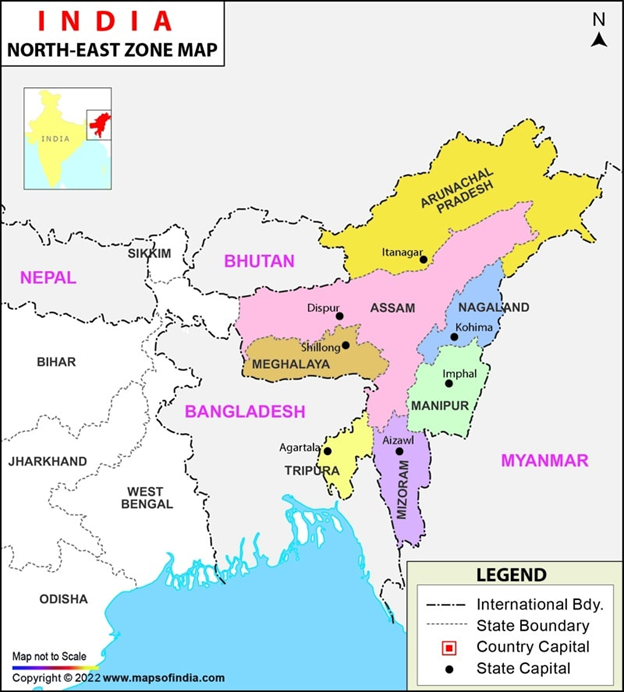
    • Special provisions under Article 371 would allow protections to be extended to the local population of Ladakh.

    100 Years of UPSC : the guardian of meritocracy

    Syllabus: GS2/Polity and Governance

    Context

    • The Union Public Service Commission (UPSC) marks a century of its establishment on October 1.

    Union Public Service Commission (UPSC)

    • Establishment: The Government of India Act, 1919, first provided for such a body, and in October 1926, the Public Service Commission was set up, following the recommendations of the Lee Commission (1924).
    • Later named the Federal Public Service Commission (1937), it was renamed the Union Public Service Commission with the adoption of India’s Constitution on 26th January 1950.
    • Functions- The UPSC conducts civil services examinations to select officers for the Indian Administrative Service , Indian Foreign Service and the Indian Police Service , among others.

    • Members: Besides the chairman, it can have a maximum of 10 members.
    • Appointment – A UPSC chairman is appointed for a term of six years or until attaining 65 years of age, all members have the same term.
    • Reappointment: The UPSC Chairman is not eligible for reappointment after completing their term.
    • Removal (317): Removal by President:
    1. Can only be done on the ground of misbehaviour.
    2. Requires a Supreme Court inquiry and report confirming the misbehaviour.
    3. Reference to the Supreme Court is made by the President.
    4. Can remove without Supreme Court inquiry if the person: Is adjudged insolvent, engages in paid employment outside office duties, is unfit due to mental or physical infirmity.

    Civil Services Day

    • Civil Services Day is observed on 21st April every year
    • Reason – to commemorate the day in 1947 when Sardar Vallabhbhai Patel addressed the first batch of civil servants at the Metcalfe House, New Delhi.
    • He termed civil servants as the “Steel frame of India,” emphasizing their role in maintaining unity and integrity.