
Karnataka’s First Spring Census

News –
- The Karnataka Minor Irrigation and Groundwater Development Department, supported by the Directorate of Groundwater, has completed the state’s first-ever digital census, identifying 274 natural springs across 31 districts to enhance water conservation.
Key Findings of the Spring Census:
- Total Count: 274 springs documented, with the majority located in hilly districts like Belagavi, Uttara Kannada, Chamarajanagar, and Kodagu.
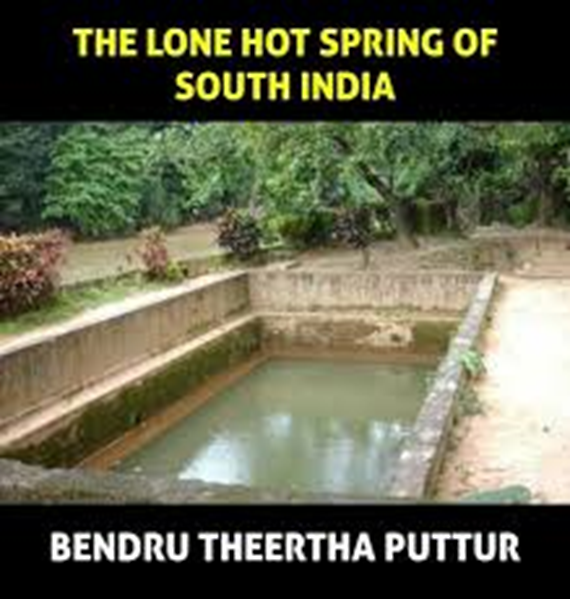
- Unique Feature: The census identified one hot spring, “Bendru Theertha,” in the Dakshina Kannada district.
- Data Usage: The data will be used to protect and manage spring-fed water sources, which are critical for water security in rural areas.
- Top Districts: Belagavi reported the highest number of springs with 59, followed by Uttara Kannada (31), Chamarajanagar (23), and Kodagu (23).
- Ecological Health: Of the 274 springs, 144 are perennial (year-round flow), 114 are seasonal, and 16 have dried up.
- River Origins: The report specifically mapped springs that serve as the birthplaces of major rivers, including the Cauvery at Talakaveri, the Hemavati at Javali, and the Sharavati at Ambutheertha.
Connect with the basics – Springs
- They are natural outflows of groundwater onto the Earth’s surface, common in fractured, karst, or faulted terrains.
- They are crucial for water security in the Himalayas, though they are drying due to climate change.
Key Aspects
- Types & Formation: Formed when the water table hits the surface or through fractures. They occur in permeable layers restricted by impermeable rocks (contact springs).
- Hot Springs in India: Found along deep faults, such as in the Himalayan region (Manikaran, Puga Valley, Yumthang).
- Significance: Provide water for irrigation, drinking, and are vital for biodiversity.
- 1000 Springs Initiative: A Tribal Affairs Ministry project using GIS-based spring mapping to provide sustainable water and livelihoods in rural areas.
- Threats: Climate change and over-extraction are leading to the reduction of perennial springs, particularly in the Himalayan belt.




















Leave a Reply