
CAR-T Cell Therapy
Syllabus: GS3/ Biotechnology
Context
- A recent study demonstrated that engineered CAR-T cells can detect “faint” tumour signals, offering a breakthrough in treating solid tumours such as kidney, ovarian, and pancreatic cancers.
T-cells
- They are white blood cells that act as the body’s frontline defenders, detecting and destroying infections or abnormal cells like cancer, and coordinating other immune cells to respond—making them crucial for immunotherapy.
CAR T-cell therapy
- It is an advanced treatment that modifies a patient’s T-cells to more effectively attack cancer.
- Doctors first collect T-cells from the patient’s blood and then introduce a gene that gives them special receptors called chimeric antigen receptors (CARs).
- These receptors function like GPS, directing the T-cells to locate and target cancer cells.
- After engineering, the T-cells are expanded in the lab and then infused back into the patient’s body.
- NexCAR19 is the world’s first humanised CAR-T therapy developed in India by ImmunoACT.
Benefits
- Targeted Precision: : CAR-T cell therapy Specifically attacks cancer cells while sparing healthy cells, reducing side effects compared to chemotherapy.
- Personalised Treatment: CAR-T cell therapy Uses the patient’s own T-cells, engineered to target their unique cancer, enhancing effectiveness.
- Long-Lasting Effects: Engineered T-cells can persist in the body, providing extended protection against cancer recurrence.
- Reduced Hospitalisation & Costs: Fewer hospital stays and less supportive care needed, leading to potential cost savings.
- Advances in Cancer Treatment: Opens new avenues in immunotherapy, expanding treatment options and research possibilities.
- Technological Evolution: Continuous development of CAR constructs allows targeting of diverse cancers and combination therapies.
- Affordability: Indigenous therapies like NexCAR19 in India make CAR-T treatment more accessible and cost-effective.
Atacama Desert
Syllabus: GS1/Places in News
Context
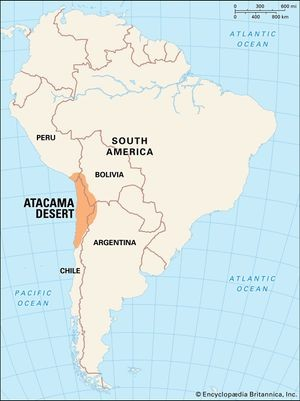
- Light pollution threatens the world’s darkest skies in the Atacama.
Atacama Desert
- Location: It is the driest desert in the world, located in northern Chile.
- It is nestled between the Andes Mountains on the east and the Pacific Ocean on the west.
- It forms a continuous strip for nearly 1,000 km along the narrow coast of the northern third of Chile.
- Bordered by: It is bordered by Argentina, Peru, and Bolivia
- It also hosts 12 volcanoes, mainly located in the western outliers of the Andes.
- Rainfall: Average rainfall in this region is about 1 mm per year. Some locations within the desert have never had any rainfall whatsoever.
- Temperature: Temperatures are comparatively mild throughout the year. The average temperature in the desert is about 63 degrees F (18 degrees C).
- Natural Resources: This region has the largest natural supply of Sodium Nitrate, which can be used for producing fertilizers and explosives, amongst other things.
- Chinchorro Mummies: The oldest artificially mummified human remains have been found in the Atacama Desert.
2026 Shanghai Cooperation Organisation (SCO) Defence Ministers’ Meeting
Syllabus: GS2/Regional Groupings
Context
- Speaking at the SCO Defence Ministers’ Meeting in Kyrgyzstan, the Defence Minister called for unified SCO action against terrorism and warned against double standards.
Shanghai Cooperation Organisation (SCO)
- Founded in – The SCO is an intergovernmental organization founded in 2001 with six members.
- Objective: To enhance regional cooperation for efforts to curb terrorism, separatism, and extremism in the Central Asian region.
- Members: China, Russia, India, Pakistan, Iran, Belarus and the four Central Asian countries of Kazakhstan, Kyrgyzstan, Tajikistan, Uzbekistan.
- Secretariat: Beijing
- Official languages: Russian and Chinese
- Observer status: Afghanistan, Belarus and Mongolia
- The SCO has been an observer in the UN General Assembly since 2005.
Areas of Concern
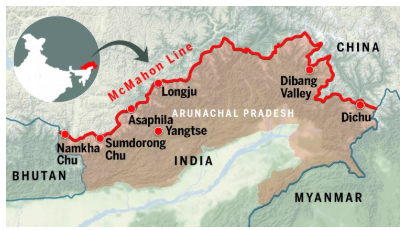
- Ongoing Border Tensions – Incidents in Doklam (2017), Galwan Valley (2020), and northeastern states (Sikkim, Arunachal Pradesh).
- Belt and Road Initiative (BRI): India has expressed reservations about China’s Belt and Road Initiative, especially regarding the China-Pakistan Economic Corridor (CPEC), which passes through the territory of India.
















Leave a Reply