
10 Years of Pradhan Mantri Krishi Sinchayee Yojana (PMKSY)
Government Schemes
Context
- The Pradhan Mantri Krishi Sinchayee Yojana (PMKSY) has completed more than 10 years of advancing irrigation-led agricultural transformation through sustainable water management and the expansion of irrigation coverage.
Pradhan Mantri Krishi Sinchayee Yojana (PMKSY)
- It is a flagship irrigation scheme launched in 2015
- Vision- ‘Har Khet Ko Pani’ (Water to Every Field) and ‘Per Drop More Crop’.
- Objective – It aims to provide for the integrated development and efficient management of water resources from source creation to its application at the farm level.
Components of PMKSY
- Accelerated Irrigation Benefit Programme (AIBP) – It improves irrigation infrastructure and availability of water.
- Har Khet Ko Pani (HKKP) – It expands assured irrigation through minor irrigation and groundwater development.
- Watershed Development Component – It promotes integrated watershed management in rainfed and degraded areas.
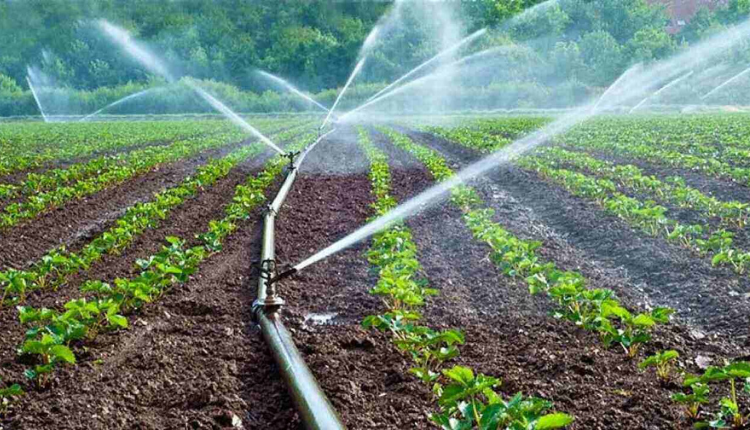
- Per Drop More Crop (PDMC) – It promotes micro-irrigation technologies like drip and sprinkler irrigation.
Nine Years of GST
Economy
Context
- On 1 July 2026, the Goods and Services Tax (GST) completed nine years since its rollout under the 101st Constitutional Amendment.
Goods and Service Tax (GST)
- Goods and Services Tax is an indirect tax used in India on the supply of goods and services.
- It is a value-added tax levied on most goods and services sold for domestic consumption.
- It was launched in India in 2017 as a comprehensive indirect tax for the entire country.
It is of three types i.e.
- CGST to be levied by the Centre,
- SGST to be levied by the States and
- IGST a tax levied on all Inter-State supplies of goods and/or services.
GST Council
-
- Legal status – It is a Constitutional body under Article 279A, introduced by the Constitution (One Hundred and First Amendment) Act, 2016.
- Mandate – It is empowered to modify, reconcile or to procure any law or regulation based on the context of GST in India.
- Federal body – It is also considered as a federal body where both the centre and the states get due representation.
- Functions: It makes recommendations to the Union and State Government on issues related to GST.
- Composition
-
- Chairperson: Union Finance Minister.
- Members: Union State Minister of Revenue or Finance and Ministers in-charge of Finance or Taxation of all the States.
Hul Diwas
History & Culture
Context
- June 30 is observed as Hul Diwas, marking the anniversary of the 1855 Santhal rebellion/ Santhal Hul, one of the earliest peasant and tribal uprisings against the British.
Santhal Hul
- Santhal Hul of 1855 was a revolt against imperialism led by four brothers, Sidho, Kanho, Chand, and Bhairav Murmu, along with sisters Phulo and Jhano.
- Background: In 1832, the British demarcated a region in present-day Jharkhand, called Damin-i-Koh, as a settlement area for the Santhal tribe.
- While initially intended for peaceful settlement and agricultural development, the region eventually experienced exploitation by outsiders (dikus), leading to land alienation among the Santhals.
- Santhal Hul: The Murmu brothers led around 60,000 Santhals against the East India Company and engaged in guerrilla warfare.
- The Santhals also fought against the upper castes, zamindars, darogas, and moneylenders, described by the umbrella term ‘diku’.
- The British hanged Sidhu in 1855, followed by Kanhu in 1856.
- Significance: The rebellion led to the enactment of the Santhal Parganas Tenancy Act of 1876 and the Chotanagpur Tenancy Act of 1908, which aimed to safeguard tribal land rights and cultural autonomy.
FCRA 2.0 Portal and e-OCI Card
Polity
Context
- The Union Home Minister launched the Foreign Contribution (Regulation) Act (FCRA) 2.0 Portal and the Electronic Overseas Citizen of India (e-OCI) Card.
FCRA 2.0 Portal
- The Portal has been developed to simplify compliance under the Foreign Contribution (Regulation) Act and to strengthen the monitoring and enforcement mechanism.
- All major processes related to applications, renewals, annual returns, and other services have now been made fully digital.
- This portal, hosted on the National Government Cloud (MeghRaj), includes features such as process re-engineering, an integrated dashboard, Aadhaar-based authentication, e-Sign facility, and OCR-based document analysis.
- The portal is integrated with major government databases and banks, including PAN, Aadhaar, OCI, NGO Darpan, and the ICAI’s UDIN system.
Electronic Overseas Citizen of India (e-OCI) Card
- It is a citizen-centric initiative aimed at transforming OCI services for the global Indian diaspora through a fully digital system.
- Under this system, applicants can complete the entire OCI process online – from submitting the application and uploading supporting documents to downloading the digitally generated card after approval.
OCI (Overseas Citizen of India)
- Status: Foreign citizens of Indian origin. It is not dual citizenship.
- Eligible: Anyone who was an Indian citizen on/after Jan 26, 1950, or their descendants. Foreign spouses qualify after 2 years of marriage.
- Barred: Anyone with ties to Pakistan or Bangladesh. Foreign military personnel are also excluded.
Privileges (What They CAN Do)
- Lifelong Visa: Multiple-entry, multi-purpose visa.
- No Foreigners Regional Registration Office: No police reporting required, regardless of stay duration.
- NRI Parity: Same rights as NRIs in economic, financial, and educational fields.
- Work: Can practice as doctors, dentists, lawyers, and chartered accountants in India.
Restrictions (What They CANNOT Do)
- No Voting: Cannot vote in any Indian elections.
- No Public Office: Barred from government jobs and constitutional posts (e.g., President, Judge).
- No Farm Land: Cannot buy agricultural or plantation property.Permissions Needed: Requires prior approval for journalism, research, missionary work, or visiting restricted areas.
Academic Bank of Credits
Economy
Context
- The Academic Bank of Credits (ABC) is a revolutionary digital platform by the Ministry of Education and is regulated by the University Grants Commission (UGC).
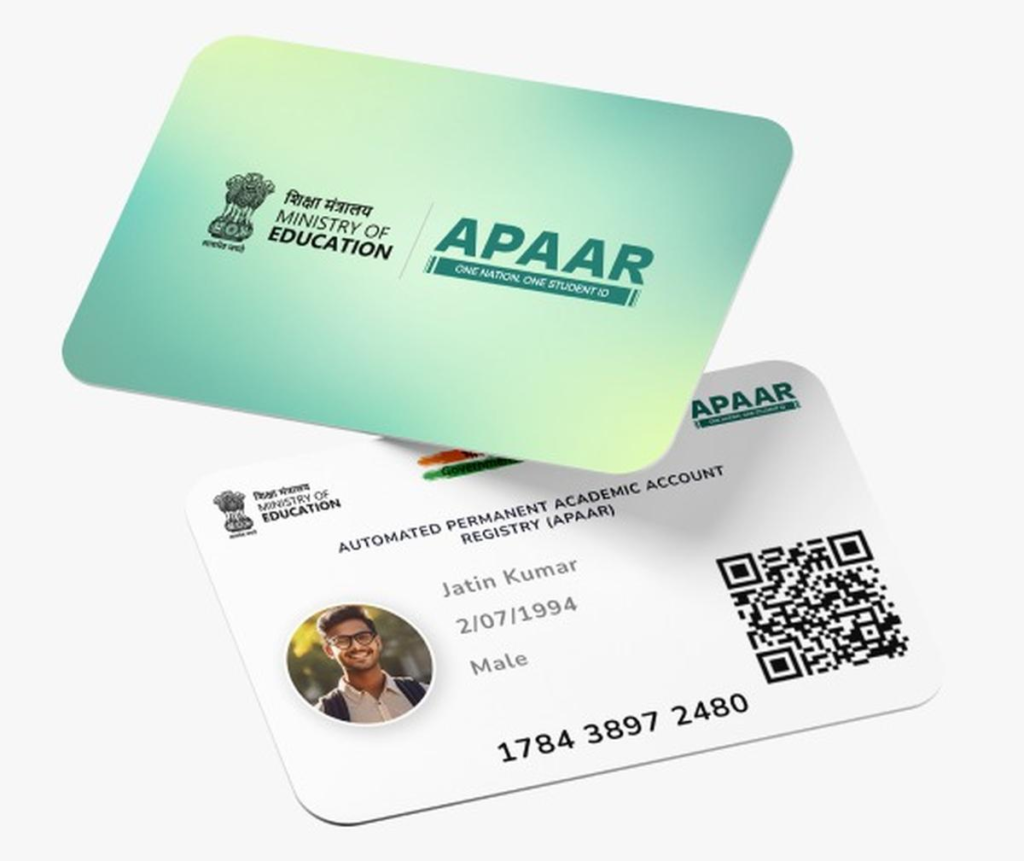
APAAR (Automated Permanent Academic Account Registry) ID
- It is a unique 12-digit student identification number linked to the ABC system.
- It was introduced as part of the “One Nation, One Student ID” initiative, and creates a single academic identity for every learner.
- Objective – It aimed to create a flexible, learner-friendly education system in which learning achievements can be recognised, stored, and used throughout a person’s life.
- It supports the vision of the National Education Policy (NEP) 2020 and the National Credit Framework (NCrF) by enabling credit transfer, multiple entry and exit options, and recognition of learning across different institutions and disciplines.
Climate Tipping Points
Environment and Ecology
Context
- Climate tipping points emerged as a major area of debate during the Bonn Climate Change Conference held in Germany.
Climate Tipping Points
- Definition – It is a critical threshold in the Earth’s climate system beyond which small incremental temperature increases trigger abrupt, self-reinforcing, and irreversible changes
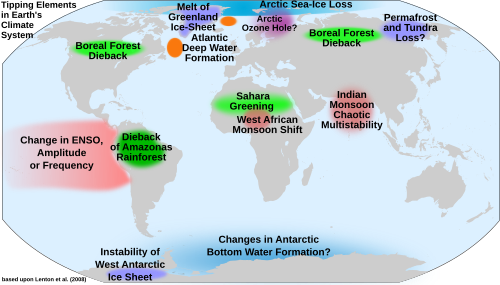
Major Potential Climate Tipping Points
- Arctic Sea Ice Loss: Continued melting reduces the Earth’s reflectivity (albedo), leading to faster global warming.
- Amazon Rainforest Dieback: Rising temperatures, deforestation and declining rainfall can transform large parts of the Amazon into savannah, reducing one of the world’s largest carbon sinks.
- Atlantic Meridional Overturning Circulation (AMOC): Weakening of this major ocean current can disrupt rainfall patterns, agriculture and weather systems across Europe, Africa and Asia.
- Greenland Ice Sheet Melting: Accelerated ice-sheet loss could contribute substantially to long-term global sea-level rise.
- Coral Reef Collapse: Increasing ocean temperatures and acidification can lead to irreversible coral bleaching and biodiversity loss.












Leave a Reply