
Chapekar Brothers
History
Context
- On 22 June 1897, the Chapekar brothers assassinated British plague commissioner Walter Charles Rand in Pune.
About
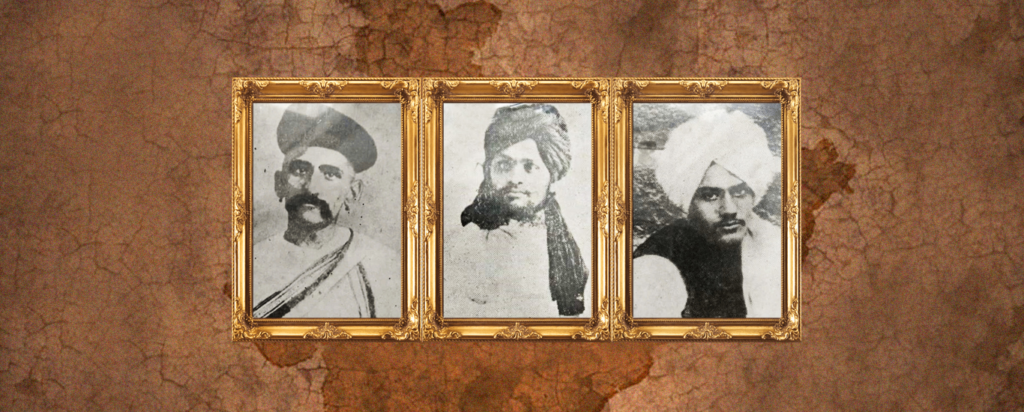
- The Chapekar Brothers, Damodar Hari Chapekar, Balkrishna Hari Chapekar, and Vasudeo Hari Chapekar, were among the earliest revolutionary nationalists in India’s freedom struggle.
- They were influenced by the revolutionary activities of Vasudev Balwant Phadke and the nationalist ideas propagated by Bal Gangadhar Tilak through his newspaper Kesari.
- Formation of Secret Organisation: They organized an association called “Chapekar Club” for physical and military training which they also called “the society for the removal of obstacles to the Hindu Religion”.
- During the bubonic plague outbreak of 1896–97, the British administration implemented harsh plague-control measures under the leadership of Walter Charles Rand, Chairman of the Poona Plague Committee.
- Soldiers conducted intrusive house searches, violated religious customs, and subjected local residents to humiliating inspections.
- Viewing Rand as a symbol of colonial oppression, the Chapekar brothers planned his assassination.
- Arrest and Execution: Damodar Hari Chapekar was executed in 1898, whereas Vasudeo Hari Chapekar and Balkrishna Hari Chapekar were executed in 1899.
Nirbhay Chetna
Poiity
Context
- The Ministry of Panchayati Raj organised a three-day Training of Trainers (ToT) programme on Nirbhay Chetna.
About
- Nirbhay Chetna is a key intervention under the Nirbhay Raho initiative, launched in 2026 by the Ministry of Panchayati Raj.
It comprises three complementary components:
- Nirbhay Netri focuses on capacity-building and legal awareness among elected women representatives;
- Nirbhay Chetna seeks to sensitise elected male representatives on gender equality and women’s safety; and
- Nirbhay Drishti envisages the installation of CCTV cameras at strategic rural locations to strengthen technology-enabled safety infrastructure in Panchayats.
TReDS Platform
Economy
Context
- The Reserve Bank of India (RBI) has issued Reserve Bank of India (Trade Receivables Discounting System) Directions, 2026, aimed at simplifying the onboarding process for MSMEs.
Trade Receivables Discounting System (TReDS)
- Objective – Resolve MSME liquidity crunch by offering collateral-free working capital.
- Nodal Regulator – Reserve Bank of India (RBI).
- Statutory Backing – Regulated under the Payment and Settlement Systems (PSS) Act, 2007.
India’s Access and Benefit Sharing (ABS) under CBD
Environment and Ecology
Context
- India’s Access and Benefit Sharing (ABS) framework under the Biological Diversity Act, 2002 has mobilized more than Rs 266 crore since 2008, with around ₹145 crore disbursed to beneficiaries.
Access and Benefit Sharing (ABS)
- It is a framework under the Convention on Biological Diversity (CBD)
- It ensures fair sharing of monetary and non-monetary benefits arising from the use of biological resources and traditional knowledge with the source communities and countries
- India operationalizes ABS through the Biological Diversity Act, 2002, and its recent amendment the Biological Diversity (Amendment) Act, 2023.
Significance
- India’s ABS framework is advancing the objectives of the Nagoya Protocol, supporting the National Biodiversity Strategy and Action Plan (NBSAP) 2024-2030, and contributing to the Kunming-Montreal Global Biodiversity Framework, particularly Target 13 on fair and equitable benefit sharing.
Connect with the basics – Biological Diversity Act, 2002
- Enacted – The act was enacted in 2002
- Objective – It aims at the conservation of biological resources, managing its sustainable use and enabling fair and equitable sharing benefits arising out of the use and knowledge of biological resources with the local communities.
The act envisaged a three-tier structure to regulate the access to biological resources:
- The National Biodiversity Authority (NBA)
- The State Biodiversity Boards (SBBs)
- The Biodiversity Management Committees (BMCs) (at local level)
National Biodiversity Authority
- Established in – The National Biodiversity Authority (NBA) was established in 2003 by the Central Government to implement India’s Biological Diversity Act (2002).
- Statutory body – It is a Statutory body that performs facilitative, regulatory and advisory functions for the Government of India on the issue of Conservation and sustainable use of biological resources.
- Headquarter – The NBA has its Headquarters in Chennai, Tamil Nadu, India.
Functions
- Monitoring and prevention of actions prohibited under the Act.
- Providing advice to the government on how best to conserve biodiversity in India.
- Prepare a report on how the government can select biological heritage sites.
- Make concrete steps to prevent the grant of intellectual property rights regarding locally used biological resources or allied traditional knowledge
Interstellar comet 3I/ATLAS
Science & technology

Context
- The discovery of 3I/ATLAS, only the third known interstellar object, has provided scientists with a rare opportunity to study material from an ancient planetary system.
3I/ATLAS
-
- 3I/ATLAS is the third interstellar object ever detected passing through our Solar System. Interstellar refers to anything located, moving, or occurring in the space between stars within a galaxy.
- It is a comet about 2.6 km in diameter.
- The name “3I” denotes the third identified interstellar object.
- It was formed when the Universe was only about 13% of its current age.
- It contains water with about 30 times more deuterium (heavy hydrogen) than comets in the Solar System.
- Carbon isotope ratios differ significantly from those found in Solar System objects.
Pradhan Mantri Rashtriya Bal Puraskar (PMRBP)
Miscellaneous – Awards
Context
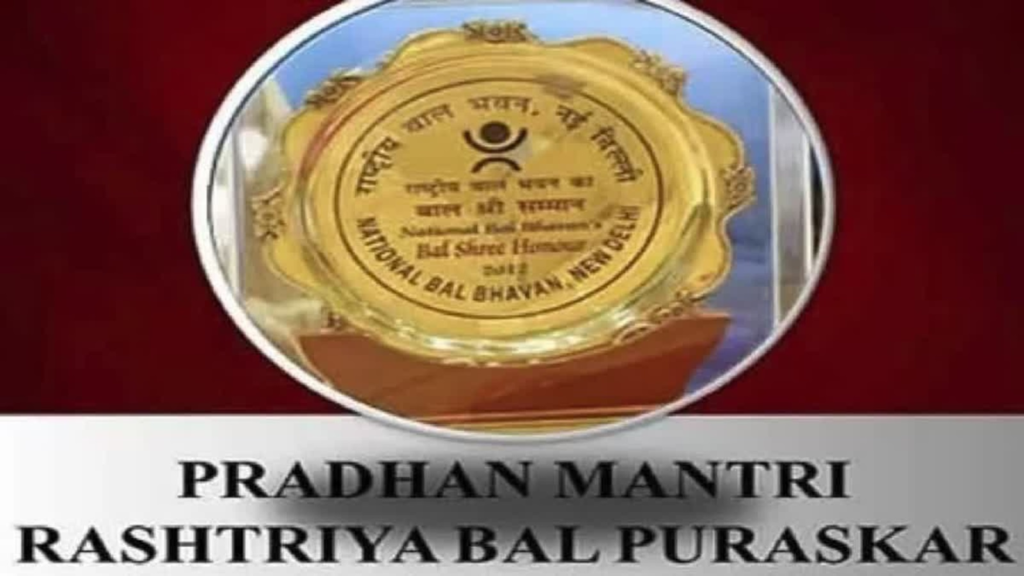
- The Ministry of Women and Child Development has invited nominations for the Pradhan Mantri Rashtriya Bal Puraskar (PMRBP) 2026.
Pradhan Mantri Rashtriya Bal Puraskar (PMRBP)
- The Pradhan Mantri Rashtriya Bal Puraskar is conferred annually by the President of India on Veer Bal Diwas (26 December).
- Instituted in its present form in 2019, the award recognises children aged 5–18 years for exceptional achievements in six categories: Bravery, Art & Culture, Environment, Science & Technology, Social Service and Sports.
To be eligible, a nominee must:
- Be an Indian citizen residing in India;
- Not have received the award previously; and
- Have achieved the recognised accomplishment within the two years preceding the nomination deadline.
- While the award is generally not conferred posthumously, exceptional cases may be considered.
- This award is the highest civilian honour for children in India. Each awardee of PMRBP is given a medal, a certificate and a citation booklet.
Assam’s Uniform Civil Code Bill, 2026
Polity
Context
- The Government of Assam has introduced the Uniform Civil Code (UCC) Bill, 2026 in the State Assembly.
- Assam became the third state in India to table a Uniform Civil Code (UCC) bill, following Uttarakhand and Gujarat.
Uniform Civil Code (UCC)?
- A Uniform Civil Code refers to the provision of one law for the entire country, applicable to all religious communities, in their personal matters such as marriage, divorce, inheritance, adoption, etc.
- Aim: To replace the existing diverse personal laws that vary based on religious affiliations.
Constitutional Provisions
- Article 44 contained in part IV of the Constitution says that the state “shall endeavor to secure for the citizens a uniform civil code throughout the territory of India”.
- Part IV of the Constitution outlines the Directive Principles of State Policy, which, while not enforceable or justiciable in a court of law, are fundamental to the country’s governance.
UCC in India
- UCC in Goa: It follows the Portuguese Civil Code of 1867, which means that people of all religions in Goa are subject to the same laws on marriage, divorce, and succession.
- The Goa Daman and Diu Administration Act of 1962, which was passed after Goa joined the union as a territory in 1961, gave Goa permission to apply the Civil Code.
- In 2024, The Uttarakhand Legislative Assembly passed The Uniform Civil Code of Uttarakhand Act, 2024, becoming the first Indian State to adopt a UCC post-independence.
Key Provisions of the Assam UCC Bill, 2026
-
- Ban on Polygamy and Bigamy: The Bill mandates monogamy for all residents under its ambit. Bigamy and polygamy would attract punishment under the Bharatiya Nyaya Sanhita (BNS), 2023.
- Existing polygamous marriages solemnised before enforcement of the law would remain legally protected.
- Uniform Marriage Age: The minimum legal age is fixed at 21 years for men and 18 years for women.
- Mandatory Registration: Registration of all marriages and divorces would become compulsory and couples must submit a marriage memorandum within 60 days of marriage.
- Non-registration may attract penalties and fines.
- Regulation of Live-in Relationships: Registration of live-in relationships within one month has been made mandatory and children born from such relationships would be considered legitimate.
- Deserted partners would have legal rights to claim maintenance.
- Uniform Grounds for Divorce: The Bill standardises divorce grounds such as; cruelty, desertion, mutual consent.
- The Bill also penalises illegal dissolution of marriage and unlawful conditions imposed before remarriage.
- Gender-Equal Inheritance: The Bill establishes equal inheritance rights for spouses, children, and parents. It creates a uniform succession framework irrespective of religion.
- Testamentary succession through written wills is legally recognised.
- Child and Fraudulent Marriages: The Bill prescribes punishment for child marriage and marriages conducted without valid consent.
- The Bill also provides imprisonment and fines for fraudulent or deceptive marriages conducted through force, coercion, concealment, or misrepresentation.
- Exemption for Scheduled Tribes: The Bill excludes Scheduled Tribes (STs) from its purview in order to protect customary practices and constitutional safeguards available to tribal communities.
Kerala’s Dedicated Senior Citizens Welfare Department
Polity
Context
- The government in Kerala has decided to establish a separate Department for Senior Citizens’ Welfare to address the growing challenges associated with population ageing, and social isolation among elderly citizens.
Elderly Population in India
- Kerala is Ageing Faster than Other States
- Kerala has the highest proportion of elderly population in India. Around 18.7% of Kerala’s population is above 60 years of age, compared to the national average of nearly 11–12%.
Government Initiatives for Elderly in India
- Atal Pension Yojana (APY): Launched in 2015 to ensure old-age income security for unorganised sector workers. It provides a guaranteed monthly pension (₹1,000–₹5,000) post-60 years.
- Rashtriya Vayoshri Yojana (RVY): Launched in 2017 to distribute assistive living devices (hearing aids, walking sticks, wheelchairs, etc.) to BPL senior citizens or those with income below ₹15,000/month.
- Senior Care Ageing Growth Engine (SAGE) Portal: Promotes start-ups and innovation in elderly care services, encouraging the growth of the silver economy.
- Ayushman Bharat – PMJAY: It Extends ₹5 lakh annual health coverage to around 6 crore senior citizens aged 70 years and above, across 4.5 crore families.
President Confers Padma Awards
Culture

In News
- President Droupadi Murmu conferred Padma Awards to 66 eminent personalities for the year 2026 at the first Civil Investiture Ceremony held at Rashtrapati Bhavan.
- The awards are announced annually on Republic Day. For 2026, the President approved 131 Padma Awards, including 5 Padma Vibhushan, 13 Padma Bhushan, and 113 Padma Shri.
Key Recipients
- Dharmendra Singh Deol was honoured with the Padma Vibhushan posthumously for contributions to art.
- N. Rajam also received the Padma Vibhushan for contributions to music.
- Bhagat Singh Koshyari received the Padma Bhushan for public affairs.
- Uday Kotak was awarded the Padma Bhushan for trade and industry.
- Harmanpreet Kaur received the Padma Shri for sports.
- Folk musician Taga Ram Bheel was conferred the Padma Shri award for keeping alive the legacy of the Algoza.
Padma Awards
- The Padma Awards are among India’s highest civilian honours instituted in 1954.
- They are presented in three categories: Padma Vibhushan, Padma Bhushan and Padma Shri.
- ‘Padma Vibhushan’ is awarded for exceptional and distinguished service;
- ‘Padma Bhushan’ for distinguished service of high order and
- ‘Padma Shri’ for distinguished service in any field.
-
- The awards recognise “work of distinction” and are given for exceptional achievements or service across a wide range of fields, including art, literature and education, sports, medicine, social work, science and engineering, public affairs, civil service, trade and industry.
- All individuals are eligible for the awards regardless of race, occupation, position or gender.
- Note – However, government servants, including employees of public sector undertakings, are generally not eligible, except for doctors and scientists.
- The government is committed to transform Padma Awards into “People’s Padma”, encouraging citizens to nominate deserving individuals.
- Self-nominations are also allowed.
- The nominations must include detailed information about the nominee’s distinguished achievements in their respective fields
- nominations will be accepted only through the online Rashtriya Puraskar Portal.
- The awards are announced on the occasion of Republic Day every year.
- These Awards are conferred by the President of India at ceremonial functions which are held at RashtrapatiBhawan usually around March/ April every year.
JEEVAN App and SHATAYU Geriatric Caregiver Dashboard
Government Schemes
Context
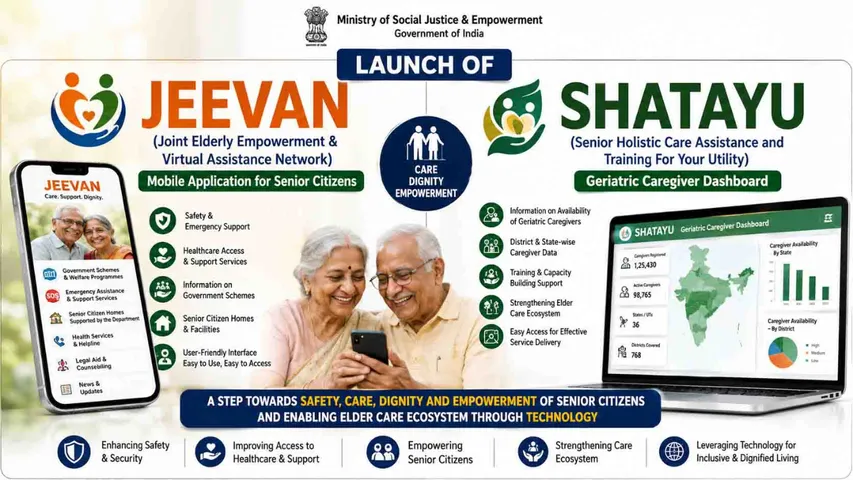
- A mobile application JEEVAN (Joint Elderly Empowerment and Virtual Assistance Network) has been launched by the Ministry of Social Justice and Empowerment.
About
- Aim: To strengthen support systems for senior citizens across the country.
Features of JEEVAN App:
- Information on Government schemes and welfare programmes, emergency assistance and details of senior citizen homes.
Senior Holistic Care Assistance and Training for Your Utility (SHATAYU) Dashboard
- to support and strengthen caregiving services for senior citizens.
- The platform is designed to enhance the safety, welfare, healthcare access and social inclusion of senior citizens across the country.
- It provides features such as information on the availability of Geriatric Caregivers in a particular district and the State for the senior citizens.
Pradhan Mantri Formalisation of Micro Food Processing Enterprises (PMFME) Scheme
Government Schemes
Context
- Ministry of Food Processing Industries, addressed a media interaction regarding the implementation and achievements of the Pradhan Mantri Formalisation of Micro Food Processing Enterprises (PMFME) Scheme.
About
- The PMFME Scheme was launched in 2020 under the Ministry of Food Processing Industries as part of the Aatmanirbhar Bharat Abhiyan.
- The scheme was conceptualised to address the challenges faced by India’s unorganised micro food processing sector.
- It is the centrally sponsored scheme, with an outlay of Rs. 10,000 crore, approved for implementation during 2020-21 to 2024-25 and has been extended till September 2026.
- The Scheme also operationalizes the One District One Product (ODOP) approach, enabling economies of scale in procurement, common services, and market linkage.
- Achievements: A total of 1,96,270 individual micro food processing enterprises have been supported under the Credit Linked Subsidy component with more than 40% of beneficiaries being women entrepreneurs.








Leave a Reply