Author: instakas

  • Karnataka Sahitya Academy awards

    Karnataka Sahitya Academy awards

    News-

    • The Karnataka Sahitya Academy honorary awards for 2024

    Awardees –

    1. Shudra Srinivas,
    2. Pratibha Nandakumar,
    3. M. Basavanna,
    4. D.B. Nayak and
    5. Vishvanath Karnad

    ‘Sahitya Shri’ award  – 10 writers are being given the ‘Sahitya Shri’ award

    • Y. Naranaswamy,
    • M. Puttaiah,
    • Padmalaya Nagaraj,
    • U. Suma,
    • Mamata Sagara,
    • Sabita Bannadi,
    • Abdul Hai Toranagal,
    • Gurulingappa Dabale,
    • S. Anupama and
    • Amaresha Yatagal.

    Karnataka Sahitya Academy Awards,

    • Instituted in – 1983
    • They are among the most prestigious literary honors in Kannada.
    • Field – Awards are given for poetry, fiction, criticism, travel writing, translation, children’s literature, and more.
    • Purpose – It is a prestigious annual literary award given by the Government of Karnataka to recognize and promote exceptional contributions to Kannada literature.

    The awards are presented in several categories:

    • Annual Honorary Awards: Five distinguished literary figures are honored each year for their immense overall service to Kannada literature.
    • Book Prizes: Awards are given to the best books in approximately 18 different literary genres, including poetry, novel, short fiction, play, criticism, travel writing, translation, children’s literature, and science writing.
    • “Sahityashree” Awards: This award is also presented to several writers annually for their notable literary contributions.
  • Commonwealth Games | Sri Lankan PM’s State Visit to India | Mass Surrender of Maoists | SC Forms Panel on Transgender Persons | Henley Passport Index | SC Allows Sale of Green Fireworks in Delhi | WTI Founder Menon Becomes First Asian to Chair Key IUCN Panel

    Commonwealth Games

    Syllabus: Miscellaneous

    Context

    • Gujarat’s largest city Ahmedabad has been recommended as the “proposed host” by the executive board of Commonwealth Sport.
    • India last hosted the CWG in Delhi in 2010.

    Commonwealth Games

    • Started in 1930 (inaugural event in Hamilton, Canada) as the British Empire Games.
    • It is a multi-sport international event, modeled on the Olympics, involving athletes from the Commonwealth of Nations and their associated territories.
    • The Commonwealth of Nations, or simply the Commonwealth, is a voluntary association of 54 sovereign countries, most of which were former colonies of the British Empire.
    • Commonwealth Games is the world’s second-largest multi-sport event from 71 nations and territories.

    Sri Lankan PM’s State Visit to India

    Syllabus: GS2/IR

    Context

    • The Sri Lankan Prime Minister is on a state visit to India.

    India and Sri Lanka Relations

    • Diplomatic Ties: Diplomatic relations established in 1948 after Sri Lanka’s independence.
    • Trade Relations: India-Sri Lanka Free Trade Agreement (ISFTA) in 2000 contributed significantly towards the expansion of trade between the two countries.
    • Maritime Security and Defence Cooperation: In 2011, a decision was taken to establish the Colombo Security Conclave which aims to further promote maritime security in the Indian Ocean Regi
    • India and Sri Lanka conduct a joint Military exercise named ‘Mitra Shakti’, Trilateral Maritime Exercise “Dosti”, and a Naval exercise named SLINEX.
    • Multilateral Forum Collaboration: India and Sri Lanka are member nations of several regional and multilateral organizations such as the South Asian Association for Regional Cooperation (SAARC) and BIMSTEC.

    Mass Surrender of Maoists

    Syllabus: GS3/Internal Security

    Context

    • 210 Maoists surrendered in Dandakaranya region of Chhattisgarh, following a similar event in Maharashtra, as a part of a broader strategy by the Union and state governments to abandon violence and embrace rehabilitation.

    Maoism, or Left-Wing Extremism (LWE)

    • It was rooted in radical communist ideology, advocating armed struggle to overthrow the state and establish a classless society.
    • Left-Wing Extremism in India traces its roots to the Naxalbari uprising of 1967 in West Bengal, inspired by Mao Zedong’s revolutionary tactics.
    • The movement gained momentum through the formation of groups like the Communist Party of India (Marxist–Leninist) and later the CPI (Maoist), which rejected electoral politics and embraced violent revolution.

    Reasons for Maoism, or Left-Wing Extremism (LWE) in India

    • Left-Wing Extremism: LWE has historically thrived in regions marked by poverty, illiteracy, and lack of basic service

    Many tribal communities have faced:

    1. Land alienation due to mining and industrial projects;
    2. Displacement without adequate rehabilitation;
    3. Limited access to education, healthcare, and employment;
    4. Governance Deficit: Remote districts often suffer from weak administrative presence and poor delivery of public services.

    This vacuum allowed Maoist groups to:

    1. Establish parallel governance structures;
    2. Exploit local grievances;
    3. Gain legitimacy among disenfranchised populations;
    4. Tribal Discontent: Tribal populations, especially in forested regions have long felt excluded from mainstream development.

    Decline in Influence

    • Red Corridor – Once widespread across the ‘Red Corridor’, Maoist influence has significantly declined due to sustained government action.

    Government Strategy To Tackle LWE

    • The National Policy and Action Plan (2015) to address LWE outlines a holistic approach:
    1. Enhancing security infrastructure and personnel;
    2. Promoting road connectivity and telecom access;
    3. Ensuring rights and entitlements of tribal communities;
    • MHA has reaffirmed the government’s resolve to eliminate LWE by March 31, 2026, urging Maoists to abandon violence and join the mainstream.

    Security Measures:

    • Deployment of Central Armed Police Forces (CAPFs) and specialized anti-Naxal units.

    Development Initiatives:

    1. Road connectivity projects in remote tribal areas to improve access and mobility.
    2. Expansion of telecom networks, electricity, and banking services.
    3. Focus on education, healthcare, and livelihood programs to address socio-economic grievances.
    • Transformation of ‘Red Zones’ into Growth Corridors through targeted investment.
    • Seminars like ‘Bharat Manthan 2025 – Naxal Mukt Bharat’ aim to build consensus and share best practices across states.

    SC Forms Panel on Transgender Persons

    Syllabus: GS1/Social Issues

    In News

    • The Supreme Court set up a committee under former Justice Asha Menon to formulate an equal opportunity policy for transgender individuals.

    Challenges Transgender Facing

    1. Institutional gaps in implementing the Transgender Persons (Protection of Rights) Act, 2019 and Rules.
    2. Lack of data and representation in policymaking.
    3. Healthcare discrimination.
    4. Workplace barriers.
    5. Social stigma.

    Steps Taken To Improve the Lives of Transgender Persons

    • Transgender Persons (Protection of Rights) Act, 2019 – It is aimed at protecting the rights of transgender individuals and their welfare. The act prohibits discrimination against transgender people in areas like education, employment, healthcare, and public services.
    • NALSA (2014): Recognized transgender persons as a third gender.
    • National Portal for Transgender Persons: Enables online applications for identity certificates.
    • SMILE scheme: It is aimed at rehabilitation and support for transgender persons, including livelihood and social security components.

    Henley Passport Index

    Syllabus: GS2/ Miscellaneous

    In News

    • India’s passport ranked 85th, granting visa-free access to 57 countries, a drop from 80th place in 2024. Singapore currently holds the top spot.

    Henley Passport Index

    • Mandate – It is a popular ranking of global passports that measures passport strength by the number of destinations that holders can visit without a prior visa.
    • The index ranks countries based on statistics provided by the International Air Transport Association (IATA).
    • Published by – It started in 2006 Henley & Partners.

    Key Highlights of Henley Passport Index 2025

    • Globally, Singapore leads the 2025 list with visa-free access to 193 destinations, followed by South Korea (190) and Japan (189).
    • The United States has slipped out of the top 10 for the first time in two decades, ranking 12th this year with access to 180 destinations
    • India’s rank – 85th, granting visa-free access to 57 countries

    SC Allows Sale of Green Fireworks in Delhi

    Syllabus: GS3/Environment

    In News

    • The Supreme Court relaxed its earlier blanket ban and permitted the sale and use of green firecrackers in the Delhi–NCR region, subject to strict conditions.
    • The court noted that blanket bans had led to smuggling and use of more harmful conventional fireworks, and cited its 2018 Arjun Gopal judgment, which introduced green firecrackers and showed reduced emissions.

    Green firecrackers

    • They are eco-friendly alternatives to traditional fireworks, developed to address air pollution concerns.
    • They emit 30–35% less particulate matter and harmful gases like SO₂, NOx, and CO, and exclude toxic substances such as barium nitrate.
    • They are developed and approved by CSIR labs (NEERI and CEERI).
    • They comply with prescribed noise limits and are identifiable by green logos and QR codes.

    WTI Founder Menon Becomes First Asian to Chair Key IUCN Panel

    Syllabus: GS3/Environment

    In News

    • The International Union for Conservation of Nature (IUCN) elected Wildlife Trust of India’s (WTI) founder Vivek Menon as the new chair of the Species Survival Commission (SSC), making him the first Asian to hold the post.

    Species Survival Commission (SSC)

    • The IUCN Species Survival Commission (SSC) is a science-based network of more than 10,500 volunteer experts from almost every country of the world.
    • It is one of the six expert commissions under the global body that advises the IUCN secretariat on matters concerning biodiversity and species conservation.
    • The commission and its specialist groups play a key role in preparing the IUCN’s red list of threatened species.

    Additional Information – International Union of Conservation of Nature

    • Establishment – 1948.
    • Set up in – Gland, Switzerland.
    • Objective – To promote international cooperation and to provide scientific knowledge and tools to aid conservation action.
    • IUCN Red List – It established the IUCN Red List of Threatened Species in 1964.

    IUCN Red List

    • It is a list compiled by the IUCN, which contains the world’s most comprehensive information on the conservation status of plants, animals, and fungus species.

    ●    Species in the IUCN Red List – There are 143000 species on the Red List.

    ●    India’s membership in IUCN – India became a member in 1969

    ●    The IUCN classification – The IUCN classification of species is based on their extinction/conservation status.

    They are as follows 

    • Extinct (EX)
    • Extinct in the Wild (EW)
    • Critically Endangered (CR)
    • Endangered (EN), Vulnerable (VU)
    • Near Threatened (NT)
    • Least Concern (LC)
    • Data Deficient (DD)
    • Not Evaluated (NE)
  • ‘Indira food kit’

    ‘Indira food kit’

    News –

    • ‘Indira food kit’ to replace 5 kg rice under Anna Bhagya scheme
    • It will benefit about 4.48 crore population holding below poverty line cards and will include toor dal, oil, sugar and salt

    ‘Indira food kit’

    • Objective – The scheme aims to ensure better nutrition, transparency, and effective resource utilization.
    • Food covered : The Indira Food Kit contains nutritious items: toor dal, moong dal, sugar, salt, and cooking oil,
    • Distribution – It is based on family size half a kg for 1-2 member families, 1 kg for 3-4 members, and 1.5 kg for families of 5 or more.
    • Beneficiaries :The scheme covers about 26 crore ration cardholder families, impacting around 4.48 crore beneficiaries.
    • Benefits : The change is intended to reduce misuse, smuggling, and illegal diversion of rice under the previous scheme.
    • The government expects to save approximately Rs 300 crore annually by implementing the kit instead of rice.
    • The kit is distributed via fair price shops using BPL ration cards under the Public Distribution System.
  • We Rise Initiatives | UPOV Convention | Rotavirus Vaccine Effective Against Gastroenteritis in Children | State Mining Readiness Index | State of Finance for Forests (SFF) Report | REDD+ Programme | BrahMos

    We Rise Initiatives

    Syllabus: GS2/ Women Empowerment

    In News

    • ‘We Rise (Women Entrepreneurs Reimagining Inclusive and Sustainable Enterprises) initiative was launched recently.

    We Rise Initiatives

    • Objective – to empower women entrepreneurs to expand globally through trade facilitation, mentorship, and strategic partnerships.
    • Launched by – by NITI Aayog’s Women Entrepreneurship Platform (WEP) under its Award to Reward (ATR) initiative

    Women Entrepreneurship Platform (WEP)

    • Launched in NITI Aayog in 2018
    • It serves as a national aggregator to strengthen India’s women entrepreneurship

    Award to Reward (ATR) initiative

    • It was launched in 2023
    • Objective – to institutionalize WEP’s partnership framework by bringing together ecosystem stakeholders to address specific needs of women entrepreneurs while celebrating their success stories.

    UPOV Convention

    Syllabus: GS2/IR

    Context

    • A new report by GRAIN warns of growing corporate control over seeds via free trade agreements.
    • Powerful economies — including the US, EU, Japan and the UAE — are pushing harsh IP rules on plant varieties.

    Union for the Protection of New Varieties of Plants (UPOV) Convention 1991

    • Mandate – It is an international treaty that provides a framework for intellectual property rights for plant breeders.
    • Adoption and Enforcement- The 1991 Act, which entered into force in 1998
    • Significance – It strengthens breeders’ rights compared to earlier versions of the convention and has significant implications for farmers and the seed industry.

    Rotavirus Vaccine Effective Against Gastroenteritis in Children

    Syllabus: GS2/ Health

    Context

    • According to a recent study India’s indigenous rotavirus vaccine, Rotavac, has significantly reduced rotavirus-related gastroenteritis cases among children since its introduction in the Universal Immunisation Programme (UIP).

    Rotavac

    • Introduction: India introduced Rotavac, an indigenous oral rotavirus vaccine, in 2016 under the Universal Immunisation Programme, administered at 6, 10, and 14 weeks of age.

    Rotavirus

    • Responsible pathogen – A highly contagious, double-stranded RNA virus from the Reoviridae family.
    • Target population: Primarily affects infants and young children under the age of five. Adults can also be infected, but symptoms are typically mild.
    • Symptoms: Fever, nausea, vomiting, abdominal cramps, and severe, watery diarrhea. The biggest concern is severe dehydration, which can be life-threatening if untreated.
    • Transmission: Occurs primarily through the fecal-oral route—by contact with contaminated hands, surfaces, or objects. It can also spread through contaminated food and water.

    State Mining Readiness Index

    Syllabus: GS3/ Economy

    Context

    • The Ministry of Mines has released the State Mining Readiness Index (SMRI) and corresponding State rankings.

    State Mining Readiness Index (SMRI)

    • Mandate – This index is designed to benchmark State performance in facilitating and reforming the mining sector.
    • The index aims to promote transparency, efficiency, and sustainable mining by encouraging competition among States.
    • Indicators-
    1. Auction performance,
    2. Early mine operationalization,
    3. Thrust on exploration
    4. Sustainable mining pertaining
    5. Non-coal minerals.

    Categorisation of States

    • States have been divided into three categories based on their mineral endowment;
    • The top three ranked States in Category A (Mineral-rich States): Madhya Pradesh, Rajasthan, and Gujarat.
    • The top three ranked States in Category B (Moderately endowed States): Uttar Pradesh, and Assam.
    • The top three ranked States in Category C (Lesser-endowed States): Punjab, Uttarakhand, and Tripura.

    State of Finance for Forests (SFF) Report

    Syllabus :GS3/Environment

    In News

    • The first State of Finance for Forests (SFF) report was recently released by the United Nations Environment Programme (UNEP).

    State of Finance for Forests (SFF)

    • It provides a global overview of public and private forest finance in 2023,
    • It compares current flows with the investments needed to realize forests’ potential to address climate change, biodiversity loss, and land degradation.

    Key Findings

    • In 2023, global forest finance stood at US$84 billion, far below the US$300 billion needed annually by 2030 and US$498 billion by 2050, leaving a US$216 billion yearly gap.

    REDD+ Programme

    Syllabus: GS3/Environment

    Context

    • According to a study, only a small number of tropical forests have achieved significant cuts in deforestation, with just 19% meeting their reported targets.
    • These offset projects are a part of the REDD+ programme.

    REDD+ (Reducing Emissions from Deforestation and Degradation Plus)

    • It is a climate change initiative under the United Nations Framework Convention on Climate Change (UNFCCC)
    • It offers financial incentives for developing countries to reduce greenhouse gas emissions from deforestation and forest degradation.
    • The “plus” in REDD+ includes additional activities like the conservation and sustainable management of forests and the enhancement of forest carbon stocks.
    • The goal is to provide a financial value for forests that encourages developing countries to protect them

    BrahMos

    Syllabus: GS3/Defence

    Context

    • Defence Minister Rajnath Singh and Chief Minister of Uttar Pradesh Yogi Adityanath flagged off the first batch of BrahMos missiles manufactured at the BrahMos Aerospace unit in Lucknow, Uttar Pradesh.

    BrahMos Missile

    • Joint Venture: Between DRDO (India) and NPO Mashinostroyeniya (Russia).
    • Name Origin: Derived from the Brahmaputra (India) and Moskva (Russia)
    • First Test: Conducted on June 12, 2
    • Type: “Fire and forget” supersonic cruise missile — can be launched from land, sea, or air in all-weather conditions, and is nearly impossible to intercept.
    • Combat Use: Reportedly used for the first time during Operation Sindoor.

    Speed:

    • Current: Mach 2.8 (Supersonic)
    • Future: Mach 5+ (Hypersonic version under development)

    Range:

    • Initially 290 km (under MTCR limit)
    • Extended to 400 km, with a 600+ km variant under development.

    Additional information – Missile Technology Control Regime (MTCR)

    • Objective – The Missile Technology Control Regime (MTCR) is a group of 35 member states that seeks to limit the proliferation of missiles and missile technology.
    • Established in – The group was formed in 1987.
    • India became a member of the MTCR in 2016
  • LEAPS 2025 | Rhodamine B | Seals and Birds Under Threat in IUCN’s New Red List | Snow Leopards

    LEAPS 2025

    Syllabus: GS3/Infrastructure

    Context

    • Union Minister for Commerce and Industry, launched the Logistics Excellence, Advancement, and Performance Shield (LEAPS) 2025.

    LEAPS 2025

    • Launched by – It is a flagship initiative of the Department for Promotion of Industry and Internal Trade (DPIIT) under the Ministry of Commerce and Industry.
    • Purpose: To benchmark and recognize excellence in the logistics sector, promoting efficiency, sustainability, innovation, and technology adoption.
    • Alignment: Supports National Logistics Policy (2022), PM GatiShakti, and initiatives like Make in India and Atmanirbhar Bharat.

    Objectives:

    • Promote best practices in logistics operations.
    • Encourage ESG (Environmental, Social, Governance) compliance and green logistics.
    • Foster collaboration between government, industry, and academia.

    Rhodamine B

    Syllabus: GS3/ Science & Technoly

    In Context

    • Scientists at the Raman Research Institute (RRI) in India have developed an effective and sensitive method to detect toxic molecules like Rhodamine B.

    Rhodamine B

    • Rhodamine B is a water-soluble synthetic dye known for its bright pink fluorescent color.
    • Rhodamine B is toxic and has carcinogenic potential; it can cause damage to skin, eyes, and the respiratory system.

    Seals and Birds Under Threat in IUCN’s New Red List

    Syllabus: GS3/ Environment

    Context

    • Arctic seals and global bird populations are facing severe threats from climate change and human activities. It is highlighted in the latest IUCN Red List of Threatened Species released at the World Conservation Congress in Abu Dhabi.

    Key Findings of the Report

    • Status of Arctic Seals: The IUCN Red List now includes 172,620 species, of which 48,646 are threatened with extinction.
    • The hooded seal has been moved from Vulnerable to Endangered status.
    • Bearded and harp seals are now classified as Near Threatened.
    • Status of global bird populations: 61% of bird species are experiencing population decline, up from 44% in 2016.
    • Out of 11,185 bird species, 1,256 (11.5%) are globally threatened.
    • The green sea turtle has been downlisted from endangered to least concern after its population rose by 28% since the 1970s.

    International Union of Conservation of Nature

    • Establishment – 1948.
    • Set up in – Gland, Switzerland.
    • Objective – To promote international cooperation and to provide scientific knowledge and tools to aid conservation action.
    • IUCN Red List – It established the IUCN Red List of Threatened Species in 1964.

    IUCN Red List

    • It is a list compiled by the IUCN, which contains the world’s most comprehensive information on the conservation status of plants, animals, and fungus species.

    • Species in the IUCN Red List – There are 143000 species on the Red List.

    • India’s membership in IUCN – India became a member in 1969

    • The IUCN classification – The IUCN classification of species is based on their extinction/conservation status.

    They are as follows 

    • Extinct (EX)
    • Extinct in the Wild (EW)
    • Critically Endangered (CR)
    • Endangered (EN), Vulnerable (VU)
    • Near Threatened (NT)
    • Least Concern (LC)

    Snow Leopards

    Syllabus: GS3/Species in News

    In News

    • The snow leopard, known as the elusive “ghost of the mountains”, has the lowest genetic diversity among big cats, even lower than the critically endangered cheetah.

    More about the news

    • A Stanford University study, using whole-genome sequencing of 37 snow leopards, concluded that this low diversity is likely due to a persistently small population over evolutionary history rather than recent inbreeding.

    Snow Leopard

    • Scientific name – Panthera uncia
    • Habitats – The Snow Leopard lives at high altitudes in the steep mountains of Central and Southern Asia, and in an extremely cold climate.
    • Range states – Jammu and Kashmir, Himachal Pradesh, Uttarakhand, Sikkim .
    • Ghost of the mountains – The Snow Leopard is also known as Ghost of the mountains
    • Bio indicator – It acts as an indicator of the health of the mountain ecosystem
    • Snow Leopard capital of the world – Hemis, Ladakh.
    • International Snow Leopard Day – It is observed on 23rd October.

    Conservation status 

    • IUCN Red List- Vulnerable
    • CITES convention – Appendix I
    • Indian Wildlife (Protection) Act 1972– Schedule I

    Conservation Efforts Launched by India

    1. Project Snow Leopard (PSL)
    • Launched in – 2009
    • Objective – To promote an inclusive and participatory approach to conserve snow leopards and their habitat.
    1. Species recovery programme – Snow Leopard is in the list of 21 critically endangered species for the recovery programme of the Ministry of Environment Forest & Climate Change.
    2. Snow Leopard conservation breeding programme – It is undertaken at Padmaja Naidu Himalayan Zoological Park, Darjeeling, West Bengal.
    3. HimalSanrakshak – It is a community volunteer programme, to protect snow leopards, launched on 23rd October 2020.
    4. First National Protocol –  was also launched In 2019.
    5. SECURE Himalaya – Global Environment Facility (GEF) , United Nations Development Programme (UNDP) funded the project on conservation of high altitude biodiversity and reducing the dependency of local communities on the natural ecosystem.

    International Conservation Efforts

    • SNOW LEOPARD ECOSYSTEM PROTECTION PROGRAM – It seeks to address high-mountain development issues using the conservation of the endangered snow leopard as a flagship program.
    • Bishkek Declaration – In 2013, the 12 snow leopard range countries signed and agreed to secure at least 20 snow leopard landscapes across by 2020
    • International Year of the Snow Leopard – Year ‘2015’ was designated as International Year of the Snow Leopard

    Recent Census

    • The exercise reported 718 snow leopards in India
    • It was conducted from 2019 to 2023.
    • Conducted by – The program was conducted by the Wildlife Institute of India (WII) with the help of all snow leopard range states and two conservation partners – the Nature Conservation Foundation, Mysuru (Karnataka), and WWF (World Wildlife Fund)-India.
    • Based on data analysis, the estimated population of 718 snow leopards in different states/UTs are as follows – Ladakh (477), Uttarakhand (124), Himachal Pradesh (51), Arunachal Pradesh (36), Sikkim (21), and J & K (9).
  • Dr. Kalayya Krishnamurthy National Award 2024

    Dr. Kalayya Krishnamurthy National Award 2024

    News-

    • Horticultural scientist G. Karunakaran, who is credited with popularising dragon fruit cultivation and identifying the Siddu jackfruit variety, was conferred the Dr. Kalayya Krishnamurthy National Award 2024 by the University of Agricultural Sciences -Bengaluru (UAS-B)
  • State to appoint three Information Commissioners soon

    State to appoint three Information Commissioners soon

    News –

    • The State government has reportedly finalised the names of three candidates for filling vacancies in the Karnataka Information Commission.
    1. Former IAS officer Richard Vincent D’Souza,
    2. Journalist Venkat Singh, and
    3. Former journalist Mahesh Valvekar.

    Karnataka information commission

    • Established under – It is an autonomous statutory body established under the Right to Information (RTI) Act, 2005.
    • It comprises one State Chief Information Commissioner (SCIC) and up to 10 State Information Commissioners (SIC) who are appointed by the Governor.
    • Objective – to hear appeals and complaints regarding information requested from various government entities in Karnataka.

    Powers and Functions

    • The KIC’s powers include receiving and investigating complaints about denied RTI requests, ordering public authorities to provide information, and exercising powers similar to a civil court.
    • The commission can also recommend disciplinary action against Public Information Officers who obstruct access to information
  • Strengthening and Safeguarding Dams in India | PM Surya Ghar Muft Bijli Yojana | UNESCO’s new Virtual Museum of Stolen Cultural Objects | Delhi Declaration on 6G

    Strengthening and Safeguarding Dams in India

    Syllabus: GS3/Infrastructure; Disaster Management

    Context

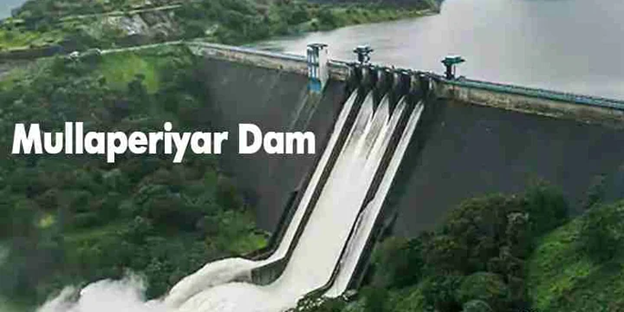
    • Recently, the Supreme Court of India issued notices to various stakeholders calling for urgent directions to reinforce the aging structure of the 130-year-old Mullaperiyar dam.

    Mullaperiyar Dam

    • It is a gravity dam built on the Periyar River in the Idukki district of Kerala that was constructed between 1887 and 1895.
    • The dam is operated and maintained by Tamil Nadu, under a 999-year lease agreement signed in 1886 between the Maharaja of Travancore and the British government.
    • It diverts water to the Vaigai basin in Tamil Nadu for irrigation across 68,558 hectares.

    India’s Dam Landscape – According to the National Register of Large Dams (NRLD) maintained by the Central Water Commission (CWC)

    • India ranks third globally — after China and the United States — in the number of large dams, with over 6,000 operational dams.
    • Functions of Dams – irrigation (supporting agriculture across vast regions); hydropower generation; flood control; and drinking water supply.
    • There are concrete gravity dams (e.g., Bhakra Dam), earthen dams (e.g., Banasura Sagar Dam), rock-fill dams, and arch dams (rare in India), based on topography, geology, and hydrological needs.

    Legal and Institutional Framework

    • Dam Safety Act, 2021: Enacted to ensure surveillance, inspection, operation, and maintenance of dams. It mandates:
    • National Dam Safety Authority (NDSA): It coordinates dam safety efforts across states.
    • Dam Rehabilitation and Improvement Project (DRIP): It was launched by the CWC with World Bank support. It focuses on rehabilitation of aging dams; improved safety monitoring; and capacity building for dam operators and engineers;

    PM Surya Ghar Muft Bijli Yojana

    Syllabus: GS3/Environment

    Context

    • A report on the performance of PM Surya Ghar Yojana has been jointly published by the Institute for Energy Economics and Financial Analysis (IEEFA) and JMK Research & Analytics.

    PM Surya Ghar Muft Bijli Yojana

    • Launched in – 2024
    • Ministry: Ministry of New and Renewable Energy.
    • Objective: Installing rooftop solar (RTS) & providing free electricity for up to 300 monthly units for 1 Crore households.
    • Uniqueness – It is the world’s largest domestic rooftop solar initiative, transforming India’s energy landscape
    • Subsidy: The scheme offers a subsidy of up to 40% to households.

    PM-Surya-Ghar-Muft-Bijli-Yojana-eligibility– Model Solar Village:

    • An allocation of ₹800 crore has been designated for this component, with ₹1 crore provided to each selected Model Solar Village.
    • To qualify as a candidate village, it must be a revenue village with a population of over 5,000 (or 2,000 in special category states).
    • This initiative aims to promote solar energy adoption and empower village communities to achieve energy self-reliance.

    UNESCO’s new Virtual Museum of Stolen Cultural Objects

    Syllabus: GS1/Culture

    News

    • UNESCO officially launched the Virtual Museum of Stolen Cultural Objects at MONDIACULT 2025.

    UNESCO’s new Virtual Museum of Stolen Cultural Objects

    • It offers a globally accessible digital platform to raise awareness about stolen heritage.
    • It currently showcases around 240 missing objects from 46 countries, with the goal of gradually “emptying itself” as items are recovered and returned to their countries of origin.
    • It is financially supported by Saudi Arabia and implemented with INTERPOL.

    Delhi Declaration on 6G

    Syllabus: GS3/Science and Technology

    In News

    • Recently, the leading global 6G research alliance including Bharat 6G, 6G-IA, ATIS’ Next G Alliance issued a Joint Declaration to develop 6G as a global public good at the International Bharat6G Symposium 2025 in New Delhi.

    Delhi Declaration on 6G

    • The declaration endorsed key principles to ensure that 6G networks are trusted, secure, resilient, open, inclusive, affordable, and sustainable.

    6G (sixth-generation wireless)

    • 6G (sixth-generation wireless) is the next-generation cellular technology following 5G
    • It is expected to offer numerous advantages including significantly higher data speeds, drastically reduced latency, and the integration of communication and sensing capabilities within the network.
  • IUCN World Heritage Outlook 2025 | Exercise AUSTRAHIND 2025 | Kenton R. Miller Award | Abel Prize 2025 | Civil Registration System (CRS) 2023 Report

    IUCN World Heritage Outlook 2025

    Syllabus: GS3/ Environment

    News

    • The IUCN World Heritage Outlook 4 revealed a worrying global environmental trend that climate change has emerged as the greatest threat to natural World Heritage sites.

    Key Points

    • The report finds that 43% of sites face severe climate threats, while invasive alien species affect 30%, and wildlife and plant diseases are rising sharply, now impacting 9% of sites, up from just 2% in 2020.
    • Note – Khangchendzonga National Park is the only site rated “Good” in conservation outlook.
    • Sundarbans National Park has deteriorated from “Good with Some Concerns” (2020) to “Significant Concern” (2025) due to sea-level rise, salinity, and cyclones.
    • Manas National Park is in significant Concern category persists due to poaching and encroachment.

    Additional information – Khangchendzonga National Park (KNP)

    • World Heritage Site: Declared a UNESCO mixed World Heritage Site in 2016, meaning it has both natural and cultural significance.
    • It was also designated as part of the World Network of Biosphere Reserves in 2018.
    • Location: Situated in the eastern Himalayas on the border of Sikkim state and eastern Nepa

    Geography and ecosystem:

    • Encompasses diverse landscapes from plains and valleys to mountains, glaciers, and forests.
    • Home to the world’s third-highest peak, Mt. Khangchendzonga.
    • It contains the 26 km long Zemu Glacier.
    • Recognized for the widest and most extensive zone of krummholz (stunted forest) in the Himalayan region.

    Biodiversity:

    • Flora: Includes a vast number of medicinal plants, orchids, rhododendrons, and a significant portion of India’s flowering plants.
    • Fauna: A haven for a wide variety of species, including:
    • Mammals: Snow leopard, red panda, Himalayan black bear, musk deer, golden cat, clouded leopard, and Tibetan wolf.
    • Birds: Over 300 bird species, including the blood pheasant (Sikkim’s state bird), Himalayan monal, and satyr tragopan.
    • Others: Reptiles, amphibians, and various insects.

    Exercise AUSTRAHIND 2025

    Syllabus: GS3/Defence

    In News

    • The 4th edition of Exercise AUSTRAHIND 2025 began in Australia.

    AUSTRAHIND 2025

    • Launched in-2022
    • It is an annual bilateral military exercise, held alternately in India and Australia.

    Kenton R. Miller Award

    Syllabus: Miscellaneous

    Context

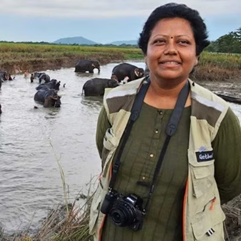
    • Dr Sonali Ghosh, Field Director of Kaziranga National Park became the first Indian to receive the prestigious WCPA-Kenton Miller Award at the IUCN World Conservation Congress held in Abu Dhabi, UAE.

    Kenton R. Miller Award

    • Established in – 2006
    • Awarding organisation – It is presented every two years by the World Commission on Protected Areas (WCPA).
    • Note – WCPA is one of the six technical commissions of the International Union for Conservation of Nature (IUCN).
    • Objective – The award honors individuals who demonstrate innovation and leadership in conserving national parks and protected areas, particularly in ensuring their long-term sustainability.
    • Named after – Dr. Kenton R. Miller, a former IUCN Director General and a prominent global leader in protected area management.

    Abel Prize 2025

    Syllabus: Miscellaneous

    Context

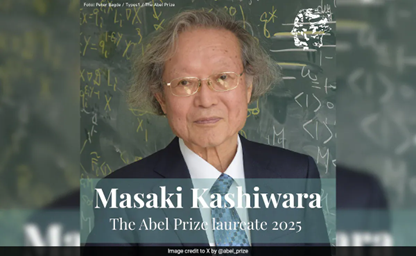
    • Japanese mathematician Masaki Kashiwara was awarded the Abel Prize 2025 for contributions to algebraic analysis and representation theory.

    Contributions of Masaki Kashiwara

    • He pioneered the theory of D-modules, an algebraic framework to study systems of linear partial differential equations (PDEs).
    • His work on sheaf theory, deepened understanding of how local analytical data connects to global geometric structure.

    Abel Prize

    • It is an international award recognizing outstanding scientific work in mathematics, often considered the equivalent of a Nobel Prize for mathematicians.
    • Named after – 19th-century Norwegian mathematician Niels Henrik Abel.
    • Awarded by: The Norwegian Academy of Science and Letters on behalf of the Government of Norway.
    • It can be awarded to mathematicians of any age and nationality.

    Notable Laureates

    • Jean-Pierre Serre: First laureate (2003) for contributions in algebraic geometry and topology.
    • Srinivasa S. R. Varadhan: Indian-origin mathematician, won in 2007.
    • Michel Talagrand (France) For contributions to probability theory and functional analysis won in 2024.

    Civil Registration System (CRS) 2023 Report

    Syllabus: GS1 / Society and GS2 / Governance

    Context

    • The Registrar General of India (RGI) released the “Vital Statistics of India Based on the Civil Registration System (CRS)”,

    Key Findings of the CRS 2023 Report

    • Births Registered: 2.52 crore births were registered in 2023
    • Deaths Registered: 86.6 lakh deaths were registered in 2023
    • Sex Ratio at Birth (SRB):is the number of female births per 1,000 male births
      • Lowest SRB: Jharkhand (899), Bihar (900), Telangana (906), Maharashtra (909), Gujarat (910), Haryana (911), and Mizoram (911).
      • Highest SRB: Arunachal Pradesh (1,085), Nagaland (1,007), Goa (973), Tripura (972), and Kerala (967).

    Additional Information – Civil Registration System (CRS)

    • It is a unified process for the continuous, permanent, and compulsory recording of vital events such as births, deaths, and stillbirths.
    • It does not include registration of marriages or divorces.
    • The system operates under the Registration of Births and Deaths (RBD) Act, 1969, which mandates compulsory reporting of all births and deaths.

    Nobel Prize 2025 Winners List

    Context

    • The 2025 Nobel Prizes in six categories —Physics, Chemistry, Physiology or Medicine, Literature, Peace, and Economic Sciences —were awarded.

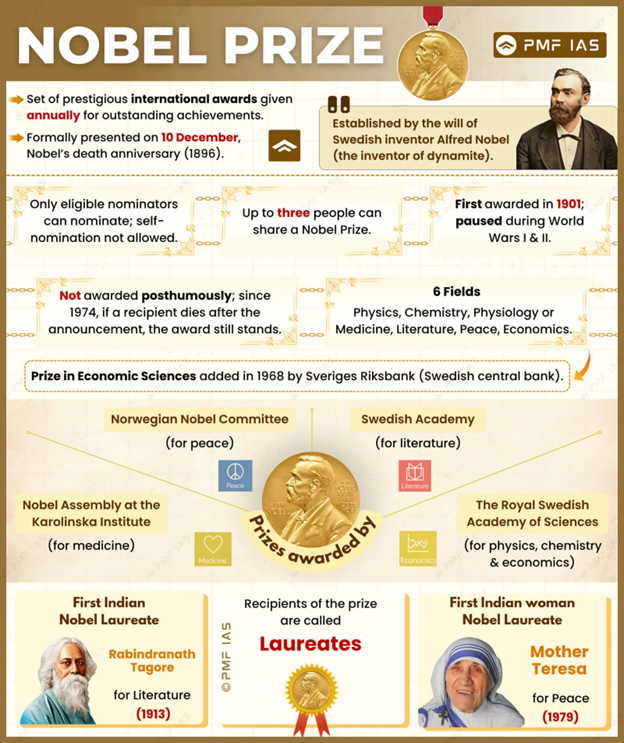
    Nobel Prize

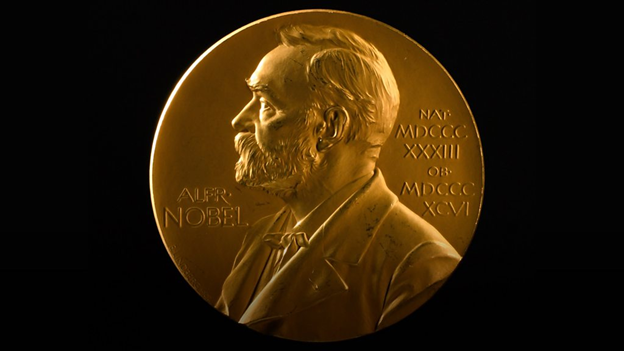
    • It is a set of prestigious international awards given annually for outstanding achievements.
    • Recipients of the prize are called
    • It was established by the will of Swedish inventor Alfred Nobel (the inventor of dynamite).
    • The first Nobel Prizes were awarded in 1901, and they have been awarded annually since then. They were not awarded  during World War I (1914–1918) and II (1939–1945).
    • It is formally presented on December 10, the anniversary of Nobel’s death in 1896.
    • Given in 6 fields: Physics, Chemistry, Physiology or Medicine, Literature, Peace, and Economic Sciences.
    • Prize in Economic Sciences was introduced in 1968 by Sveriges Riksbank (Swedish central bank)
    • A Nobel Prize can be shared by up to three individual In the case of the peace prize, it can also be awarded to an organisation.
    • To become a Nobel Prize laureate one must be nominated for a prize by an eligible nominator. Self-nomination is not allowed.
    • The Nobel Prize cannot be awarded posthumously. However, since 1974, if the recipient dies after the prize has been announced, they can still be awarded it

    Note

    • First Indian Nobel Laureate was Rabindranath Tagore, for Literature (1913).
    • The first Indian woman Nobel Laureate was Mother Teresa, for Peace (1979).

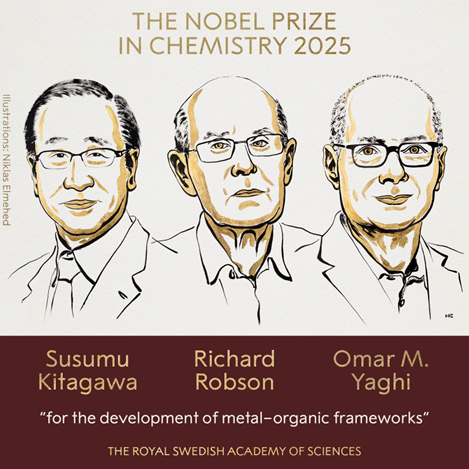
    Nobel Prize in Chemistry 2025

    • Awarded by – Royal Swedish Academy of Sciences
    • Awardees – Susumu Kitagawa (Japan), Richard Robson (Australia), and Omar M. Yaghi (USA)
    • Achievement – for their groundbreaking development of metal-organic frameworks (MOFs).

    Additional Information – Metal-Organic Frameworks (MOFs)

    • They are crystalline, porous materials made of metal ions as “nodes” connected by organic molecules called “linkers.”
    • Functionality: Their lattice structure creates large cavities that can store substances, catalyse reactions, or conduct electricity.

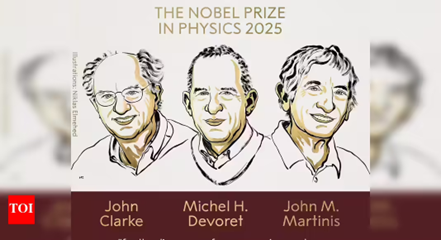
    Nobel Prize in Physics 2025

    • Awarded by – Royal Swedish Academy of Sciences
    • Awardees – John Clarke (UK), Michel Devoret (France), and John Martinis (USA)
    • Achievement – for the discovery of macroscopic quantum mechanical tunnelling and energy quantisation in an electric circuit.
    • Their discovery confirmed that quantum phenomena, once thought limited to subatomic particles, can also manifest in macroscopic systems, expanding the boundaries of quantum mechanics.

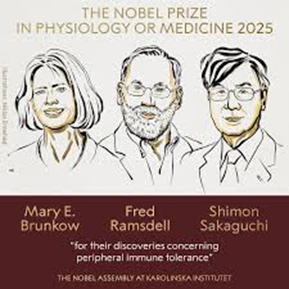
    Nobel Prize in Physiology or Medicine 2025

    • Awarded by – Nobel Assembly at the Karolinska Institute in Stockholm, Sweden, for outstanding contributions to medical research.

    Awardees –

    1. Shimon Sakaguchi (Japan) received the award for discovering regulatory T-cells.
    2. Mary E. Brunkow and Fred Ramsdell (USA) were honoured for identifying the Foxp3 gene, which controls immune regulation.
    3. Significance of the discovery – groundbreaking discoveries concerning peripheral immune tolerance that prevents the immune system from harming the body.

    Did you know?

    ●    First Laureate: In 1901, Emil von Behring received it for developing serum therapy to treat diphtheria.

    ●    Indian–Origin Laureate: In 1968, Har Gobind Khorana became the first Indian winner for decoding the genetic code guiding protein synthesis.

    Nobel Prize in Economics 2025

    • Awarded by – Royal Swedish Academy of Sciences
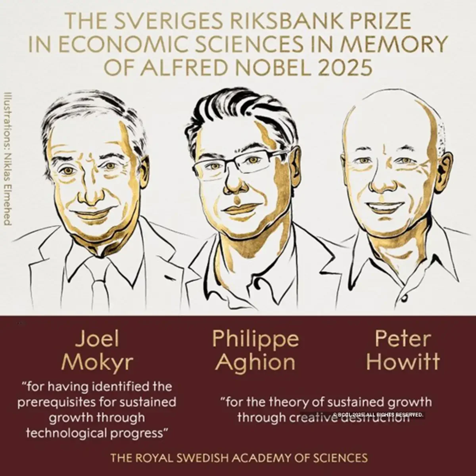
    • Awardees – Joel Mokyr, Philippe Aghion and Peter Howitt “
    • Achievement – for having explained innovation-driven economic growth”.
    • The official name for the Nobel Prize in Economics is the Sveriges Riksbank Prize in Economic Sciences in Memory of Alfred Nobel.
    • It was established in 1968 by Sweden’s central bank (Sveriges Riksbank) in memory of Alfred Nobel, and first awarded in 1969.

    Nobel Prize in Literature 2025

    • Awarded by – Royal Swedish Academy of Sciences
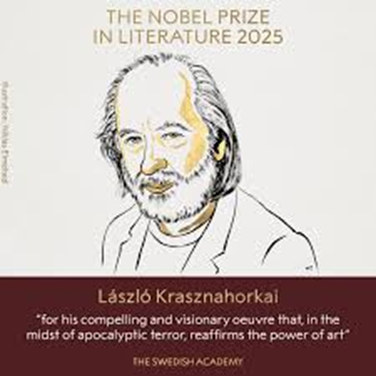
    • Awardee – to Hungarian novelist and screenwriter László Krasznahorkai.
    • He is known for distinct long sentences that can span dozens of pages, his acclaimed works include Satantango (1985) and The Melancholy of Resistance (1989).

    Nobel Peace Prize 2025

    • Awarded by – Norwegian Nobel Committee
    • Awardee – to Venezuelan opposition leader María Corina Machado.
    • Achievement – She was honoured for promoting democratic rights and advocating a peaceful transition from dictatorship to democracy in Venezuela.
    • Political Role: Machado, the leader of the Vente Venezuela party, has mobilised civic movements demanding judicial independence, electoral transparency, and human rights protection.
  • Almatti dam

    Almatti dam

    News

    • notifies land acquisition to raise Almatti dam height
    • A total of 1,33,867 acres will be acquired for increasing the height of the dam from 519.60 metres to 524.25 metres.

    Almatti dam

    • It also known as Lal Bahadur Shastri Dam,
    • Location – It is a major hydroelectric and irrigation project located on the Krishna River in the Vijayapura district of Karnataka.
    • It was completed in July 2005 and serves multiple purposes including irrigation, hydroelectric power generation, and flood control.
    • The dam stands 52.5 meters high and stretches about 3.5 kilometers in length.
    • The reservoir has a gross storage capacity of 123.08 TMC (Thousand Million Cubic feet) at 519 meters above mean sea level.
    • Almatti Dam is the main reservoir of the Upper Krishna Irrigation Project.
    • It houses a 290 MW hydroelectric power station with vertical Kaplan turbines; five 55 MW generators and one 15 MW generator.

    Additional Information – Important Dams of Karnataka

    Dam/Reservoir

    River

    Location

    Storage Capacity (TMC ft)

    Almatti Dam

    Krishna

    Nidagundi taluk, Bijapur district

    123.25

    Basava Sagara Dam

    Krishna

    Narayanapur, Yadgir district

    37.965

    Raja Lakhamagowda Dam

    Ghataprabha

    Hidkal, Belgaum district

    51.16

    Renuka Sagara Dam

    Malaprabha

    Navilutheertha, Belgaum district

    37.73

    Vani Vilasa Sagara

    Vedavathi

    Marikanive, Chitradurga district

    30.442

    Upper Tunga Dam

    Tunga

    Gajanur, Shimoga

    3.24

    Bhadra Dam

    Bhadra

    Lakkavalli, Chikmagaluru district

    71.50

    Tungabhadra Dam

    Tungabhadra

    Hospet, Vijayanagara district

    132.47

    Hemavathi Reservoir

    Hemavathi

    Gorur, Hassan district

    35.76

    Kabini Reservoir

    Kabini

    Heggadadevanakote, Mysore

    19.52

    Harangi Reservoir

    Harangi

    Hudgur, Kodagu district

    8.07

    Krishna Raja Sagara

    Kaveri

    Mandya

    45.05

    Linganamakki Dam

    Sharavathi

    Sagara, Shimoga district

    156.62

    Chakra Reservoir

    Chakra

    Chakra Nagar, Shimoga

    7.3

    Savehaklu Reservoir

    Chakra

    Chakra Nagar, Shimoga

    4.1

    Mani Reservoir

    Varahi

    Hummadagallu, Shimoga

    35.2

    Supa Dam

    Kali

    Ganesha Gudi, Uttara Kannada

    147.54

    Kodasalli Dam

    Kali

    Kodasalli, Uttara Kannada

    10.14

    Kadra Dam

    Kali

    Virje, Uttara Kannada

    13.74

    Shanti Sagara

    Haridra

    Kerebilchi, Davanagere district

    3.5

    Karanja Dam

    Karanja

    Byalahalli, Bidar district

    13.1