Traffic police introduce e-accident report feature on its ASTraM app
ASTraM app
Abbreviation – Actionable Intelligence for Sustainable Traffic Management
Launched by – Bengaluru Traffic Police in January 2024
Objectives
To equip Bengaluru Traffic Police with real-time, data-driven situational awareness for better traffic management.
To provide congestion alerts every 15 minutes to traffic officials and stakeholders for proactive traffic planning.
To enable citizens to actively participate by reporting accidents, violations, and making online traffic fine payments.
Devadasi survey extended
News –
The ongoing resurvey of Devadasis in Karnataka has been extended till December 31. The Karnataka State Women’s Development Corporation (KSWDC), the nodal agency for conducting the survey,.
The Karnataka Cabinet has approved the Karnataka Devadasi (Prevention, Prohibition, Relief and Rehabilitation) Bill, 2025, aiming to strengthen efforts against the Devadasi system
Devadasi rehabilitation Bill
It will replace the 1982 Act
Mandate – to protect the dignity of Devadasis and their children.
Devadasi system
It is an ancient practice dating back to the Chola, Chera, and Pandya dynasties, involving dedicating young lower-caste girls to temple deities.
Though termed “servants of God,” these girls often end up providing sexual services to temple patrons and powerful men.
The system persists under different regional names across India, such as Natis (Assam), Maharis (Kerala), Basavi/Jogati (Karnataka), Jogin (Andhra Pradesh), and Aradhini (Maharashtra).
Akkai on panel to draft transgender equal opportunity policy
News –
Trans rights activist Akkai Padmashali from Karnataka has been named as a member of a Supreme Court-appointed committee that was formed to formulate an equal opportunity policy for the protection of the rights of transgender persons.
The Supreme Court set up a committee under former Justice Asha Menon to formulate an equal opportunity policy for transgender individuals.
Challenges Transgender are Facing
Institutional gaps in implementing the Transgender Persons (Protection of Rights) Act, 2019 and Rules.
Lack of data and representation in policymaking.
Healthcare discrimination.
Workplace barriers.
Social stigma.
Steps Taken To Improve the Lives of Transgender Persons
Transgender Persons (Protection of Rights) Act, 2019 – It is aimed at protecting the rights of transgender individuals and their welfare. The act prohibits discrimination against transgender people in areas like education, employment, healthcare, and public services.
NALSA (2014): Recognized transgender persons as a third gender.
National Portal for Transgender Persons: Enables online applications for identity certificates.
SMILE scheme: It is aimed at rehabilitation and support for transgender persons, including livelihood and social security components.
Facial recognition attendance (FRA) has already been implemented as a pilot project for three months in schools and PU colleges in Mandya, Haveri, and Bengaluru South districts
Chief Minister Siddaramaiah had announced the implementation of the FRA in the State Budget for 2025-26.
Facial recognition attendance (FRA)
It is a contactless biometric system that detects a face, creates a numerical template (embedding), matches it to an enrolled profile, and auto-logs time, date, and location.
The Karnataka State Policy and Planning Commission chaired by B R Patil has expressed dissatisfaction over district in-charge, not holding regular meetings of district planning committees
District Planning Committee (DPC)
It is a constitutional body under Article 243Z. It is mandatory in every district.
Core mandate: consolidate Panchayat and Municipality plans; prepare a draft development plan for the district.
Composition: at least four-fifths elected from among elected members of district Panchayats and Municipalities, in proportion to rural–urban population.
Remaining members: as provided by state law; may include MLAs/MPs of the district and nominated experts.
Mandate – to recommend comprehensive measures for enhancing transparency, efficiency, and accountability in public administration.
The commission’s mandate includes restructuring administrative systems, simplifying citizen-centric service delivery, and strengthening institutional governance across departments.
The current Chairman of the Karnataka Administrative Reforms Commission is Shri R.V. Deshpande, who was appointed in January 2024 with the status of a Cabinet Minister. He took over from the previous chairman, Shri T.M. Vijay Bhaskar
117-km Bengaluru Business Corridor (BBC), formerly known as the Peripheral Ring Road (PRR), to connect Electronics City with Tumakuru Road and Mysuru Road.
Bengaluru Business Corridor
Implementation – Bengaluru Development Authority (BDA) would develop the BBC.
It connects Electronics City with Tumakuru Road and Mysuru Road.
Significance – It decongest traffic by up to 40% by diverting through-traffic and linking major radial highways; alternative/complement to NICE Road.
In a landmark labour reform, Saudi Arabia has officially scrapped the decades-old Kafala (sponsorship) system.
Kafala system
The Kafala system required foreign workers to have a Saudi sponsor, usually their employer, who controlled their visa and legal status.
This meant that workers couldn’t change jobs, leave the country, or even renew their residence permits without the sponsor’s consent.
Why did Saudi Arabia scrap the system
Human rights bodies long argued that this system often led to worker exploitation and abuse, as employees were left with little legal recourse if their employers withheld salaries or passports.
The reform aligns with Saudi Crown Prince Mohammed bin Salman’s Vision 2030, which aims to modernise the economy, attract foreign investment, and reduce the kingdom’s reliance on oil.
Exercise Ocean Sky 2025
Syllabus: GS3/ Defence
Context
The Indian Air Force (IAF) is participating in Exercise Ocean Sky 2025, a multinational air combat exercise hosted by the Spanish Air Force at Gando Air Base, Spain.
Exercise Ocean Sky 2025
Objective – The exercise aims to foster mutual learning, enhance interoperability, sharpen air combat skills, and strengthen defence cooperation with friendly nations.
The exercise brings together more than 50 aircraft from Spain, Germany, Greece, Portugal, India, and the United States, including India’s Su-30MKI fighter jets.
Project Arunank
Syllabus: GS3/Defence
In News
Project Arunank of the Border Roads Organisation (BRO) marked its 18th Raising Day in Naharlagun, Arunachal Pradesh.
Project Arunank
It was established in 2008
It has built over 696 km of roads and 1.18 km of major bridges, enhancing connectivity to remote areas and supporting Armed Forces operations.
It has embraced sustainable technologies such as Steel Slag, Geo Cells, and GGBFS Concrete to improve infrastructure
Environmental efforts include planting 23,850 trees under the ‘Ek Ped Maa Ke Naam’ initiative.
Established in – It was formed in 1960 by Pandit Jawaharlal Nehru
Objective – To coordinate the speedy development of an adequate road communication network of roads in the North and the North-Eastern border regions of the country.
Functions under – It works under the administrative control of the Ministry of Defence.
Significance – Support the armed forces meet their strategic needs by committed, dedicated and cost-effective development and sustenance of the infrastructure.
Recent and upcoming Projects: This includes the construction of Sela Tunnel in Arunachal Pradesh on Balipara-Chariduar-Tawang Road.
ICGS Ajit and ICGS Aparajit
Syllabus: GS3/Defence
In News
The Indian Coast Guard launched two advanced Fast Patrol Vessels—ICG Ship Ajit and ICGS Aparajit—at Goa Shipyard Limited (GSL).
ICGS Ajit and ICGS Aparajit
These vessels are the seventh and eighth in a series of eight indigenously built Fast Patrol Vessels
Built by – Goa Shipyard Limited (GSL).
Significance – The FPVs are designed for multi-mission roles such as fisheries protection, coastal patrol, anti-smuggling, anti-piracy, and search and rescue operations, especially around India’s island territories and Exclusive Economic Zone.
Indo-Tibetan Border Police (ITBP) Raising Day
Syllabus: GS 3/Security Agencies
In News
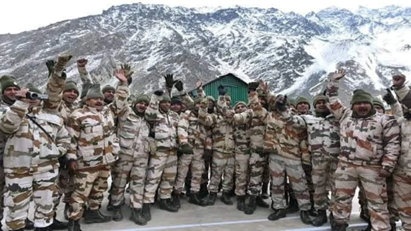
The 64th raising day of Indo-Tibetan Border Police (ITBP) was observed recently.
Indo-Tibetan Border Police (ITBP)
Established on – October 24, 1962
It guards the 3,488 km-long India-China border, stretching from the Karakoram Pass in Ladakh to Jachep La in Arunachal Pradesh.
It also plays a crucial role in internal security operations, including anti-Naxal duties in Chhattisgarh.
Many of the ITBP’s Border Out Posts are located at altitudes between 9,000 and 18,800 feet, where temperatures can plummet to minus 45 degrees Celsius during winters.
Relevance
It is recognised as a specialised armed police force.
It trains its personnel in mountaineering, skiing, and tactical combat,
to maintain readiness for disaster response and relief operations in the Himalayan region.
Carabid Beetles
Syllabus: GS3/ Environment
Context
Recent research in Italy has shown that carabid ground beetles can serve as potential bioindicators of microplastic pollution in soil.
Carabid Beetles
They belong to the family Carabidae
They are nocturnal predators that inhabit nearly all terrestrial ecosystems worldwide.
Species diversity: Around 34,000 species globally and over 1,000 species recorded in India.
Physical traits: Flattened, elongated bodies (mostly dark or metallic-shiny), and prominent mandibles for predation.
Ecological Role:
Natural pest controllers: Feed on a variety of agricultural pests like caterpillars, slugs, aphids, weevils, and snails.
Indicator of soil quality: High carabid diversity reflects low pesticide use, good organic matter, and balanced soil moisture.
Pilot Whales
Syllabus: GS3/Species in News
Context
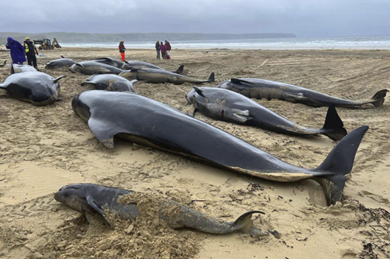
More than two dozen pilot whales have died after becoming stranded on a remote beach in New
Pilot Whales
Scientific name:
Globicephala melas (Long-finned Pilot Whale).
Globicephala macrorhynchus (Short-finned Pilot Whale).
Family: Delphinidae (Oceanic dolphins).
Despite their name, they are not true whales but large oceanic dolphins.
They were named pilot whales because it was thought that each pod followed a ‘pilot’ in the group.
Distinctive Appearance: Pilot whales have a distinctive appearance characterized by a bulbous forehead and a long, black body with a white or light-gray saddle patch behind the dorsal fin.
Habitat & Distribution:
Long-finned species – They prefer cooler waters (North Atlantic, Southern Ocean).
Short-finned species – They prefer warmer tropical and subtropical waters (Indian Ocean and Arabian Sea).
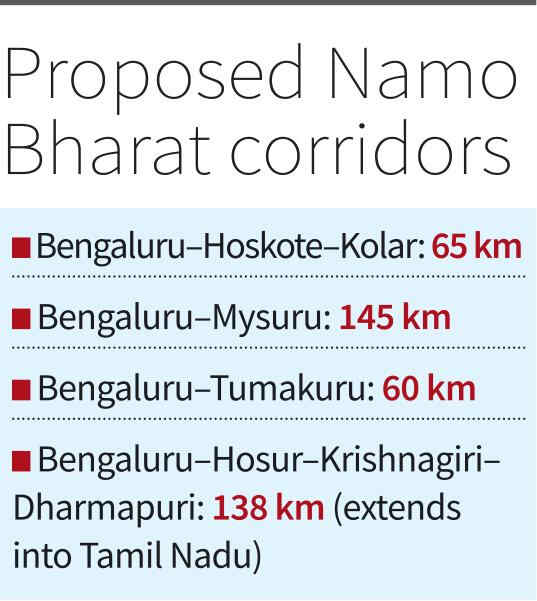
Bengaluru City likely to get Namo Bharat trains to boost regional connectivity
Namo Bharat
It is India’s first semi-high-speed regional rail service (previously known as RapidX) designed for fast, comfortable, and efficient inter-city travel within the National Capital Region (NCR) and other urban areas.
It is currently India’s fastest operational train, running at a top speed of 160 km/h on dedicated corridors
It marked the launch of India’s first Regional Rapid Transit System service, initially branded RapidX and introduced to the public as Namo Bharat at launch.
State inks pact with GAIL to generate gas from wet waste
News –
The Karnataka government has signed an agreement with Gas Authority of India Limited (GAIL) to generate gas from wet waste in Bengaluru.
This will help reduce the problem of waste in Bengaluru,and that the gas will be distributed to industries and hotels.
The types of waste generated and managed in Bangalore include:
Organic Waste – Kitchen waste such as food leftovers, vegetable peels, fruit waste, tea/coffee grounds, eggshells, garden pruning and green waste.
Non-Organic (Dry) Waste – Recyclable solid waste like plastics (bags, bottles, containers), metals (utensils, wires, batteries), glass (bottles/cups), paper (newspapers, cardboard), and wood.
Hazardous Waste – Items such as insect sprays, chemicals, medical waste (syringes, bio-medical waste), e-waste, batteries, and sanitary products.
Inert Waste – Construction and demolition debris like sand, concrete, clay, subsoil, stones, and rubble.
Solid Waste Management Rules, 2016:
Mandatory Source Segregation: Waste generators must segregate waste into three streams: wet (biodegradable), dry (plastic, paper, metal, etc.), and domestic hazardous waste.
Extended Producer Responsibility (EPR): Manufacturers/brand owners of certain products (e.g., plastic packaging, e-waste, batteries) are financially responsible for collecting and processing their post-consumer waste.
Role of Urban Local Bodies (ULBs): Responsible for door-to-door collection, transportation, processing, and disposal.
User Fees and Spot Fines: Local bodies can levy user fees for waste services and spot fines for littering or non-segregation.
Promotion of Waste Processing: Emphasis on composting, biomethanation, recycling, and waste-to-energy plants over landfills.
Government Initiatives
Swachh Bharat Mission (SBM) (Urban and Gramin): Flagship cleanliness campaign with a focus on achieving “Garbage-Free Cities” (SBM-U 2.0) through scientific waste management.
Waste to Wealth Mission: Promotes converting waste into energy, compost, and other valuable products.
GOBAR-Dhan Scheme: Focuses on converting organic waste and cattle dung into biogas, bio-CNG, and organic manure in rural areas.
NAMASTE Scheme: Aims to formalize and integrate informal waste pickers into the formal waste management system, providing them with safety and social security.
Kashmir’s new Chrysanthemum Garden, Bagh-e-Gul-e-Dawood will open near the Zabarwan range, featuring over 30 lakh blooms across 50+ varieties.
Chrysanthemum
It is a perennial flowering plant from the Asteraceae family.
It is widely cultivated in China, Japan, Europe, and the U.S. for its medicinal properties and use in aromatic beverages.
Uniqueness – It is rich in phenolic compounds and exhibits potent antioxidant, antimicrobial, anti-inflammatory, anticancer, and other therapeutic activities.
International Convention Against Doping in Sport
Syllabus: Miscellaneous
In News
India was re-elected as Vice-Chairperson of the Bureau representing the Asia-Pacific during the 10th Session of UNESCO’s International Convention against Doping in Sport, held in Paris.
Doping and its Concerns
Doping refers to the practice of using banned chemical substances, known as performance enhancing drugs (PEDs), by athletes.
Conventions and Declarations related to Anti-Doping
Copenhagen Declaration
Held in – Copenhagen Declaration on Anti-Doping in Sport was agreed upon by governments at the Second World Conference on Doping in Sport held in Copenhagen, Denmark in 2003.
Purpose – The declaration was the political document through which governments signalled their intention to formally recognise and implement the World Anti-Doping Code.
Significance – This declaration was the first step toward the preparation of the UNESCO International Convention against doping in sports.
India agreed to this declaration in the year 2003.
International Convention Against Doping in Sport
It is also known as the ‘UNESCO Anti-Doping Convention’.
It was adopted at the General Conference of UNESCO in Paris in 2005. It entered into force in 2007.
Objective –To promote the prevention of and the fight against doping in sports, with a view to its elimination.
India ratified this convention in 2007.
Note – National Anti-Doping Agency, an autonomous body under the Ministry of Youth Affairs, is responsible for adopting, implementing and enforcing anti-doping programmes in India.
Strengthening Governance through Blockchain Technology
Syllabus: GS2/ Governance. GS3/ Science and Technology
Context
India is accelerating its adoption of blockchain technology to transform governance, enhance transparency, and strengthen digital trust through the National Blockchain Framework (NBF).
Connect with the basics- Blockchain
Definition – Blockchain is a distributed, transparent, secure, and immutable database that functions like a ledger of records or transactions, resistant to tampering and accessible across a network of computers.
Applications of Blockchain Technology
Blockchain technology has numerous applications across various industries due to its secure, transparent, and decentralized nature.
Cryptocurrencies: Enabling secure digital currencies like Bitcoin and Ethereum.
Smart Contracts: Automating agreements without intermediaries.
Supply Chain Management: Enhancing transparency and traceability.
Healthcare: Securing patient records and improving data sharing.
Banking and Finance: Streamlining cross-border payments and fraud detection.
Voting Systems: Ensuring transparent and tamper-proof elections.
Identity Management: Offering secure, verifiable digital identities.
Real Estate: Simplifying property transfers with tokenized assets.
Gaming: Enabling ownership of in-game assets and NFTs.
Energy Sector: Supporting peer-to-peer energy trading.
National Blockchain Framework (NBF)
Launched in- 2024
Developed by – Ministry of Electronics and Information Technology (MeitY)
Objective – to accelerate the development and deployment of permissioned blockchain-based applications.
Makhananomics
Syllabus: GS3/Economy
In News
Prime Minister Narendra Modi described the newly launched National Makhana Board as a transformative “revolution” for the sector.
Makhana (Euryale ferox)
It is a flowering plant classified in the water lily family (Nymphaeaceae).
Climatic condition: Requires a temperature range of 20-35°C, and annual rainfall between 100- 250 cm.
It is a fully organic non-cereal food found principally in India but also in Korea, Japan, as well as parts of eastern Russia.
Bihar accounts for ~90% of India’s makhana production.
GI Tag: In 2022, ‘Mithila Makhana’ was conferred a GI tag.
Cloud Seeding
Syllabus: GS3/Environment
Context
Delhi Chief Minister has said cloud seeding is essential for the national capital as it could play a key role in controlling rising pollution levels during the winter season.
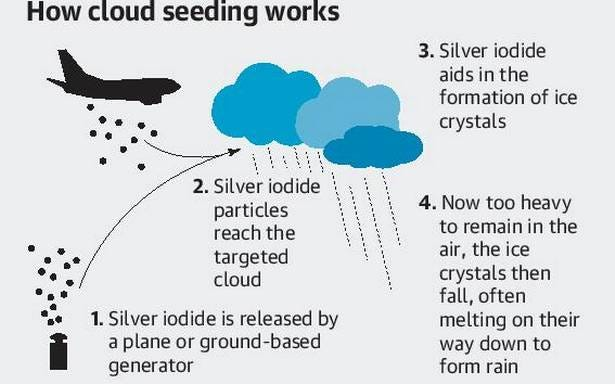
Cloud Seeding or Artificial Rain
Definition – Artificial rain refers to inducing precipitation by injecting certain chemicals into clouds to accelerate the process of raindrop formation.
Conditions Required:Potential rain-bearing clouds, sufficient humidity and atmospheric instability & Favorable wind and temperature conditions.
Advantages of Cloud Seeding
Air Pollution Mitigation: In cities like Delhi, artificial rain can wash down particulate matter and other pollutants, providing temporary relief from severe air pollution.
Drought Mitigation and Water Resource Augmentation: States like Maharashtra and Karnataka have used cloud seeding to combat water shortages (e.g., “Project Meghdoot” and “Varshadhari”).
Forest Fire Control: By increasing moisture levels, cloud seeding can potentially reduce the risk and intensity of wildfires.
Sree Narayana Guru
Syllabus: GS1/Modern History
Context
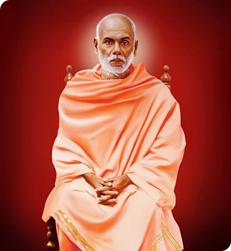
The President of India inaugurated the observance of the Mahasamadhi centenary of Sree Narayana Guru at Sivagiri Mutt, Varkala, Kerala.
Sree Narayana Guru(1856–1928)
He was born in 1856 in Kerala into the Ezhava community, which faced severe caste disabilities.
He was a saint, philosopher, and one of the foremost social reformers in modern India who challenged caste oppression and emphasized spiritual reform as the path to social reform.
Sree Narayana Guru known for blending Advaita Vedanta with a call for social justice.
Key Contributions
Social Philosophy: Propagated the radical message: “One Caste, One Religion, One God for Man”.
Rejected birth-based caste hierarchy and promoted dignity of labour.
Institution Building: Founded Sree Narayana Dharma Paripalana Yogam (SNDP, 1903) to advance education, social empowerment, and reform.
Aruvipuram Movement (1888): Consecrated a Shiva idol himself, breaking the Brahmin monopoly over temple ritual Built temples, schools, and ashrams for the common people with egalitarian access.
Political & Social Movements: Extended moral and ideological support to the Vaikom Satyagraha (1924–25) for temple entry rights of lower castes.
Educational Upliftment: Stressed education as the foundation of empowerment and upliftment.
Gyan Bharatam Mission
Syllabus: GS1/Culture
Context
The Gyan Bharatam Mission on manuscripts under the Union Culture Ministry, signed Memorandums of Understanding with around 20 institutes for conservation, upkeep and digitisation of manuscripts.
Gyan Bharatam Mission
Purpose – The mission aims to preserve and protect manuscripts found across the country.
Objective: To undertake the “survey, documentation and conservation” of more than one crore manuscript heritage lying with academic institutions, museums, libraries, etc.
Significance of Mission: Preserving historical value, unveiling ancient Indian knowledge to the world, ensuring longevity and round-the-clock access to Manuscripts, etc.
Basic terms – Manuscripts
A manuscript is a handwritten composition on paper, bark, palm leaf etc. dating back at least 75 years that has significant scientific, historical or aesthetic value.
g. Bakhshali manuscript (Third or fourth century A.D.), an ancient Indian mathematical text written on birch bark, is considered to be the earliest recorded example of use of zero.
India possesses an estimated 10 million manuscripts in 80 ancient scripts like Brahmi, Kushan, Gaudi, Lepcha, and Maithili.
Other initiatives for manuscript conservation in India
National Manuscripts Mission (NMM): Launched In 2003, by the Ministry of Tourism and Culture to locate and preserve manuscripts.
National Library of India, Kolkata: It has about 3600 rare and historically important manuscripts.
Asiatic Society of Bengal: Founded on Jan. 15, 1784, by Sir William Jones, undertakes digitization of ancient manuscripts.