1.Which of the following best captures the core objective of the BBNJ or High Seas Treaty?
- To regulate deep-sea mining operations within Exclusive Economic Zones (EEZs).
- To conserve and sustainably use marine biodiversity in areas beyond national jurisdiction.
- To increase trade-related cooperation between coastal nations.
- To protect only endangered species within territorial waters.
Answer: B
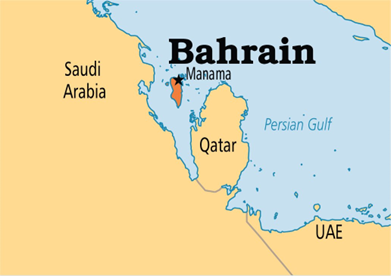
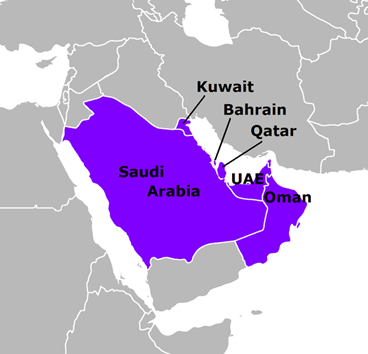
- Which of the following correctly lists all members of the Gulf Cooperation Council?
- Saudi Arabia, UAE, Oman, Qatar, Bahrain, Kuwait
- Bahrain, Kuwait, Qatar, UAE, Iran, Saudi Arabia
- Bahrain, UAE, Oman, Qatar, Iraq, Saudi Arabia
- Oman, Qatar, Jordan, UAE, Bahrain, Kuwait
Answer: A
- Which of the following statements correctly highlights the Maldives’ unique global position regarding tobacco control?
- It is the first South Asian nation to ban all tobacco imports.
- It is the first country to make Dhivehi the sole language for tobacco warnings.
- It is the first country to declare full tobacco-free tourism zones.
- It is the first country to impose a generational ban on tobacco and vaping.
Answer: D
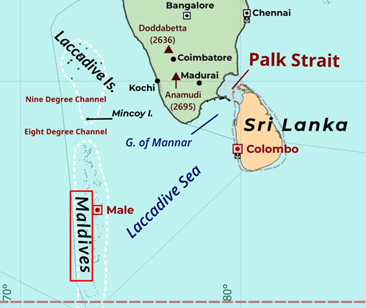
- The strategic importance of the Maldives in the Indian Ocean Region (IOR) is primarily due to:
- Its large naval fleet and military bases.
- Its position along major maritime trade routes.
- Its extensive oil reserves.
- Its status as a global financial hub.
Answer: B
- Which of the following best describes the genomic nature of the Encephalomyocarditis Virus (EMCV)?
- Single-stranded RNA virus belonging to the Picornaviridae family.
- Double-stranded DNA virus belonging to the Herpesviridae family.
- Double-stranded RNA virus belonging to the Reoviridae family.
- Single-stranded DNA virus belonging to the Parvoviridae family.
Answer: A
- Which of the following statements is correct regarding Encephalomyocarditis Virus epidemiology?
- It exclusively infects primates.
- It affects a wide range of mammalian species.
- It is restricted to tropical marine ecosystems.
- It primarily spreads through mosquito vectors.
Answer: B
- Which statement about the Appellate Tribunal’s legal status is correct?
- It is a fully judicial body with the same powers as the Supreme Court.
- It is a quasi-legislative authority issuing policy rules.
- It is a quasi-judicial body hearing appeals from NCLT and other authorities.
- It is an executive body enforcing compliance with the Companies Act.
Answer: C
- With reference to the Pradhan Mantri Fasal Bima Yojana (PMFBY), consider the following statements:
- It is implemented by the Ministry of Agriculture & Farmers Welfare.
- Farmers pay a uniform premium rate of 5% for all food grain and oilseed crops.
- The scheme was launched to provide financial support to farmers in cases of crop loss due to natural calamities, pests, and diseases.
How many of the statements given above is/are correct?
- One only
- Two only
- All
- None
Answer: B
- Under PMFBY, which of the following premium rates is correctly matched with its crop category?
- Rabi crops – 2%
- Kharif crops – 1.5%
- Annual commercial/horticultural crops – 5%
- All crops – 3%
Answer: C
- Consider the following statements regarding Coal India Limited (CIL):
- It is a Maharatna PSU under the Ministry of Coal.
- It was established during the period of the Second Five-Year Plan.
- It accounts for about 80% of India’s domestic coal production.
Which of the statements given above is/are correct?
- 1 and 2 only
- 2 and 3 only
- 1 and 3 only
- 1, 2 and 3
Answer: C
- Consider the following statements regarding Public Sector Undertakings (PSUs):
- A PSU is defined as an enterprise in which the government holds at least 51% equity.
- All PSUs are established under the Companies Act, 2013.
- Both Central and State Governments can own PSUs.
Which of the statements given above is/are correct?
- 1 and 3 only
- 1 and 2 only
- 2 and 3 only
- 1, 2 and 3
Answer: A
- The North Eastern Science & Technology (NEST) Cluster was inaugurated by which of the following authorities?
- Union Minister for Education
- Union Minister for Science and Technology
- Union Minister for Communications and Development of North Eastern Region
- Prime Minister of India
Answer: C
- In 2025, which Biosphere Reserve of India was included in UNESCO’s World Network of Biosphere Reserves (WNBR)?
- Simlipal Biosphere Reserve (Odisha)
- Nanda Devi Biosphere Reserve (Uttarakhand)
- Gulf of Mannar Biosphere Reserve (Tamilnadu)
- Cold Desert Biosphere Reserve (Himachal Pradesh)
Answer: D
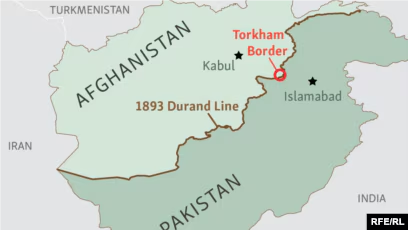
- Consider the following statements about the Torkham border:
- 1. It serves as a major logistical hub for trade and transport.
- It is the only land border between Afghanistan and Pakistan.
- It lies on the international boundary between the two countries.
How many of the statements given above is/are correct?
- One only
- Two only
- All
- None
Answer: B
- Consider the following features:
- Provides ₹5 lakh insurance coverage per family per year.
- Targets vulnerable and economically weaker families.
- Ensures free secondary and tertiary care hospitalization.
Which of the above features are associated with AB-PMJAY?
- 1 and 2 only
- 2 only
- 1 and 3 only
- 1, 2 and 3
Answer: D
- The concept of “Blue Cities” is primarily associated with which of the following?
- Cities located along major river systems promoting inland waterways.
- Coastal or port cities integrating ocean-based economic activities with sustainable urban development.
- Cities with high per capita consumption of clean drinking water.
- Smart cities developed under the Digital India initiative.
Answer: B
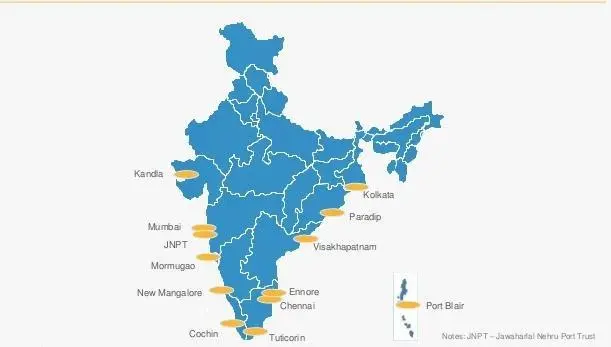
- Consider the following statements regarding India’s port infrastructure:
- Minor ports are controlled by the Central Government.
- Major ports are under the respective jurisdiction of State Governments.
- India has 13 major ports and over 200 minor ports.
Which of the statements given above are correct?
- 1 only
- 2 and 3 only
- 3 only
- 1 and 3 only
Answer: C
- With reference to a Rupee backed Stablecoins, consider the following:
- It is typically pegged 1:1 to the Indian rupee.
- It offers the programmability of crypto assets without high volatility.
- It is primarily designed for speculative investment gains.
How many of the above statements are correct?
- Only one
- Only two
- All three
- None
Answer: B
- With reference to the National Beekeeping and Honey Mission (NBHM), consider the following statements:
- It is a Central Sector Scheme aimed at promoting scientific beekeeping.
- It is implemented through the National Bee Board (NBB).
- It was launched as part of the Sweet Revolution initiative.
Which of the statements given above is/are correct?
- 1 and 2 only
- 2 and 3 only
- 1 and 3 only
- 1, 2 and 3
Answer: D
- Which of the following Indian states share a border with Nepal?
- Sikkim
- West Bengal
- Bihar
- Uttarakhand
- Himachal Pradesh
Select the correct answer using the code below:
- 1, 2, 3 and 4 only
- 1, 3 and 5 only
- 2 and 4 only
- 1, 2, 3, 4 and 5
Answer: A
- The Kalapani region is located near the trijunction of which of the following?
- India – Nepal – China
- India – Nepal – Bhutan
- India – Bhutan – China
- India – Nepal – Bangladesh
Answer: A
- Which of the following statements best defines diabetes?
- A genetic disorder caused by deficiency of red blood cells.
- A chronic metabolic disorder caused by imbalance in blood pressure.
- A chronic metabolic disorder where the body cannot produce or properly use insulin.
- A viral infection affecting glucose absorption.
Answer: C
- In Type 2 Diabetes, the problem primarily arises because:
- The body produces no insulin at all.
- The pancreas becomes infected.
- The immune system attacks the liver.
- The body produces insufficient insulin or cannot use it effectively.
Answer: D
- Match the following Hepatitis types with their characteristics:
|
Hepatitis types
|
Characteristics
|
|
a. Hepatitis A
|
1. Requires Hepatitis B for infection.
|
|
b. Hepatitis C
|
2. Can cause chronic liver cirrhosis and cancer.
|
|
c. Hepatitis D
|
3. Usually mild & self-limiting.
|
|
d. Hepatitis E
|
4. Serious in people with weakened immunity.
|
Select the correct combination:
- a–3, b–2, c–1, d–4
- b) a–4, b–1, c–2, d–3
- c) a–3, b–1, c–4, d–2
- d) a–2, b–3, c–1, d–4
Answer: A
- With reference to Rheumatoid Arthritis, which of the following is correct?
- It usually affects only elderly individuals above 65 years.
- It commonly affects individuals between 30–60 years.
- It mostly affects children.
- It affects men and women equally.
Answer: B
- Rheumatoid Arthritis is considered a systemic disease because:
- It affects only the bones.
- It spreads through air.
- It affects multiple organs including lungs, heart, skin, and eyes.
- It is always limited to the knees and hands.
Answer: C
- Saranda Forest lies in which bio-geographic zone of India?
- Western Ghats zone
- Trans-Himalayan zone
- Chhotanagpur zone
- Deccan plateau zone
Answer: C
- Saranda Forest is inhabited mainly by which tribal communities?
- Bhils and Gonds
- Ho, Munda, Uraon communities
- Santhals and Todas
- Angami and Khasi tribes
Answer: B
- Assertion (A): The FAME India Scheme focuses solely on public transport electrification.
Reason (R): The scheme is implemented under the Ministry of Heavy Industries as part of the National Electric Mobility Mission Plan (NEMMP).
Select the correct Option:
- Both A and R are true, and R is the correct explanation of A
- Both A and R are true, but R is not the correct explanation of A
- A is true, but R is false
- A is false, but R is true
Answer: D
- Mudh-Nyoma Airbase, recently in focus for its strategic significance, is associated with which of the following statements?
- It is located in Nyoma, Leh district of Ladakh, at an altitude of around 13,700 feet.
- Its construction was led by the Central Public Works Department (CPWD).
- Its location near the Line of Actual Control (LAC) provides India with tactical, logistical, and surveillance advantages in areas such as Depsang Plains, Pangong Tso, and Chushul Valley.
Which of the statements given above is/are correct?
- 1 and 2 only
- 1 and 3 only
- 2 and 3 only
- 1, 2 and 3 only
Answer: B
- Rift Valley Fever (RVF) primarily affects which of the following?
- Humans only
- Animals such as sheep, goats, cattle, and camels
- Birds and reptiles
- Marine animals
Answer: B
- Consider the following statements regarding molasses and its strategic importance in India:
- Molasses is a byproduct of sugarcane or sugar beet refining and contains fermentable sugars suitable for industrial fermentation.
- It is a key raw material for ethanol production under India’s Ethanol Blending Programme, helping reduce crude oil imports.
- Molasses is primarily used as a direct fuel substitute for thermal power generation due to its high calorific value.
- It also finds applications in the food industry, animal feed, and industrial production of citric acid and yeast.
Which of the statements given above is/are correct?
- 1, 2 and 4 only
- 1 and 3 only
- 2 and 3 only
- 1, 2, 3 and 4
Answer: A
- Ricin, a highly toxic protein, has raised global security concerns. Consider the following statements:
- Ricin is extracted from the seeds of the castor bean plant (Ricinus communis) and inhibits protein synthesis in human cells.
- It is classified under Schedule-1 of the Chemical Weapons Convention (CWC), which restricts its production and use to research, medical, or protective purposes.
- Ricin poisoning can be effectively neutralized by common antibiotics if administered immediately after exposure.
- Exposure to Ricin can be fatal within hours, and there is currently no known antidote.
Which of the statements given above is/are correct?
- 1 and 3 only
- 2 and 4 only
- 2 and 3 only
- 1, 2, 3 and 4
Answer: B
- Statement 1: The Booker Prize is awarded for fiction published in the United Kingdom and/or Ireland.
Statement 2: David Szalay’s Flesh was eligible for the prize because it was published in the UK or Ireland.
Select the correct options:
- Both statements 1 and 2 are true, and statement 2 correctly explains statement 1.
- Both statements 1 and 2 are true, but statement 2 does not explain statement 1.
- Statement 1 is true, statement 2 is false.
- Statement 1 is false, statement 2 is true.
Answer: A
- Consider the following statements regarding the demonetisation announced in India on November 8, 2016:
Statement 1: The demonetisation rendered Rs 500 and Rs 1,000 notes, which accounted for about 86% of currency in circulation, invalid as legal tender.
Statement 2: The objectives of the 2016 demonetisation included eliminating black money, curbing counterfeit currency, promoting digital payments, and formalising the economy.
Statement 3: Demonetisation directly resulted in the complete eradication of black money from the Indian economy.
Which of the above statements is/are correct?
Options:
- 1 and 2 only
- 2 and 3 only
- 1 and 3 only
- 1, 2, and 3
Answer: A
- With reference to India’s Aditya-L1 mission, consider the following statements:
- Aditya-L1 is India’s first space-based solar observatory.
- The spacecraft will be placed in a halo orbit around the Lagrange Point 1 (L1), approximately 1.5 million km from Earth.
- The mission involves sending the spacecraft directly to the Sun to study its surface and corona.
- The placement at L1 allows continuous observation of the Sun even during solar eclipses.
Which of the statements given above are correct?
Options:
- 1 and 2 only
- 1, 2, and 4 only
- 1, 3, and 4 only
- All of the above
Answer: B
- Consider the following products and their GI tag states:
|
List I (Products)
|
List II (States/UTs)
|
|
a. Kannadippaya
|
- Tamil Nadu
|
|
b. Apatani textile
|
2. Arunachal Pradesh
|
|
c. Marthandam honey
|
3. Kerala
|
|
d. Lepcha Tungbuk
|
4. Assam
|
|
e. Bodo Aronai
|
5. Sikkim
|
Select the correct pairs:
Options:
- a-3, b-2, c-1, d-5, e-4
- a-2, b-1, c-3, d-5, e-4
- a-1, b-3, c-2, d-4, e-5
- a-1, b-2, c-3, d-5, e-4
Answer: A
- According to the Climate Risk Index (CRI) 2026 released by Germanwatch, what was India’s ranking among countries most affected by extreme weather events between 1995 and 2024?
- 5th
- 7th
- 9th
- 11th
Answer: C
- Project Cheetah, aimed at reintroducing the cheetah in India, is implemented by which of the following?
- Wildlife Institute of India
- National Tiger Conservation Authority
- Ministry of Environment, Forest and Climate Change
- Zoological Survey of India
Answer: B
- Which of the following statements about cheetahs is/are correct?
- Cheetahs are the fastest mammals in the world.
- Cheetahs are the only large carnivore that went extinct in India.
- Cheetahs can roar like lions.
- African cheetah is Vulnerable, and Asiatic cheetah is Critically Endangered.
Select the correct options:
- 1, 2 and 4 only
- 1, 2 and 3 only
- 2, 3 and 4 only
- 1, 3 and 4 only
Answer: A
- Which of the following are major bilateral projects launched by India in Bhutan?
- Punatsangchhu and Mangdechhu Hydro Projects
- Ground Earth Station of ISRO
- RuPay Card
- National Knowledge Network of India
Select the correct options:
- 1 and 2 only
- 1, 2, and 3 only
- 1, 2, 3, and 4
- 2, 3, and 4 only
Answer: C
- The ‘Delhi Declaration 2025’ was adopted by which of the following organizations?
- Reserve Bank of India
- National Federation of Urban Cooperative Banks and Credit Societies
- Securities and Exchange Board of India
- Small Industries Development Bank of India
Answer: B
- Which of the following is/are characteristics of Urban Cooperative Banks (UCBs)?
- They primarily serve rural populations.
- They operate on principles of cooperation, democratic decision-making, and open membership.
- They offer deposits, loans, and credit facilities to small businesses and salaried individuals.
Select the correct options:
- 1 and 2 only
- 2 and 3 only
- 1 and 3 only
- 1, 2, and 3
Answer: B
- Bioremediation is distinct from other remediation methods because it:
- Relies on microorganisms to degrade or transform pollutants.
- Uses only mechanical separation techniques.
- Is used only for treating plastic waste.
- Involves the incineration of contaminated soil.
Answer: A
- The Dumpsite Remediation Accelerator Programme (DRAP) contributes directly to which national target?
- Achieving 100% urban waste segregation by 2025
- Achieving net-zero emissions by 2070
- Doubling recycling capacity by 2030
- Achieving “Lakshya Zero Dumpsites” by September 2026
Answer: D
- “Megachile (Hackeriapis) lucifer,” recently in news, belongs to which group of organisms?
- Amphibians
- Bee species
- Marine crustaceans
- Freshwater molluscs
Answer: B
- Which of the following correctly distinguishes the LVM3’s suitability for the Gaganyaan Mission?
- It is India’s only rocket equipped with strap-on boosters
- It is the only Indian launch vehicle capable of placing 4-tonne payloads into Geostationary Transfer Orbit, making it apt for human-rating after modifications
- It uses a solar-electric propulsion stage adapted for crewed missions
- It was originally developed as a reusable orbital class rocket
Answer: B
- Assertion (A): The cryosphere is considered a critical component of the global climate system.
Reason (R): Frozen surfaces have a high albedo, reflecting a significant portion of solar radiation back into space.
- Both A and R are correct, and R is the correct explanation of A
- Both A and R are correct, but R is not the correct explanation of A
- A is correct, but R is incorrect
- A is incorrect, but R is correct
Answer: A
- With reference to the National Water Awards, consider the following statements:
- It aims to reward exemplary efforts in water conservation and efficient water resource management.
- They promote the government’s vision of ‘Jal Samridh Bharat’.
- Maharashtra received the first prize in the Best State category. Gujarat and Haryana secured the second and third positions respectively.
- The Ministry of Housing and Urban Affairs administers these awards.
How many of the above statements is/ are correct?
- Only one
- Only two
- Only three
- All four
Answer: C
- Assertion (A): Hydrogen is considered an important future energy carrier.
Reason (R): It is the lightest, most abundant, and highly combustible chemical element in the universe.
- Both A and R are correct, and R is the correct explanation of A
- Both A and R are correct, but R is not the correct explanation of A
- A is correct, but R is incorrect
- A is incorrect, but R is correct
Answer: B
- With reference to the global cryosphere, consider the following statements:
- It is restricted only to the polar regions of the Earth.
- Icebergs are considered part of the cryosphere.
- Permafrost refers to ground that remains frozen for more than two consecutive years.
- Seasonal lake and river ice are excluded from the cryosphere.
How many of the above statements are correct?
- Only one
- Only two
- Only three
- All four
Answer: B
- With reference to the FGM-148 Javelin system, consider the following statements:
- It uses an infrared imaging seeker that enables a true “fire-and-forget” capability.
- It is capable of top-attack as well as direct-attack modes against armoured targets.
- It requires continuous guidance by the operator until the missile strikes the target.
- It is a single man-portable anti-tank guided missile system with medium-range strike capability.
Which of the statements given above are correct?
- 1, 2 and 4 only
- 1 and 3 only
- 2 and 3 only
- 1, 2, 3 and 4
Answer: A
- ORS (Oral Rehydration Salts) is primarily used for which of the following?
- Treatment of chronic kidney disorders.
- Prevention and treatment of dehydration due to acute diarrhoea.
- Management of hypertension in children.
- Treatment of malaria-induced dehydration.
Answer: B
- With reference to the Joint Crediting Mechanism (JCM), consider the following statements:
- It is a bilateral carbon market framework initiated by Japan.
- Under the JCM, carbon credits generated in partner countries can be used only by Japan.
- The JCM supports deployment of low-carbon technologies through technology transfer and financing.
Which of the statements given above are correct?
- 1 and 3 only
- 2 and 3 only
- 1 and 2 only
- 1, 2 and 3
Answer: A
- With reference to Acanthosis Nigricans (AN), consider the following statements:
- It is characterised by dark, velvety skin patches typically found in body folds.
- The condition appears suddenly within hours or days, indicating acute hormonal imbalance.
- It is strongly associated with insulin resistance and can serve as an early indicator of prediabetes.
Which of the statements given above are correct?
- 1 and 2 only
- 2 and 3 only
- 1 and 3 only
- 1, 2 and 3
Answer: C
- With reference to the India International Trade Fair (IITF), consider the following statements:
- It is organised annually by the Ministry of Commerce & Industry.
- It is held every year at Pragati Maidan, New Delhi.
- The first edition of the IITF was launched in 1990.
Which of the statements given above is/are correct?
- 2 and 3 only
- 1 and 2 only
- 1 and 3 only
- 1, 2 and 3
Answer: B
- Assertion (A): Methane is classified as a short-lived climate pollutant.
Reason (R): Its atmospheric lifetime is about 12 years, which is significantly shorter compared to CO₂.
Choose the correct option:
- Both A and R are true, and R is the correct explanation of A.
- Both A and R are true, but R is not the correct explanation.
- A is true, but R is false.
- A is false, but R is true.
Answer: A
- Match the following global sectors with their approximate share of methane emissions:
|
List I (Sector)
|
List II (Contribution)
|
|
1. Agriculture
|
a. 35%
|
|
2. Energy
|
b. 20%
|
|
3. Waste
|
c. 40%
|
Select the correct matching combination:
- 1-c, 2-a, 3-b
- 1-a, 2-c, 3-b
- 1-c, 2-b, 3-a
- 1-b, 2-a, 3-c
Answer: A
- With reference to the Codex Alimentarius Commission (CAC), consider the following statements:
- It was jointly established by FAO and WHO to protect consumer health and ensure fair practices in food trade.
- It has a total membership of 189, including the European Union.
- Its sessions are held once every two years, alternating between Rome and Geneva.
Which of the statements given above are correct?
- 1 and 2 only
- 2 and 3 only
- 1 and 3 only
- 1, 2 and 3
Answer: A
- With reference to Water Budgeting, consider the following:
- It accounts for ecological water requirements.
- It is mandated only in drought-prone districts of India.
- It helps identify gaps between water supply and demand.
- It contributes to improving groundwater recharge only.
Which of the above statements are correct?
- 2 and 4
- 1, 2, and 3
- 1 and 3
- 3 and 4
Answer: C
- Consider the following statements regarding the Indira Gandhi Peace Prize:
- It is awarded by the Government of India through the Ministry of External Affairs.
- It recognizes contributions to peace, disarmament, and development.
- Michelle Bachelet is the 2024 recipient of the prize.
Which of the statements given above is/are correct?
- 1 and 2 only
- 2 and 3 only
- 3 only
- 1, 2 and 3
Answer: B
- Consider the following statements regarding the National Action Plan on AMR 2.0 (2025–29):
- It seeks to strengthen AMR surveillance systems and laboratory capacity across India.
- It places greater emphasis on engaging the private sector compared to NAP-AMR 1.0.
- One of its objectives is to expand public awareness and improve regulatory frameworks on antimicrobial use.
Which of the statements given above is/are correct?
- 1 and 2 only
- 2 and 3 only
- 1 and 3 only
- 1, 2 and 3
Answer: D
- Consider the following statements regarding the National Food Security Act (NFSA), 2013:
- The right to food under NFSA is explicitly listed as a Fundamental Right in the Constitution.
- Under the Act, Antyodaya Anna Yojana (AAY) households are entitled to 35 kg of foodgrains per month.
- The coverage ratio is uniform for rural and urban populations, with 70% each.
Which of the statements given above is/are correct?
- 2 only
- 1 and 3 only
- 2 and 3 only
- 1, 2 and 3
Answer: A
- Consider the following statements regarding the YUVA AI for ALL initiative:
- It is launched by the Ministry of Electronics and Information Technology (MeitY) under the IndiaAI Mission.
- It is a mandatory certification course for all government employees.
- It aims to impart foundational AI skills to 1 crore citizens across India.
Which of the statements given above is/are correct?
- 1 and 3 only
- 1 and 2 only
- 2 and 3 only
- 1, 2 and 3
Answer: A
- Which of the following best describes the primary aim of the Hanoi Convention?
- To set global standards for data protection and privacy across international borders.
- To establish a global framework enabling investigation and prosecution of cybercrimes through enhanced international cooperation.
- To promote digital trade and e-commerce cooperation among UN member states.
- To create a global regulatory body to oversee cyber activities of private technology firms.
Answer: B
- Under the PPV&FRA Act, which of the following is NOT a category of plant varieties eligible for registration?
- New variety
- Essentially derived variety
- GM variety approved by GEAC
- Extant variety
Answer: C
- Consider the following statements regarding Dugong Conservation in India:
- India’s first Dugong Conservation Reserve is located in the Palk Bay region of Tamil Nadu.
- Dugong is listed as Vulnerable under the IUCN Red List.
- Dugong is protected under Schedule I of the Wildlife (Protection) Act, 1972.
Which of the statements given above are correct?
- 1 and 2 only
- 1 and 3 only
- 2 and 3 only
- 1, 2 and 3
Answer: B
- Which of the following threats are major causes of dugong decline in India?
- Loss of seagrass habitats.
- Accidental bycatch in fishing nets.
- Underwater noise pollution from offshore wind farms.
- Illegal hunting.
Select the correct answer:
- 1, 2 and 4 only
- 1, 3 and 4 only
- 2, 3 and 4 only
- 1, 2, 3 and 4
Answer: A
- Consider the following statements regarding LeadIT:
- It was launched at the 2019 UN Climate Action Summit by India, Sweden, and the World Economic Forum.
- It focuses on accelerating industrial transition in hard-to-abate sectors toward net-zero by 2050.
- LeadIT is the first global initiative completely dedicated to decarbonising the power sector.
Which of the statements given above is/are correct?
- 1 and 2 only
- 2 and 3 only
- 1 and 3 only
- 1, 2 and 3
Answer: A
- Assertion (A): CRISPR-Cas9 is considered revolutionary for gene therapy and agricultural biotechnology.
Reason (R): It allows highly targeted and precise modification of DNA sequences at specific genome locations.
Choose the correct option:
- Both A and R are correct, and R is the correct explanation of A
- Both A and R are correct, but R is NOT the correct explanation of A
- A is correct, but R is incorrect
- A is incorrect, but R is correct
Answer: A
- Consider the following pairs of International Protocols and their functions:
|
Protocol
|
Function
|
|
1. Cartagena Protocol on Biosafety
|
Regulates transboundary movement of LMOs/GMOs
|
|
2. Nagoya Protocol
|
Ensures access and benefit-sharing of genetic resources
|
|
3. Nagoya–Kuala Lumpur Supplementary Protocol
|
Liability and redress for damage from LMOs
|
Which of the pairs given above are correctly matched?
- 1 and 2 only
- 2 and 3 only
- 1 and 3 only
- 1, 2 and 3
Answer: D
- Consider the following statements about Chittaranjan Das:
- He earned the title Deshbandhu for his role in defending freedom fighters in the Alipore Bomb Case.
- He withdrew from legal practice after defending Aurobindo Ghosh and fully devoted himself to the national movement.
- He resigned from the Indian National Congress to form the Swaraj Party in 1923.
Which of the statements given above are correct?
- 1 and 2 only
- 2 and 3 only
- 1 and 3 only
- 1, 2 and 3
Answer: A
- With reference to the key sectoral focus of the India Development and Strategic Fund (IDSF), which of the following are included?
- Logistics and industrial corridors
- Education and skilling
- Defence acquisitions
- MSME scale-up
Select the correct answer:
- 1, 2 and 4 only
- 1 and 3 only
- 2 and 3 only
- 1, 2, 3 and 4
Answer: A
- Which of the following can be considered as “sunrise domains” targeted under the Research Development and Innovation (RDI) Scheme Fund?
- Artificial Intelligence
- Quantum technologies
- Green hydrogen
- Blockchain-based governance solutions
Select the correct answer:
- 1 and 2 only
- 1, 2 and 3 only
- 2, 3 and 4 only
- 1, 2, 3 and 4
Answer: D
- With reference to the Rowmari–Donduwa Wetland Complex, consider the following statements:
- It lies within the Laokhowa Wildlife Sanctuary, which forms part of the Kaziranga Tiger Reserve.
- It serves as a key ecological corridor connecting Kaziranga Tiger Reserve with Nameri Tiger Reserve.
- It records more bird species annually than Assam’s Deepor Beel and Manipur’s Loktak Lake.
Which of the statements given above is/are correct?
- 1 and 2 only
- 1 and 3 only
- 2 and 3 only
- 1, 2 and 3
Answer: B
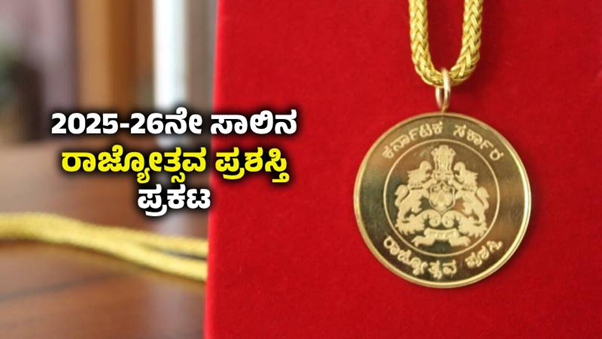
- With reference to the Kannada Rajyotsava Award, consider the following statements:
- It was instituted to commemorate the formation of Karnataka following the States Reorganisation Act, 1956.
- It is awarded only to individuals and not to organisations.
- It is the second-highest civilian award given by the Government of Karnataka.
Which of the statements given above is/are correct?
- 1 and 3 only
- 2 and 3 only
- 1 and 2 only
- 1, 2 and 3
Answer: A
- Match the following Karnataka State Film Lifetime Achievement awards with their 2024–25 awardees correctly:
|
List I (Award)
|
List II (Awardee)
|
|
a. Dr. Rajkumar Award
|
1. Richard Castelino
|
|
b. Puttanna Kanagal Award
|
2. Umashree
|
|
c. Dr. Vishnuvardhan Award
|
3. N. R. Nanjunde Gowda
|
Select the correct option:
- a-2, b-3, c-1
- a-3, b-1, c-2
- a-1, b-2, c-3
- a-2, b-1, c-3
Answer: A
- Consider the following statements regarding the HortiRoad2India initiative:
- It is a bilateral government-to-government programme solely between India’s Ministry of Agriculture and the Netherlands’ Ministry of Foreign Affairs.
- It aims to accelerate modern horticulture through greenhouse and controlled-environment technologies supported by Dutch expertise.
- Its pilot projects in India are expected to be fully operational by the end of 2026.
Which of the statements given above is/are correct?
- 1 and 3 only
- 1 and 2 only
- 2 and 3 only
- 1, 2 and 3
Answer: C
- Consider the following statements regarding Karnataka’s recognition at Windergy India 2025:
- Karnataka received the national award for achieving the highest installed wind capacity in India for 2024–25.
- The award was presented during the seventh edition of Windergy India, held in Chennai.
- Officials from Karnataka Renewable Energy Development Limited (KREDL) received the award.
Which of the statements given above is/are correct?
- 1 and 2 only
- 2 and 3 only
- 1 and 3 only
- 1, 2 and 3
Answer: B
- Consider the following statements regarding the Karnataka State Skill Development Policy 2025–32:
- The policy targets skilling 3 million youth by the year 2032.
- It includes a goal to raise women’s enrolment in ITIs to one-third of total enrolment.
- It proposes restricting international mobility programmes under IMC-K to only Gulf countries.
Which of the statements given above is/are correct?
- 1 and 2 only
- 2 and 3 only
- 1 and 3 only
- 1, 2 and 3
Answer: A
- With reference to the ‘MUTS Sahayak’ scheme recently launched in India, consider the following statements:
- It has been launched by the South Western Railway (SWR).
- It enables issuance of unreserved tickets through handheld devices.
- SWR is the second railway zone in India to introduce such a scheme.
Which of the statements given above is/are correct?
- 1 and 3 only
- 2 and 3 only
- 1 and 2 only
- 1, 2 and 3
Answer: C
- Which river’s mouth hosts the proposed Honnavar deep-water port?
- Netravati River
- Kali River
- Sharavathi River
- Aghanashini River
Answer: C
- With reference to the recently launched ‘Cobra Beat’ system, consider the following statements:
- It has been introduced by the Bengaluru Traffic Police.
- It aims to address micro-level, location-specific causes of traffic congestion.
- It is a drone-based monitoring system for real-time traffic surveillance.
Which of the statements given above is/are correct?
- 1 and 2 only
- 2 and 3 only
- 1 and 3 only
- 1, 2 and 3
Answer: A
- With reference to the ‘Lakshya’ rocket, consider the following statements:
- It was developed by R.V. College of Engineering (RVCE).
- It won the IN-SPACe Model Rocketry Competition 2024–25.
- The competition required launching a model rocket carrying a 2-kg CANSAT to an altitude of 2,000 metres.
Which of the statements given above is/are correct?
- 1 and 3 only
- 2 and 3 only
- 1 and 2 only
- 1, 2 and 3
Answer: C
- With reference to the Chief Minister’s Kaushalya Karnataka Yojane (CMKKY), consider the following statements:
- The scheme aims to skill 5 lakh youth annually in Karnataka.
- All beneficiaries are trained solely through the Department of Skill Development, Entrepreneurship and Livelihood (SDEL).
- Half of the targeted youth are trained through schemes implemented by other government departments.
Which of the statements given above is/are correct?
- 1 and 3 only
- 1 and 2 only
- 2 and 3 only
- 1, 2 and 3
Answer: A
- With reference to the Bengaluru Skill Summit 2025, consider the following statements:
- It is Karnataka’s flagship annual event on workforce transformation.
- It was jointly organized by SDEL, KSDC, the Agriculture Department, and the Karnataka Digital Economy Mission.
- The summit’s theme was “Workforce 2030: Skills for Global Mobility.”
Which of the statements given above is/are correct?
- 1 and 3 only
- 2 and 3 only
- 1 and 2 only
- 1, 2 and 3
Answer: C
- With reference to the Fair and Remunerative Price (FRP) of sugarcane, consider the following statements:
- It is the minimum price that sugar mills are legally bound to pay farmers for sugarcane procured.
- It is fixed by the Cabinet Committee on Economic Affairs based on the recommendations of the Commission for Agricultural Costs and Prices (CACP).
- FRP is governed under the Sugarcane Control Order, 1966.
Which of the statements given above is/are correct?
- 1 only
- 1 and 2 only
- 1, 2 and 3
- 2 and 3 only
Answer: C
- Which of the following crops are classified as commercial crops under MSP?
- Sugarcane and Cotton
- Jute and Copra
- Tur and Gram
- Ragi and Nigerseed
Answer: B
- With reference to the Karnataka Startup Policy 2025–30, consider the following statements:
- The policy aims to establish 25,000 new startups over five years.
- At least 10,000 of these startups are targeted to be set up outside Bengaluru.
- The policy was approved by the Union Cabinet as part of the Digital India Mission.
Which of the statements given above are correct?
- 1 and 2 only
- 2 and 3 only
- 1 and 3 only
- 1, 2 and 3
Answer: A
- The Resource Mobilisation Committee (RMC) was headed by:
- Nandan Nilekani
- K.P. Krishnan
- Amitabh Kant
- S. Venkitaramanan
Answer: B
- The theme of Krishi Mela 2025 is:
- “Digital Farming for Future India”.
- “Smart Farmers – Smart Nation”.
- “Prosperous Agriculture – Viksit Bharat: Soil, Water, and Crop”.
- “Green Revolution 2.0”.
Answer: C
- With reference to the Domestic Workers (Social Security and Welfare) Bill, 2025, consider the following statements:
- The Bill proposes a mandatory contributory framework in which domestic workers and employers must register under the State system.
- The welfare fee to be contributed by employers is capped at 5% of the wages payable to the domestic worker.
- The Bill mandates that all contributions to the welfare fund must be routed only through digital transactions.
How many of the above statements is/ are correct?
- Only one
- Only two
- All three
- None
Answer: C
- The high-powered committee constituted by the Karnataka Government to review prison functioning was headed by:
- Sandeep Patil
- Hitendra
- Amarnath Reddy
- Rishyanth
Answer: B
- Karnataka recorded what percentage reduction in maternal deaths from January to October 2025 compared to 2024?
- 10%
- 18%
- 24%
- 30%
Answer: C
- Which administration launched the Koti Vruksha Abhiyan in Vijayapura district?
- State Forest Department only
- District Administration
- Ministry of Environment, Government of India
- Panchayat Raj Institutions
Answer: B
- Which department has established the Kalaloka store?
- Department of Tourism
- Department of Industries
- Karnataka Handloom Development Department
- Ministry of Commerce, Government of India
Answer: B
- Karnataka ranks which position in India in terms of adoption numbers?
- First
- Second
- Third
- Fourth
Answer: D
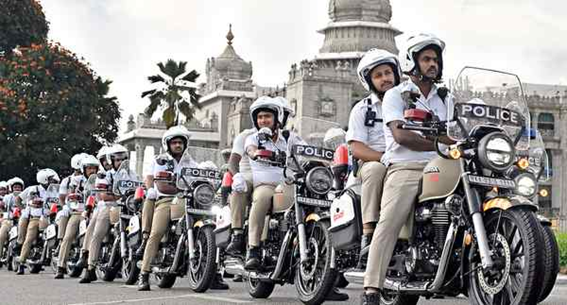
- Consider the following statements about the Bengaluru Safe City Project:
- It is a technology-driven initiative under the Ministry of Home Affairs funded entirely by the State Government.
- The project integrates fixed, high-resolution, Pan-Tilt-Zoom cameras, drones, and body-worn cameras to enhance urban safety.
- The emergency response system includes dedicated police vehicles and forensic vans linked with command centers.
- The project primarily focuses on traffic management and municipal services.
Which of the statements given above are correct?
- 2 and 3 only
- 1 and 4 only
- 1, 2 and 3 only
- All four statements
Answer: A
- Consider the following statements about KEO (Knowledge-driven, Economical, Open-source):
- KEO is an AI-ready personal computer developed by the Karnataka government in collaboration with KEONICS.
- It is built on an open-source RISC-V processor and a Linux-based operating system.
- KEO requires constant internet connectivity to run AI applications.
- It comes pre-loaded with BUDDH, an AI agent trained on the Karnataka DSERT syllabus.
Which of the statements given above are correct?
- 1, 2 and 4 only
- 1 and 3 only
- 2, 3 and 4 only
- All four statements
Answer: A
- The training for teachers under the Digital Nagarik programme is conducted through:
- NISHTHA portal
- DIKSHA portal
- DISHA portal
- SWAYAM portal
Answer: C